Best Homeschool Curriculum for Third Grade (2026)
A complete guide to choosing third grade homeschool curriculum — the year when reading becomes learning, math gets serious, and your child starts working more independently.
By The Slow Childhood

Third grade marks a genuine turning point in your child's education. The foundational skills of first and second grade — learning to read, mastering basic math facts, developing handwriting — are now tools your child uses to learn everything else. Third grade is when children start reading to learn rather than learning to read, when math problems require genuine reasoning rather than just counting, and when writing becomes a way to express real ideas rather than just practice letters.
This shift means your curriculum choices matter more now than they did in kindergarten. A third grader working with the wrong materials can stall out or lose motivation, while the right curriculum can ignite a love of learning that carries through the rest of elementary school and beyond.
We have reviewed and compared the most popular third grade homeschool options, talked with families who have used them, and identified the programs that consistently produce confident, capable, curious learners. Here is what works.
What Changes in Third Grade
Reading Becomes the Gateway
By third grade, your child should be reading independently and with reasonable fluency. The focus shifts from decoding skills to comprehension, vocabulary, and reading stamina. Third graders are ready for full chapter books, and the quality of what they read matters enormously. This is the year to build a reading life — regular trips to the library, a growing personal book collection, and daily independent reading time.
If your child is not yet reading fluently, do not panic — but do continue systematic phonics instruction alongside comprehension work. All About Reading Level 4 or Logic of English Essentials can fill gaps while your child builds fluency.
Math Requires Reasoning
Third grade math is a significant leap. Multiplication and division are introduced, fractions appear for the first time, multi-step word problems become standard, and mental math strategies become essential. Children who relied on counting or finger strategies in earlier grades need to build fluency and number sense now. The best math programs for this age balance conceptual understanding with procedural practice.
Writing Becomes Substantive
Third graders are ready to write real paragraphs and multi-paragraph compositions. They should be learning to organize ideas, use transition words, edit their own work, and write for different purposes — narrative, informational, and persuasive. Grammar and spelling instruction becomes more formal and systematic at this level.
Independence Increases
Third graders can handle longer periods of independent work, follow multi-step directions, and manage simple assignments without constant supervision. This is the year to begin building study habits and self-management skills that will serve your child through middle school and beyond.
Best All-in-One Curriculum Packages
Timberdoodle Third Grade Kit
Timberdoodle continues its tradition of excellence with a third grade kit that balances rigorous academics with the hands-on, engaging materials that make learning feel like discovery rather than drudgery. The kit typically includes math, language arts, handwriting or cursive, thinking skills, science experiments, and STEM building challenges.
Pros:
- Outstanding hands-on materials that keep third graders engaged
- Available in both secular and Christian editions
- Strong critical thinking and STEM components
- Detailed weekly schedule eliminates planning time
- Individual components can be swapped if needed
Cons:
- Significant upfront investment ($400-600 depending on options)
- Some included items may not match your child's exact level
- Physical kit only — no digital version available
Best for: Families who want a comprehensive, curated experience with strong hands-on learning. Especially good for active learners and families new to homeschooling.
BookShark Level 3
BookShark Level 3 wraps third grade learning in outstanding children's literature. History, science, language arts, and read-alouds are all driven by real books rather than textbooks. The Level 3 selections include some genuinely wonderful novels that children remember for years.
Pros:
- Literature-based learning that builds a genuine love of reading
- Secular, inclusive curriculum
- Excellent book selections — children actually want to read them
- Detailed daily lesson plans
- Strong integration across subjects
Cons:
- Still requires significant parent read-aloud time
- Language arts may need supplementation for grammar and writing
- Large number of books to acquire and manage
Best for: Families who believe in the power of great books and want their child immersed in literature rather than worksheets. Pairs beautifully with a separate math program.
Build Your Library Level 3
Build Your Library takes a Charlotte Mason approach with living books, narration, copywork, and nature study at its core. Level 3 covers history, science, language arts, and art appreciation in an integrated, book-rich program.
Pros:
- Charlotte Mason methodology with narration, nature study, and living books
- Secular with diverse and inclusive selections
- Includes art, poetry, and music appreciation
- Well-structured weekly plans
- More affordable than many all-in-one options
Cons:
- Does not include math — purchase separately
- Requires a good library or book budget
- Charlotte Mason methods have a learning curve for new families
Best for: Families drawn to Charlotte Mason's philosophy. Combines beautifully with hands-on math programs like Math-U-See or RightStart.
Best Math Curriculum for Third Grade
Math-U-See Gamma
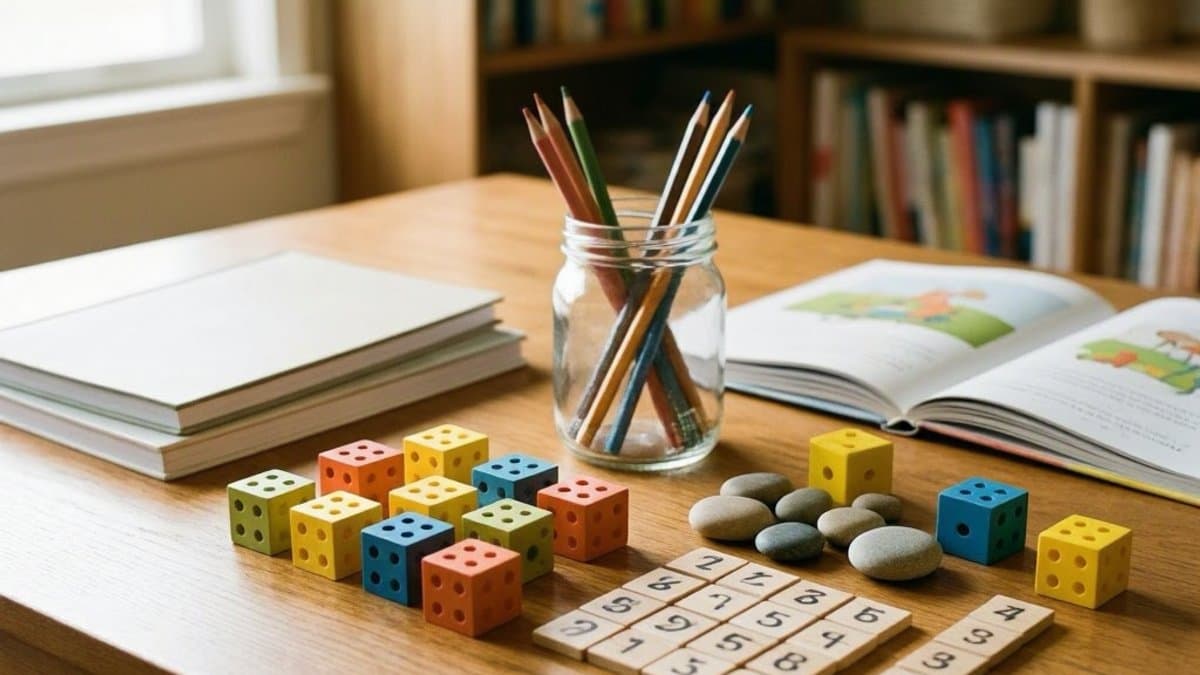
Math-U-See Gamma focuses on multiplication — the defining math skill of third grade. The program uses its signature manipulative blocks to build deep conceptual understanding of what multiplication means before drilling facts. Children learn to see multiplication as groups, arrays, and repeated addition before memorizing tables.
Pros:
- Manipulative-based instruction makes multiplication concrete and visual
- Mastery-based approach ensures real understanding before moving on
- DVD/streaming instruction allows independent learning
- Systematic and thorough with no gaps
- The blocks remain excellent at this level
Cons:
- Can feel slow for children who grasp concepts quickly
- Workbook pages are repetitive by design
- Does not cover all third grade math topics — supplementation may be needed for geometry and measurement
Best for: Children who need to see and touch math to understand it. Particularly effective for multiplication instruction, which is the critical skill of third grade.
Singapore Math 3A/3B
Singapore Math at the third grade level introduces multiplication and division mastery, fractions, measurement, data analysis, and more complex word problems. The bar model method for solving word problems becomes increasingly powerful at this level.
Pros:
- Produces exceptionally strong mathematical thinkers
- The bar model method is transformative for word problems
- Concise lessons with no busywork
- Excellent preparation for advanced math in later years
- Used successfully in top-performing schools worldwide
Cons:
- Requires parent involvement to teach effectively
- Teaching style may be unfamiliar to American-educated parents
- Word problems can be challenging and may frustrate some children
- The Home Instructor's Guide is essential and sold separately
Best for: Families who want rigorous, conceptual math and are comfortable with an approach that differs from traditional American methods.
Beast Academy Level 3
Beast Academy by Art of Problem Solving teaches math through comic-book-style guide books paired with challenging practice books. The series is designed for mathematically curious children and goes significantly deeper than grade-level standards.
Pros:
- Engaging comic format that children genuinely enjoy reading
- Goes far beyond standard third grade math — introduces challenging concepts
- Develops mathematical reasoning and problem-solving at a high level
- Online component adds interactive practice
- Builds the kind of mathematical thinking that leads to success in advanced math
Cons:
- Significantly more challenging than grade-level programs — not right for every child
- Can be frustrating for children who struggle with math
- Some children dislike the comic format
- May not align well with standardized test expectations
Best for: Mathematically curious or gifted children who find grade-level math boring. Also excellent as a supplement alongside a standard program for children who need more challenge.
Best Language Arts for Third Grade
All About Reading Level 4 + All About Spelling Level 3-4
All About Reading Level 4 completes the systematic phonics instruction with advanced patterns, multisyllable words, and a focus on fluency and comprehension strategies. All About Spelling at Levels 3-4 covers increasingly complex spelling patterns and rules.
Pros:
- Completes systematic phonics instruction thoroughly
- Multi-sensory approach continues to work well
- Scripted and easy to teach
- Smooth transition from earlier levels
- Builds strong spelling alongside reading
Cons:
- Only covers reading and spelling — not grammar, writing, or literature
- May be unnecessary for children already reading fluently
- Physical materials require organization
Best for: Children who benefited from All About Reading in earlier grades and need to complete their phonics foundation. If your child is already reading fluently, you may be able to skip this and focus on comprehension and literature instead.
Writing With Ease Level 3
Writing With Ease by Susan Wise Bauer uses copywork, dictation, and narration to build writing skills gradually and naturally. Level 3 increases the complexity of dictation passages and introduces original composition in a gentle, structured way.
Pros:
- Gentle, non-intimidating approach to writing instruction
- Builds skills progressively through copywork, dictation, and narration
- Based on exposure to excellent writing models
- Only takes 15-20 minutes per day
- Works well alongside any reading program
Cons:
- Very gradual — children who are ready for more may find it slow
- Does not teach creative writing or personal narrative directly
- Some children find copywork tedious
Best for: Families who want a gentle, Charlotte-Mason-inspired approach to writing. Pairs beautifully with a living-books reading program and a separate grammar curriculum.
Best Science for Third Grade
Real Science Odyssey Earth and Space Science
Real Science Odyssey brings the same hands-on, experiment-driven approach to earth and space science. Third graders study rocks and minerals, weather, the water cycle, the solar system, and earth's structure through real experiments, observations, and lab reports.
Pros:
- Genuinely hands-on with real experiments
- Teaches scientific methodology and observation skills
- Secular and evidence-based
- Lab notebook pages develop scientific writing
- Affordable with mostly household supplies
Cons:
- Requires advance preparation for experiments
- Only covers earth and space science — other topics need separate resources
- Some experiments can be messy
Best for: Families who want real science instruction with genuine experiments and lab work. Combines well with nature study for a comprehensive science education.
Building Your Third Grade Day
Third grade requires slightly more structure than earlier grades, but the daily rhythm should still leave plenty of room for play, exploration, and independent reading.
Morning block (focused academics — about 2 hours):
- Math lesson and practice: 30-40 minutes
- Language arts (reading, spelling, grammar): 30 minutes
- Writing or copywork: 20 minutes
- Read-aloud together: 20 minutes
Midday block (enrichment — about 45-60 minutes, rotating):
- Science with experiments (2 days per week)
- History through living books (2-3 days per week)
- Art, music, or handicraft (1-2 days per week)
- Nature study (1 day per week, ideally outdoors)
Afternoon:
- Independent reading (30+ minutes daily — this is non-negotiable in third grade)
- Free play, outdoor time, hobbies, and helping around the house
For more on structuring your homeschool days, see our daily schedule guide and our tips for planning and organization.
Third grade is the year your child transforms from a beginning learner into a capable, independent student. The right curriculum supports this transition without rushing it. Choose programs that challenge your child appropriately, build genuine understanding rather than surface-level performance, and leave room for the curiosity and joy that make homeschooling worthwhile.
Frequently Asked Questions
- What should a third grader know by the end of the year?
- By the end of third grade, most children should read chapter books fluently and independently, write multi-paragraph compositions with proper punctuation and grammar, multiply and divide basic facts fluently, understand fractions at an introductory level, read and create simple graphs, and have a growing knowledge base in science and history through living books and hands-on exploration.
- How many hours a day should a third grader homeschool?
- Most third graders need 2.5 to 3.5 hours of focused instruction per day. This typically covers math, language arts, reading, and one or two additional subjects. The rest of the day should include independent reading, free play, outdoor time, and interest-led exploration. If your school day consistently runs longer than 4 hours, you may be doing too much formal work.
- Is third grade too late to start homeschooling?
- Absolutely not. Third grade is actually one of the most common entry points for homeschooling. Many families pull their children out of traditional school around this age when they notice the joy of learning being replaced by test prep and busywork. Children who transition in third grade typically adjust within a few weeks and often make rapid academic progress once the curriculum is tailored to their needs.
- Should third graders do standardized testing?
- This depends on your state's requirements and your personal goals. Some states require annual testing, others do not. If testing is optional, many homeschool families skip it in the early grades and begin in fourth or fifth grade. If you do test, treat it as a data point rather than a verdict — standardized tests measure a narrow range of skills and often do not reflect the depth of learning happening in a good homeschool.
Enjoying this article?
Get more ideas like this delivered to your inbox every week.