Best Homeschool Curriculum for First Grade (2026)
A complete guide to choosing first grade homeschool curriculum — from all-in-one packages to our favorite picks for reading, math, science, and more.
By The Slow Childhood
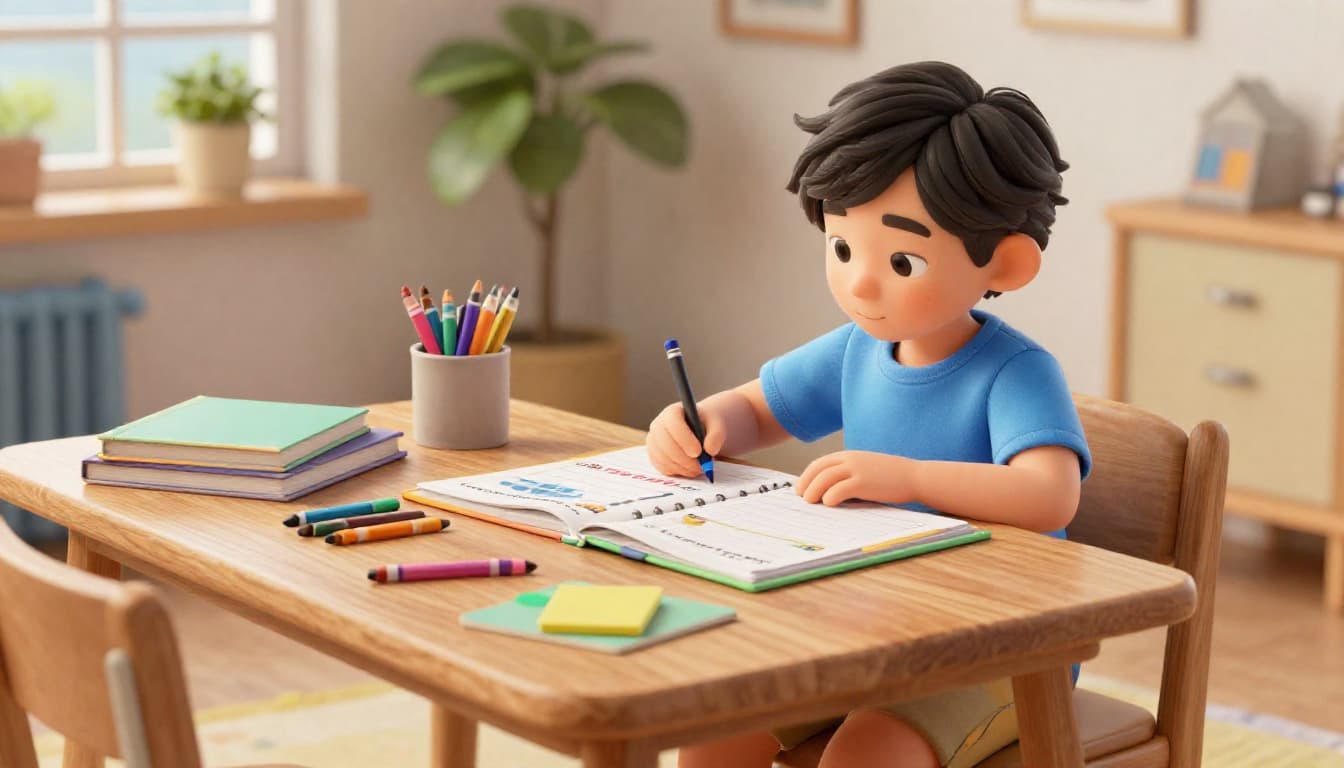
First grade is where homeschooling starts to feel real. Your child is moving beyond the play-based learning of preschool and kindergarten into more intentional instruction — learning to read fluently, mastering basic math, beginning to write. It is an exciting year, and also the year when many parents feel the most pressure to "get it right."
Here is the good news: first grade is forgiving. Children develop at wildly different rates, and most of what matters at this age is building a love of learning, establishing good habits, and making steady progress in reading and math. The specific curriculum you choose matters far less than the consistency and warmth you bring to your days together.
That said, a good curriculum makes your life easier and your child's learning more effective. We have tested, researched, and talked with hundreds of homeschool families about what works for first grade. Below, we cover the best all-in-one options and our top individual subject picks to help you build the first grade year that fits your family.
What to Prioritize in First Grade
Before you spend a dollar on curriculum, understand what actually matters in first grade:
Reading is the main event. A child who can read fluently by the end of first or second grade has the key that unlocks every other subject. Invest your best energy here. This does not mean drilling phonics for hours — it means consistent, patient, daily practice with a good program.
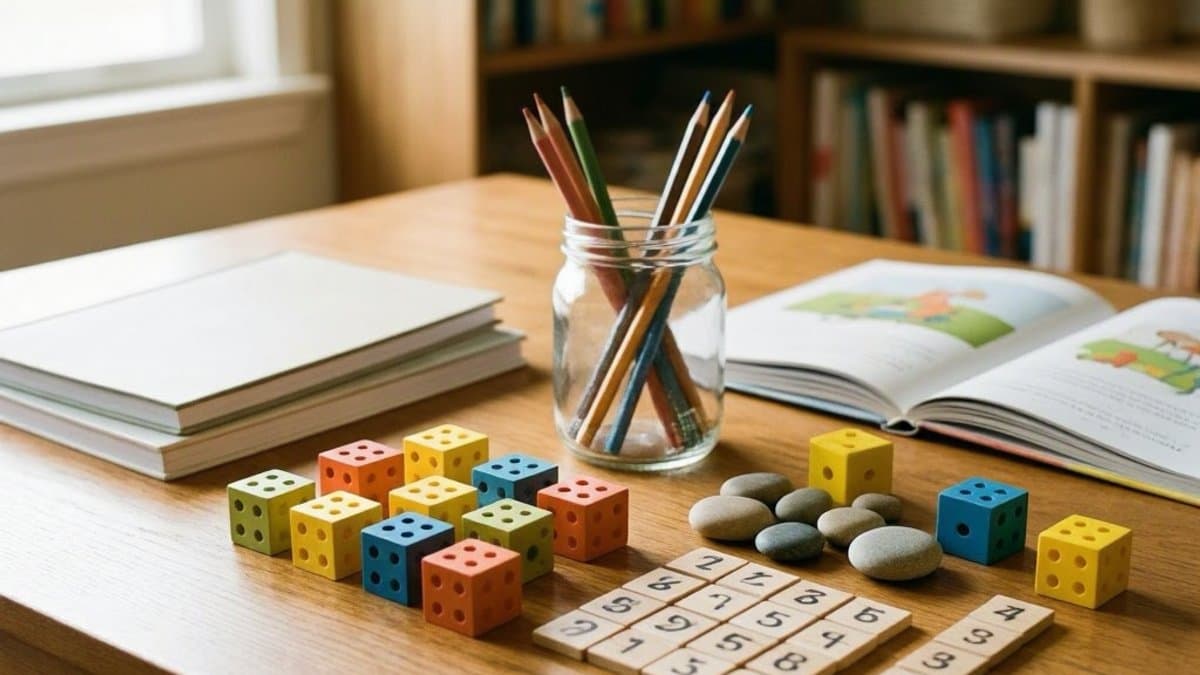
Math should be hands-on. First graders are concrete thinkers. They need to touch, count, group, and manipulate real objects before they move to abstract number work. The best first grade math programs use manipulatives heavily and keep worksheets minimal.
Everything else is enrichment. Science, history, art, and music at this age should be joyful, curiosity-driven, and largely based on living books, nature study, field trips, and hands-on projects. You do not need a formal curriculum for these subjects in first grade.
Keep it short. Most first graders can handle 1.5 to 2.5 hours of focused instruction per day. If your school time is stretching beyond that, you are probably doing too much. The rest of a first grader's day should include free play, read-alouds, outdoor time, and helping around the house.
Best All-in-One Curriculum Packages for First Grade
All-in-one packages bundle multiple subjects into a single, coordinated program. They save planning time and take the guesswork out of scope and sequence. Here are the best options for first grade.
Timberdoodle First Grade Kit
Timberdoodle curates a kit of hand-picked curricula and hands-on materials for each grade level. Their first grade kit typically includes a math program, handwriting, reading or phonics, thinking skills materials, science supplies, and art projects.
Pros:
- Excellent hands-on materials that first graders love — building kits, puzzles, science tools
- Carefully curated by experienced homeschool parents who test every product
- Includes both a non-religious and a Christian edition
- Strong emphasis on critical thinking and STEM skills alongside traditional academics
- The handbook provides a weekly schedule so you know exactly what to do each day
- Individual items can be swapped out if you prefer a different option for one subject
Cons:
- The full kit is a significant upfront investment ($300-500 depending on customizations)
- Some included items may duplicate resources you already own
- The reading and phonics component varies by year and may not be the strongest available
- Shipping the physical kit is the only option — no digital version
Best for: Families who want a curated, hands-on experience without the research. Timberdoodle's kits are especially strong for active, kinesthetic learners who need more than workbooks. If your budget allows, the convenience factor is real.
BookShark Level 1
BookShark is a literature-based, secular curriculum that builds learning around high-quality children's books. Level 1 (approximately first grade) includes language arts, read-alouds, history, and science.
Pros:
- Literature-based approach means your child learns through real books, not textbooks
- Secular and inclusive — works for families of any or no religious background
- Beautiful book selections that children genuinely enjoy
- The instructor's guide is detailed and easy to follow with daily lesson plans
- Strong integration across subjects — the same historical period appears in read-alouds, crafts, and science
- Includes all the books, so no hunting at the library
Cons:
- Math is not included — you will need to purchase a separate math curriculum
- Expensive for the full package since it includes many physical books
- The pace may be too fast for some first graders, especially late readers
- Heavy on reading and listening, which may not suit active learners who need more movement
- Resale value is lower once books are written in or used
Best for: Families who love books and want a literature-rich, secular education. BookShark is wonderful for the child who loves story time and the parent who wants to learn alongside them. Pair it with a solid math curriculum and you have a beautiful first grade.
Sonlight Level A
Sonlight is the original literature-based homeschool curriculum and has been refining their approach for over 30 years. Level A is their first grade program and includes history, Bible, read-alouds, language arts, and science.
Pros:
- Three decades of refinement have produced a polished, well-sequenced program
- Exceptional book selections — many families keep these books for years after finishing the curriculum
- The instructor's guide is one of the most detailed and supportive in the industry
- History is taught chronologically through living books, giving children a sense of the big story
- Sonlight's guarantee and customer service are outstanding
- Active community of families for support and encouragement
Cons:
- Christian worldview throughout — not suitable for secular families
- The full package is expensive, though individual components are available
- Like BookShark, it is reading-heavy and requires a parent who enjoys reading aloud
- Math and handwriting are separate purchases
- The volume of books can feel overwhelming for families new to homeschooling
Best for: Christian families who want a proven, literature-based program with outstanding support. Sonlight families tend to be deeply loyal to the program, and for good reason — the book selections are exceptional and the learning is rich.
Build Your Library Level 1
Build Your Library is a secular, literature-based curriculum designed by a librarian. Level 1 includes language arts, history, science, read-alouds, and art appreciation.
Pros:
- Secular and inclusive by design
- Outstanding book selections curated by an actual librarian
- More affordable than Sonlight and BookShark because it uses more library books rather than including every book
- Flexible pacing that accommodates different learning speeds
- Includes poetry, art appreciation, and music alongside core subjects
- The online community is warm and supportive
Cons:
- Requires regular library access since not all books are included in the purchase
- Less hand-holding than Sonlight — the instructor's guide is lighter
- Newer program with a smaller user base, so fewer online reviews and discussions
- Math is not included
- Some families find the library dependency stressful, especially during holds and waitlists
Best for: Secular families who want a literature-based approach at a more accessible price point. If you love your local library and enjoy the flexibility to swap books in and out, Build Your Library gives you an excellent framework without the full package price.
Best Individual Subject Picks for First Grade
Many families prefer to choose their own curriculum for each subject. Here are our top picks by subject for first grade.
Reading and Phonics
Reading is the most important skill your first grader will develop this year. Choose a program and use it consistently.
Our top pick: All About Reading Level 1 All About Reading uses a multisensory, Orton-Gillingham-based approach with letter tiles, flashcards, readers, and activity sheets. It is scripted for the parent, making it nearly impossible to teach incorrectly. The included readers give children real books to practice with at exactly their level. For a full breakdown of phonics and reading options, see our reading curriculum review.
Runner-up: Logic of English Foundations More rigorous and thorough than All About Reading, Foundations teaches phonograms and spelling rules from the start. It is excellent for detail-oriented families but requires more parent preparation.
Math
Our top pick: Math-U-See Alpha Math-U-See uses video instruction and manipulative blocks to teach concepts visually and concretely. Alpha covers single-digit addition and subtraction. The blocks are brilliant — children literally build numbers and see what addition and subtraction look like. This program works especially well for visual and kinesthetic learners.
Runner-up: Singapore Math 1A/1B Singapore Math develops deep number sense through its concrete-pictorial-abstract progression. It is more rigorous than many first grade programs and produces strong mathematical thinkers. Requires more parent involvement than Math-U-See. For a detailed comparison, see our math curriculum guide for early learners.
Budget pick: RightStart Math Level B Excellent for developing mental math skills and number sense through games and activities. Uses an abacus as the primary manipulative.
Handwriting
Our pick: Handwriting Without Tears 1st Grade Simple, effective, and gentle. It uses a consistent letter formation method and multisensory activities. Most first graders complete it without tears, which is the entire point. Ten to fifteen minutes a day is sufficient.
Science
At first grade, we strongly recommend a nature study approach over a formal science curriculum. Get outdoors weekly, keep a nature journal, and read lots of living science books from the library. If you want more structure, Apologia Botany is a wonderful first formal science course — it is gentle, wonder-filled, and gets children outside observing real plants.
History and Social Studies
At this age, history is best taught through picture books, biographies, and stories rather than textbooks. Read about historical figures, visit local historical sites, and let your child's questions guide deeper exploration. If you want a structured spine, Story of the World Volume 1 provides a narrative framework that works beautifully as a read-aloud.
Sample First Grade Weekly Schedule
Here is what a typical first grade week might look like:
Daily (Monday through Thursday, approximately 2 hours):
- Phonics/Reading: 20-30 minutes
- Math: 20-30 minutes
- Handwriting: 10-15 minutes
- Read-aloud time: 20-30 minutes (history, science, or literature)
Two to three times per week:
- Nature study or science exploration: 30-60 minutes
- Art, music, or handicrafts: 20-30 minutes
Weekly:
- Library visit
- Free play and outdoor time (daily, but at least one extended afternoon)
- One field trip or co-op activity (optional)
For more scheduling ideas, our homeschool daily schedule guide walks through how to build a rhythm that works for your family.
Tips for a Successful First Grade Year
Do not compare to public school. Your first grader does not need worksheets, homework folders, or daily spelling tests. Homeschool first grade looks different, and that is the point. You have the gift of time and flexibility — use it.
Read aloud every single day. Read-alouds are the single most powerful educational tool you have. Read above your child's level. Read widely. Read fiction and nonfiction. Thirty minutes of daily read-alouds will do more for your child's vocabulary, comprehension, and love of learning than any workbook.
Watch for readiness, not age. Some first graders read chapter books by October. Others are still working through phonics in the spring. Both are normal. If a curriculum feels like a constant battle, your child may need more time to develop, or a different approach — not more pressure.
Protect free play. First graders still need large blocks of unstructured play time. This is where they process learning, develop creativity, build social skills, and simply be children. Do not fill every hour with activities and lessons.
Give yourself grace. You will have terrible days. Your child will melt down during math. You will question everything. This is part of the process, and it does not mean you are failing. The fact that you are researching curriculum and investing in your child's education means you are already doing well.
Budget Considerations
First grade can be done beautifully on almost any budget:
- Under $100: Use free phonics resources like Progressive Phonics, Khan Academy Kids for math, library books for everything else, and nature study for science
- $100-300: Purchase one strong reading program and one math program, supplement everything else with library books and free resources
- $300-500: An all-in-one kit like Timberdoodle or individual picks for each major subject
- $500+: Full literature-based packages like Sonlight or BookShark with all the books included
The library is your most powerful budget tool. A library card gives your first grader access to thousands of living books for history, science, and literature at no cost.
Our Top Recommendation
For most first grade homeschool families, we recommend choosing a strong reading program (All About Reading Level 1 or Logic of English), a hands-on math curriculum (Math-U-See Alpha or Singapore Math), and then building the rest of your year around library books, nature study, and read-alouds. This approach gives you solid skill-building in the subjects that matter most while keeping first grade joyful, flexible, and affordable.
If you want the convenience of an all-in-one package and your budget allows it, Timberdoodle offers the best hands-on experience, while BookShark or Build Your Library are ideal for families who want a literature-rich, secular program.
Just getting started with homeschooling? Our beginner's guide to homeschooling covers everything from legal requirements to daily routines. If you are transitioning from kindergarten curriculum, our kindergarten curriculum guide can help you assess what your child already knows. And for more subject-specific recommendations, explore our reading curriculum reviews and math curriculum guide for early learners.
Frequently Asked Questions
- What should a first grader learn in homeschool?
- First grade focuses on reading fluency, basic math facts (addition and subtraction to 20), handwriting, and beginning writing. Science and history are best taught through living books, nature study, and hands-on exploration rather than formal textbooks at this age.
- How many hours a day should a first grader homeschool?
- Most first graders need only 1.5 to 2.5 hours of focused instruction per day. Young children learn through play, read-alouds, and exploration throughout the day. Formal seatwork should be kept short — 15 to 20 minutes per subject is plenty at this age.
- Do I need an all-in-one curriculum for first grade?
- No. Many families mix and match individual subject curricula. However, all-in-one packages save significant planning time and ensure nothing falls through the cracks. They are especially helpful for first-time homeschoolers still building confidence.
- What is the best reading curriculum for a first grader who is not reading yet?
- If your first grader is still learning to decode, a systematic phonics program like Logic of English Foundations or All About Reading Level 1 will build strong skills. Do not panic — many children are not fluent readers until age 7 or 8, and that is developmentally normal.
- How much does first grade homeschool curriculum cost?
- Costs range widely. An all-in-one package like Timberdoodle runs $300-500, while a la carte picks can cost $100-300 total. Many excellent resources are free or available at the library. You can homeschool first grade beautifully on a tight budget.
Enjoying this article?
Get more ideas like this delivered to your inbox every week.