Best Pretend Play Kitchen Sets for Kids (Honest Reviews 2026)
The best play kitchens for kids — KidKraft, Hape, Plan Toys, and IKEA options compared. Plus essential accessories and how to set up an inviting kitchen play space.
By The Slow Childhood
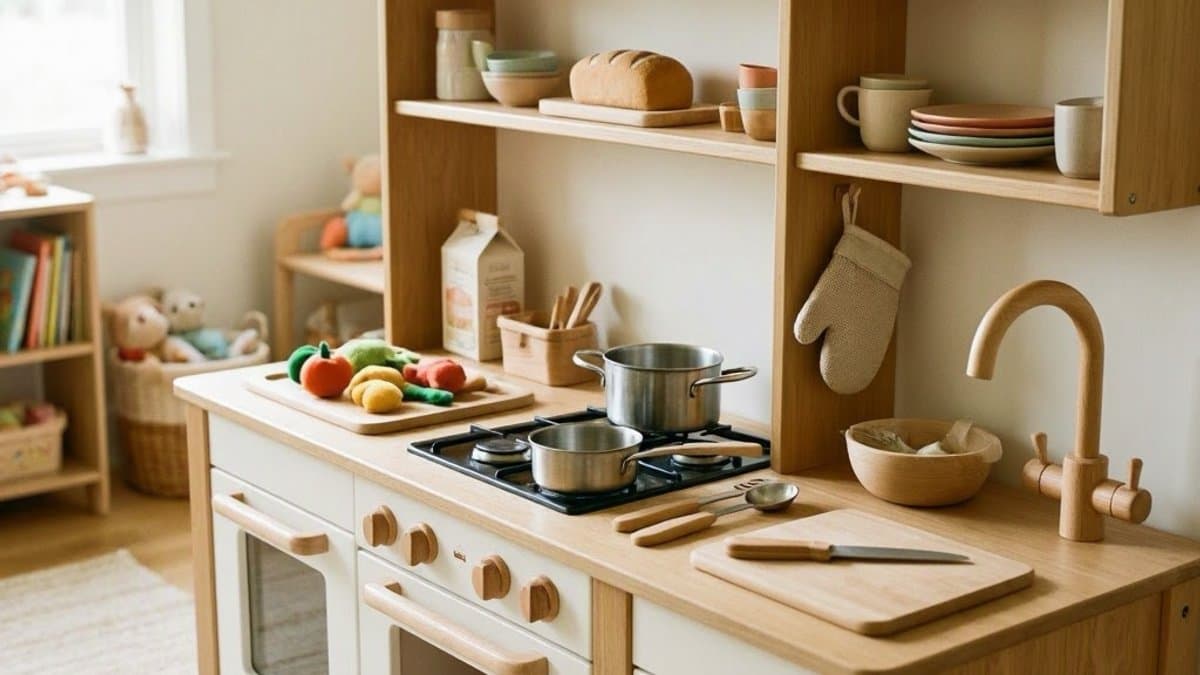
A play kitchen is one of the most-used toys in any home that has one. Children who barely engage with most toys for more than 15 minutes will spend hours pretending to cook elaborate meals, run a restaurant, or host a tea party. The play kitchen invites virtually unlimited imaginative scenarios, develops social and language skills, and provides quiet sustained play that parents appreciate.
This guide covers the best play kitchens we have tested ourselves and seen in real homes — organized by price point and style.
Best Premium Play Kitchens
KidKraft Uptown Espresso Kitchen
The KidKraft Uptown Espresso Kitchen is the most popular premium wooden play kitchen. The dark espresso finish fits modern decor, the realistic features (working knobs, oven door, microwave, multiple cabinets) keep children engaged, and the build quality lasts years.
Pros: Beautiful design, lots of features, multiple cabinet storage, quality wood construction Cons: Substantial assembly required, larger footprint Best for: Families willing to invest in heirloom-quality kitchen.
KidKraft Vintage Kitchen
The KidKraft Vintage Kitchen offers a more whimsical retro aesthetic with the same quality and features. Available in white, pink, and pastel colors.
Best for: Families wanting cottage-style or traditional aesthetic.
Plan Toys Kitchen Sets
Plan Toys Wooden Kitchen takes the premium sustainable approach — chemical-free wood, water-based finishes, sustainable rubberwood construction.
Best for: Eco-conscious families; aesthetic-focused homes.
Best Mid-Range Play Kitchens
IKEA DUKTIG Kitchen
The IKEA DUKTIG Play Kitchen is legendary in homeschool and Montessori circles. At around $150, it provides quality wooden construction, a sturdy build, multiple cabinets, working faucet design, and a footprint that fits in most playrooms. Many families upgrade or customize it with paint, hardware changes, and contact paper for a personalized look.
Pros: Excellent quality-to-price ratio, available widely, popular in design communities Cons: Requires assembly, IKEA-only purchase Best for: Style-conscious families; budget-conscious quality seekers.
Hape Gourmet Kitchen
The Hape Gourmet Kitchen is the gold standard mid-range kitchen — beautiful cottage-style wooden construction with working features at an accessible price point.
Best for: Families wanting wood quality without IKEA's specific aesthetic.
Hape Cook 'n Serve Kitchen
The Hape Cook 'n Serve Kitchen is a smaller-footprint wooden kitchen that fits well in small playrooms or bedrooms.
Best for: Smaller spaces; secondary play kitchens.
Best Plastic Play Kitchens
Step2 Lifestyle Dream Kitchen
The Step2 Lifestyle Dream Kitchen is a feature-rich plastic option with electronic sounds, water-effect sink, and detailed appliances. Children who want maximum features (including sound effects) get them here.
Best for: Children who love electronic features; durable plastic construction.
Little Tikes Cook 'n Learn Smart Kitchen
The Little Tikes Cook 'n Learn Smart Kitchen takes plastic kitchens to a more advanced level with Bluetooth connectivity (with a parent's tablet) and educational content.
Best for: Tech-comfortable families; combining digital and pretend play.
Best Compact Play Kitchens
For small spaces:
Hape All-in-One Kitchen
The Hape All-in-One Kitchen consolidates kitchen features into a smaller wooden footprint. Perfect for apartments or shared spaces.
Step2 LifeStyle Custom Kitchen
Step2 LifeStyle Custom Kitchen modules let you add or remove pieces, adapting to your space.
Essential Play Kitchen Accessories
Wooden Play Food Sets
Quality wooden play food sets — especially those with magnetic cutting capabilities — extend kitchen play significantly. Children love the satisfying "click" of cutting wooden vegetables apart.
Pots and Pans Set
A child-sized pots and pans set (metal versions are nicer than plastic) makes the kitchen feel real. Real pots that simply happen to be child-sized work too.
Play Mixer and Blender
Wooden play mixers and toy blenders extend cooking play with realistic action (turning handles, pretend mixing).
Apron and Chef Hat
A child-size apron and chef hat transforms kitchen play into character play. Children take their cooking more seriously when dressed for it.
Restaurant Play Accessories
Order pads, fake money, and table settings extend kitchen play into restaurant scenarios that involve multiple roles and interactions.
Setup Tips
Position thoughtfully. Place the kitchen where children can see family activities — living room corner, kitchen-adjacent space, or near the dining area. Children play in their kitchens most when they feel connected to family life.
Light it well. Natural light or a small floor lamp near the kitchen invites use.
Provide accessible storage. A small basket or shelf near the kitchen for play food and accessories means children can set up scenarios independently.
Resist over-stocking. A modest amount of play food (15-20 pieces) gets used more than overwhelming bins of plastic food. Quality over quantity.
Include real items. A few real (safe) kitchen items — wooden spoons, metal measuring cups, real pot holders — transform the play. Children love using "real" things.
Extending Kitchen Play
Cooking together. A child who plays kitchen all day will love actual cooking experiences. Even toddlers can stir, pour, and add ingredients to real food preparation.
Restaurant night. Once a week or once a month, let children "run a restaurant" for the family — they take orders, "cook," and serve real food.
Recipe books for kids. A kids cookbook extends kitchen play into reading and real food connection.
Mini real kitchen tools. A few real mini whisks, small cutting boards, and child-safe knives let children genuinely participate in family cooking.
For more on imaginative play and quality toys, see our guides to imaginative play ideas for preschoolers, best wooden toys for toddlers, and Montessori practical life kitchen.
A play kitchen is one of those investments that proves itself over years. Choose well, set it up thoughtfully, and watch your children spend countless hours in elaborate culinary fantasy worlds.
Frequently Asked Questions
- What age is best for a play kitchen?
- Play kitchens are most engaging for ages 2-7, with peak interest around 3-5 years. Toddlers love the mechanical elements (knobs, doors, water taps). Preschoolers add elaborate pretend scenarios — restaurants, cafes, family meals. Early elementary kids combine kitchen play with extended dramatic play involving multiple props. A quality play kitchen can serve a child from age 2 through age 7+, easily justifying the investment.
- Wooden or plastic play kitchen?
- Wooden kitchens look better, last longer, and feel more substantial. Plastic kitchens are cheaper, easier to assemble, often have more electronic features (sounds, lights), and are easier to clean. For long-term use through multiple children, wood wins. For budget-conscious families or those wanting electronic features, quality plastic (Step2, Little Tikes) works well. Hape and IKEA bridge the gap — wooden kitchens at more accessible prices.
- What's the best play kitchen for under $200?
- The IKEA DUKTIG ($150) is the best play kitchen at this price point — solid wood construction, charming design, multiple play features, and fits in smaller spaces. The KidKraft Vintage Kitchen ($150-180) is another excellent option with more cabinet space and traditional aesthetic. Both offer real wooden quality without the $300+ price tag of premium options.
- Do play kitchens need to look like real kitchens?
- Quality play kitchens balance realistic features with kid-friendly design. They should have key elements children recognize from real kitchens — stove, sink, oven, refrigerator — but don't need to be miniature replicas. The realistic touches that matter: working knobs that turn and click, doors that open and close, a sink with a basin, hooks for utensils. Color and styling can be whimsical or matched to your decor.
Enjoying this article?
Get more ideas like this delivered to your inbox every week.