25 Camping Activities for Kids That Don't Need a Screen
Screen-free camping activities that keep kids entertained from setup to sunset — campfire games, nature exploration, stargazing, and more.
By The Slow Childhood
The best camping activities for kids are the ones that use what the campsite already provides — a campfire for cooking and storytelling, trees for climbing and fort-building, streams for wading and skipping stones, trails for hiking and exploring, rocks for painting and stacking, and a sky full of stars for watching. Camping is one of the purest screen-free experiences a family can share. There are no plugs, no Wi-Fi (at most sites), and no default screen options. Instead, there is dirt, firelight, fresh air, and unstructured time — exactly the conditions under which children thrive. These 25 activities cover every part of the camping day, from morning to long after dark, and most require nothing more than what nature provides.
Why Camping Is the Ultimate Screen-Free Reset
Something remarkable happens when families camp: the rhythm of daily life reorganizes around natural light, weather, and basic needs. You wake when the sun hits the tent. You eat when you are hungry. You play until dark. You sleep when the fire dies down. This natural rhythm is how humans lived for thousands of years, and children respond to it immediately.
Research from the University of Colorado found that even a single weekend of camping resets the body's circadian rhythm, improving sleep quality for days afterward. For children accustomed to screen-stimulated evenings, this reset is particularly powerful.
Camping also creates what psychologists call "shared adversity" — the minor challenges of outdoor living (a leaky tent, a sudden rainstorm, a failed fire-starting attempt) become stories that bond families together. Children who camp develop resilience, problem-solving skills, and a sense of capability that transfers to every other area of life.
If you have been building screen-free habits at home, camping is where those habits become effortless. Without screens as a default option, children rediscover what every generation before them knew: the outdoors is endlessly entertaining.
Campfire Activities (Ages 3-12)
1. Campfire Cooking
Move beyond marshmallows (though keep those too). Cook banana boats — slit a banana, stuff with chocolate chips and mini marshmallows, wrap in foil, and place in coals for ten minutes. Roast hot dogs on sharpened sticks. Make campfire popcorn in a foil pouch. Cook foil-packet meals — diced potatoes, vegetables, and sausage seasoned and sealed in heavy foil, placed on coals for 20 minutes. Children who cook their own food over fire eat with an enthusiasm no kitchen meal can match.
2. Campfire Storytelling
Take turns telling stories. Start with established campfire tales, then move to collaborative stories where each person adds one sentence. Give a prompt — "There was a bear who lived in this exact forest, and one night..." — and let the story build. The firelight, the darkness beyond, and the captive audience make even simple stories feel electric.
3. Shadow Puppets
Position yourselves between the fire and a tent wall or large light-colored surface. Use your hands to create animal shadows — rabbits, birds, dogs, alligators. Challenge children to create their own creatures and act out scenes. The flickering firelight makes the shadows dance in ways that flashlights cannot replicate.
4. Campfire Songs
Sing together. You do not need to be a good singer. Classic campfire songs work because they are repetitive, participatory, and often ridiculous. "Down by the Bay," "The Ants Go Marching," "I've Been Working on the Railroad," and "This Land Is Your Land" are accessible starting points. Children who feel self-conscious about singing in other contexts will sing freely around a campfire.
5. Stargazing
Wait until the fire dies to embers and look up. Away from city lights, the night sky is overwhelming — thousands of stars, the Milky Way, satellites moving silently overhead, and occasionally a shooting star. Point out the Big Dipper, Orion, and the North Star. Use a free stargazing app (one brief, purposeful screen use) to identify constellations, or bring a star chart. Stargazing at a dark campsite is one of the most profound nature experiences a child can have.
Nature Exploration (Ages 2-12)
6. Campsite Scavenger Hunt
Create a list before you leave home, or write one at the campsite: find a feather, a smooth rock, something that smells good, an animal track, three different types of leaves, something an animal has eaten, a piece of bark, a spider web, something smaller than your thumbnail. Scavenger hunts transform idle campsite time into focused exploration. For more ideas, see our complete nature scavenger hunt guide.
7. Stream and Creek Exploration
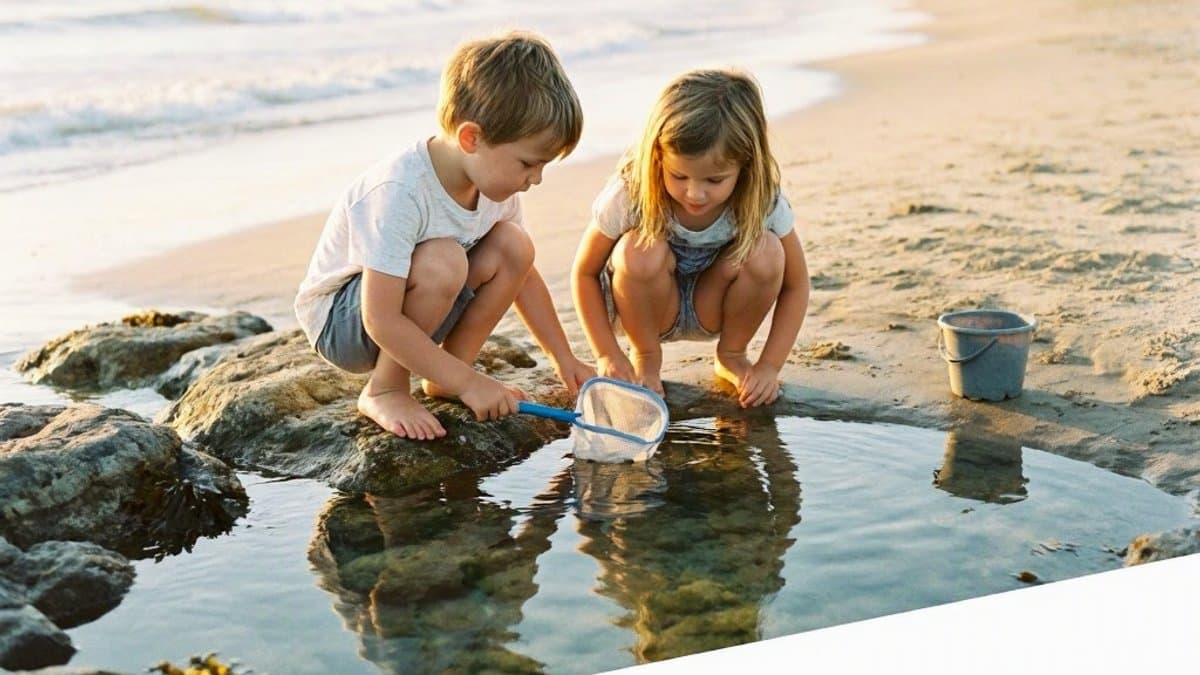
If your campsite is near water, this single activity can occupy children for hours. Wade in shallow streams, turn over rocks to find crayfish and aquatic insects, build dams with rocks and sticks, float leaf boats, skip stones, and sit quietly watching the water flow. Always supervise water play and check water depth and current before allowing access.
8. Animal Tracking
Look for animal signs around the campsite and on trails: tracks in mud or soft soil, scat (droppings), chewed vegetation, claw marks on trees, nests, dens, feathers, and shed fur. Bring a simple field guide to identify common tracks — deer, raccoon, squirrel, rabbit, and bird tracks are found in most camping areas. This transforms a walk into a detective mission.
9. Bug Safari
Arm children with a magnifying glass and send them on a bug safari. How many different insects can they find? Look under logs (always replace them), on leaves, in the air, near water, and around the campfire at night when moths and beetles are attracted to light. Count species. Observe behavior. Draw the most interesting finds in a sketchbook.
10. Tree Identification
Challenge children to identify five or ten different trees at the campsite. Examine bark texture, leaf shape, overall silhouette, and any fruit or seeds. Many campgrounds have nature interpretation signs that help with identification. By the end of a camping trip, most children can recognize at least three or four tree species — knowledge that stays with them every time they walk through a wooded area afterward.
11. Sunrise or Sunset Watch
Pick a spot with a clear view and watch the sun rise or set together. Notice how the colors change minute by minute. Time how long the transition takes. Compare the sunrise colors to the sunset colors. This is a slow, contemplative experience that teaches children to pay attention to beauty — a skill that benefits them for life.
Active Games and Adventures (Ages 3-12)
12. Hiking
The core camping activity. Choose trails appropriate for your youngest child's ability. For toddlers, a half-mile nature trail is an adventure. For preschoolers, one to two miles with stops for exploration. For school-age children, three to five miles with a destination — a waterfall, a viewpoint, a swimming hole. Bring snacks, water, and zero expectations about pace. The best hiking happens when children lead.
13. Capture the Flag (Campsite Edition)
Use bandanas or bright cloths as flags. Define boundaries using natural landmarks — that tree, that rock, the picnic table. Play with neighboring campsite families if willing. The uneven terrain, trees for hiding behind, and natural obstacles make campsite capture the flag far more exciting than the backyard version.
14. Flashlight Tag
After dark, one person is "it" with a flashlight. Everyone else hides. The tagger uses the flashlight beam to "tag" hiders by illuminating them. Play within defined boundaries near the campsite. The darkness, the sounds of the forest, and the beam of light slicing through trees create an intensity that children find thrilling.
15. Rock Skipping Contest
Find a calm lake or slow section of river and skip stones. Teach the technique — choose flat, smooth stones; hold horizontally; throw sidearm with a flick of the wrist. Count skips. Compete for the most skips. This is one of those timeless activities that adults enjoy as much as children, creating a genuinely shared experience rather than a parent-supervised activity.
16. Geocaching
Download coordinates for geocaches near your campsite before the trip (while you still have signal). Use a GPS device or phone to navigate to hidden containers in the woods. Finding a geocache in the wilderness feels like discovering buried treasure. If you find one, take an item and leave an item. Sign the logbook. Children become obsessed with this modern treasure hunt.
17. Tree Climbing
If the campsite has climbable trees — sturdy branches, no dead limbs — let children climb. Stay nearby, establish height limits based on your comfort level, and let them assess their own risk. Tree climbing builds physical strength, spatial awareness, risk assessment, and confidence. It is one of childhood's most fundamental outdoor experiences.
Creative and Quiet Activities (Ages 3-12)
18. Nature Art
Create art using only materials found at the campsite. Arrange stones, sticks, leaves, flowers, and pinecones into mandalas, pictures, or sculptures on the ground. Build a miniature fairy village at the base of a tree. Weave grass and flowers into crowns. These are temporary artworks — photograph them and leave them for the next camper to discover.
19. Rock Painting
Bring a small set of acrylic paint pens or markers and let children paint rocks at the campsite. Designs can be simple — a ladybug, a sunset, a word — or elaborate. Leave painted rocks along trails for other families to find, or bring them home as souvenirs. This is a calm, focused activity perfect for rest time after a long hike.
20. Whittling and Stick Carving
For children age seven and older with proper supervision, whittling is a classic camping skill. Use a simple pocket knife or child-safe whittling knife. Start with sharpening a stick into a point (for marshmallow roasting). Progress to peeling bark, carving notches, and making simple shapes. Teach safety rules — always carve away from your body, sit down while whittling, close the knife when not in use.
21. Nature Journaling and Sketching
Bring sketchbooks and colored pencils. During quiet times — early morning, after lunch, before bed — sit and draw what you see. The campsite, a particular tree, a wildflower, the campfire setup, the view from the tent. Nature journaling builds observation skills, artistic confidence, and creates a lasting record of the trip that is far more meaningful than photographs.
22. Card Games
A single deck of cards provides dozens of games across all ages. Go Fish and War for young children. Crazy Eights and Rummy for school-age kids. Poker, Hearts, and Spades for tweens and teens. Cards are lightweight, indestructible, and endlessly versatile — the perfect camping supply. Add Uno or Skip-Bo if you want options beyond a standard deck.
23. Cloud Watching
Lie on a blanket or in a hammock and watch the clouds. Name the shapes. Create stories about the shapes. Identify cloud types — cumulus (puffy), cirrus (wispy), stratus (layered). Predict weather based on cloud patterns. This is rest disguised as activity, and it is essential on multi-day camping trips when children need downtime between adventures.
Camp Life Activities (Ages 3-12)
24. Camp Chores as Play
Reframe camp chores as adventures. Gathering firewood becomes a mission — who can find the most sticks? Pumping water is a strength challenge. Setting up the tent is an engineering project. Washing dishes at the camp spigot is water play. Children who contribute to camp setup and maintenance develop competence and ownership of the experience.
25. Map Making
Give children paper and pencils and ask them to draw a map of the campsite. Include the tent, the fire ring, the picnic table, the path to the bathroom, the closest trail, water sources, and notable trees or rocks. Add a compass rose. Create a legend with symbols. This builds spatial awareness, mapping skills, and observational detail — and produces a wonderful keepsake of the trip.
Camping by Age: What to Expect
Toddlers (1-3)
Toddlers experience camping primarily through sensation — the feel of dirt, the warmth of fire (supervised from a safe distance), the sound of birds, the taste of food cooked outdoors. Keep expectations low. Bring a portable playpen or pack-and-play for a safe contained space at camp. Expect short exploration bursts followed by rest. The experience itself is enough — you are not trying to check off activities.
Preschoolers (3-5)
Preschoolers are ready for short hikes, scavenger hunts, campfire cooking, and extended campsite exploration. They thrive with a loose routine — morning hike, afternoon rest, evening campfire. Bring one or two comfort items from home. Expect some resistance to sleeping in a tent the first night, then full enthusiasm by the second.
School-Age (6-10)
This is the golden age of camping. Children are physically capable of longer hikes, mentally engaged by identification challenges and camp skills, and emotionally ready for the minor discomforts of outdoor living. Give them responsibilities — fire-tending (with supervision), water collection, firewood gathering, cooking tasks. They want to contribute, and they should.
Tweens (10-12)
Tweens may initially complain about the lack of screens and connectivity. This passes quickly — usually within a few hours. Give them more independence: solo exploration within defined boundaries, their own tent section, the lead on navigation during hikes. Challenge them with advanced skills — fire starting, knot tying, compass navigation. They rise to challenges that respect their growing competence.
Tips for Screen-Free Camping Success
The First-Day Rule
If your children are accustomed to screens, the first few hours of camping without them may involve complaints. This is normal. Do not give in. By the end of the first day, most children have adjusted. By the second day, they are fully engaged with their surroundings. By the end of the trip, they may not want to leave.
Prepare, Don't Over-Pack
Bring a few key supplies — magnifying glass, cards, sketchbooks, a ball, binoculars — but do not over-pack entertainment. Boredom at a campsite leads to creativity. The child with nothing to do will invent something to do, and it will usually be more engaging than anything you planned.
Involve Children in Planning
Let children help choose the campsite, plan meals, pick trails, and decide the daily schedule. Ownership creates investment, and invested children do not ask for screens.
Accept the Mess
Children will get dirty. Spectacularly dirty. This is correct. Dirt washes off. The memories of being allowed to get dirty do not.
Connecting the Outdoor Habit
Camping is not an isolated event — it is part of a broader relationship with the outdoors. Families who camp regularly tend to spend more time outside in daily life as well. The comfort with dirt, weather, bugs, and physical challenge that camping builds carries over to everyday outdoor play, backyard games, and a general willingness to choose outside over inside.
If camping feels like a big leap, start with a backyard overnight. Set up the tent, cook dinner on a camp stove, sleep outside. The next step — a campground one hour from home for a single night — feels natural rather than daunting.
The outdoors is not a destination. It is home. Camping just reminds us of that.
Pack the tent. Leave the tablets. Go.
Frequently Asked Questions
- What activities can kids do while camping?
- Kids can enjoy campfire cooking, nature scavenger hunts, stargazing, rock painting, stick whittling, stream exploration, animal tracking, shadow puppets by firelight, campfire storytelling, building forts from sticks, fishing, cloud watching, compass navigation, night hikes with flashlights, and creating nature art. Most camping activities require zero supplies beyond what nature provides.
- How do I keep kids entertained camping without screens?
- Give children jobs at camp (gathering firewood, setting up tents, pumping water), bring a few versatile supplies (a magnifying glass, a ball, cards, sketchbooks), and let unstructured exploration fill the gaps. Most children adapt to screen-free camping within the first day and become deeply engaged with their surroundings once the initial restlessness passes.
- What age is good to start camping with kids?
- Families can start car camping with children as young as six months. Toddlers (1-3) enjoy campsite exploration and campfire time. Preschoolers (3-5) are ready for short hikes, scavenger hunts, and campfire cooking. School-age children (6-10) can handle longer hikes, basic camp chores, and multi-night trips. Start with one-night trips close to home and build up gradually.
- What should I pack for camping with kids?
- Beyond standard camping gear, pack extra layers and socks, a first aid kit, sun protection, insect repellent, headlamps for each child, a few card games, a magnifying glass, a nature field guide, sketchbooks and pencils, a ball, marshmallow roasting sticks, and a few plastic bags for collecting nature treasures. Pack less than you think you need — part of camping's magic is making do with less.
Enjoying this article?
Get more ideas like this delivered to your inbox every week.