How to Create a Homeschool Portfolio (Record Keeping Made Simple)
A practical guide to homeschool record keeping and portfolios — what to include, how to organize it, and how to make the process painless and even enjoyable.
By The Slow Childhood
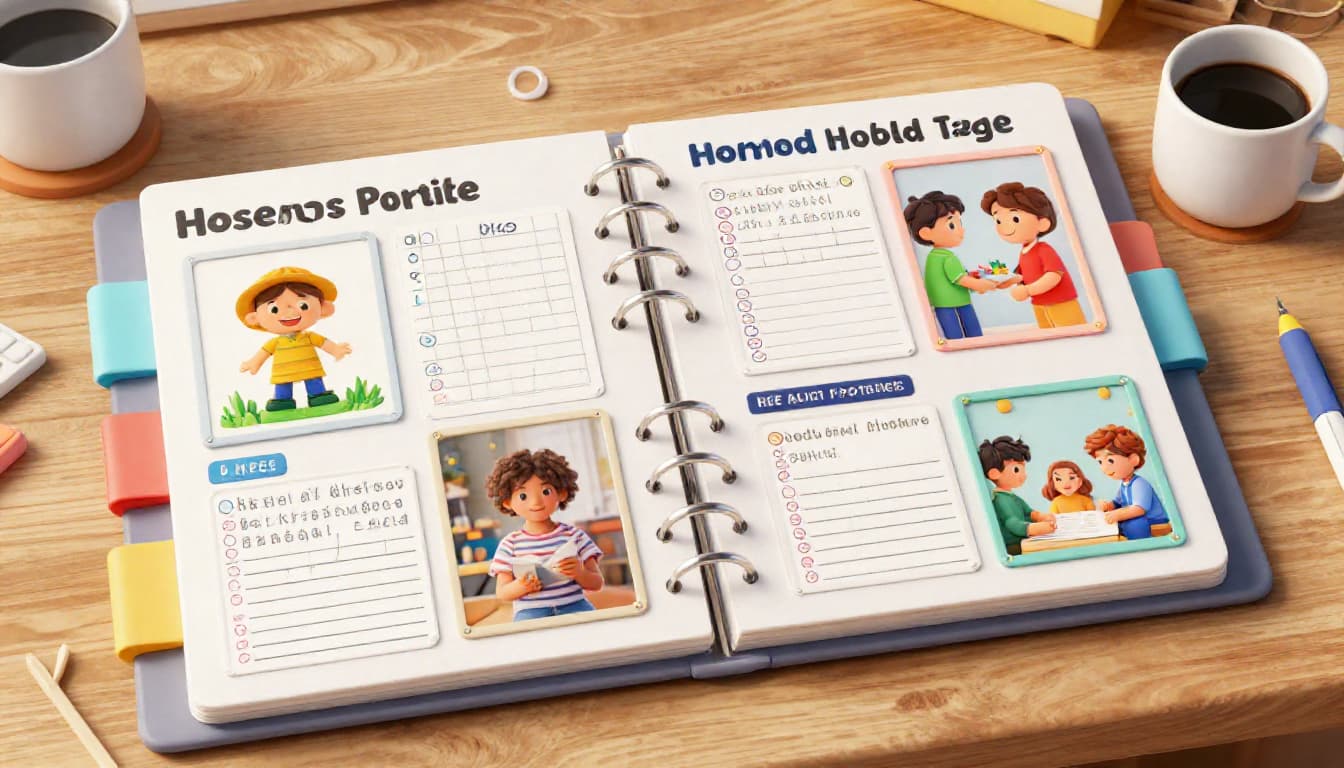
Homeschool record keeping is one of those tasks that most of us know we should do, feel guilty about not doing, and then scramble to catch up on at the end of the year. If that describes you, welcome to the club. You are in very good company.
The good news is that keeping records of your homeschool does not need to be complicated, time-consuming, or stressful. With the right system — one that actually fits your life and personality — it can become a simple weekly habit that takes minutes. And the portfolio you build becomes something genuinely beautiful: a record of your child's growth, your family's learning adventures, and the unique education you are creating together.
In this guide, we will cover why record keeping matters, what to include, how to organize it all, the digital versus physical debate, a practical look at state requirements, and real examples to help you build a system that works.
Why Homeschool Record Keeping Matters
Before we talk about how, let us talk about why. Even in states with minimal reporting requirements, keeping records serves several important purposes.
Legal compliance
Depending on your state, you may be required to maintain attendance records, submit portfolios for review, or demonstrate academic progress. Even if your state is relaxed, having records protects you if your homeschool status is ever questioned. This is unlikely for most families, but documentation is a simple insurance policy.
Tracking progress
When you see your child every day, it is easy to miss how much they have grown. Flipping through a portfolio from six months ago and seeing how far their handwriting, reading, or math skills have come is both encouraging and informative. It helps you identify what is working and what might need adjustment.
College preparation
For older students, a well-maintained transcript built from years of records is invaluable for college applications. Starting good record-keeping habits in the early years makes high school transcripts much easier to compile later.
Your own encouragement
Homeschooling has hard days — days when you wonder if you are doing enough, if your child is learning, if you made the right choice. A portfolio full of evidence that learning is happening is the best antidote to doubt. We cannot tell you how many times flipping through our records on a discouraging day has reminded us that yes, real education is happening here.
Memory keeping
Beyond the practical reasons, a homeschool portfolio is a scrapbook of your family's learning life. The nature journal pages, the photos of science experiments, the first attempts at cursive, the reading lists that grew longer each year — these are treasures you will want to look back on.
What to Include in Your Homeschool Portfolio
You do not need to save everything. The goal is a curated collection that tells the story of your child's learning year. Here is what we recommend including.
Core documentation
- Attendance log — a simple record of school days (many states require a minimum number). This can be as basic as a calendar with days marked.
- Subjects and curriculum list — what you used for each subject. Include textbooks, online programs, co-op classes, and any other formal resources.
- Course descriptions — brief descriptions of what each subject covered. One or two sentences per subject is sufficient for most purposes.
- Goals or objectives — if your state requires them, a list of educational objectives for the year. Keep these broad and achievable.
Work samples
Aim to save two to four work samples per subject per quarter. This is enough to show progress without drowning in paper. Select pieces that demonstrate:
- Beginning, middle, and end-of-year skill levels (this shows growth)
- Best work that represents your child's true ability
- Different types of work — writing, math, drawings, lab reports, maps, timelines
- Work your child is proud of
Tip: Date everything. It sounds obvious, but undated work samples lose most of their value. We keep a date stamp near our workspace for exactly this purpose.
Reading logs
Track what your child reads throughout the year. Include:
- Book title and author
- Approximate date read
- Whether it was a read-aloud, independent read, or audiobook
- Optional: a brief note about whether the child enjoyed it
A simple running list in a notebook or spreadsheet works perfectly. Over the years, these reading logs become one of the most meaningful parts of the portfolio — a map of your child's literary journey.
Photos and documentation of hands-on learning
So much of homeschool learning does not produce paper evidence. Science experiments, nature study, field trips, art projects, building projects, cooking, gardening — all of these are rich educational experiences that need to be captured differently.
Take photos regularly. Snap a quick picture of your child during science experiments, on field trips, working on art projects, building with blocks, measuring ingredients in the kitchen. These photos are your evidence that learning extends far beyond worksheets.
Write brief captions. A photo of your child at a museum is nice. A photo with a note saying "Visited the natural history museum — spent an hour in the geology exhibit and came home and identified rocks in our backyard" tells a much richer story.
Standardized test results (if applicable)
Some states require periodic standardized testing. Keep those results in your portfolio. Even in states that do not require testing, some families choose to test occasionally as one data point among many.
Special achievements and extracurriculars
- Awards, certificates, or ribbons
- Recital programs, sports team rosters, co-op class descriptions
- Community service documentation
- Any classes taken outside the home (music lessons, art classes, co-op courses)
Organizing Your Portfolio: Three Approaches
There is no single right way to organize homeschool records. The best system is the one you will actually use. Here are three approaches that work.
The Binder System
This is the most popular method and the one we started with. It is tangible, simple, and satisfying.
What you need:
- One large three-ring binder per child per year (a 2-3 inch binder usually suffices)
- Tab dividers for each subject
- Sheet protectors for special items like art or certificates
- A three-hole punch
How to set it up: Create a tab for each major subject (reading, math, writing, science, history, art) plus tabs for attendance, curriculum list, and miscellaneous. File work samples behind the appropriate tab throughout the year. Keep your attendance log and curriculum list at the front.
Pros: Easy to flip through during reviews or evaluations. Children enjoy looking back through their binders. No technology required. Everything in one place.
Cons: Takes up physical storage space over the years. Paper work samples can be bulky. Does not capture digital learning or hands-on activities well without printed photos.
The Digital System
More and more homeschool families are going fully digital, and the tools available now make it genuinely easy.
What you need:
- A smartphone for photos
- A cloud storage service (Google Drive, Dropbox, or iCloud)
- A simple folder structure
- Optional: a scanner app for digitizing paper work
How to set it up: Create a folder for each school year, with subfolders for each subject. Photograph or scan work samples and file them in the appropriate folder. Save photos of hands-on activities in a "Documentation" subfolder. Keep a running document for attendance, book lists, and curriculum notes.
Recommended digital tools:
- Google Drive — free, accessible anywhere, easy to share if needed for evaluations
- Homeschool Tracker or Homeschool Planet — dedicated apps that track attendance, grades, lesson plans, and more
- Evernote or Notion — flexible note-taking apps that can organize records, photos, and notes in one place
- Scanner apps like Adobe Scan or CamScanner — turn phone photos of student work into clean digital files
Pros: No physical storage needed. Easy to back up. Searchable. Easy to share with evaluators digitally. Captures photos and digital work naturally.
Cons: Requires consistent digital habits. Less satisfying to browse than a physical binder. Technology failures can lose records if not backed up. Some evaluators prefer physical portfolios.
The Hybrid Approach
This is what we have settled on after years of experimenting, and what we recommend for most families.
How it works: Keep a physical binder for your child's best and most meaningful paper work — their proudest writing, most beautiful art, important milestones. Use digital tools for everything else: attendance tracking, book lists, photos of hands-on activities, curriculum documentation.
This gives you the best of both worlds. Your child gets a beautiful physical portfolio to flip through and feel proud of, while your administrative records stay organized digitally without filling filing cabinets. At the end of each year, the physical binder becomes a keepsake, and the digital files become your official record.
Building the Weekly Habit
The single most important thing about homeschool record keeping is consistency. A perfect system that you never use is worse than an imperfect system you maintain weekly. Here is a simple weekly habit that takes about fifteen minutes.
Every Friday (or whatever day ends your school week):
- Save one or two work samples per child. Choose pieces that show either strong work or meaningful effort. Date them.
- Snap a few photos of the week's activities if you have not already. Hands-on projects, nature study, field trips, read-aloud sessions, anything that does not produce paper.
- Update your reading log with any books finished that week.
- Mark attendance for the week on your calendar or tracking app.
- Jot one or two sentences about what you covered in each subject. This does not need to be detailed — "Singapore Math 1A, lessons 22-25, subtraction within 20" is perfect.
That is it. Fifteen minutes. If you do this consistently, you will never face the year-end scramble, and your portfolio will build itself over the months.
Quarterly cleanup (30 to 60 minutes): Once a quarter, review what you have collected. Remove any duplicate or low-quality work samples. Make sure your digital photos are organized and labeled. Update course descriptions if the curriculum changed. Print any important digital items for the physical binder if desired.
State Requirements: A Practical Overview
Homeschool record-keeping requirements vary enormously across the United States. While this guide cannot replace checking your own state's current laws (which do change), here is a general overview to orient you.
High-regulation states
States like New York, Pennsylvania, Vermont, Massachusetts, and Rhode Island require some combination of: annual notification, individualized home instruction plans, quarterly reports, annual assessments or portfolio reviews by a certified teacher, and detailed attendance records. If you live in a high-regulation state, your record keeping is not optional — it is legally required, and the format may be specified.
Moderate-regulation states
States like Virginia, Colorado, Florida, Minnesota, and North Carolina typically require notification and either standardized testing or portfolio evaluation at specified intervals. Record keeping is important both for compliance and for the evaluation process.
Low-regulation states
States like Texas, Alaska, Idaho, Indiana, and Missouri have minimal reporting requirements. You may need to maintain attendance records or notify your district, but portfolios and evaluations are generally not required. Even in these states, we recommend keeping basic records for your own benefit and as documentation should questions ever arise.
Always verify your specific state's requirements. The HSLDA website maintains current summaries of each state's homeschool laws. Your state homeschool organization is another excellent resource.
Portfolio Examples and Templates
Sometimes seeing what a finished portfolio looks like is more helpful than reading about it. Here are some examples of what a well-maintained first grade portfolio and a fourth grade portfolio might include.
First grade portfolio example
Front section:
- Attendance calendar (180 days marked)
- Curriculum list: All About Reading Level 1, Math-U-See Alpha, Handwriting Without Tears, library books for science and history
- Brief course descriptions for each subject
Reading tab:
- Phonics assessment from September and May showing progress
- A few pages from their reading fluency practice
- Annual reading log (42 books read independently, 86 read-alouds)
Math tab:
- Math worksheet from September (addition to 5) and one from April (subtraction within 20)
- Photo of child working with manipulatives
- End-of-year assessment page
Writing tab:
- First attempt at writing a sentence (September)
- A story written in February
- Best writing piece from the spring
Science and nature study tab:
- Three nature journal pages from different seasons
- Photos from two field trips with captions
- A leaf identification project from autumn
Art and extras tab:
- Two favorite art projects
- Photo from co-op class
- Certificate from swimming lessons
That is a complete, compelling first grade portfolio, and building it required only a few minutes per week throughout the year.
Recommended Supplies for Record Keeping
You do not need much, but having the right supplies on hand makes the habit easier to maintain.
For the binder system:
- Large three-ring binder (one per child per year)
- Sheet protectors for artwork and special pieces
- Tab dividers — we like ones with pockets for loose items
- A three-hole punch
- A date stamp or the habit of dating everything by hand
For planning and tracking:
- A homeschool planner that includes attendance, curriculum planning, and record-keeping pages. Many families love the Well Planned Day planner or the Erin Condren Homeschool Planner.
- Alternatively, a simple composition notebook dedicated to logging what you cover each day
For digital organization:
- A smartphone with a good camera
- A free cloud storage account
- A scanner app (most are free)
Common Record-Keeping Mistakes to Avoid
Having walked this road for years and talked with many families, here are the mistakes we see most often.
Trying to save everything. Your child will produce mountains of paper. You cannot and should not keep it all. Be selective. Two strong math samples per quarter tell a better story than forty worksheets stuffed in a folder.
Waiting until the end of the year. The year-end scramble is real, and it produces incomplete, stressful portfolios. Build the habit weekly, even if it is imperfect.
Making it too complicated. If your record-keeping system has twelve categories, color-coded tabs, and requires a thirty-minute daily log, you will abandon it by October. Simple systems survive. Complicated systems do not.
Not capturing hands-on learning. Many homeschool families do rich, experiential education but only save worksheets for the portfolio. Photos of nature study, science experiments, building projects, cooking, field trips, and art are just as valid as paper evidence — sometimes more so.
Comparing your portfolio to Instagram homeschoolers. Your portfolio does not need to be beautiful. It needs to be honest, organized, and reasonably complete. Watercolor calligraphy headers are optional.
Forgetting to date work samples. We mentioned this before because it really matters. An undated writing sample could be from September or May — and without the date, it cannot show growth.
Getting Started Today
If you have been homeschooling without keeping records and feel overwhelmed, here is your action plan.
This week:
- Choose your system — binder, digital, or hybrid. Do not overthink this. You can switch later.
- If going physical, order a binder and dividers. If going digital, create your folder structure.
- Gather any work samples you already have. Stack, sort, and save the best pieces.
- Scroll through your phone photos and pull any that document learning activities.
- Write a quick list of the curricula and resources you have used this year.
This month:
- Start the weekly habit — fifteen minutes every Friday.
- Create your attendance record for the current year (backfill from memory and calendars as best you can).
- Start your reading log. List everything you can remember, then track going forward.
This quarter:
- Do your first quarterly review and cleanup.
- Evaluate whether your system is working. Adjust if needed.
- Take a moment to appreciate how much learning your portfolio already reflects.
You do not need to build the perfect system. You need to build a system that is good enough and that you will actually use. Start simple, start now, and refine as you go.
Our Top Recommendation
For most homeschool families, we recommend the hybrid approach — a physical binder for your child's best work and proudest pieces, combined with digital tracking for attendance, book lists, and photo documentation. Use a simple homeschool planner or composition notebook to log what you cover each week, and commit to the fifteen-minute Friday habit.
This approach works whether your state requires detailed portfolios or nothing at all. It gives you legal protection, personal encouragement, beautiful keepsakes, and peace of mind — all for a few minutes of effort each week.
If you are still building out your homeschool systems, our planning and organization guide covers everything from curriculum planning to daily routines. For help structuring your actual school days, check out our daily schedule guide. And if you are just starting your homeschool journey, our beginner's guide to homeschooling walks you through every step from legal requirements to choosing your first curriculum.
Frequently Asked Questions
- What should be included in a homeschool portfolio?
- A basic homeschool portfolio should include a log of subjects and books used, work samples showing progress (writing, math, art), reading lists, photos of hands-on activities and field trips, and any standardized test results if your state requires them. Include enough to tell the story of your child's learning year.
- How often should I update our homeschool portfolio?
- We recommend a quick weekly habit — save one or two work samples, jot down what you covered, and snap a photo of any hands-on activities. Then do a more thorough organization monthly or quarterly. Waiting until year-end to compile everything is stressful and leads to gaps.
- Do all states require homeschool portfolios?
- No. Homeschool record-keeping requirements vary dramatically by state. Some states like New York and Pennsylvania require annual portfolio reviews, while others like Texas and Alaska have almost no reporting requirements. Always check your specific state's current laws.
- Should I keep a digital or physical homeschool portfolio?
- Both work well, and many families use a hybrid approach. Physical portfolios with binders are simple and satisfying. Digital portfolios (photos, scanned work, apps) save space and are easy to back up. Choose whichever system you will actually maintain consistently.
- What if I fall behind on homeschool record keeping?
- First, take a deep breath. It is never too late to start. Set aside an afternoon to gather what you have — pull work samples from stacks, scroll through phone photos, list books you remember reading. Going forward, build one small weekly habit that captures your learning. Done is better than perfect.
Enjoying this article?
Get more ideas like this delivered to your inbox every week.