What Is Loose Parts Play? A Guide to Open-Ended Play Materials
A complete guide to loose parts play — what it is, why it matters, how to collect and organize materials, and 15 invitations to set up at home.
By The Slow Childhood
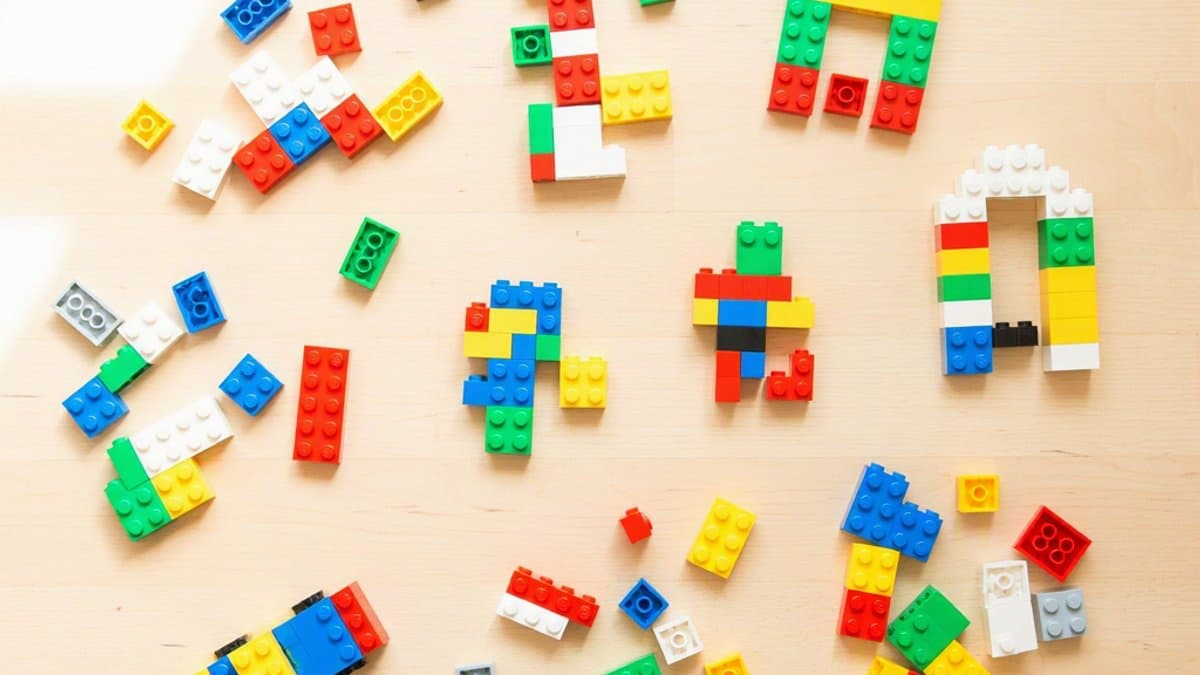
Loose parts play uses collections of open-ended, movable materials — stones, shells, buttons, wooden discs, fabric scraps, corks, tubes, and countless other objects — that have no single predetermined purpose. Unlike a puzzle (which has one correct solution) or a battery-operated toy (which does one thing), loose parts can be combined, arranged, stacked, sorted, and reimagined in infinite ways by the child who plays with them. The concept, rooted in the Reggio Emilia educational philosophy and architect Simon Nicholson's theory of loose parts, holds that creativity and learning flourish when children have access to diverse, manipulable materials. This guide explains why loose parts matter, what to collect, how to organize them, and how to set up invitations to play that will engage children from toddlerhood through the early school years.
The Theory Behind Loose Parts
In 1971, architect Simon Nicholson published his "Theory of Loose Parts," arguing that "in any environment, both the degree of inventiveness and creativity, and the possibility of discovery, are directly proportional to the number and kind of variables in it." In simpler terms: the more things children can move, combine, and manipulate in their environment, the more creative and engaged they will be.
This idea aligns with what Reggio Emilia educators in Italy have practiced for decades. In Reggio-inspired classrooms, you will find tables covered with beautiful collections of materials — glass beads, wire, clay, natural objects, fabric — arranged as invitations for children to explore. There are no worksheets, no step-by-step instructions, and no predetermined outcomes. The child's curiosity drives the work.
You do not need to follow a specific educational philosophy to embrace loose parts. The principle is universal: children learn best when they are actively constructing, not passively consuming.
Why Loose Parts Play Matters
Develops Creativity and Imagination
When a child picks up a wooden disc, it might become a steering wheel, a cookie, a wheel for a vehicle, a stepping stone for a toy figure, or an element in a pattern. The material has no fixed identity, which means the child's imagination determines its use. This kind of open-ended thinking is the foundation of creative problem-solving.
Builds Mathematical Thinking
Children naturally sort, classify, count, create patterns, and explore spatial relationships with loose parts. A child arranging shells by size is exploring seriation. A child creating an ABAB pattern with buttons and acorns is doing algebraic thinking. A child building a tower discovers balance and symmetry. None of this requires adult instruction — the materials themselves invite mathematical exploration.
Supports Language Development
Loose parts play generates rich language. Children narrate their building ("I'm making a road for the bears"), negotiate with peers ("You can use the big stones and I'll use the small ones"), describe their creations ("This is a spiral"), and ask questions ("What happens if I put this on top?"). The open-ended nature of the play demands more language than following a set of instructions would.
Encourages Risk-Taking and Persistence
There is no "wrong" way to use loose parts, which means there is no failure. A tower that falls over is not a mistake — it is information about balance. A pattern that looks different from what the child intended is a discovery, not an error. This low-risk environment encourages children to experiment, take creative risks, and persist through challenges.
Promotes Collaboration
When children share a loose parts collection, they must communicate, negotiate, share resources, and co-construct ideas. This social learning is deeply valuable and happens naturally without adult-directed group activities.
Connects Children to Nature
Many of the best loose parts come from the natural world — stones, sticks, pinecones, shells, seed pods, feathers, leaves. Collecting these materials is itself a valuable activity that gets children outdoors and attentive to their environment. This connects naturally to nature art projects and seasonal nature observations.
What to Collect: A Loose Parts Inventory
The beauty of loose parts is that they are mostly free or very inexpensive. You probably already have many of them in your home, yard, and recycling bin.
Natural Materials
- Stones and pebbles (smooth river stones are especially appealing)
- Pinecones (various sizes)
- Shells (collected from beaches or purchased in bulk)
- Sticks and small branches
- Seed pods and acorn caps
- Feathers
- Dried leaves and flowers
- Bark pieces
- Small slices of wood (cut from a branch with a saw)
- Chestnuts, walnuts, and other large seeds
- Sand and small gravel
- Driftwood
Household Items
- Buttons (sorted from old clothing or purchased in bags)
- Corks (wine corks and champagne corks)
- Jar lids and bottle caps
- Cardboard tubes (toilet paper and paper towel rolls)
- Fabric scraps (felt, burlap, silk, cotton)
- Ribbon and yarn pieces
- Keys (old keys from a thrift store)
- Clothespins
- Wooden spoons
- Small baskets and containers
- Muffin tin liners
- Popsicle sticks and craft sticks
Craft and Hardware Supplies
- Wooden beads (various sizes)
- Wooden rings and discs
- Pom-poms
- Pipe cleaners
- Glass beads and gems (flat marbles)
- Washers, nuts, and bolts
- Wooden spools
- Dowel pieces
- Small tiles or mosaic squares
- Chain links
Recycled and Repurposed Items
- Plastic lids in various sizes
- Small cardboard boxes
- Egg carton cups (cut apart)
- Wire pieces (with smooth ends)
- PVC pipe sections and connectors
- Old game pieces (dice, tokens, figurines)
- Puzzle pieces from incomplete puzzles
Safety Note
For children under 3 who still put things in their mouths, use only items too large to swallow and supervise closely. Avoid sharp edges, small magnets, and anything that could break into small pieces. As children grow, you can introduce smaller and more varied items.
How to Organize Loose Parts
A disorganized pile of random objects is overwhelming, not inviting. How you store and present loose parts matters.
Storage Systems
- Clear containers with lids — so children can see what is inside without opening everything
- Divided trays — printer trays, tackle boxes, or craft organizers keep different materials separate
- Baskets and bowls — attractive baskets on a shelf display materials beautifully
- Muffin tins and ice cube trays — perfect for small items and for use during play as sorting containers
- Open shelving — visible, accessible storage at the child's level invites independent access
Organization Strategies
Organize loose parts in whatever way makes sense for your space. Common approaches include:
- By material type — one basket for stones, one for shells, one for buttons, one for wooden items
- By color — all red items together, all blue items together (creates a beautiful rainbow display)
- By size — small items in one section, large items in another
- By theme — a "nature" collection, a "building" collection, a "sorting" collection
Follow the same principle that guides a Montessori bookshelf: do not put everything out at once. Rotate collections to maintain interest and prevent overwhelm. Five or six well-chosen containers of loose parts are more inviting than twenty.
15 Loose Parts Play Invitations
An "invitation to play" is simply an intentional arrangement of materials that invites the child to explore. You set it up; the child decides what to do with it. There are no instructions and no expected outcomes.
1. Open-Ended Sorting
Materials: A collection of mixed loose parts and a divided tray, muffin tin, or several small bowls.
Setup: Place the mixed collection in a large bowl or on a tray. Set out empty containers beside it.
What children do: Sort by color, size, texture, shape, or any category they invent. Sorting is one of the earliest mathematical activities and deeply satisfying for toddlers and preschoolers alike.
2. Mandala Making
Materials: A large round tray or circle of paper, plus a variety of small loose parts (gems, buttons, seeds, shells, flowers).
Setup: Place the tray in the center of a table with containers of materials around it.
What children do: Create symmetrical or free-form patterns radiating from the center. Mandala making develops spatial awareness, symmetry recognition, and aesthetic sensibility. Photograph the result before cleanup since the art is temporary.
3. Small World Building
Materials: A tray of sand, soil, or playdough as a base, plus natural loose parts (stones, sticks, moss, shells), small figurines (animals, people).
Setup: Set out the base tray and arrange loose parts and figurines nearby.
What children do: Build miniature worlds — forests, farms, oceans, villages, alien planets. The narrative play that accompanies small world building is remarkably rich and can sustain children for extended periods. This connects well to sensory play when the base is a sensory material.
4. Light Table Exploration
Materials: A light table or light panel (or a clear storage bin with a string of lights inside), translucent loose parts (glass gems, colored acetate sheets, transparent buttons, colored plastic lids).
Setup: Turn on the light table and arrange translucent materials in containers around it.
What children do: Explore color, light, transparency, and shadow. Layer translucent objects to mix colors. Create patterns and designs that glow. The light table transforms ordinary loose parts into something magical.
5. Building and Stacking
Materials: Wooden discs, flat stones, wooden blocks, corks, spools, small boxes, cardboard tubes.
Setup: Arrange building materials on a tray or mat on the floor.
What children do: Stack, balance, build towers and structures, experiment with gravity and stability. Add small figurines and the structures become castles, houses, or forts.
6. Threading and Lacing
Materials: Large beads, pasta tubes, wooden rings, buttons with large holes, plus string, yarn, pipe cleaners, or shoelaces.
Setup: Place threading materials and stringing items side by side.
What children do: Create necklaces, patterns, and sequences. Threading is excellent fine motor practice and a stepping stone to the kind of handwork done in Waldorf traditions.
7. Transient Art
Materials: A frame (empty picture frame, large embroidery hoop, or tape a rectangle on the table) plus a rich collection of colorful loose parts.
Setup: Place the empty frame in the center and arrange materials around it.
What children do: Create artwork within the frame using loose parts. The art is temporary — it exists only in the moment and is deconstructed at cleanup. Photograph it to preserve the creation. This teaches both creative expression and the beauty of impermanence.
8. Pattern Making
Materials: Items that lend themselves to patterns — two-toned objects, items in graduated sizes, or objects in distinct categories.
Setup: Start a simple pattern (red button, blue button, red button, blue button) and leave the rest for the child to continue.
What children do: Continue, modify, or create their own patterns. Pattern recognition is a foundational math skill, and loose parts make it concrete and tactile rather than abstract.
9. Outdoor Loose Parts Play
Materials: Sticks, stones, pinecones, leaves, sand, water, mud, logs, planks, old pots and pans.
Setup: Designate an area of the yard as a loose parts zone. Stock it with natural and repurposed items.
What children do: Build dams in puddles, construct fairy houses, create mud kitchens, balance on logs, dig channels in sand. Outdoor loose parts play is bigger, louder, and messier than indoor play — and often more engaging. Add old kitchen items for a mud kitchen that builds on practical life kitchen skills.
10. Playdough and Loose Parts
Materials: Fresh homemade playdough plus an assortment of loose parts for pressing, poking, and decorating — buttons, beads, sticks, shells, cookie cutters, stones.
Setup: Place a ball of playdough at each seat and scatter loose parts in the center of the table.
What children do: Press items into the dough to create faces, patterns, and sculptures. Roll dough around items to create creatures or structures. The combination of malleable dough and rigid loose parts offers unique creative possibilities.
11. Counting and Number Work
Materials: Number cards (1-10 or 1-20), plus small countable loose parts (gems, shells, buttons, coins).
Setup: Lay out number cards in order. Place a bowl of counters beside them.
What children do: Place the correct number of counters below each card. This is a hands-on version of Montessori cards and counters, using loose parts as the counting material. It bridges beautifully into the kind of concrete math work done with Montessori math materials.
12. Color Exploration
Materials: Loose parts sorted by color — a bowl of all-red items, all-blue, all-yellow, all-green, etc.
Setup: Arrange the color-sorted collections on a table or shelf.
What children do: Create monochromatic compositions, explore shades and tones within a single color, mix colors together, or sort a mixed collection back into color groups.
13. Balance Scale Play
Materials: A simple balance scale (DIY from a hanger and two cups, or a purchased one), plus various loose parts of different weights.
Setup: Place the scale on a table with containers of loose parts nearby.
What children do: Predict which items are heavier, test their predictions, discover that many small items can outweigh one large item, explore equivalence. This is science and math in action.
14. Sensory Tray Arrangement
Materials: A large tray filled with a sensory base (rice, sand, dried beans) plus themed loose parts hidden or placed on top.
Setup: Fill the tray, scatter or bury loose parts, and add scoops and containers.
What children do: Dig for buried treasures, create scenes in the sensory base, pour and scoop between containers. The sensory base adds a tactile dimension that transforms the loose parts experience.
15. Collaborative Construction
Materials: A large shared workspace (a big table, a mat on the floor) plus a generous quantity of building-oriented loose parts — blocks, tubes, planks, stones, connectors.
Setup: Dump a large collection of building materials in the center of the workspace. Add no other instructions.
What children do: Collaborate (or work side by side) to build whatever they imagine. The shared space and shared resources naturally generate negotiation, communication, and cooperative play.
The Adult's Role in Loose Parts Play
Set Up, Then Step Back
Your job is to curate the materials, arrange the invitation, and then get out of the way. Resist the urge to show children what to do with the materials, correct their designs, or steer their play toward your idea of what the loose parts should become.
Observe and Document
Watch what your child does. Take photos. Notice which materials they gravitate toward and which they ignore. These observations tell you what to offer next and what to rotate away. Documentation is a core practice in Reggio Emilia education, and even informal observation at home deepens your understanding of your child's thinking.
Refresh and Rotate
Keep the loose parts collection dynamic. Introduce new items regularly — a bag of shells from a beach trip, a collection of autumn seed pods, a handful of old keys from a thrift store. Remove items that are consistently ignored. The rotation keeps the materials feeling fresh and interesting.
Trust the Play
A child who spends forty-five minutes sorting buttons by size is doing meaningful cognitive work. A child who builds and destroys the same tower fifteen times is exploring physics. A child who creates an elaborate small world and narrates a complex story is developing language and emotional intelligence. Trust that the play is the learning, even when it does not look productive to adult eyes.
Getting Started Today
You do not need to buy anything. Walk through your home and gather:
- A handful of stones or pebbles from outside
- A collection of buttons from a sewing kit
- Some jar lids from the recycling
- A few corks
- Wooden spoons from the kitchen
- Any small baskets or containers
Place them on a tray at your child's level. Step back. Watch what happens.
That is loose parts play. The materials are simple. The possibilities are limitless. And the child — not the toy, not the app, not the adult — is in charge of what happens next.
Frequently Asked Questions
- What is loose parts play?
- Loose parts play is a type of open-ended play using collections of movable materials that have no predetermined purpose. Unlike toys with a fixed use (a puzzle has one solution, a doll has one role), loose parts — shells, stones, buttons, fabric scraps, tubes, corks, wooden discs — can be used in infinite ways. Children arrange, stack, sort, combine, build, and reimagine these materials freely, driving their own play and learning.
- What are examples of loose parts for children?
- Loose parts include natural items (stones, pinecones, shells, sticks, seed pods, leaves, feathers), household items (buttons, corks, jar lids, fabric scraps, cardboard tubes, bottle caps, keys), craft supplies (pom-poms, wooden beads, pipe cleaners, ribbons, popsicle sticks), and wooden or metal items (wooden rings, washers, nuts and bolts, wooden discs, spools). Anything safe, movable, and open-ended qualifies.
- Is loose parts play the same as Reggio Emilia?
- Loose parts play is a key element of Reggio Emilia-inspired education but is not exclusive to it. The term 'loose parts' was coined by architect Simon Nicholson in 1971, and Reggio Emilia schools in Italy have long used collections of beautiful, open-ended materials to support children's creativity and investigation. However, loose parts play can be practiced in any educational philosophy — Montessori, Waldorf, Charlotte Mason, or no specific approach at all.
- How do I organize loose parts without it becoming a mess?
- Use clear containers, divided trays, baskets, and muffin tins to sort loose parts by type or material. Open shelving with labeled baskets makes materials visible and accessible. Rotate collections regularly so not everything is out at once. Involve children in cleanup by making sorting a game. The key is having a designated space for loose parts storage and a clear expectation that materials return to their containers after play.
Enjoying this article?
Get more ideas like this delivered to your inbox every week.