Memorial Day Week: Meaningful Service and Community Connection Activities
Use Memorial Day week — especially May 25 and 26 — to teach children gratitude and service through age-appropriate community activities that honor sacrifice, build empathy, and turn a long weekend into something kids remember for the right reasons.
By The Slow Childhood
Memorial Day weekend has a way of collapsing into hot dogs and a mattress sale. There is nothing wrong with the cookout — gathering with people you love is its own quiet good — but somewhere between the grill and the pool, the meaning of the day tends to evaporate. For a few years our family treated the last Monday of May exactly like that, and then one spring our oldest asked, point-blank, why we had a flag on the porch. I did not have a good answer ready, and it stuck with me.
So we started doing things differently. Not a heavy, solemn production — kids cannot hold that, and they should not have to — but small, real acts of gratitude woven through the week leading up to the holiday. The window of May 25 and 26, the days right before the Monday holiday in 2026, turned out to be the sweet spot: school is winding down, the weather is good, and there is just enough open time to actually do something that matters before the relatives arrive.
This is a guide to using Memorial Day week to teach gratitude and service in ways children can genuinely understand. Everything here is age-scaled, mostly free or cheap, and designed to honor sacrifice while building the muscle that matters most in a kid: empathy.
Start With the "Why" — at Their Level
Before any craft or project, spend five minutes on meaning. Children sense when an activity has weight behind it, and a little context turns "making cards" into something they remember.
The honest, kid-sized version of Memorial Day is this: it is a day to remember people who were brave enough to help protect others, and some of them did not come home. That is enough for a three-year-old. A seven-year-old can handle more — that these were soldiers, that families still miss them, that we say their names so they are not forgotten. Let your child's questions set the depth. I have watched a preschooler accept "they helped keep people safe" and move on, and a second-grader sit quietly for a full minute and then ask, "Do their moms still feel sad?" Both responses are exactly right.
It is also worth drawing the line between Memorial Day and Veterans Day, because kids mix them up and so do plenty of adults. Memorial Day remembers those who died serving. Veterans Day, in November, thanks everyone who served, including the people still with us. The shorthand we use: Memorial Day is for remembering, Veterans Day is for thanking the people we can still hug. That single sentence has done more to make the day land for our kids than any speech.
If you want a gentler on-ramp, this fits naturally alongside the rhythm of marking the seasons we describe in our guide to holiday and seasonal crafts for kids year-round — meaning first, then the making.
Activity 1: Thank-You Cards That Actually Reach Someone
Best for ages 2 and up. This is the lowest-effort, highest-impact project on the list, and it is where I tell every family to start.
The trick is making sure the cards go somewhere real. A card that gets handed to an actual person — or read aloud at a VA hospital — means infinitely more than one that ends up in a drawer. Call your nearest VA medical center, a local veterans' organization like the VFW or American Legion, or a senior living facility with veteran residents, and ask if they accept handmade cards. Most do, and many have a deadline a few days before the holiday, so this is genuinely a "do it early in the week" task.
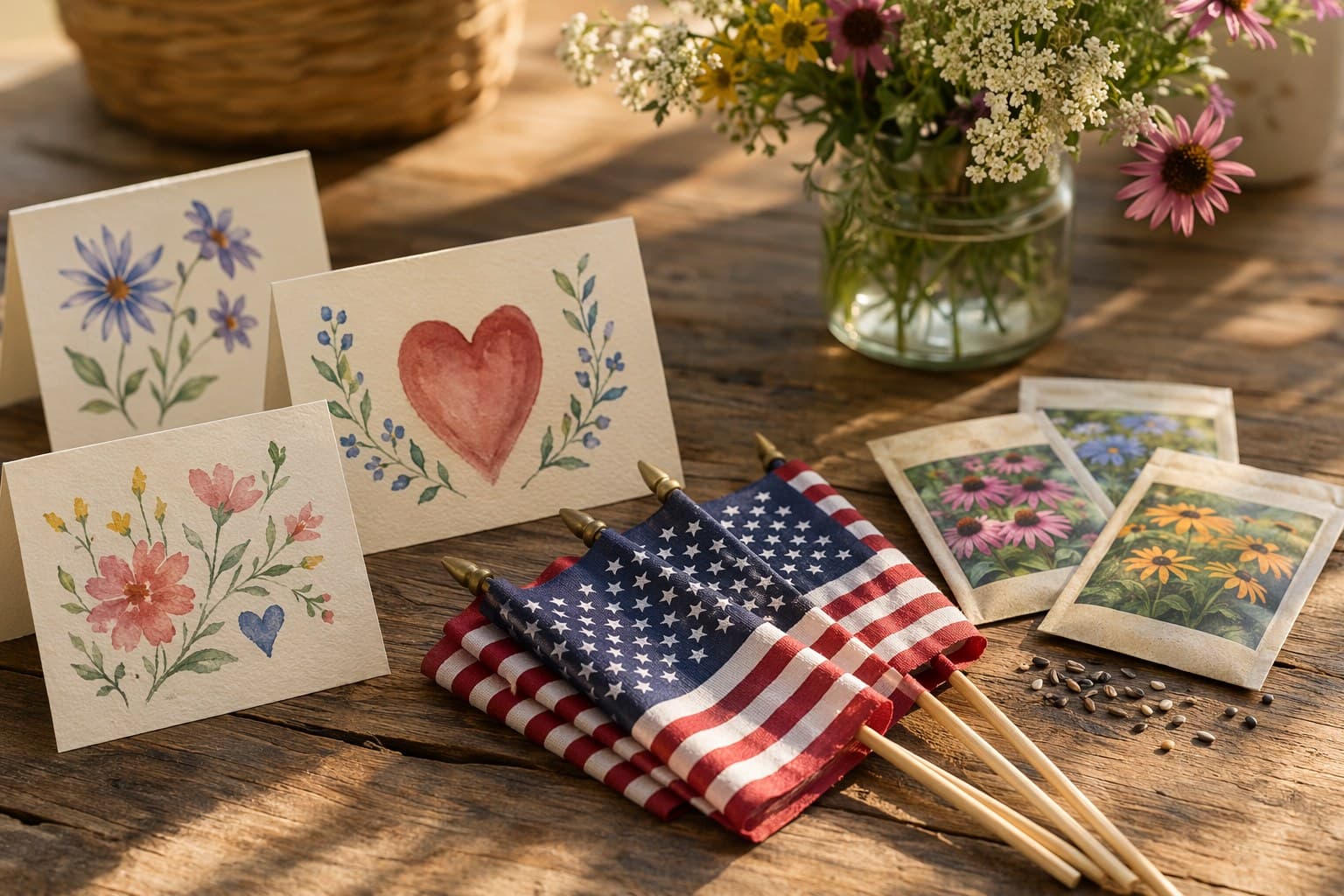
For little ones, keep supplies simple: a blank thank-you note card set, washable markers, and a few patriotic stickers and craft stickers so even a toddler who cannot write yet can contribute something. Preschoolers can dictate a sentence for you to scribe ("Thank you for being brave"). School-age kids can write their own, and you will be surprised how thoughtful they get when they know a stranger will read it.
A small thing that matters: have your child sign just a first name and age. "From Maddie, age 5" reads as a real little person reaching out, and that is the whole point.
Activity 2: A Care Package the Kids Pack Themselves
Best for ages 4 and up. Active-duty service members are deployed over Memorial Day too, and assembling a care package is a wonderfully hands-on way for kids to connect gratitude to action.
Organizations like Operation Gratitude and Soldiers' Angels publish current wish lists and shipping guidelines — check them before you shop, because allowed items change. Then hand your kid the list and let them be in charge of the cart. Letting children make the choices, count the items, and physically pack the box is what makes it stick. A small care package assembly kit with snacks and toiletries gives you a tidy starting point, and you can round it out with a sturdy flat-rate shipping box and packing supplies.
Tuck one of the thank-you cards from Activity 1 inside. Kids love the idea that the card and the snacks are traveling together to the same person. The fine-motor sorting and counting that happens during packing is real practical-life learning, the kind we are always chasing — it just happens to come wrapped in meaning this time.
Activity 3: Flag Making and Display
Best for ages 2 and up. Few symbols are as immediately recognizable to children as the American flag, and making one is a natural fit for the week.
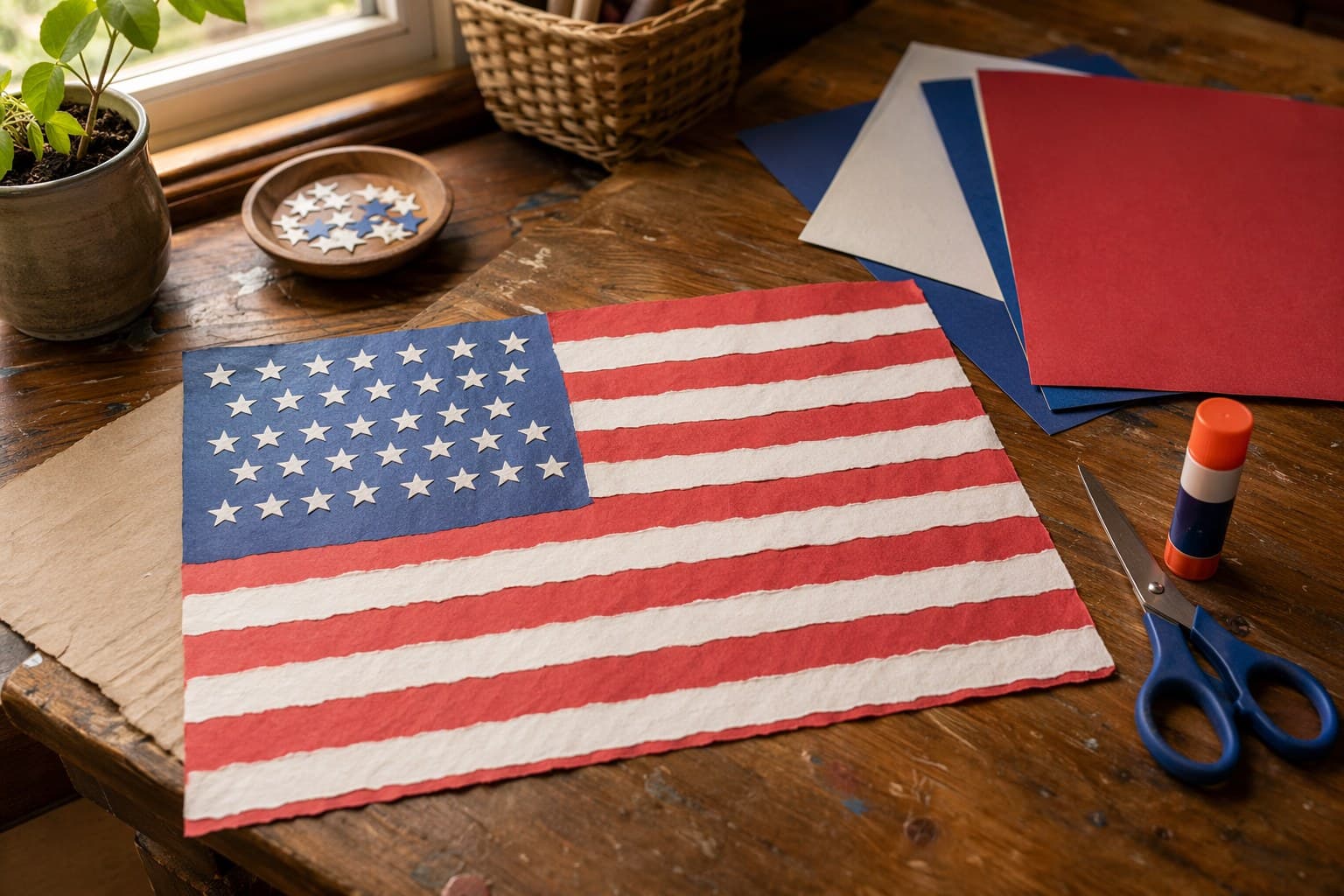
You have two routes. The craft route uses a patriotic flag-making craft kit or basic supplies — red, white, and blue paper, star stickers, a paper-plate-and-handprint flag for the littlest ones. The respectful-display route teaches a quieter lesson: how to handle a real flag with care, why it goes up at dawn and comes down at dusk, and why on Memorial Day it flies at half-staff until noon, then rises to full height. That half-staff detail is a small, sticky fact kids genuinely remember once you explain it — it represents the nation mourning in the morning and the living resolving to carry on in the afternoon.
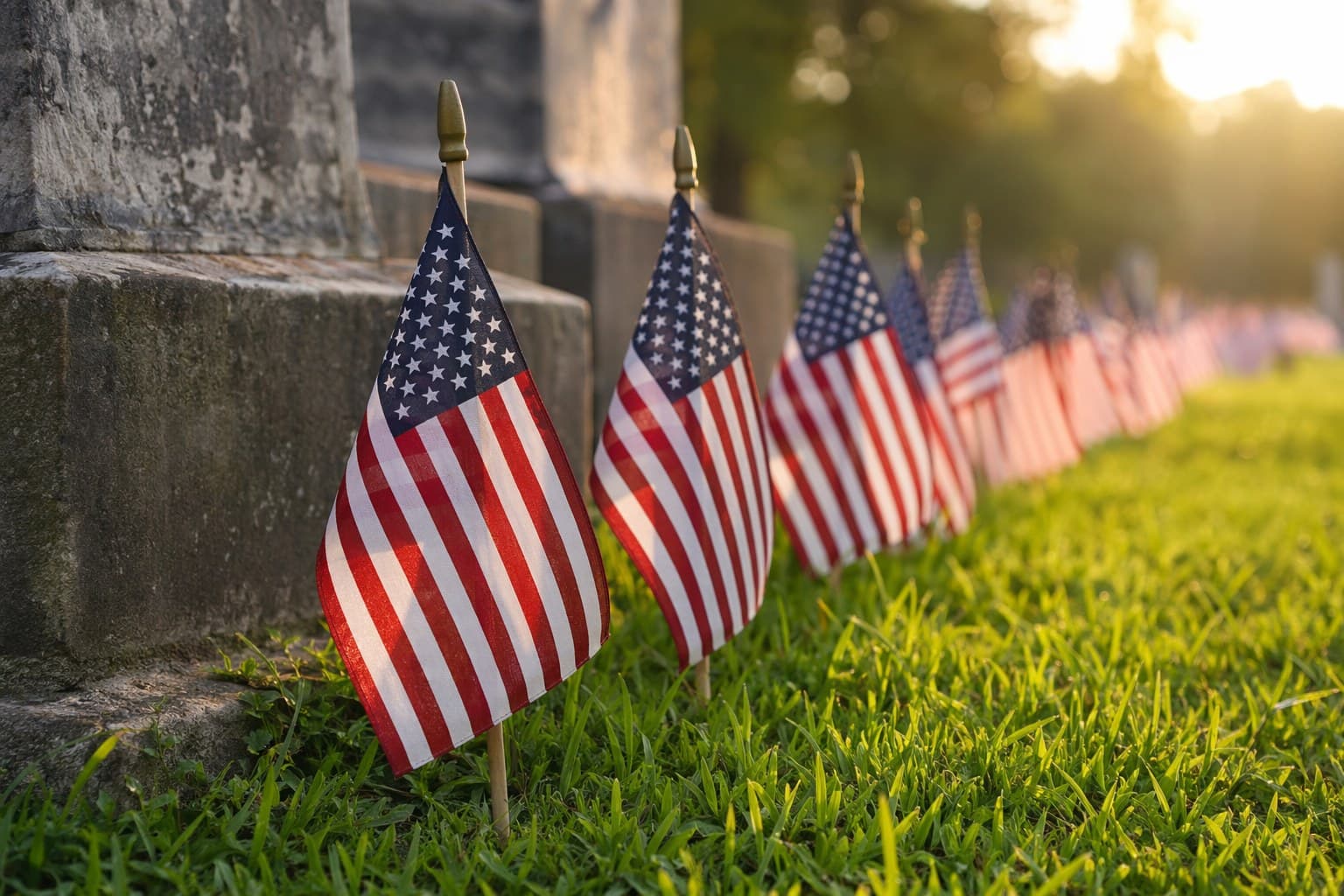
If you visit a cemetery or memorial later in the week, a bundle of small stick-mounted American flags lets each child place one themselves. Placing a flag at a grave is a concrete, physical act of remembrance, and watching a five-year-old do it carefully, on their own, is the kind of moment this whole week is built around.
Activity 4: Plant Something That Honors Memory
Best for ages 3 and up. Planting connects remembrance to something living and ongoing, which is exactly the right metaphor for a day about legacy.
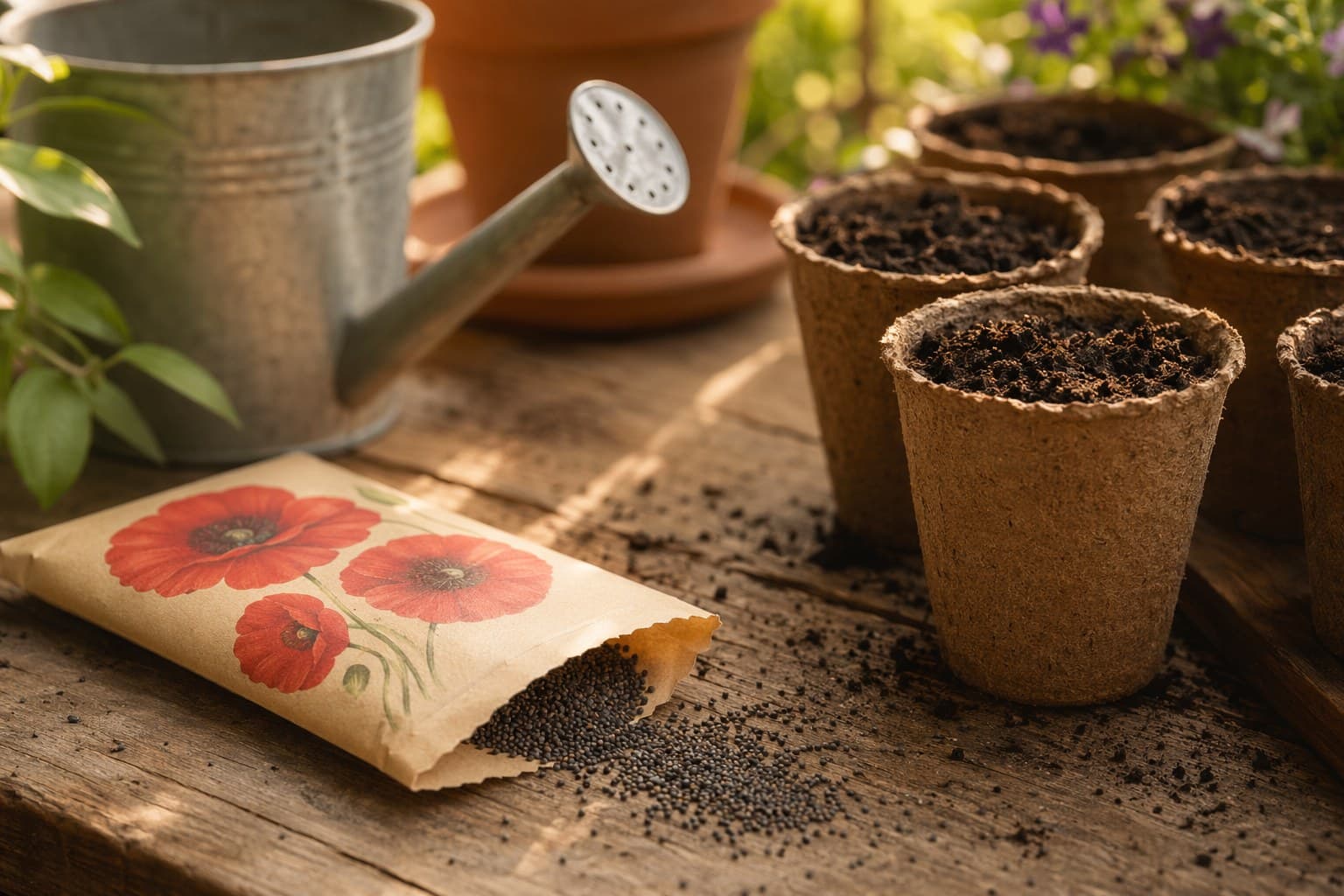
The red poppy is the traditional flower of remembrance, rooted in the WWI poem "In Flanders Fields," and it makes a perfect kid project. A simple wildflower and poppy seed packet collection and a few biodegradable seed-starting pots are all you need. Plant them on May 25 or 26 and the timing works out beautifully — by mid-to-late summer you have blooms, and the connection between planting now and remembering later becomes something your child watches unfold over weeks.
We pair planting with a short ritual: as we tuck the seeds in, each person says one thing they are grateful to be safe enough to do — ride bikes, go to the library, sleep without worry. It reframes "freedom," which is abstract, into specific, child-sized things they actually value. Gardening with kids has a slow, grounding quality that suits this week; if planting catches on, our broader notes in holiday and seasonal crafts for kids year-round can help you carry the seasonal-ritual habit into the rest of the year.
Activity 5: Visit a Memorial or Community Event
Best for all ages, with adjustments. Many towns hold Memorial Day ceremonies, parades, or flag-placing volunteer events, often on the Saturday or Sunday before the holiday — squarely in that May 25 and 26 window. Check your city's parks department or local veterans' post.
For toddlers, a quick stop at a local memorial or a war monument in a park is plenty: look at it, touch it, read a name or two aloud, and head out before anyone melts down. School-age children can handle a full ceremony, a moment of silence, or volunteering at a flag-placing event where they help set hundreds of small flags at a veterans' cemetery. That last one is genuinely moving to do as a family, and most events welcome kids with adult supervision.
A practical tip from experience: scout the timing and your exit. Ceremonies have slow stretches that test small attention spans, and the lesson is lost if it ends in a tantrum. Arrive a little late, leave a little early if you must, and protect the meaning by not overstaying.
Activity 6: Turn Gratitude Into a Service Habit
Best for ages 5 and up. Memorial Day week is a natural launchpad for service that does not end on Monday. Pick one ongoing or repeatable act so gratitude becomes a verb in your house, not a once-a-year event.
A kid-friendly volunteer activity guide for families can spark ideas your children get to choose from — and that sense of choosing is what builds ownership. Ideas that work for elementary-age kids include writing to a deployed pen pal through a verified program, raking leaves or shoveling for an older veteran neighbor, or running a small lemonade stand and donating the proceeds to a veterans' charity.
The cooperative, everyone-pitches-in spirit of service has a lot in common with the way the right games teach teamwork; if you want to extend the "we are on the same side" feeling indoors, our guide to cooperative games where everyone wins is a good companion. And if your service act takes you up and down the block — checking on neighbors, delivering cards by hand — the prompts in our neighborhood walk activities for kids turn the errand itself into part of the adventure.
A Simple May 25–26 Plan You Can Actually Follow
You do not need all six activities. Overpacking the week is the fastest way to drain the meaning out of it. Here is the realistic version we use, scaled by age.
Toddlers and preschoolers (ages 2–4): Pick one making activity (thank-you cards or a handprint flag) plus a five-minute visit to a local memorial. That is a complete, meaningful Memorial Day for a little one.
Early elementary (ages 5–7): Make and deliver thank-you cards, plant poppy seeds with the gratitude ritual, and attend part of a community ceremony or flag-placing event.
Older kids (ages 8+): Lead the care-package project from list to packed box, attend a full ceremony, and commit to one ongoing service act that continues past the holiday.
The connective tissue across all ages is the same: a clear, honest "why" up front, one finishable act of care, and a quiet moment of remembrance. Everything else — the cookout, the pool, the relatives — can carry on around it.
Why This Matters More Than the Cookout
Here is what I have learned doing this for a few years now. Children do not build empathy from lectures about gratitude. They build it from doing gratitude — addressing an envelope to a stranger, pressing a flag into the ground at a grave, watching a poppy they planted finally bloom in July and remembering, without being prompted, why it is there.
Memorial Day gives us a rare, ready-made occasion to practice that with our kids. The sacrifice the day honors is real and heavy, and we do not have to hand children the full weight of it. We just have to hand them a small, true way to say thank you, and then get out of the way while they mean it.
This year, before the grill goes on, give your kids one real thing to do. The hot dogs will still be there. So, hopefully, will the lesson.
Frequently Asked Questions
- How do I explain Memorial Day to young children without it being too heavy?
- Keep it concrete and honest at their level. For toddlers and preschoolers, something like 'Today we say thank you to people who were very brave and helped keep others safe, and some of them did not get to come home' is enough. You do not need to explain war in detail. For school-age kids, you can talk about specific service members, read an age-appropriate picture book, or visit a local memorial and read the names together. Follow their questions rather than front-loading information — children tell you how much they are ready for by what they ask.
- What is the difference between Memorial Day and Veterans Day, and should I tell my kids?
- Yes, it is worth a short, clear distinction. Memorial Day, the last Monday in May, honors service members who died while serving. Veterans Day, November 11, thanks all who have served, especially those still living. A simple way to put it for kids: Memorial Day is for remembering, Veterans Day is for thanking the people we can still hug. Getting this right matters because thanking a living veteran 'for their sacrifice' on Memorial Day can land wrong — the day is about those who did not return.
- What service activities are realistic for a long weekend with little kids?
- Pick one small, finishable project rather than a packed itinerary. Writing and decorating a few thank-you cards for a local VA or assembling one care package box is plenty for preschoolers. School-age children can plant flowers at a memorial, help sort donations, or join a community flag-placing event for an hour. The goal is a single genuine act of care your child can see through from start to finish, not a checklist. A short, real experience beats a long, rushed one every time.
Enjoying this article?
Get more ideas like this delivered to your inbox every week.