Spring Cleaning Projects Kids Can Help With (Montessori-Inspired)
Turn spring cleaning into hands-on practical life learning. Montessori-inspired, age-appropriate projects that build real responsibility — plus the child-sized tools that make it work.
By The Slow Childhood
Spring cleaning does not have to be the weekend you banish the kids to the backyard so you can finally get something done. In a Montessori home, it is the opposite: the cleaning is the curriculum. When a four-year-old wipes down a shelf or a toddler sweeps crumbs into a dustpan, they are not slowing you down (well, a little). They are building concentration, coordination, sequencing, and a genuine sense that they belong to and care for this household. Maria Montessori called these tasks "practical life," and they are arguably the most underrated learning a young child can do.
The trick is to stop thinking of spring cleaning as one giant adult project and start seeing it as a collection of small, concrete, repeatable jobs — each one matched to what your child can actually accomplish. Below are the projects that work, organized roughly from youngest to oldest, plus the handful of real tools that make the difference between a frustrated meltdown and a child who asks to do it again tomorrow.
Why Cleaning Is Real Learning (Not Just Free Labor)
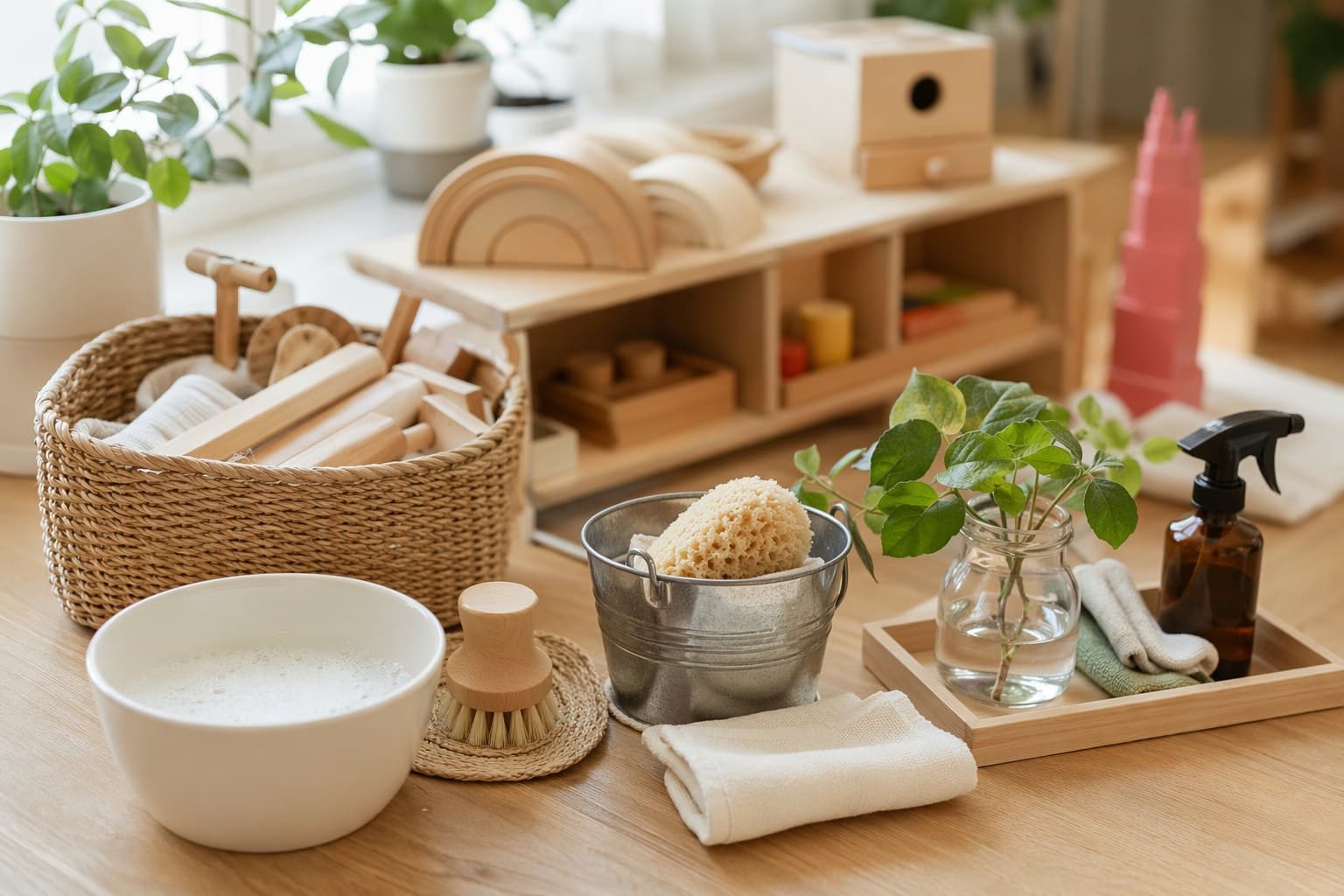
There is solid reasoning behind the Montessori emphasis on practical life. Tasks like sweeping, wiping, and sorting have a built-in beginning, middle, and end, which teaches sequencing. They demand the same pincer grip and crossing-the-midline movements that later support handwriting. And because the results are visible — the table is clean, the crumbs are gone — they give a young child the deeply satisfying feedback that effort changes the world.
There is also a longevity argument worth knowing. A well-known longitudinal study from the University of Minnesota (the work of Marty Rossmann) found that the strongest childhood predictor of young-adult success — in career, relationships, and self-sufficiency — was whether a person had begun doing chores around ages three or four, rather than waiting until the teen years. Early, low-stakes participation matters more than the quality of any single scrub.
So when you involve your child in spring cleaning, you are not handing off drudgery. You are offering one of the most developmentally rich activities available, and it happens to be free. If you want the broader developmental map, our guide to Montessori practical life activities by age lays out what to expect from twelve months through six years.
Toddlers (18 Months to 3 Years): Wiping, Carrying, and Spray Bottles
Toddlers are in what Montessori called the sensitive period for order and movement, which is why a two-year-old will happily wipe the same patch of floor eleven times. Lean into it.
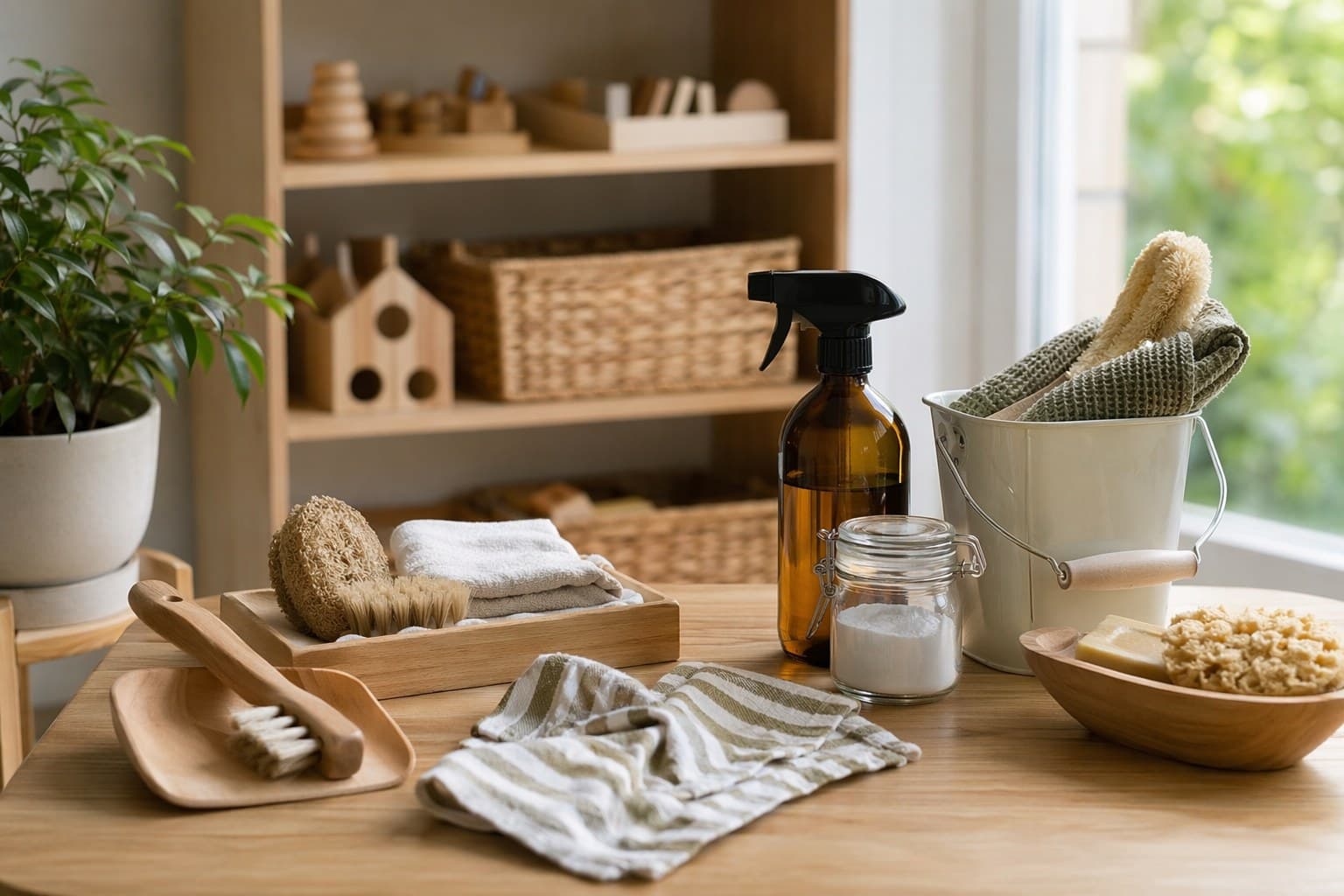
Wiping surfaces. Give your toddler a small, damp cotton cloth and a low table, a windowsill, or the front of a cabinet. Show them the motion once — slow, exaggerated, no narration — then let them go. A set of plain cotton cleaning cloths sized for small hands is one of the best three-dollar investments you will make.
Spray and wipe. Around two and a half, most toddlers can manage a spritz from a child-friendly spray bottle filled with plain water (skip the cleaners at this age). The two-handed squeeze is a fantastic hand-strengthening exercise. Look for child-safe spray bottles with an easy trigger; the stiff adult ones will defeat little fingers and end the activity before it starts.
Carrying and emptying. Toddlers love transporting things. Let them carry a small basket of dust cloths from room to room, empty a wastebasket into the bin, or ferry sorted laundry. The carrying itself builds balance and core strength.
Keep these sessions to ten or fifteen minutes. The goal is not a clean windowsill; it is the child's experience of focused, purposeful work.
Preschoolers (3 to 5 Years): Sweeping, Sorting, and Dusting
By three, children are ready for tools that do more and tasks with more steps.
Sweeping. A short broom and a child-sized dustpan and brush set — the Melissa and Doug set is a sturdy, well-loved option — turns crumb cleanup into a daily ritual. To make it concrete, put a small square of painter's tape on the floor as a "target" where the dirt should be swept. The visible goal gives the task structure and a clear control of error.
Dusting shelves. Hand your preschooler a microfiber dust mop, like the Casabella, for baseboards and floors, or a dry cloth for shelves at their height. Dusting is a wonderful left-to-right, top-to-bottom sequencing lesson.
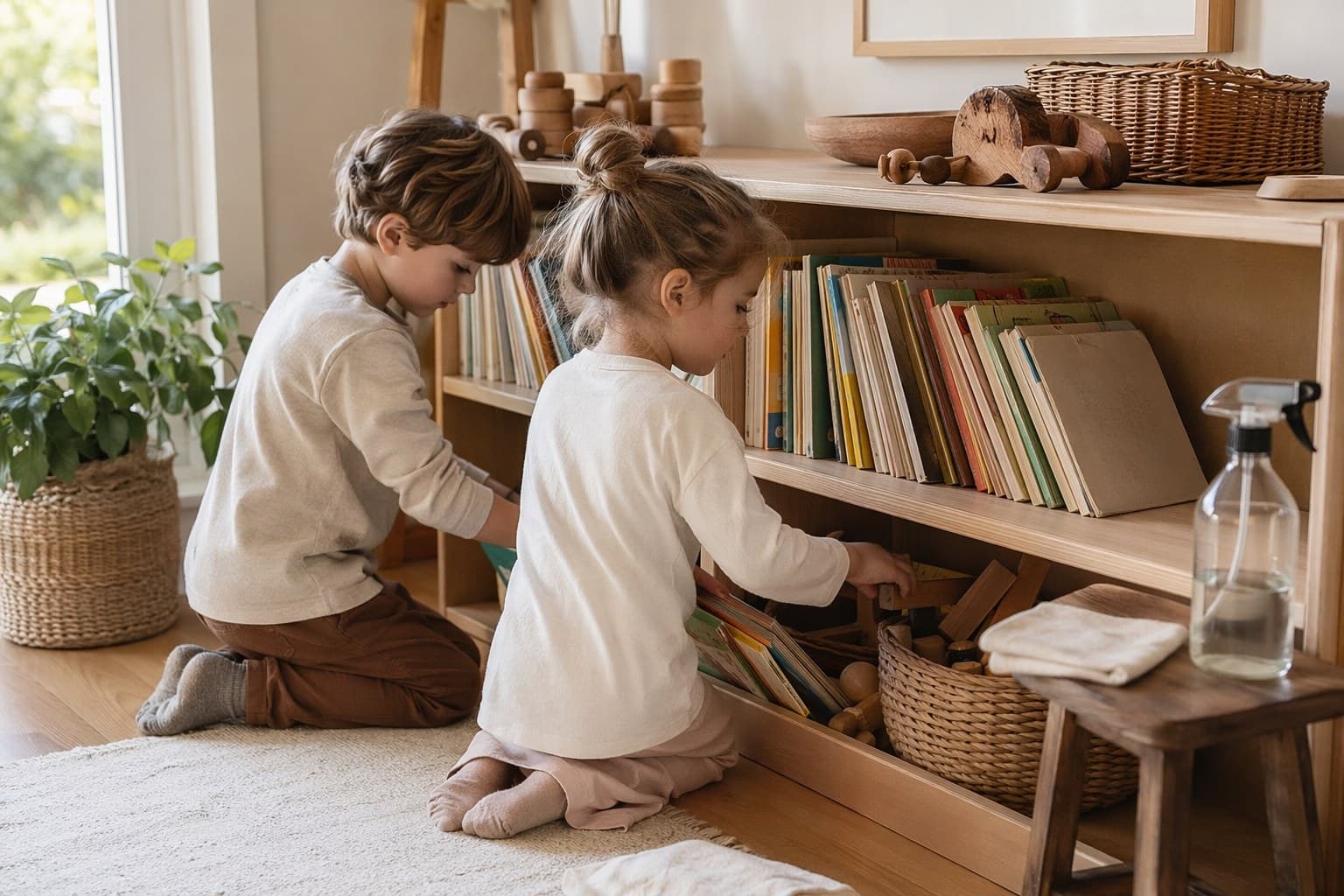
Sorting belongings. Spring is the natural moment to thin out the toy shelf and the bookcase. Sit with your child and sort into three baskets: keep, fix or wash, and pass on. Four-year-olds are remarkably capable of deciding what they have outgrown when you frame it as making room for a younger friend rather than "getting rid of" treasures. This dovetails neatly with the broader rhythm of age-appropriate chores for kids, where contribution becomes a normal part of belonging to a family.
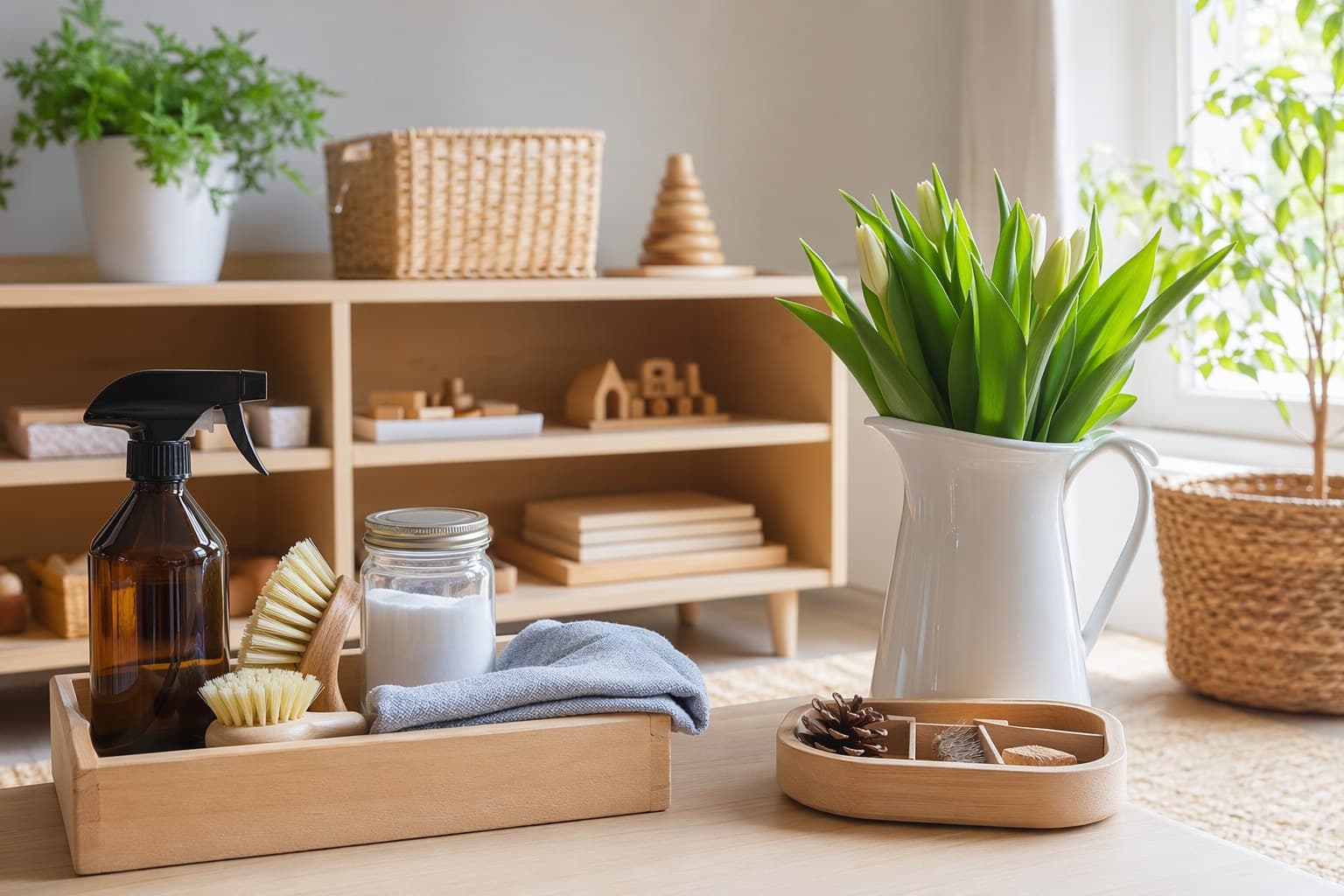
This is also the age to introduce wooden-handled brushes for scrubbing — a small vegetable brush for washing potatoes, a nail brush for hands, a bottle brush for cups. Real tools that feel substantial communicate that the work is real, too.
Early Elementary (5 to 7 Years): Polishing, Washing, and Owning a Zone
Once a child is five or six, they can carry a task from start to finish with minimal help, and they take real pride in a job that is clearly "theirs."
Wood polishing. Polishing a wooden table or chair with a soft cloth and a dab of beeswax is a classic Montessori work — quiet, repetitive, and visibly rewarding. The transformation from dull to gleaming is irresistible feedback.
Window washing. With a spray bottle of water and a squeegee or dry cloth, a six-year-old can do a genuinely good job on lower windows and glass doors.
Owning a zone. Give your child responsibility for one small area for the whole spring-cleaning push — the entryway shoe bench, the bathroom sink, their own bookshelf. Ownership of a defined space builds accountability far better than a scattered list of one-off requests. If you are reorganizing a play or learning area at the same time, our budget homeschool room setup ideas pair well with this and keep everything at a child-accessible height.
How to Set It Up So It Actually Works
The single biggest factor in whether kids help is accessibility. A broom propped in a closet they cannot open might as well not exist.
- Store tools low and visible. A hook at the child's height for the broom and dustpan, a basket of cloths on a bottom shelf, the spray bottle within reach.
- Demonstrate slowly, then go quiet. Show the whole task once with exaggerated, wordless movements. Resist correcting mid-task; let the work teach.
- Prepare for spills. A sponge or cloth that lives with the activity means the child cleans up their own mess — which is itself part of the lesson.
- Lower your standard, on purpose. A streaky window cleaned by a proud six-year-old is a win. Redoing it in front of them is a quiet message that their work does not count.
- Make it rhythmic, not a one-off event. Ten minutes of "everyone tidies their zone" most days beats one exhausting marathon Saturday.
A Simple Two-Week Spring Cleaning Plan for Families
You do not need to do everything at once. Spread it across a couple of weeks so each child can repeat and master a few jobs.
- Days 1 to 3: Toy and book sorting (keep, wash, pass on). Everyone participates at their level.
- Days 4 to 6: Dusting and wiping — shelves, sills, baseboards, low cabinet fronts.
- Days 7 to 9: Floors — sweeping with the dustpan, then a damp mop for older kids.
- Days 10 to 12: Glass and wood — windows, mirrors, polishing the table.
- Days 13 to 14: Reset and celebrate. Arrange the freshened shelves together and admire the work as a team.
Keep each day short. The accumulation across two weeks is what gets the house clean; the daily ten minutes is what builds the child.
Frequently Asked Questions
What if my child does a "bad" job? Let it stand. The point of practical life is the child's development, not a magazine-ready home. A crooked, smeared, half-swept result that the child completed independently is worth more than a perfect one you took over. Quietly model better technique another day; do not redo their work in front of them.
Should I pay or reward my child for spring cleaning? Generally no, at least not for everyday contribution. Montessori (and a good deal of motivation research) favors framing household care as a normal part of belonging to a family rather than a paid transaction. Constant rewards can actually erode a young child's natural drive to participate. Save any allowance conversation for separate, optional jobs.
My toddler just makes more mess. Is it still worth it? Almost always, yes. In the toddler years you are investing in the habit and the brain wiring, not in efficiency. The child who "helps" badly at two is the child who genuinely contributes at six. Build in a little extra time, keep a cloth handy, and treat the mess as part of the curriculum.
The Real Payoff
The freshly dusted shelves are nice. But the lasting result of inviting your kids into spring cleaning is a child who sees themselves as capable, contributing, and at home in their own home. Hand them a real broom, show them once, and step back. You are not just getting the house ready for spring — you are raising someone who knows how to take care of a space, and a person, including themselves.
Frequently Asked Questions
- What age can kids start helping with spring cleaning?
- Children can begin contributing as early as 12 to 18 months with simple tasks like wiping a low table, carrying a cloth to a basket, or putting toys away. The two-to-four range is the sweet spot — toddlers and preschoolers are intrinsically driven to do real work. By age five or six, most children can dust shelves, sort belongings, and polish wood with light supervision. Match the task to the child rather than waiting for a magic age.
- How do I get my child to actually want to help clean?
- Lead with the Montessori idea that cleaning is meaningful contribution, not punishment. Offer real, child-sized tools instead of plastic pretend ones, demonstrate each task slowly and without lecturing, then step back and let them work imperfectly. Keep sessions short, focus on the process rather than a spotless result, and avoid sticker charts that turn intrinsic motivation into a transaction.
- Are child-sized cleaning tools worth buying?
- Yes, for tools the child uses regularly. A short broom, a small dustpan and brush, and a spray bottle sized for small hands dramatically increase success and willingness. You do not need a full set — start with two or three quality items, store them where your child can reach them, and add more only as new tasks come up. Real tools that work build competence faster than toy versions that frustrate.
Enjoying this article?
Get more ideas like this delivered to your inbox every week.