Transition from Spring to Summer Routine: A Planning Template
The shift from structured school to open summer is jarring for most kids. This planning template helps you build a summer rhythm that balances freedom and structure — with a week-by-week transition plan, sample daily flow, and printable-friendly framework.
By The Slow Childhood

The last week of every school year has the same emotional weather in our house: a mix of relief, restlessness, and a strange undercurrent of dread. The kids are done — really done — with worksheets and morning baskets. But I know from experience that the wide-open calendar they are dreaming about will, by about day four, curdle into squabbling and the sentence every parent fears: "There's nothing to do."
The problem is not summer itself. The problem is the cliff. Most families go from a tightly structured Tuesday in May straight into a structureless Monday in June, and children — who thrive on predictability far more than they will ever admit — feel that drop in the ground beneath them. Researchers who study routine and child behavior have found for years that predictable daily rhythms are linked to better emotional regulation and lower stress in children. Summer does not have to abandon that. It just needs a gentler version of it.
This guide is a transition template. Not a rigid hour-by-hour schedule, but a framework for easing from your spring rhythm into a summer one over a couple of weeks, so the change feels like a slope instead of a cliff.
Why the Abrupt Switch Backfires
Think about how the adult version of this goes. You would not work a demanding job until 5:00 p.m. on Friday and then expect to feel relaxed and purposeful by 8:00 a.m. Saturday. You need a wind-down. Children need one even more, because they have less ability to self-direct and fewer internal tools to fill empty time productively.
When the structure vanishes overnight, three things tend to happen. First, sleep falls apart — bedtimes drift later, wake times get erratic, and overtired kids are short-fused kids. Second, screen time fills the vacuum, because a tablet is the path of least resistance for everyone. Third, the sibling friction climbs, because unstructured time with no shared anchor is a recipe for territorial disputes.
A transition period heads all three off. You keep sleep relatively stable, you establish screen boundaries before the habit forms, and you give the day enough shape that kids are not perpetually negotiating what happens next.
The Two-Week Transition Template
Here is the core of the framework. Rather than flipping a switch, you dial structure down gradually across two weeks — typically the last week of school and the first week of summer. The goal is to land softly in your summer rhythm rather than free-fall into it.
Week One: Loosen the Afternoon
In the final school week, keep your mornings exactly as they are. Mornings are where predictability matters most, and protecting them keeps the whole day from unraveling. But start letting the afternoons breathe. Drop the afternoon academic block entirely. Replace it with a single anchor activity — a nature walk, a baking project, a library trip — and then leave the rest open. This teaches kids how to handle a chunk of unstructured time while the morning still provides a familiar foundation.
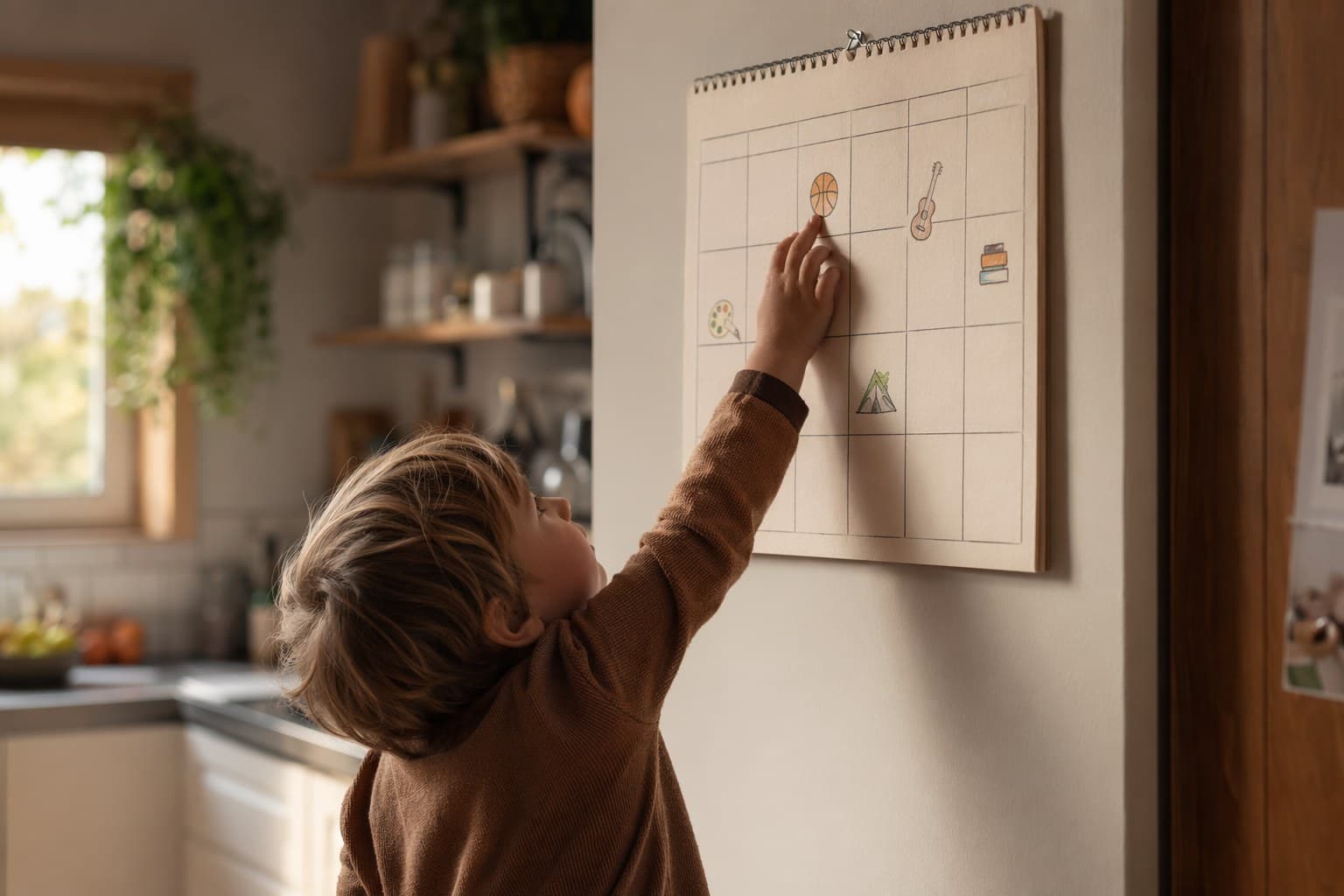
This is also the week to set up your physical systems. A simple magnetic dry-erase wall whiteboard by the kitchen becomes the family's daily anchor — each morning you sketch out the day's shape together. For younger children who cannot yet read a written plan, a set of picture-based routine chart cards lets them see the sequence of the day and move a marker as they go.
Week Two: Shift the Whole Day
Now that school is officially out, move the morning anchor too. Replace academic mornings with what I call a "morning launch" — a short, predictable opening sequence that signals the day has begun without the weight of formal lessons. Ours is breakfast, beds made, fifteen minutes of reading, and then a quick family huddle at the whiteboard to look at the day. The entire launch takes under an hour, but it does the psychological work of starting the day on purpose.
By the end of week two, you have arrived: a summer rhythm that has shape but not rigidity. If you already have a homeschool daily schedule that works for you, think of the summer version as that same skeleton with most of the academic muscle removed and a lot more outdoor and free-play tissue added.
The Anatomy of a Good Summer Day
A summer rhythm only needs four blocks. You can stretch or compress them, you can reorder them, but if your day has these four anchors, it will hold together.
The morning launch. A predictable opening — wake, eat, tidy, a few minutes of reading or quiet activity. This replaces the jarring "wake up to nothing" that makes kids feel unmoored. Keep it short and the same every day so it becomes automatic.
The active block. Mid-morning, before the heat peaks in many regions, is the time for movement and the outdoors. Bike rides, the park, the sprinkler, a hike, gardening. This is the block that protects everyone's mood for the rest of the day. Tired-out bodies make calmer afternoons.
The quiet block. Every summer day needs an enforced low gear, usually right after lunch. Younger kids nap; older kids do "quiet time" — reading, puzzles, drawing, audiobooks in their rooms. This block is as much for the adults as the children, and it prevents the late-afternoon meltdown that comes from a day with no downshift. A simple visual countdown timer makes quiet time concrete for kids who cannot yet tell time — when the colored disc disappears, quiet time is over.
The free block. The afternoon stretch of genuinely unstructured time. This is where boredom does its quiet, important work, where kids invent games and build forts and figure out who they are when no one is directing them. Your job here is to be available but not to program it.

Handling the Screen Question Before It Handles You
The single biggest predictor of a relaxed summer versus a tense one is whether you set screen boundaries on day one or try to claw them back in July. Decide your rules in advance and make them part of the visible rhythm rather than a thing you renegotiate every afternoon when you are tired.
A approach that works well for many families: screens are not part of the morning at all, and they only become available in the free block after the day's "first this" items are done — outdoor time, some reading, and one creative or building activity. When the offline options are genuinely appealing, the tablet loses a lot of its gravitational pull. We keep a long list of screen-free alternatives taped inside a cabinet so that when the boredom hits, the answer is already written down and nobody has to invent it on the spot.
Building a grab-and-go boredom bin helps too — index cards with activity ideas, a deck of card games, art supplies, a magnifying glass and collection jars. The goal is to lower the activation energy for offline play so it is easier to reach for than a screen.
Sharing the Load: Responsibility in Summer
Summer is the ideal season to let kids carry more of the household. With school out, there is space to teach skills slowly — how to load a dishwasher properly, how to water the garden, how to make their own simple lunch. A lightweight reusable chore chart system keeps the expectations clear without turning into a nagging contest. Tie a couple of contributions to the morning launch so they become routine rather than special requests.
This is not about productivity for its own sake. Contributing to the family gives children a sense of competence and belonging that a summer of pure leisure never does, and it lightens the parental load just enough to make the long days sustainable.
Keeping the Whole Family on the Same Page
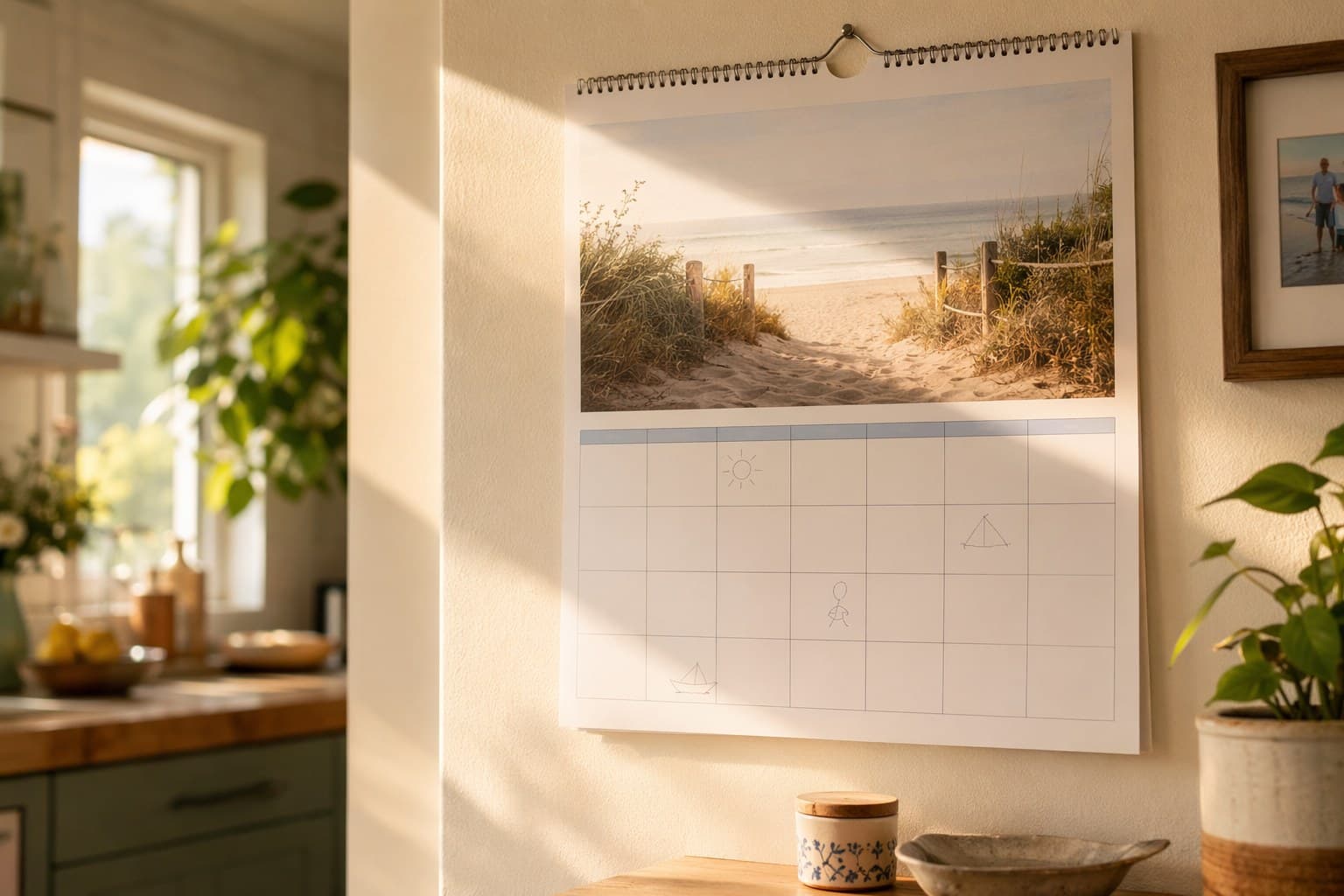
A transition only works if everyone understands it. Hold a short family planning meeting at the start of week two — fifteen minutes is plenty. Show the kids the new rhythm, let them name a few things they want to do over the summer, and capture the framework somewhere everyone can see it daily. A wall-mounted family calendar planner earns its keep here, holding the week's anchors, any camps or trips, and the running summer wish list in one glance-able place.
Involving children in the planning is not just nice; it is strategic. Kids defend rhythms they helped create. The same child who would resist a schedule imposed on them will champion one they had a hand in building. If you want to go deeper on the systems side of this, our full guide to planning and organizing your year maps out the record-keeping and physical setup that makes seasonal transitions like this one painless.
A Word on Holding It Loosely
I will end with the same reminder I give myself every June. The template is a tool, not a master. Some days the rhythm will dissolve because a thunderstorm rolled in, or grandparents arrived, or everyone slept until nine and nobody cared. That is summer working exactly as it should.
The point of the transition plan is not to control the season. It is to give your family a soft place to land so the freedom of summer feels like freedom rather than chaos. Build the shape, hold it loosely, and let the long, golden days do the rest.
Frequently Asked Questions
- When should we start transitioning to a summer routine?
- Start the transition about two weeks before your school year actually ends, not on the first official day of summer. Children handle change far better when it arrives gradually. Begin by loosening one part of the day — usually the afternoon — while keeping mornings predictable, then continue easing the structure week by week until you reach your summer rhythm.
- Do kids really need a summer schedule, or should summer be totally free?
- Most children do best with a loose rhythm rather than either a rigid schedule or total chaos. Completely unstructured days sound idyllic but often lead to boredom, sibling conflict, and the dreaded 'I'm bored' loop by mid-morning. A predictable shape to the day — a wake window, a morning anchor, an active block, and a quiet block — gives kids security while leaving generous room for free play.
- How do I keep summer from becoming all screens?
- Decide on your screen boundaries before summer starts and make them visible, not negotiated daily. Many families use a 'first this, then that' approach: outdoor time, reading, and one creative activity happen before any screen time is offered. Building a rotating bin of appealing, low-effort offline activities also removes the friction that pushes tired parents toward the tablet.
Enjoying this article?
Get more ideas like this delivered to your inbox every week.