Transition to Summer: Creating a Balanced Schedule Without Over-Programming
The pull every June is to fill the calendar with camps, classes, and color-coded blocks. This guide makes the case for the opposite — a summer schedule built on structured learning windows, generous unstructured play, and enough flexibility to honor your family's real rhythm.
By The Slow Childhood
Every June I have the same internal argument. One side of me wants summer to be wide open — late mornings, bare feet, kids disappearing into the yard for hours. The other side starts compulsively browsing camp registrations at 11 p.m., convinced that if I do not fill the weeks now, July will dissolve into screens and squabbling and the haunting feeling that we wasted the season. The over-programming side usually wins the argument in May. And every August, I regret it.
After enough summers of overcorrecting in both directions, I have landed on a conviction I will defend: the key to a good summer is not more activities. It is balance. A small amount of structured learning, a large amount of genuinely unstructured play, and enough flexibility that the plan bends around your family instead of the other way around. This guide is about how to build that balance on purpose, and how to resist the very real pressure to schedule the magic right out of the season.
The Over-Programming Trap
Over-programming rarely comes from a bad motive. It comes from love and a little fear. We want our kids to have rich summers, we worry about "summer slide" in academics, we dread the boredom complaints, and we are surrounded by other families whose calendars look like a NASA launch sequence. So we book the soccer camp and the art class and the swim lessons and the nature program, and then we spend the summer driving.
Here is what the research and my own experience both suggest is the cost. A frequently cited line of work from psychologist Peter Gray and others argues that the decades-long decline in children's free, unsupervised play has tracked alongside rising rates of childhood anxiety — and that self-directed play is precisely where kids learn to manage risk, resolve conflict, and entertain themselves. A 2018 American Academy of Pediatrics clinical report went as far as recommending that doctors "prescribe" play, noting that unstructured, child-led play builds executive function and reduces stress in ways that adult-directed activities do not.
In plain terms: the very thing we are tempted to schedule out of existence is the thing kids most need. A packed calendar can leave a child as depleted as an overworked adult, with the added problem that they never get to practice the irreplaceable skill of figuring out what to do with empty time.
The Three Ingredients of a Balanced Summer
A balanced summer is not a free-for-all. Total structurelessness backfires just as badly as over-programming — it produces the dreaded "I'm bored" loop by mid-morning and a slow drift toward screens. What works is a deliberate mix of three ingredients.
Structured learning windows. Short, predictable, low-pressure. This is the small dose of intentional learning that keeps skills warm without turning summer into school. Think 30 to 45 minutes, once a day.
Unstructured play. The bulk of the day. Open-ended, child-led, ideally outdoors and ideally a little boring at the edges so kids have to invent their way out of it.
Flexibility. The connective tissue. A rhythm loose enough to absorb a heat wave, a spontaneous pool invitation, or a morning when everyone sleeps until nine.
Get the proportions right — a little of the first, a lot of the second, all of it held loosely by the third — and the summer mostly runs itself.
Designing the Structured Learning Window
The learning window is where parents tend to over-engineer, so keep it almost embarrassingly simple. One block, in the morning, before the heat and before the day's plans scatter everyone. Twenty to forty-five minutes depending on age. The aim is maintenance and curiosity, not curriculum.
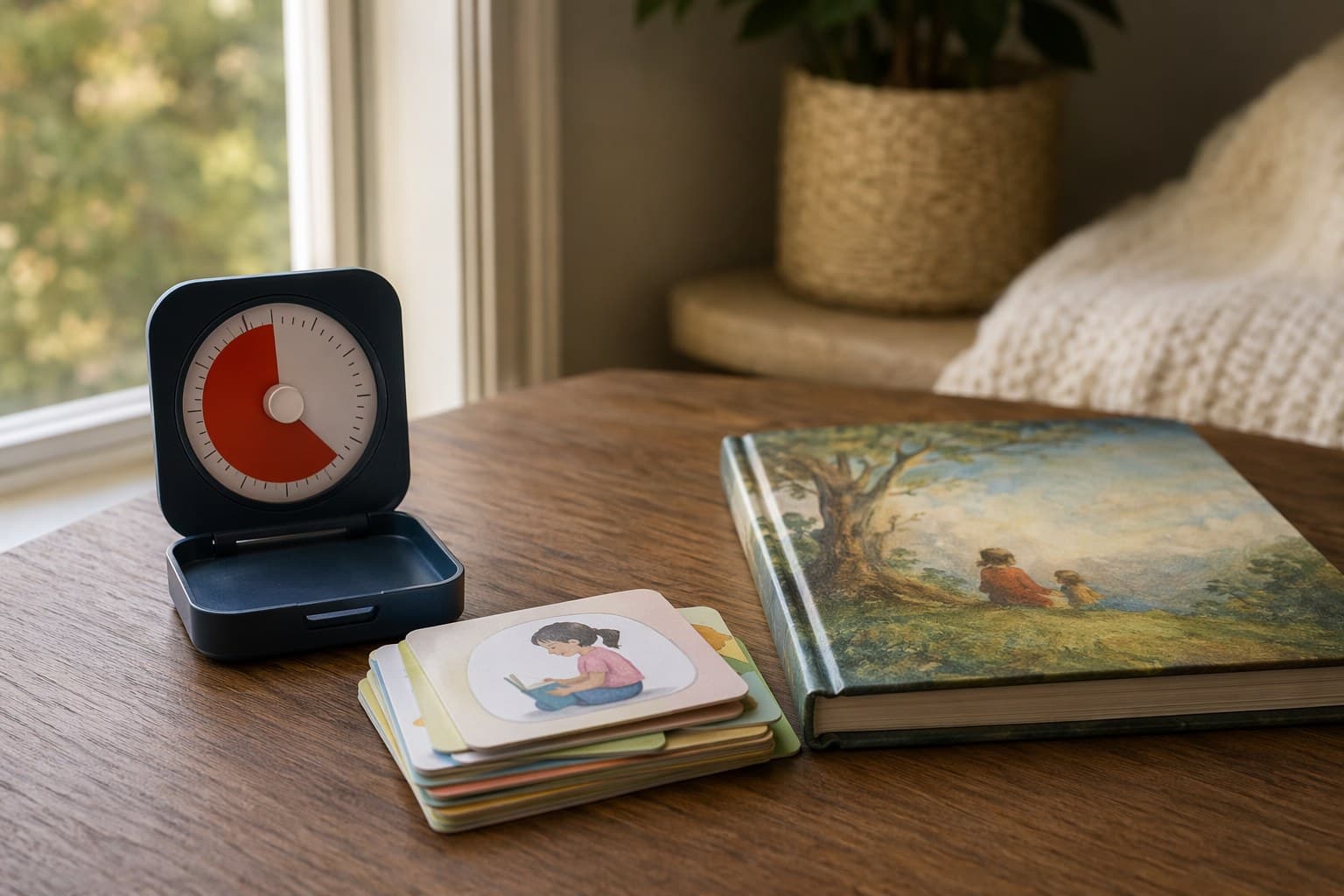
What goes in it can rotate: ten minutes of math facts, a chapter of a read-aloud, a page of copywork, a nature journal entry, a chess game, an audiobook with a drawing prompt. The content matters less than the consistency. To keep it from sprawling, I use a simple analog timer for focused activity sessions set for the window — when it dings, learning time is genuinely over, which protects both the kids' goodwill and my own. To kill the daily negotiation about what we do, we draw from a deck of printable activity rotation cards so the choice is made by the card, not by a tired parent at 9 a.m. If you want a deeper framework for this, our guide to building a homeschool daily schedule that actually works lays out the rhythm-over-clock approach that the summer window is really just a stripped-down version of.
A note on "summer slide": the panic is overblown. A short daily reading habit and some real-world math — measuring for a recipe, counting change, calculating innings — preserves far more than a packed worksheet regimen, and it does not cost you the season.
Protecting the Unstructured Hours
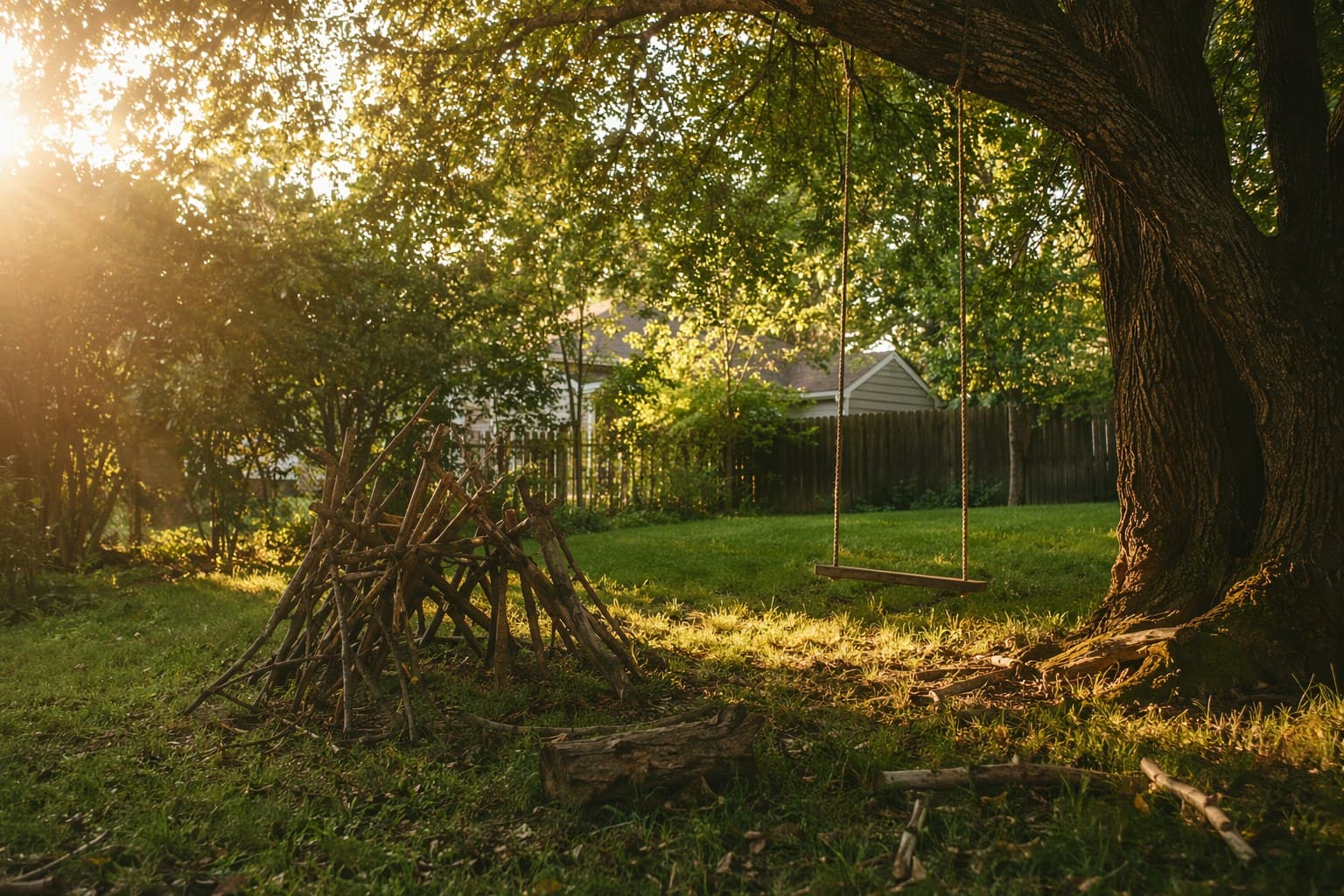
This is the part you defend rather than fill. After the learning window, the day should open up: an active outdoor block in the cooler morning hours, lunch, a quiet block, and then a long stretch of free afternoon. Your job in the free stretch is to be available, not to be the cruise director.
The hardest skill here is tolerating the boredom that precedes invention. When a child whines that there is nothing to do, the over-programmed instinct is to rush in with an activity. Resist it. Boredom is the uncomfortable doorway to imaginative play, and kids who are never bored never learn to walk through it.
Two things make the free hours easier to protect. First, a daily quiet block — usually right after lunch — that everyone observes. A quiet time visual timer makes the boundary concrete for kids who cannot yet read a clock: when the colored disc runs out, quiet time ends, and not before. This block resets everyone's nervous system and prevents the late-afternoon meltdown. Second, lowering the friction for offline play. We keep a running menu of screen-free alternatives taped inside a cabinet door, so the answer to "what can I do?" is already written down and nobody has to invent it on the spot. Set your screen boundary once, up front — ours is no screens until outdoor time, reading, and one creative activity are done — and you sidestep the daily renegotiation that pushes exhausted parents toward the tablet.
Building In Flexibility on Purpose
A balanced schedule that cannot bend is just a different kind of over-programming. Flexibility is not the absence of a plan; it is a plan with deliberate slack built in. A few ways to engineer it:
- Keep the proportions, not the clock. Plan the shape of the day — window, active block, quiet block, free block — but never assign hard times. "After breakfast" beats "9:15" every time.
- Leave more open weeks than booked weeks. Audit the summer at a glance. If camps and commitments outnumber open stretches, cut something.
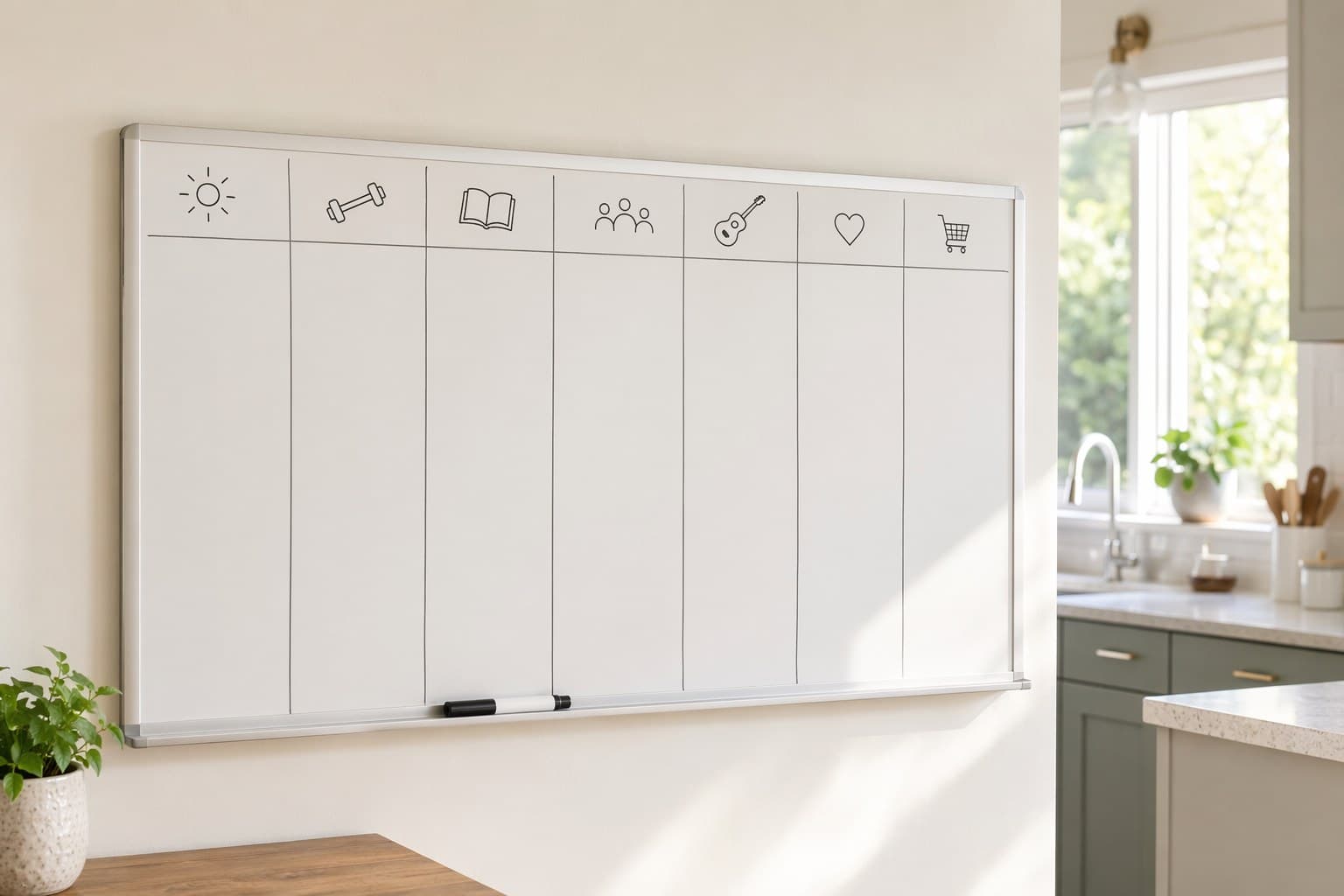
- Use a flexible, reusable template instead of a fixed one. A flexible weekly schedule template on a dry-erase board lets you redraw the week's anchors each Sunday without committing to anything in ink. A heat wave, a sick day, or a last-minute lake invitation just gets erased and redrawn.
- Have a default, not a vacuum. When the plan dissolves, the fallback is outdoor free play, not a scramble. A known default removes the panic that makes us reach for more structure.
Getting the Whole Family Onboard
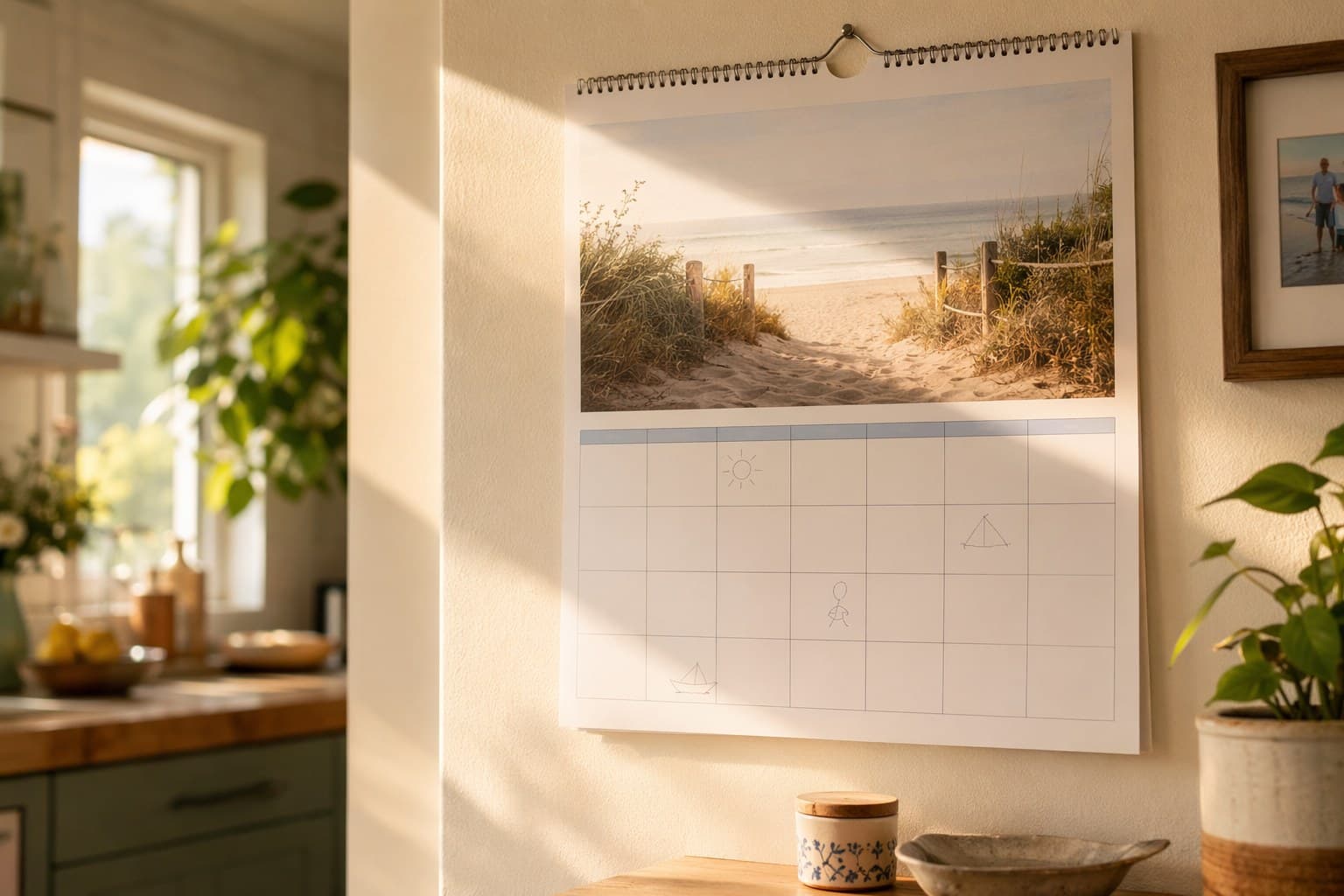
A balanced summer works best when it is shared rather than imposed. Hold a short family planning meeting in late May — fifteen minutes is plenty. Show the kids the loose shape of the days, let each person name two or three things they genuinely want to do over the summer, and capture it all somewhere visible. A wall-mounted family calendar planner holds the season's real commitments, the rotating wish list, and the weekly anchors in one glanceable place — and seeing how much white space remains is itself a quiet argument against over-booking.
Involving children is strategic, not just kind. Kids defend rhythms they helped build, and a wish list they wrote themselves means the open hours have a backlog of their own ideas waiting. If you want to extend this into a full system for the rest of the year, our planning and organization guide covers the record-keeping and physical setup that makes seasonal shifts painless. And if the jump from your spring routine feels abrupt, pair this with our spring-to-summer routine transition template for a gentler week-by-week ramp.
The Case for Doing Less
I will end with the reminder I tape to my own calendar each June. The most memorable parts of childhood summers are almost never the scheduled ones. They are the long, shapeless afternoons — the fort, the creek, the made-up game that lasted three days. Those things only grow in unscheduled soil.
Build the small structure that keeps the days from collapsing. Protect the large openness where the magic actually happens. Hold the whole thing loosely enough that the season can surprise you. Then put down the camp registration tab, and let summer be summer.
Frequently Asked Questions
- How much structure does a summer schedule actually need?
- Far less than most parents fear. For elementary-age kids, one short anchored learning window of 30 to 45 minutes in the morning plus one daily quiet block is plenty of structure to keep the days from unraveling. Everything else can be open. The goal is a predictable shape, not a packed timetable. If you find yourself penciling in three or more scheduled activities per day, you are likely over-programming and crowding out the unstructured time where the real summer happens.
- Is it bad to sign my child up for a lot of summer camps?
- One or two camps across a summer can be wonderful, especially if your child is genuinely excited about them. The problem starts when back-to-back camps mean a child never has more than a few free days in a row. Children need stretches of slow, unscheduled time to decompress, get bored, and generate their own play. A useful test: look at your calendar and make sure there are more open weeks than camp weeks, and that no week is fully booked dawn to dusk.
- Won't my kids just watch screens all day if I do not schedule them?
- Not if you set screen boundaries up front and make offline options easy to reach. Over-programming is often a defense against the screen fear, but the better fix is a clear rule — screens come only after outdoor time, reading, and one creative activity — paired with a visible menu of low-effort offline ideas. When the alternatives require no setup and the boundary is non-negotiable, unstructured time fills with play rather than tablets.
Enjoying this article?
Get more ideas like this delivered to your inbox every week.