Summer Bucket List Template: Planning 30 Screen-Free Activities Together
A simple template for building a 30-activity summer bucket list with your kids. The planning itself builds anticipation, gives the season structure, and keeps everyone engaged without screens.
By The Slow Childhood
Every June, the same thing happens in our house. School lets out, the calendar suddenly empties, and within about four days someone is lying on the floor announcing that they are bored and there is nothing to do. The long open summer that looked like a gift in May starts to feel like a logistics problem by mid-month. And the path of least resistance, every single time, is a screen.
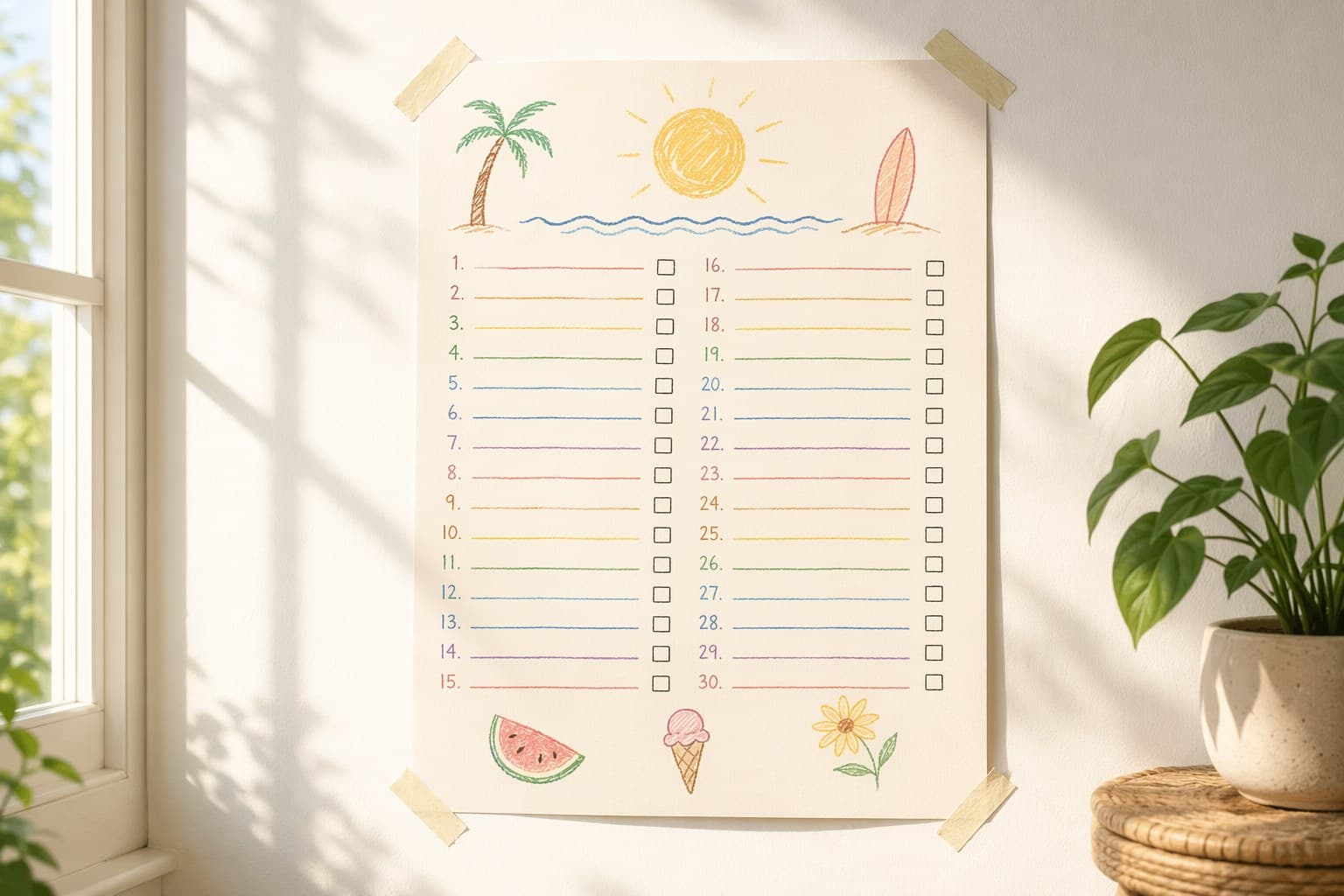
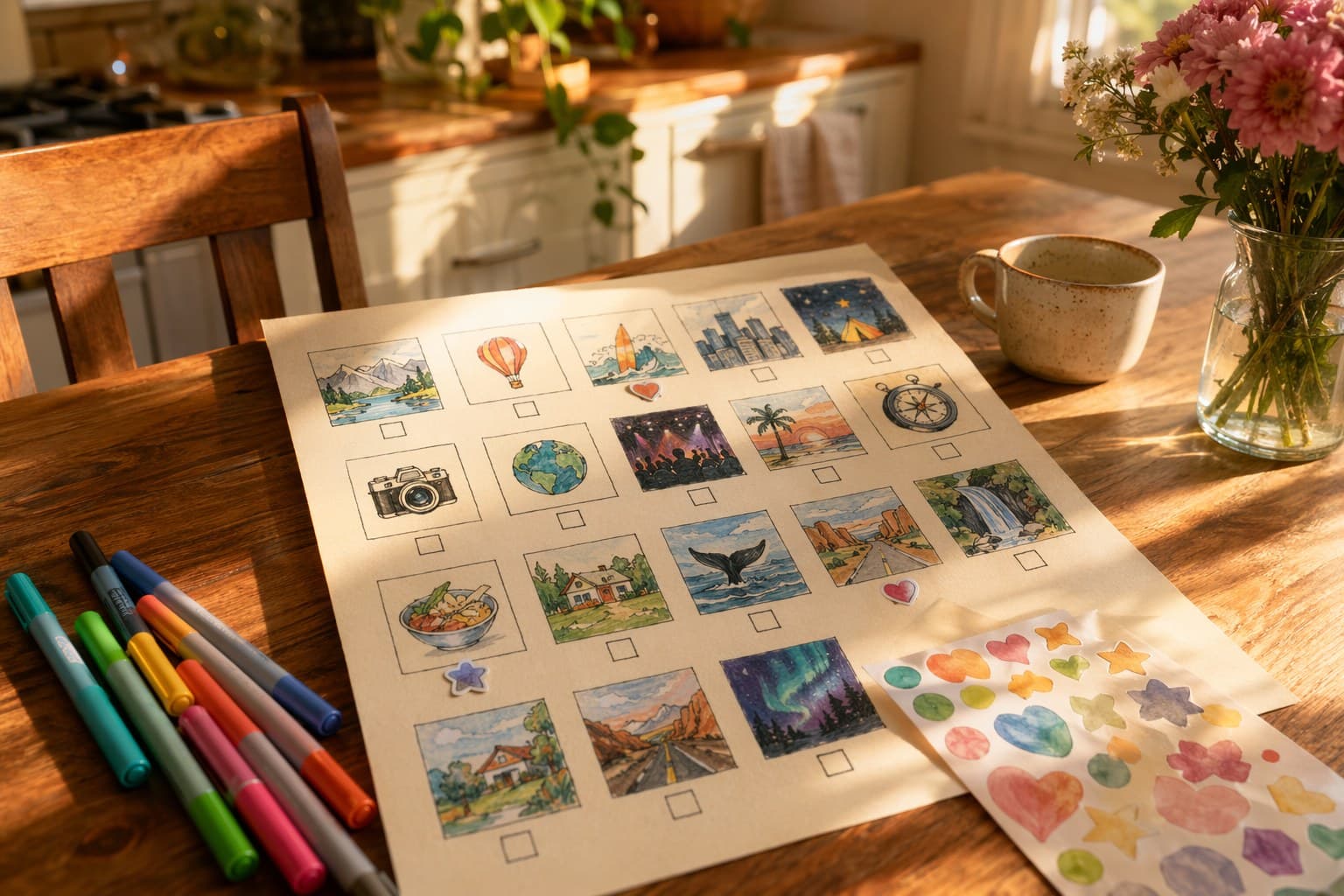
The fix that has worked for us, year after year, is not a packed camp schedule or a Pinterest-perfect activity calendar. It is a single sheet of poster board with 30 activities on it that the kids chose themselves. Not 80. Not a sprawling menu of possibilities. Exactly 30 things, numbered, with a checkbox next to each one. The number matters more than you would think, and so does the fact that the kids built it.
This is a guide to the planning itself, because the planning is where most of the value lives. The afternoon you spend brainstorming and writing the list together builds anticipation that carries through the whole season. It gives summer a quiet structure without turning it into a schedule. And it does something screens never do: it makes your kids the authors of their own summer.
Why 30 Is the Magic Number
Last summer we tried a longer list. We pulled ideas from our 80-activity screen-free summer roundup, wrote out something like 60 items, and felt very accomplished about it. By August the poster had become wallpaper. The kids stopped looking at it because the list was so long it felt like it had no end, and a goal with no end is not a goal at all. It is just decoration.
Thirty is different. Thirty fits comfortably on one poster in handwriting a six-year-old can read. It maps loosely to a summer that runs roughly ten to twelve weeks, which means two or three items a week with plenty of slow, empty days in between. Most importantly, 30 is finishable. When a list is finishable, checking off the last box becomes an event worth celebrating, and that finish line pulls the whole family forward all season.
There is a real psychological mechanism underneath this. A list that feels achievable triggers what motivation researchers call a goal-gradient effect: the closer you get to a defined endpoint, the harder you push toward it. An 80-item list never produces that feeling because the endpoint is functionally unreachable. A 30-item list produces it by the Fourth of July, when someone notices you are already a third of the way done and starts angling to knock out three more before the week is over.
The Planning Session: Where the Anticipation Begins
Set aside an hour, ideally on one of those rainy early-summer afternoons or the first weekend after school ends. Make it a small occasion. Put out a snack, clear the kitchen table, and tell the kids you are planning the whole summer together. The framing matters. This is not chores; this is the kids getting a vote over how their summer goes, which to a child is a genuinely thrilling amount of power.
Here is the structure that works for us.
Start with a wide-open brainstorm. No filtering, no "we can't afford that," no eye-rolling at the suggestion to sleep in the treehouse for a week. Write everything down. Give each kid a quota so the loudest child does not dominate: maybe eight ideas each for a two-kid family. A pad of paper or a simple activity checklist pad works perfectly for capturing the raw flood of ideas before you narrow them down.
Stock the brainstorm with prompts. Kids run dry after their first four obvious ideas, so have categories ready to spark more. We use a deck of summer activity cards as conversation starters, but you can just call out categories aloud: water things, food things, nighttime things, adventure things, making things, helping-the-neighborhood things. Each category usually shakes loose three or four new ideas.
Narrow to 30 together. This is the part where kids practice real decision-making. You will likely have 45 to 60 raw ideas. Go through them together and let each person advocate for their favorites. Combine duplicates, cut the genuinely impossible ones gently ("Disney's not in the budget this year, but a water-balloon battle absolutely is"), and keep negotiating until you land on 30 that everyone feels good about. The discussion itself is valuable; this is where kids learn that a good plan involves trade-offs.
For families who would rather not start from a blank page, a printable bucket list template gives you a ready-made grid of 30 numbered boxes to fill in. We have used both approaches. The blank poster feels more personal; the printable is faster and looks tidier on the wall. Either works as long as the kids fill in the actual activities.
Building a Balanced List: The 30-Activity Framework
A list of 30 random ideas tends to skew toward whatever the kids said first, which is usually five variations of "go swimming." A little balance keeps the summer from feeling repetitive and makes sure there is always something doable regardless of weather, budget, or energy level. Here is the rough mix we aim for.
Ten quick wins (10 to 30 minutes). These are the backbone of the list, the items you can knock out on an ordinary Tuesday with zero planning. Make homemade popsicles. Catch fireflies. Have a sidewalk-chalk afternoon. Read a chapter book outside in the shade. These exist so the list always has something achievable, even on a low-energy day, which keeps momentum alive.
Ten half-day adventures. A trip to a new playground, a berry-picking outing, a bike ride to the ice cream shop, a morning at the creek. These take a little planning but no major production. They are the meat of the list and the source of most of the summer's actual memories.
Five big-ticket experiences. The beach day, the camping trip, the visit to grandparents, the day at the lake. One or two of these per month is plenty. They anchor the summer and give the kids something to count down to.
Five connection or contribution items. Activities that point outward: leave painted rocks around the neighborhood, set up a lemonade stand and donate the money, write letters to a faraway cousin, help a neighbor weed their garden. These quietly teach that summer is not only about consuming fun but about being part of a community.
If you are stuck on ideas for the quick-win category especially, our roundup of screen-free activities for toddlers scales up surprisingly well for older kids too, and a rainy-day list of family board games makes a perfect bucket-list line item for the inevitable week of thunderstorms.
Make It Visible, Make It Tactile
A bucket list that lives in a notes app on a phone is a bucket list that will be forgotten by July. The whole point is to make it physical and impossible to ignore. Hang the poster somewhere central: the kitchen, the mudroom, the hallway everyone passes a dozen times a day. Visibility is what turns the list from a one-time planning exercise into a daily nudge.
The checking-off ritual is where a lot of the joy lives, and it is worth making it satisfying. Younger kids in particular respond enormously to a reward sticker sheet; let them slap a sticker onto each completed item rather than just drawing a checkmark. The tactile act of placing the sticker is a tiny celebration, and the slowly filling poster becomes a visible record of the summer accumulating in real time.
A few things that make the visible list work better:
- Number every item. Numbering creates the sense of a countable goal. "We've done 14 of 30" hits differently than "we've done a bunch."
- Leave the boxes generous. Big checkboxes are more satisfying to fill and easier for small hands.
- Add a couple of blank lines at the bottom. Inevitably a spontaneous great idea will come up in July. Letting kids add two or three items mid-summer keeps the list feeling alive rather than fixed.
- Resist re-doing the poster when it gets messy. The smudges, the misspellings, the sticker someone put on crooked: that is the texture of a real summer, and the kids are proud of it precisely because it is theirs.
Keeping Momentum Without Turning It Into a Chore
The risk with any structured plan is that it curdles into pressure. A bucket list is supposed to reduce the "I'm bored" friction and add anticipation, not become one more thing the family is failing to keep up with. A few guardrails keep it on the right side of that line.
Never schedule the list. The poster is a menu of possibilities to pull from when a day is open, not a calendar with due dates. Some weeks you will do three items; some weeks, none, because you spent five lazy afternoons in the hammock and that was perfect. The empty, unplanned hours are not a failure of the list. They are the whole reason a slow summer is worth protecting.
Let kids drive the pace. When someone glances at the poster and says "Can we do number 12 today?", that is the system working exactly as designed. The list gives them a starting point for their own initiative, which is the opposite of handing them a screen and the goal of the entire exercise.
Build in a midsummer check-in. Around the Fourth of July, take two minutes to count what you have finished. This is where the goal-gradient pull kicks in. Kids who realize they are halfway there with two months to go often get genuinely motivated to push toward the finish, and that motivation is theirs, not yours.
And when an item just is not going to happen, let it go cleanly. Maybe the camping trip got rained out and never rescheduled. Cross it off, shrug, and move on. The list serves the summer; the summer does not serve the list.
Celebrating the Finish
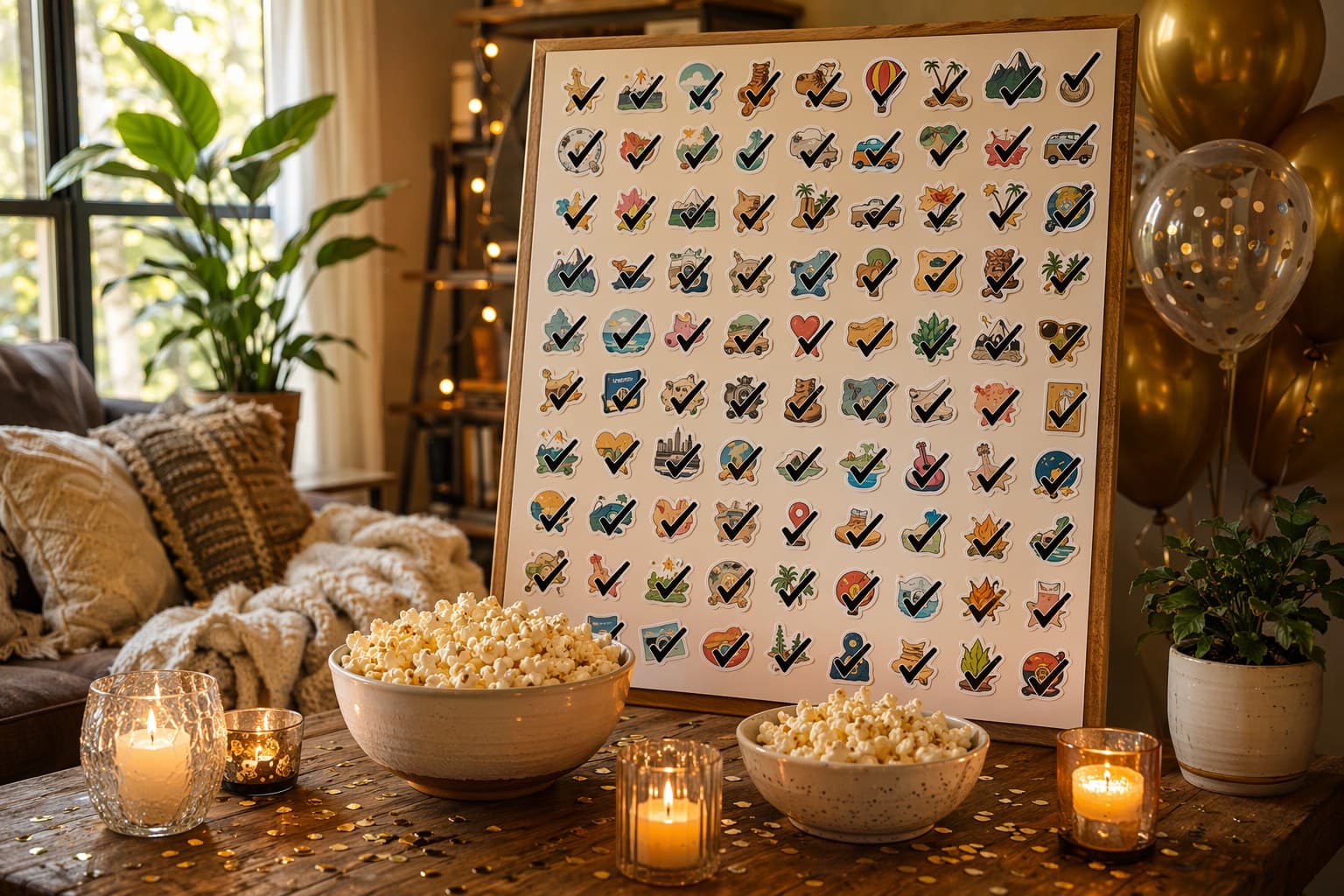
This is the part most families skip, and it is the part that makes the whole thing memorable enough that the kids will want to do it again next year. When you reach 30, or when summer ends with most boxes checked, mark it. Make it a real, small celebration. We do a backyard movie night with popcorn, the kids in charge of the snack menu, and we look back at the poster together and talk about which activities were the best.
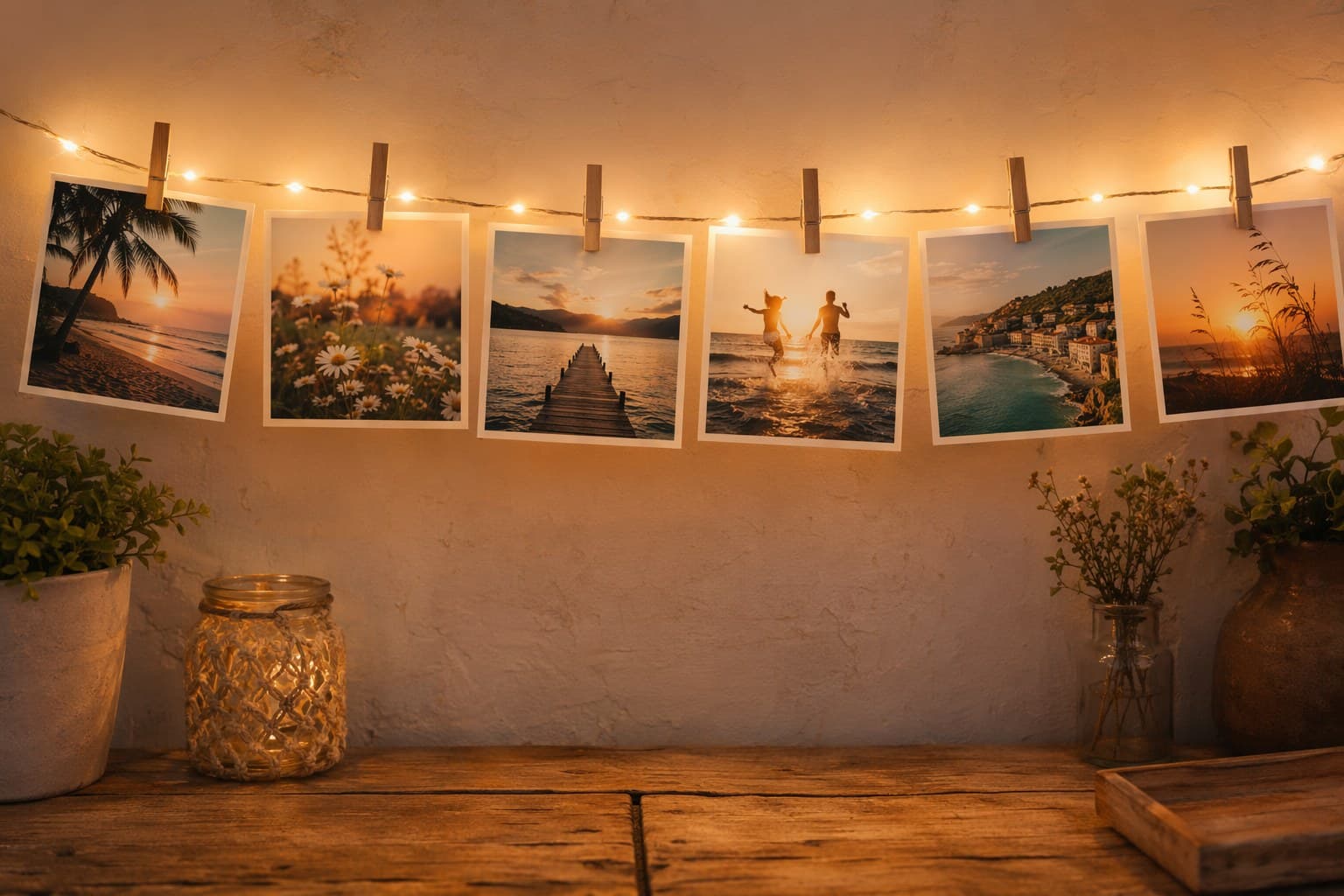
The piece that turns a finished checklist into a lasting memory is documentation. All summer, snap a quick photo at each completed activity, then near the end, print them. We string the printed photos along a set of photo display string lights clipped above the kitchen table, one image per completed item. Seeing the summer laid out as a glowing row of real moments, the popsicle-stained grins and the sandy beach day and the firefly jar, does something the poster alone cannot. It makes visible that the kids actually lived a full, rich season, and they did almost none of it on a screen.
That is the quiet magic of planning a 30-activity bucket list together. The list itself is almost beside the point. What you are really doing in that first planning hour is telling your kids that their summer matters enough to plan for, that their ideas count, and that the long open weeks ahead are full of possibility rather than boredom. You are trading the reflexive reach for a screen for a poster on the wall that says, in your child's own crooked handwriting, here are 30 things we are going to do together.
You will not do all of them perfectly. Some will get rained out, some will fall flat, and a few will become traditions you repeat for years. But you will have a summer with shape and anticipation and a finish line worth celebrating, and a row of photos to prove your family was right there in the middle of it, fully present, the whole time.
Grab the poster board. Hand out the markers. Let them dream up 30.
Frequently Asked Questions
- How many activities should be on a summer bucket list?
- Thirty is the number we keep coming back to. It is enough to cover a long summer with variety, but small enough that finishing the list feels genuinely achievable. A list of 80 ideas is a menu you graze from; a list of 30 is a shared goal you can actually complete and celebrate. If you have more than two kids and want everyone well represented, stretch to 35, but resist the urge to balloon past 40 or the list stops feeling like a finish line.
- What is the best way to plan a bucket list with kids so they stay invested?
- Let the kids do the brainstorming and let them write or draw the items themselves, even messily. Ownership is what drives investment. Give each child a quota of ideas to contribute, take everything seriously during the brainstorm, then narrow together. The single biggest predictor of whether a family finishes the list is whether the kids felt like authors of it rather than recipients of a chore chart their parents made.
- What if we do not finish all 30 activities by the end of summer?
- That is completely normal and not a failure. Roll the unfinished items into a short fall list, or simply note that you got to 22 of 30 and call it a great summer. The goal of the list is to add intention and anticipation to the season, not to create pressure. A bucket list that becomes a source of stress has defeated its own purpose. Celebrate what you did, not what you missed.
Enjoying this article?
Get more ideas like this delivered to your inbox every week.