Water Play Beyond Puddles: Creating Engaging Summer Water Stations
Move past the splash pad and design summer water stations that genuinely hold a child's attention. Learn how to set up transfer stations, sensory bins, and pouring zones that teach cause and effect and fine motor skills — with the few tools that make it work.
By The Slow Childhood
Every summer the splash pad and the inflatable pool get top billing, and every summer I watch the same thing happen: a burst of shrieking joy, then twenty minutes later a child standing in two inches of water looking faintly bored, asking what's next. There is nothing wrong with a splash pad. But the impression it leaves — that water play means cold water plus a body to get wet — sells the whole category short. Water is the single most engaging open-ended material a young child has access to, and the difference between a soggy afternoon and an hour of genuine, self-directed absorption almost always comes down to how the play is set up.
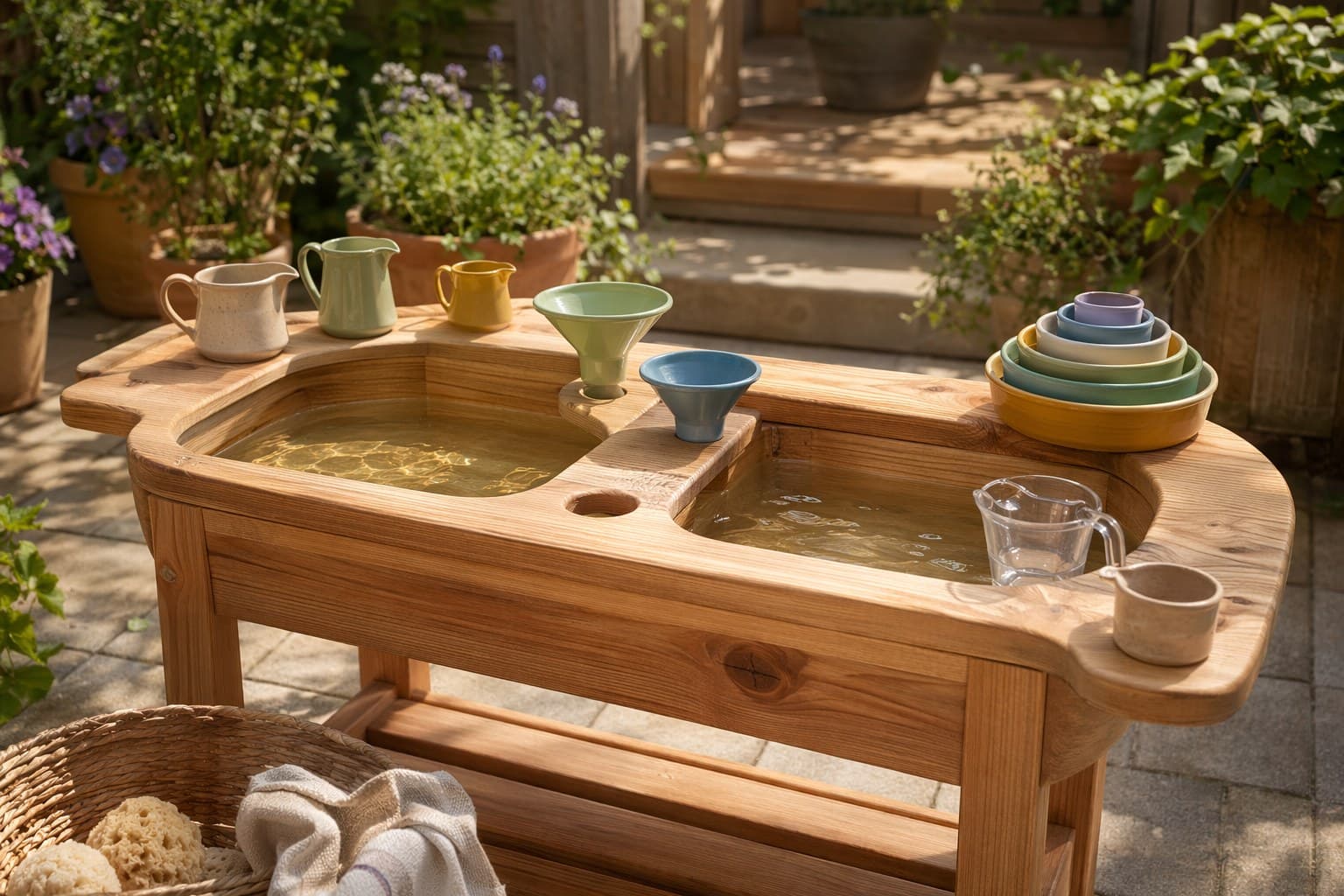
That is what a water station is. Not a toy, not an event, but a deliberately arranged invitation — a contained space, a few inches of water, and a thoughtfully chosen handful of tools that let a child pour, transfer, scoop, and experiment without anyone telling them how. Done well, it teaches cause and effect, builds fine motor strength, and produces the kind of quiet, focused play that is increasingly rare. Done well, it also costs almost nothing.
Why Stations Beat a Single Big Pool
A kiddie pool is a destination. You get in, you splash, and the activity is essentially complete the moment you're wet. A station is a workshop. The water is the medium, not the point, and that small reframe is what unlocks the long, absorbed play sessions parents are actually hoping for.
The developmental reason is something educators call the transporting and transforming schemas — the deep, repeated urges young children have to move materials from one place to another and to change their state. A child who fills a cup, carries it across the patio, pours it into a funnel, and watches it drain into a bottle is satisfying a genuine cognitive drive. Each repetition deepens an intuitive understanding of volume, flow, weight, and gravity. A pool offers almost none of this. A station offers nothing but.
The same principles that make indoor water play activities for toddlers so effective scale up beautifully for a summer patio: shallow water, lots of containers, zero instructions. You are simply trading the kitchen sink for the open air, where mess stops mattering entirely.
Station One: The Pouring and Transfer Bench
This is the workhorse, and the one I'd build first. The goal is a stable surface at the right height with two or more vessels and a generous set of tools for moving water between them.
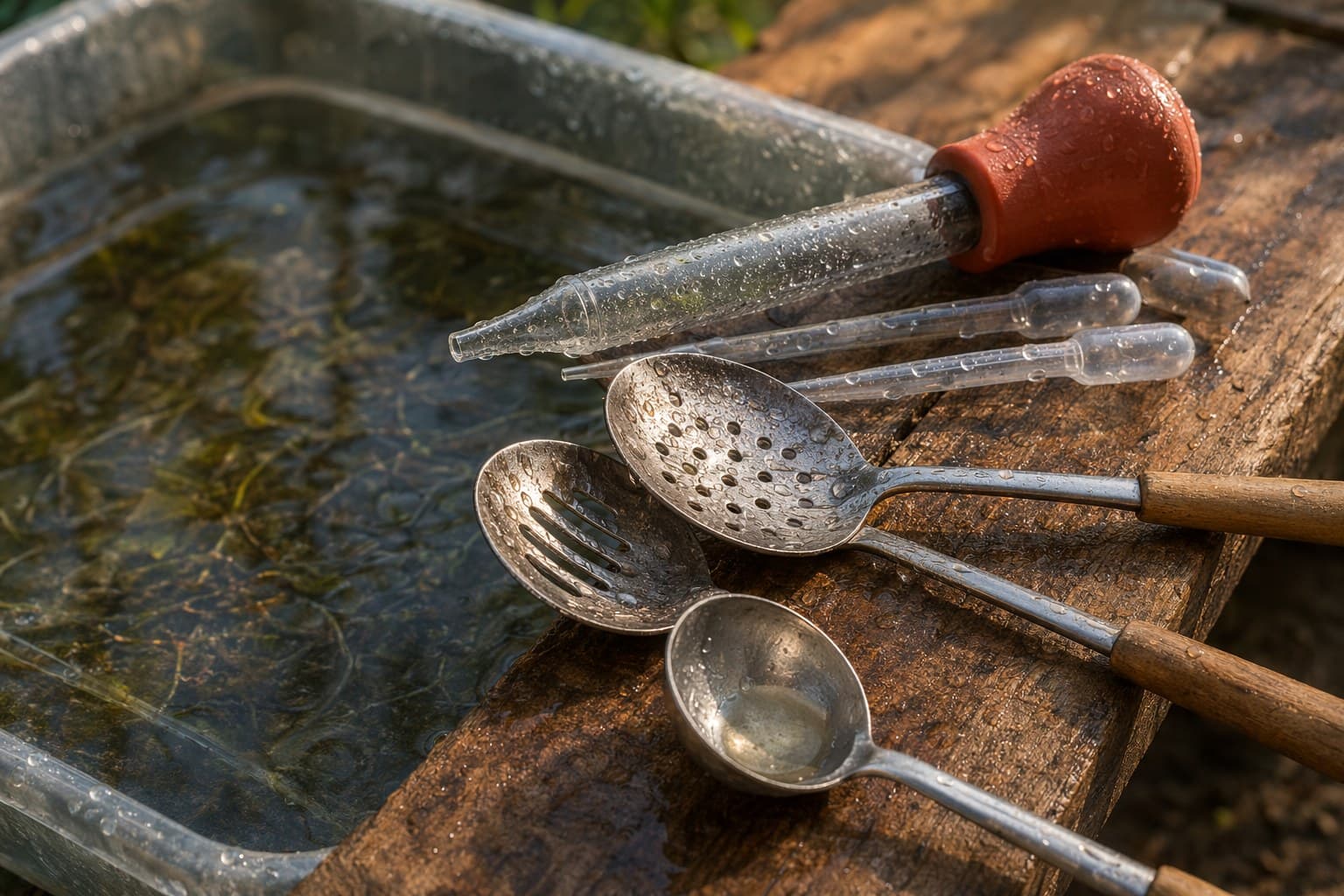
A dedicated large outdoor water table is the easiest foundation because it holds water at standing height and usually has a couple of basins built in, but two sturdy dishpans on a low table work just as well. The magic is in the tools. Stock it with a set of nesting cups and pouring containers in graduated sizes, then add the real attention-holders: a proper collection of scoops, funnels, and water transfer tools like turkey basters, pipettes, slotted spoons, and a small ladle.
Here is the thing about that baster. A turkey baster is, developmentally, one of the most valuable objects you can hand a four-year-old. Squeezing the bulb to draw water up and then releasing it builds exactly the hand muscles a child will later need for holding a pencil, and the cause and effect is instant and visible. I have watched a child move water across a bench one baster-squirt at a time for forty-five minutes, narrating the whole operation. No screen holds attention like that.
Keep the water level shallow — two or three inches — and resist the urge to demonstrate "the right way." The whole point is that there isn't one.
Station Two: A Sensory Bin That Adds a New Variable
Once pouring is established, the fastest way to renew interest is to change what's in the water. This is where a sensory bin earns its place, and where water play overlaps with the broader world of sensory play ideas for preschoolers.
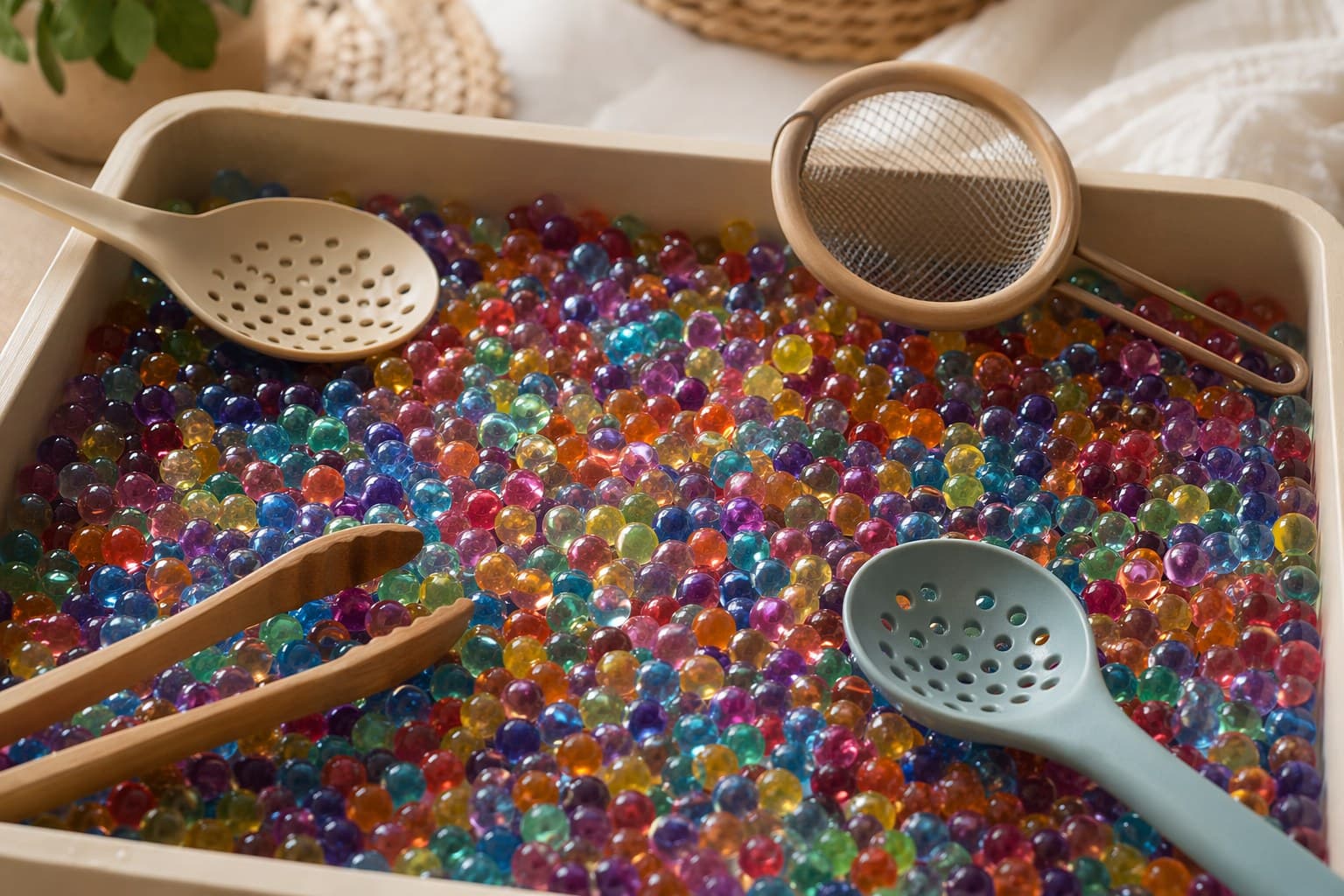
The standout addition for summer is sensory water beads. Soaked until fully swollen, they become slippery, translucent, jewel-like spheres that behave like nothing else — they're solid enough to scoop yet slick enough to escape, which turns a simple "move the beads from bin A to bin B" task into an absorbing fine-motor challenge. Tongs, slotted spoons, and small sieves make it harder and therefore better.
A blunt safety word, because it matters: water beads are a serious choking and ingestion hazard, and they keep growing if swallowed. Use them only with children well past the mouthing stage, supervise constantly, work over a contained surface, and sweep the area completely when you're done. A single bead lost in the grass is one a toddler or a dog can find later. Treated with that respect, they're one of the richest sensory materials going. If you have younger children around, skip the beads entirely and use ice cubes with frozen toys inside, or smooth river pebbles, which deliver a similar scoop-and-sort experience with none of the risk.
Station Three: The Splash and Squirt Zone
Not all water play should be quiet and fine-motor. Children need the big, whole-body, gross-motor version too — the kind that gets the heart rate up and the giggles loud. The mistake is letting that be the only mode. Set it up as one station among several and it becomes a deliberate, joyful release rather than the default.
A good collection of splash water toys — squirters, spray bottles, watering cans, and squeeze toys — gives children a way to control and aim water, which is its own lesson in cause and effect and trajectory. A spray bottle set to "stream" versus "mist" is a physics demonstration disguised as a game, and the simple act of pumping a trigger builds grip strength all summer long.
I keep this zone deliberately low-tech. The squeeze toys and spray bottles that let a child do the work hold up far better than anything battery-powered, which tends to dazzle for ten minutes and then sit dead in the grass.
Setting Up for a Long Session
A few practical decisions separate a station that runs for an hour from one that fizzles in ten minutes.
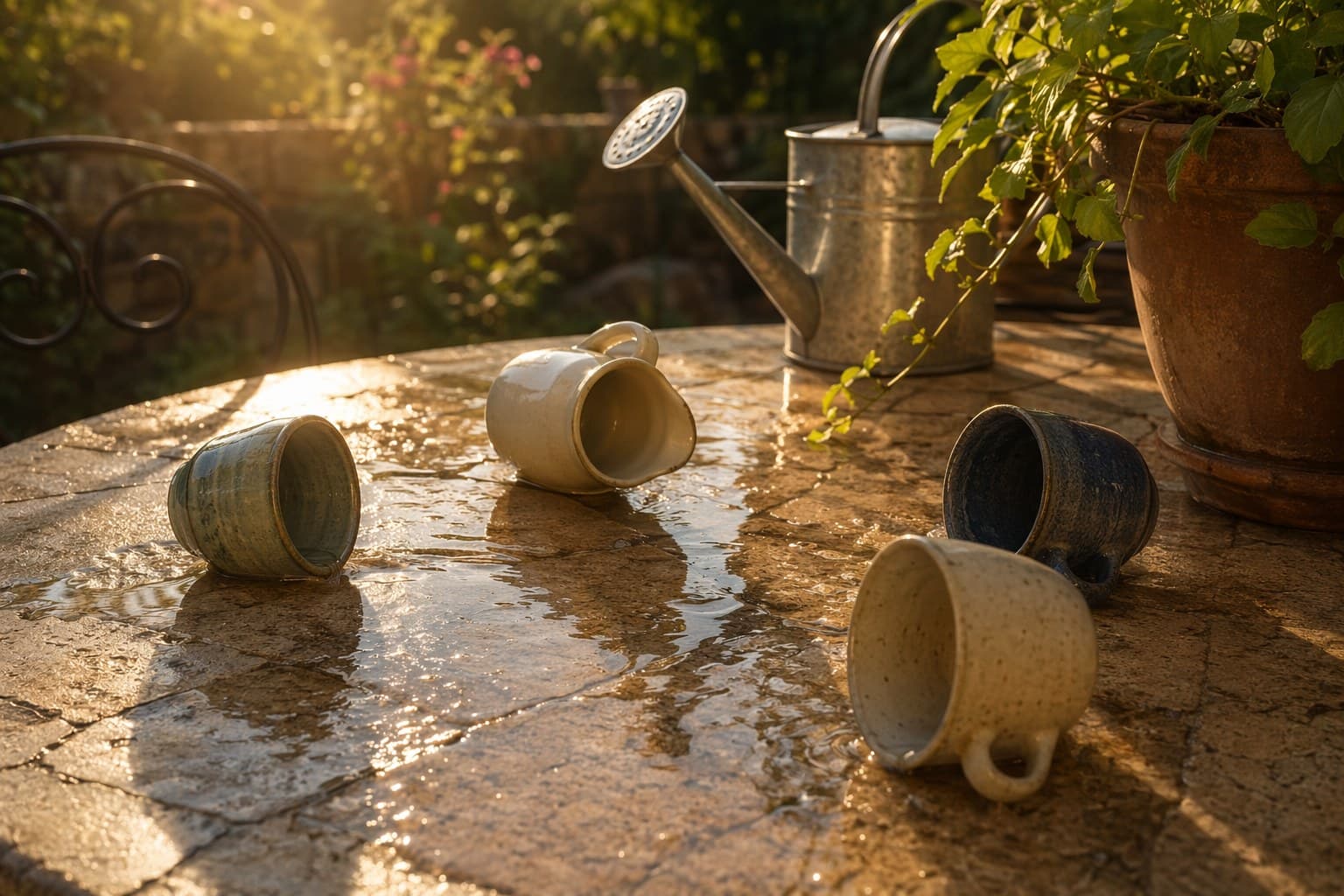
Fill once and reuse. Treat the morning fill as the whole day's supply. Children will happily pour the same water back and forth indefinitely, and when play ends you tip it onto the garden rather than the drain.
Offer fewer instructions than feels natural. The single biggest attention-killer is an adult narrating the "correct" use. Set the station, step back, and let the child set their own goals.
Rotate small materials, not whole setups. When interest dips, don't rebuild everything — just add one new variable. A handful of ice cubes, a few drops of food coloring, a sponge, a new funnel. Novelty is cheap when the base station already works.
Plan the cleanup into the play. End by hosing toys onto a drying rack and tipping water onto thirsty pots. Cleanup that doubles as watering the yard never feels like a chore.
Water stations fit naturally into the rhythm of a slow, low-pressure summer, and they belong on the same shelf as your other screen-free activities for toddlers — cheap, repeatable, and endlessly absorbing.
The Quiet Case for Doing Less
The instinct, when a child seems bored, is to add more — a bigger pool, a flashier toy, a new outing. Water stations make the opposite case. Give a child a few inches of water, a baster, a funnel, and an empty bottle, and then do the genuinely difficult part: leave them alone with it. What unfolds is not a product you bought or an activity you ran. It is a child following their own curiosity to the end of an idea, which is the whole point of a slow childhood, and the reason a few plastic cups will out-entertain almost anything with batteries in it.
Frequently Asked Questions
- How long should a water station actually hold a child's attention?
- A well-designed station with the right tools regularly produces 30 to 60 minutes of focused play for a preschooler, and considerably longer if you rotate small materials in and out. The trick is open-endedness — a station with one toy gets abandoned in five minutes, but a station with cups, scoops, funnels, and a few interesting objects to move around invites a child to invent their own goals. If attention fades fast, you almost always have too few tools or too much instruction, not too little water.
- What is the safest way to set up water beads outdoors?
- Use water beads only with children who are reliably past the mouthing stage — generally age three and up — and supervise every minute. Set them in a shallow, contained bin rather than loose on the ground, keep a colander handy so stray beads get caught instead of scattering into grass, and do a full sweep when play ends because a single bead left in the yard is a choking and pet hazard. Never combine water beads with younger siblings nearby, even briefly.
- How do I keep summer water play from wasting gallons of water?
- Treat the same water as a renewable resource for the whole session rather than refilling constantly. Fill stations once in the morning, let children pour and transfer the same water back and forth, and at the end tip it onto garden beds or thirsty pots instead of down a drain. A single five-gallon fill can power an entire afternoon of transfer play, and reusing it on plants turns cleanup into watering the yard.
Enjoying this article?
Get more ideas like this delivered to your inbox every week.