Easy Watercolor Painting Projects for Kids (Beginner-Friendly)
Twelve beginner-friendly watercolor painting projects for kids organized by age and difficulty — from wet-on-wet exploration for toddlers to resist painting and salt textures for older children.
By The Slow Childhood
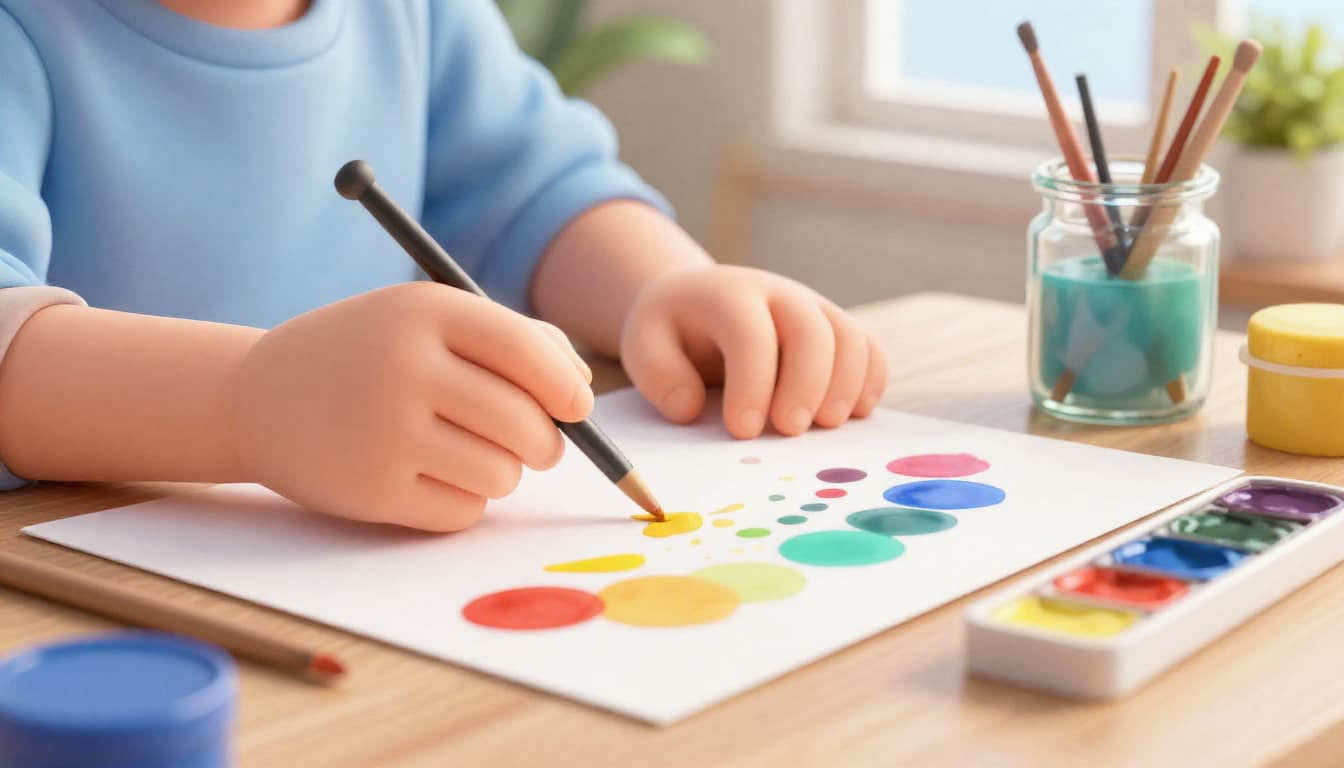
Watercolor is one of the most forgiving, affordable, and beautiful art mediums for children. It flows. It blends. It surprises. A child dips a wet brush into color, touches it to damp paper, and watches the pigment bloom outward in a way that feels almost magical. There is no other medium that rewards curiosity so generously — and no other that requires so little setup and cleanup.
We have been painting with watercolors in our homeschool for years, and the projects below represent our tested favorites. They are organized roughly by age and difficulty, starting with techniques that toddlers can enjoy and building toward projects that challenge older children. But do not hold too rigidly to the age suggestions — we have seen three-year-olds nail salt texture painting and eight-year-olds happily return to basic wet-on-wet exploration when they need a calm, process-focused activity.
Supplies You Will Need
Before we get into the projects, let us talk supplies. Watercolor does not require much, but the quality of a few key items makes a real difference in the experience.
Paint
For younger children (ages 2-4), we strongly recommend liquid watercolors. They come in bottles, produce vivid colors, and are ready to use — no technique required beyond dipping and painting. A set of liquid watercolors in primary and secondary colors will last a long time since you dilute them with water.
For older children (ages 5 and up), a semi-moist pan watercolor set offers a more traditional experience and teaches brush-loading technique. Look for a set with at least 12 colors and good pigmentation. A quality student-grade watercolor pan set is a worthwhile step up from the thin, chalky paint in cheap sets.
Brushes
Invest in a few quality brushes rather than a big pack of cheap ones. You want:
- One large flat brush (about 1 inch wide) for washes and big strokes
- One medium round brush for general painting
- One small round brush for details (older children)
A set of watercolor brushes in assorted sizes covers all the basics. Look for soft synthetic bristles that hold water well.
Paper
Regular printer paper works for casual painting, but it will buckle and pill when wet. Watercolor paper is thicker, absorbs water without warping, and allows colors to blend beautifully. A student-grade watercolor paper pad (90-140 lb weight) is an affordable upgrade that transforms the experience.
For large process art with toddlers, butcher paper or craft paper on a roll is a great budget option.
Other Helpful Supplies
- A wide-mouth jar for rinse water (mason jars are perfect — heavy and stable)
- Paper towels or a rag for blotting
- A plastic tray or tablecloth for the work surface
- Painter's tape or washi tape (for tape resist projects)
- Table salt (for salt texture projects)
- White crayons or oil pastels (for resist painting)
- A spray bottle with water
Beginner Projects (Ages 2-4)
These projects focus on process over product. The goal is sensory exploration, cause-and-effect discovery, and the sheer pleasure of watching color move on paper.
1. Wet-on-Wet Color Exploration
Technique: Painting liquid color onto pre-wet paper and watching it spread
This is the very first watercolor project we recommend for young children because it produces beautiful results with zero skill required.
Materials: Watercolor paper, liquid watercolors or diluted pan watercolors, a large brush, a spray bottle or sponge
Steps:
- Wet the entire sheet of watercolor paper using a spray bottle, sponge, or a large brush dipped in clean water. The paper should be damp and glistening but not pooling with water.
- Offer your child a brush and two or three colors of liquid watercolor.
- Let them touch color to the wet paper and watch it bloom and spread.
- There are no instructions beyond this. Let them experiment.
What children learn: Cause and effect, color mixing (when two colors meet on wet paper, a third appears), fine motor control, focus.
2. Dropper Painting
Technique: Squeezing liquid color from a dropper or pipette onto paper
Materials: Watercolor paper, liquid watercolors in small cups, plastic droppers or pipettes
Steps:
- Pour small amounts of diluted liquid watercolor into cups or a muffin tin — one color per section.
- Give your child a dropper or pipette and show them how to squeeze, dip, release, then squeeze again over the paper.
- Let them drop color anywhere they choose on the paper. Tilting the paper to make colors run is encouraged.
What children learn: Hand strength and fine motor control (squeezing the dropper is excellent for building the muscles used in writing), color mixing, spatial awareness.
3. Watercolor on Coffee Filters
Technique: Painting on coffee filters and watching colors spread and blend
Materials: Flat-bottom coffee filters (or round ones flattened), liquid watercolors, brushes or droppers
Steps:
- Give your child a flattened coffee filter on a tray or plate.
- Offer liquid watercolors and a brush or dropper.
- Let them paint freely on the filter. The porous material wicks the color outward in beautiful patterns.
- Let dry completely — these make gorgeous window decorations or can be turned into butterflies, flowers, or abstract art.
What children learn: Absorption and how different materials interact with water, color blending, patience (waiting for them to dry).
4. Blow Painting
Technique: Blowing diluted watercolor across paper with a straw
Materials: Watercolor paper, very diluted liquid watercolors, straws, a dropper
Steps:
- Drop a few pools of diluted watercolor onto paper using a dropper.
- Give your child a straw and show them how to blow the color across the paper.
- The paint creates organic, tree-like branching patterns as it moves.
What children learn: Oral motor development (blowing strengthens the mouth muscles used in speech), cause and effect, creative thinking.
Intermediate Projects (Ages 4-6)
These projects introduce specific techniques while still leaving room for creative freedom. Children at this stage can follow simple instructions and are beginning to paint with intention.
5. Crayon Resist Painting
Technique: Drawing with white crayon, then painting over it with watercolor to reveal the hidden drawing
This is pure magic for young children. The moment the watercolor hits the crayon lines and the hidden picture appears, their eyes go wide.
Materials: White crayons or oil pastels, watercolor paper, pan or liquid watercolors, brushes
Steps:
- Have your child draw a picture, design, or write their name on white paper using a white crayon. Press firmly. They will not be able to see much of what they are drawing — that is the point.
- Using watercolor paint, wash color over the entire page.
- Watch the crayon lines resist the paint and appear as white against the colored wash.
Variations: Draw secret messages or letters for a literacy connection. Use multiple crayon colors (yellow, light orange) instead of just white for a subtler resist effect. Draw patterns inspired by nature — snowflakes, leaves, stars.
What children learn: Wax-and-water resistance (a basic science concept), fine motor control, surprise and delight as a motivator for creative work.
6. Tape Resist Geometric Art
Technique: Placing tape on paper, painting over it, then removing the tape to reveal clean white lines
Materials: Painter's tape or washi tape, watercolor paper, watercolors, brushes
Steps:
- Help your child place strips of tape on the paper in any pattern they choose — straight lines, geometric shapes, random angles, letters.
- Paint over the entire surface, covering both tape and exposed paper. Use multiple colors for the most dramatic effect.
- Let the painting dry completely. This is important — removing tape from wet paper tears it.
- Carefully peel the tape away to reveal crisp white lines where the tape protected the paper.
What children learn: Planning and patience, geometric concepts (lines, shapes, angles), the reward of delayed gratification.
7. Salt Texture Painting
Technique: Sprinkling salt onto wet watercolor to create crystal-like textures as the salt absorbs pigment
Materials: Watercolor paper, watercolors (pan or liquid), brushes, table salt, a tray
Steps:
- Paint a section of paper with rich, wet watercolor. The paint should be wet and glistening — this technique does not work on dry paint.
- While the paint is still wet, sprinkle table salt over the painted area.
- Watch as the salt absorbs the pigment, creating tiny starburst patterns.
- Let dry completely without disturbing. This takes at least an hour.
- Once dry, gently brush the salt off to reveal the texture underneath.
Variations: Try coarse sea salt for larger crystal patterns. Sprinkle salt on different color combinations. Create a night sky scene — dark blue and purple wash with salt for "stars."
What children learn: Absorption, crystal formation, patience (waiting for drying), scientific observation.
8. Watercolor and Plastic Wrap Texture
Technique: Pressing crumpled plastic wrap onto wet watercolor paint to create organic, crinkled textures
Materials: Watercolor paper, watercolors, brushes, plastic wrap
Steps:
- Paint a generous, wet layer of watercolor onto the paper. Use rich, saturated colors.
- While the paint is wet, tear a piece of plastic wrap and crumple it slightly before pressing it onto the wet surface.
- Adjust the wrinkles and folds — these create the pattern.
- Let dry completely with the plastic wrap in place. This may take several hours.
- Peel the plastic wrap away to reveal an organic, crystalline texture.
What children learn: Texture creation, patience, how materials interact, the artistic concept that tools beyond brushes can create art.
Advanced Projects (Ages 6+)
These projects involve planning, layering, and combining multiple techniques. Children at this stage are ready to think about composition and can work with more intentionality.
9. Watercolor Resist with Rubber Cement
Technique: Painting rubber cement onto paper as a resist, then painting watercolor over it and rubbing the cement away
Materials: Rubber cement, watercolor paper, watercolors, brushes
Steps:
- Paint a design or pattern onto dry watercolor paper using rubber cement. Let it dry completely (it dries clear, so the design becomes invisible).
- Paint watercolor washes over the entire paper, covering the rubber cement areas.
- Let the watercolor dry completely.
- Rub the rubber cement off with clean fingers or an eraser. The paper underneath will be white and paint-free.
Note: Rubber cement should be used in a ventilated area and is best for children 7 and up with adult supervision.
What children learn: Multi-step planning, resist science, patience through a multi-stage process.
10. Wet-on-Wet Landscape
Technique: Painting a simple landscape using wet-on-wet technique for soft, blended backgrounds and adding details when dry
Materials: Watercolor paper (taped to a board to prevent warping), watercolors, brushes in multiple sizes, a pencil
Steps:
- Wet the entire sheet of paper with clean water.
- Using a large brush, paint the sky area with blue, adding touches of yellow or pink near the horizon. Let the colors blend on the wet paper.
- Paint the ground area with greens and browns while the paper is still damp.
- Let dry completely.
- Once dry, use a small brush to add details — trees, flowers, a house, animals, a sun. The details will have crisp edges against the soft background.
What children learn: Foreground and background concepts, planning a composition, layering techniques, landscape observation.
11. Watercolor Galaxy or Nebula
Technique: Layering dark washes with salt, splatter, and white details to create a space scene
Materials: Watercolor paper, watercolors (dark blues, purples, blacks), salt, a white gel pen or white paint, an old toothbrush, brushes
Steps:
- Wet the paper and paint a rich, dark wash of blues, purples, and black, leaving a few lighter areas.
- While wet, sprinkle salt in select areas for star-like textures.
- Let dry and brush off salt.
- Dip an old toothbrush in white paint, hold it over the paper, and flick the bristles to create a splatter of tiny white "stars."
- Use a white gel pen to add larger stars, constellation lines, or planets.
What children learn: Layering techniques, combining multiple methods in one piece, astronomy connections, working with dark values.
12. Nature Observation Painting
Technique: Painting a natural object from life using careful observation
Materials: Watercolor paper, watercolors, brushes, a pencil, a natural object (a flower, leaf, feather, shell, or piece of fruit)
Steps:
- Choose a natural object and place it in front of your child where they can see it clearly.
- Lightly sketch the basic outline in pencil. Encourage looking at the object more than the paper.
- Mix colors to match what they see. This is where real color-mixing skill develops — matching the exact green of a leaf or the blush of a peach requires careful observation and mixing.
- Paint from light to dark, building layers. Start with the lightest colors and add darker details as layers dry.
- Add final details — veins on a leaf, texture on a shell, shadow underneath.
What children learn: Observation skills, color mixing, patience, the connection between art and science, realistic representation.
Tips for a Successful Watercolor Experience
Let Go of the Outcome
Especially for younger children, the finished painting is not the point. The experience of watching color move, feeling the brush glide across wet paper, and discovering what happens when blue meets yellow — that is the learning. If every painting ends up brown because your child loved mixing all the colors together, that is a successful painting session.
For more on this philosophy, our guide to process art ideas for toddlers covers why the process matters more than the product and how to set up art experiences that prioritize exploration.
Teach Brush Care
Good brushes last for years if treated well. Teach children from the beginning:
- Never leave a brush sitting in the water jar (it bends the bristles permanently)
- Rinse thoroughly between colors
- Reshape the bristles after rinsing
- Store brushes flat or bristle-up in a cup — never bristle-down
Manage Water
Too much water is the most common issue. Teach the "load, tap, paint" method — dip the brush in water, tap it gently on the rim of the jar to remove excess, then load it with color. For younger children, keep the rinse jar only half full to minimize spills.
Build a Color Mixing Chart
For children ages 5 and up, creating a color mixing chart is a valuable project in itself. Paint a grid and fill in each square with a different two-color combination. This becomes a reference they can return to again and again, and the process of making it teaches color theory more effectively than any lesson.
Create a Painting Ritual
Children thrive on routine. If watercolor painting happens at the same time and place each week — say, Wednesday afternoons at the kitchen table — it becomes a cherished part of the rhythm rather than a one-off activity that requires convincing. Set up a simple routine: cover the table, fill the water jar, choose paper, paint, clean up together.
Connecting Watercolor to Other Subjects
Watercolor painting is not just art class. It connects naturally to:
- Science — nature observation painting, color mixing theory, absorption and material science
- Geography — painting maps, landscapes from different biomes, flags of countries being studied
- Literature — illustrating scenes from read-aloud books, painting characters
- History — studying famous watercolorists, painting in historical styles
- Math — symmetry projects, geometric tape resist, measuring and mixing dilutions
This cross-curricular potential makes watercolor one of the most versatile tools in a homeschool.
Related Reading
If your family enjoys watercolor, you will also love our collection of nature art projects for kids, which combines natural materials with art techniques for projects rooted in the outdoor world. For families with toddlers just beginning their art journey, process art ideas for toddlers covers twenty open-ended activities that build creative confidence before technique. And if you are looking for a more structured approach to art in your homeschool, our guide to the best homeschool art curriculum reviews programs that teach skills while honoring creativity.
Frequently Asked Questions
- What age can kids start watercolor painting?
- Children can start watercolor painting as early as age 2 with large brushes, liquid watercolors, and simple wet-on-wet techniques. At this age, the focus should be entirely on process and exploration — not producing a recognizable painting. By age 4-5, children can begin learning basic techniques like controlled washes and resist painting. By age 6-8, they are ready for more intentional projects involving multiple techniques, planning, and layering.
- What is the best watercolor paint for kids?
- For toddlers and preschoolers (ages 2-4), liquid watercolors are the best choice because they are vibrant, easy to use, and do not require the brush-wetting technique that pan watercolors need. For children ages 5 and up, a quality pan watercolor set with semi-moist cakes provides a more traditional painting experience and teaches brush control. Avoid the cheapest dollar store sets — they produce dull, streaky colors that frustrate children.
- What is the difference between liquid watercolors and pan watercolors?
- Liquid watercolors come pre-mixed in bottles and are ready to use — children just dip their brush and paint. They produce intense, vibrant colors and are ideal for young children. Pan watercolors come as dried or semi-moist cakes in a palette. Children wet their brush and rub it on the cake to pick up color. Pans teach more brush control and color mixing but require more coordination, making them better for children ages 5 and up.
- Do kids need special watercolor paper?
- For casual practice and process art, regular white paper or cardstock works fine. However, watercolor paper makes a noticeable difference in the painting experience — it absorbs water without warping or pilling, allows colors to blend more smoothly, and produces more vibrant results. A pad of student-grade watercolor paper is an affordable upgrade that helps children feel like 'real artists.' It is especially worth using for projects they will want to keep.
- How do I keep watercolor painting from becoming a mess?
- Set up a designated painting area with a plastic tablecloth or tray underneath. Give children a smock or old shirt. Provide a rinse cup that is heavy enough not to tip (a wide-mouth mason jar works well). Keep a damp cloth nearby for wiping hands. Limit colors to 3-4 at a time for younger children. And most importantly, accept that some drips and spills are part of the process — watercolor is actually one of the less messy paints because it washes out of most clothing and surfaces easily.
Enjoying this article?
Get more ideas like this delivered to your inbox every week.