Best Indoor Games for Kids: 30 Active Games for Small Spaces
30 active indoor games for kids that burn energy in small spaces — from balloon volleyball and hallway bowling to freeze dance and indoor hopscotch.
By The Slow Childhood
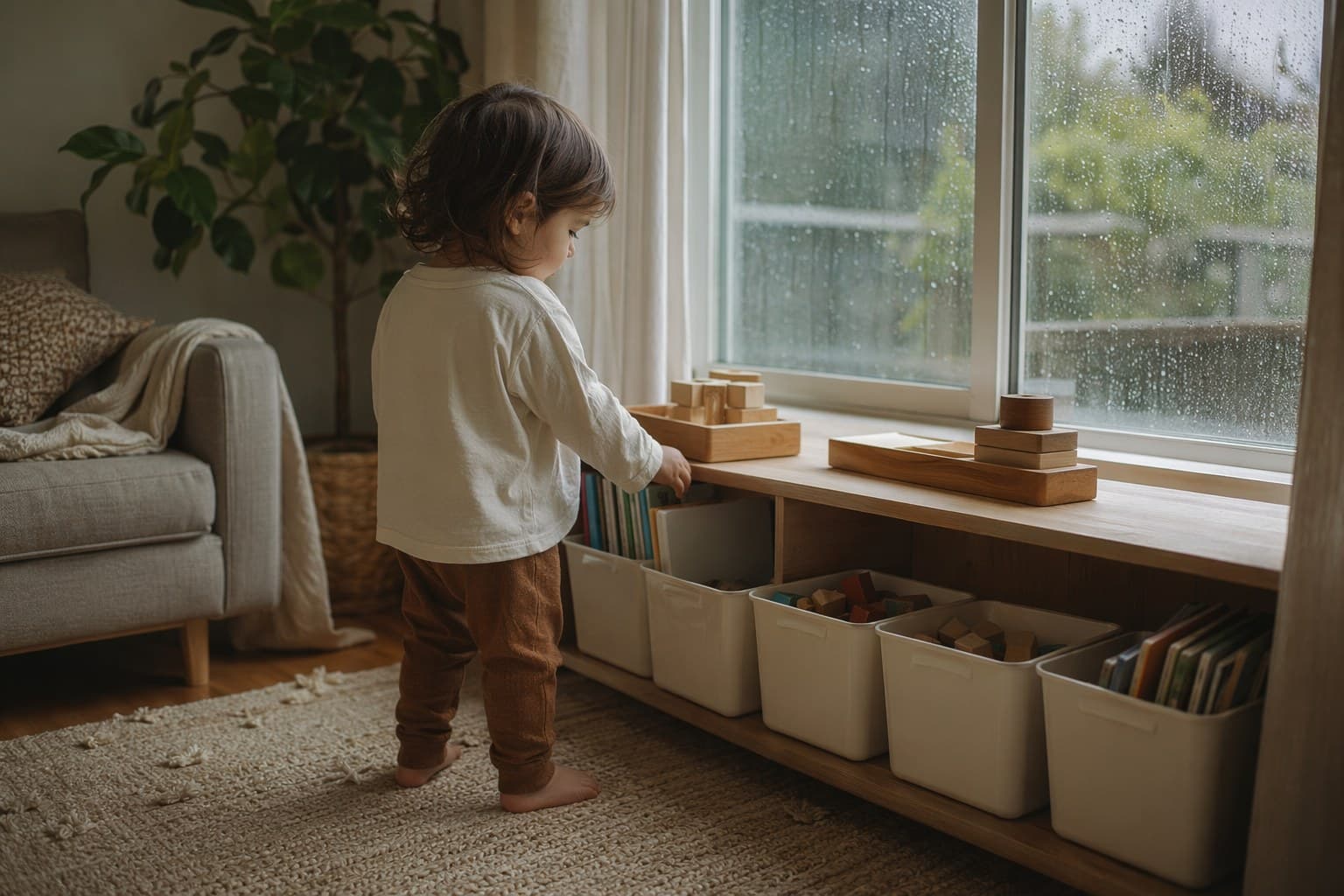
It is 3 PM on a rainy Wednesday. Your kids have been inside since breakfast and you can feel the energy building — the couch has become a trampoline, the hallway is a racetrack, and someone is about to crash into something breakable. You need a plan, and you need it now.
We have been there more times than we can count. Winter weeks, rainy stretches, apartment living, sick days that are not quite sick enough for rest — there are countless reasons children end up stuck inside. And children who are stuck inside still need to move. Their bodies are wired for it. When they do not get physical activity, the restless energy shows up in ways that make everyone miserable: roughhousing that escalates, whining, inability to focus, and meltdowns over nothing.
The good news is that you do not need a gym, a backyard, or even a big living room to give kids a serious physical outlet. You just need a few ideas and a willingness to push the coffee table against the wall.
Here are 30 active indoor games that burn real energy in real-world small spaces. Most require no equipment at all, and the ones that do use items you already have.
Why Indoor Active Play Matters
Before we get to the games, a quick word on why this matters beyond just "burning off energy."
Physical development. Gross motor skills — jumping, balancing, throwing, catching, crawling — develop through practice. Children who do not get enough physical play fall behind in coordination, strength, and body awareness. Indoor active games give these skills practice time regardless of weather.
Focus and behavior. Research from the American Academy of Pediatrics shows that physical activity directly improves attention, working memory, and executive function in children. A ten-minute movement break can buy you an hour of focused, cooperative behavior. If you homeschool, weave active games between academic blocks and watch the difference.
Emotional regulation. Physical activity metabolizes stress hormones (cortisol, adrenaline) and releases endorphins. A child who has had a good movement session is calmer, more flexible, and better able to handle frustration. The connection between movement and emotional health is something we explore in our screen time alternatives guide as well.
Sleep. Children who are physically active during the day fall asleep faster and sleep more soundly. If bedtime is a battle in your house, the first question to ask is whether your child got enough physical activity today.
Balloon Games (5 Games)
Balloons are the single best indoor active play tool. They move slowly enough that young children can track and hit them, they will not break anything when they go sideways, and they make every game feel like a party. Keep a balloon pump and a bag of balloons in your activity supplies — they will be the most-used items you own.
1. Balloon Volleyball
Ages: 3+ | Space: Living room, cleared of breakables | Players: 2+
String a piece of yarn, ribbon, or painter's tape across the room at about shoulder height (for the kids, not you). Divide into two teams. Hit the balloon back and forth over the "net." If it touches the ground on your side, the other team scores a point. First to ten wins.
For younger children, forget the net and scoring — just hit the balloon back and forth and celebrate every successful volley. For older children, add rules: you can only hit with your non-dominant hand, you must let it bounce once, or you have to spin before hitting it.
2. Balloon Tennis
Ages: 3+ | Space: Hallway or living room | Players: 2+
Give each player a paper plate taped to a popsicle stick or wooden spoon — instant tennis racket. Hit the balloon back and forth. The paper plate rackets add a skill element that makes this harder (and funnier) than using hands. For a sturdier version, use fly swatters.
3. Keep It Up
Ages: 2+ | Space: Any room | Players: 1+
The simplest balloon game and one that never gets old. Hit the balloon in the air and do not let it touch the ground. Count each hit out loud. Try to beat your record. For multiple players, take turns hitting or assign a rule — each person must hit it once before anyone can hit it twice.
Add challenges for older kids: use only your head, use only your elbows, lie on your back and use only your feet, or keep two balloons up at once.
4. Balloon Waddle
Ages: 3+ | Space: Hallway or long room | Players: 2+
Place a balloon between your knees and waddle from one end of the room to the other without dropping it. Race against a sibling or parent. If the balloon drops, start over from the beginning. For a relay version, waddle to a chair, touch it, and waddle back to tag the next person.
This is harder than it sounds, and the wobbling waddle produces genuine belly laughs every time.
5. Hot Air Balloon
Ages: 3+ | Space: Any room | Players: 1+
Place a balloon on the ground. Give each player a piece of cardboard, a paper plate, or a magazine to use as a fan. The goal is to fan the balloon across the room and over a finish line using only air — no touching the balloon with your body or the fan. Race against each other or time individual attempts.
This is a surprisingly good workout for the arms and core, and the concentration required to direct the balloon with air currents keeps children engaged.
Dance and Movement Games (5 Games)
No equipment needed — just a way to play music and enough space for kids to move without colliding.
6. Freeze Dance
Ages: 2+ | Space: Any room | Players: 2+
Play music. Everyone dances. When the music stops, everyone freezes. Anyone who moves is out (or just sits for one round and jumps back in — we prefer this kinder version for young children). The last dancer standing gets to control the music for the next round.
What makes freeze dance brilliant for indoor play is the alternation between intense movement and complete stillness. The dancing burns energy. The freezing builds impulse control. Both are exactly what cooped-up kids need.
7. Musical Statues
Ages: 3+ | Space: Any room | Players: 3+
A variation on freeze dance with a twist: when the music stops, players must freeze in a specific pose called out by the leader. "Freeze like a flamingo!" "Freeze like a superhero!" "Freeze like a melting snowman!" The silliest statue wins each round, as judged by the music controller.
8. Dance-Off
Ages: 4+ | Space: Any room | Players: 2+
Players take turns showcasing their best moves in the center while everyone else cheers. Each dancer gets thirty seconds of music. Everyone votes on their favorite performance. Change the genre each round — ballet, robot, slow motion, hip hop, silly, dramatic. The category shifts keep it fresh and push kids to be creative rather than competitive.
9. Animal Dance Party
Ages: 2+ | Space: Any room | Players: 1+
Play music and call out an animal. Everyone must dance like that animal. "Dance like a monkey!" "Dance like an elephant!" "Dance like a jellyfish!" Change animals every thirty seconds. The rapid switching between movement styles — heavy stomping to slinky slithering to bouncy hopping — gives children a full range of physical experiences.
10. Follow the Leader
Ages: 2+ | Space: Any room or hallway | Players: 2+
The leader moves through the space doing actions — jumping, spinning, crawling, tiptoeing, hopping on one foot, walking backward — and everyone must copy. Rotate leaders every two minutes. Encourage leaders to use as much of the space as possible and to include a mix of high-energy and slow-motion movements.
For a more structured version that builds listening skills, try Simon Says (see game 26).
Target and Throwing Games (5 Games)
Throwing, tossing, and aiming develop hand-eye coordination and are deeply satisfying for children who need to discharge physical energy.
11. Indoor Bowling
Ages: 2+ | Space: Hallway or long room | Players: 1+
Set up ten empty water bottles or plastic cups at the end of a hallway. Use a soft ball (a rolled-up sock works perfectly) to bowl. Keep score or just enjoy the crash. Reset and repeat. For a more polished setup, an indoor bowling set with weighted foam pins is sturdier and easier to reset than water bottles.
You can vary the distance, use different sized balls, or set up the pins in creative formations to keep the challenge fresh across multiple rounds.
12. Bean Bag Toss
Ages: 2+ | Space: Any room | Players: 1+
Set up targets at different distances — a laundry basket (3 points), a bucket (5 points), a mixing bowl (10 points). Give each player five bean bags (or rolled socks) per round. Add up scores. Make it harder by moving the targets further away, requiring an underhand throw, or having players stand on one foot while throwing.
13. Sock Basketball
Ages: 3+ | Space: Any room | Players: 1+
Hang a laundry basket, bucket, or paper grocery bag on a door handle or chair back. Roll socks into balls. Shoot hoops from increasing distances. Mark a free-throw line with tape. Play HORSE (each player must replicate the previous player's successful shot, or they earn a letter).
This game naturally occupies children for twenty to thirty minutes because the scoring system and the progressive distance create built-in motivation.
14. Paper Airplane Contest
Ages: 5+ | Space: Hallway or long room | Players: 2+
Each player folds a paper airplane (look up designs together if needed — there are simple ones and complex ones, and both are fun to try). Compete in categories: longest distance, longest hang time, most accurate (land closest to a target), best trick (loops, spins). Modify designs and try again. The folding, testing, adjusting, and re-testing cycle is engineering in disguise.
15. Ring Toss
Ages: 3+ | Space: Any room | Players: 1+
Set up bottles, paper towel rolls, or traffic cones at different distances. Toss rings (use glow bracelets, embroidery hoops, or rings cut from paper plates with the centers removed). Assign point values based on distance. This is a classic carnival game that translates perfectly to indoor play and builds throwing accuracy and depth perception.
Floor Games (5 Games)
These games use the floor itself as the playing field. Clear the space, move the furniture, and let kids use their whole bodies.
16. Hallway Hopscotch
Ages: 3+ | Space: Hallway or long room | Players: 1+
Use painter's tape to create a hopscotch grid on the floor. (Painter's tape is the hero of indoor active play — it comes up cleanly and sticks to any surface.) Toss a small beanbag or rolled sock onto a number. Hop through the grid, skipping the square with the marker. For a more permanent option, an indoor hopscotch mat rolls out and stores easily.
You can adapt the grid for different skills — add letters instead of numbers for alphabet practice, or colors for younger children who are still learning.
17. Lava Floor
Ages: 2+ | Space: Living room | Players: 1+
Scatter pillows, cushions, and blankets across the room. The floor is lava — children must navigate from one side to the other without touching it. Move the "stepping stones" further apart to increase the challenge. Add a time element for older kids.
This game develops balance, spatial planning, and risk assessment, and it turns the living room into an adventure landscape. For a more elaborate version with multiple stations, see our full indoor obstacle course guide.
18. Indoor Relay Races
Ages: 3+ | Space: Hallway or long room | Players: 2+
Set up a start line and a turnaround point. Race in different styles: running (if you have space), hopping on one foot, skipping, walking backward, crab walking, carrying an egg on a spoon, balancing a book on your head. Relay format means each person does a leg and tags the next.
Mix movement styles within a single relay for maximum fun — hop to the chair, crab walk back, skip to the chair, bear crawl back.
19. Crab Walk Races
Ages: 3+ | Space: Hallway or long room | Players: 2+
Sit on the floor, place hands behind you, and lift your bottom off the ground. Walk forward (or backward) using hands and feet, belly facing the ceiling. Race to the end of the hallway and back. Add a challenge: balance a small stuffed animal on your stomach while crab walking. If it falls off, start over.
Crab walking is an exceptional core and arm workout disguised as a silly game. Children will feel it the next day (and so will you, if you join in).
20. Bear Crawl Tag
Ages: 3+ | Space: Living room or large room | Players: 3+
Regular tag, but everyone must bear crawl — hands and feet on the floor, bottom in the air, knees off the ground. The speed restriction that bear crawling imposes makes this game safe for indoor spaces. No one is running full speed into furniture. The person who is "it" bear crawls to tag someone, then that person becomes "it."
For more active games in this style, our list of screen-free activities for rainy days includes additional movement games organized by age.
Classic Games Reinvented (5 Games)
These games have been entertaining children for generations. They require zero equipment and work in the smallest spaces.
21. Simon Says
Ages: 3+ | Space: Any room | Players: 3+
One player is Simon and gives commands. "Simon says touch your toes." "Simon says jump three times." "Spin around" (without "Simon says" — anyone who spins is out). Keep the pace fast and the commands physical — hopping, stretching, balancing, bending, twisting.
For younger children, skip the elimination and just play for fun. The value is in the listening, processing, and physical responding, not in catching people out.
22. Red Light, Green Light
Ages: 3+ | Space: Hallway or long room | Players: 3+
One player stands at the end of the room facing the wall. Everyone else starts at the opposite end. "Green light" — everyone moves forward. "Red light" — the leader spins around and everyone freezes. Anyone caught moving goes back to the start. First to reach the leader wins and becomes the next caller.
Add "yellow light" (slow motion only) for variety. Change the movement style — green light but you must hop, green light but you must crab walk.
23. Hide and Seek (Small Space Version)
Ages: 2+ | Space: Apartment or small home | Players: 3+
In a small space, traditional hide and seek ends too quickly because there are only so many places to hide. Adapt it: the hider gets a small bell or jingle bracelet and must move to a new hiding spot every thirty seconds. The sound gives the seeker clues while the movement keeps the hider active. Or play in the dark with flashlights for a completely different experience.
24. Sardines
Ages: 4+ | Space: Whole house | Players: 4+
Hide and seek in reverse. One person hides. Everyone else seeks. When you find the hider, you quietly squeeze in and hide with them. The last person to find the group loses (or is the next hider). The name comes from the fact that everyone ends up packed together like sardines. This game produces uncontrollable giggling, which is its own form of medicine.
25. Hot/Cold Treasure Hunt
Ages: 3+ | Space: Any room | Players: 2+
One player hides a small object while the other is not looking. The seeker searches while the hider gives temperature clues — "cold" (far away), "warm" (getting closer), "hot" (very close), "on fire!" (practically touching it). Take turns hiding and seeking.
For older children, hide multiple objects and create a scavenger list. Or hide pieces of a puzzle that they must find and assemble. This game develops listening, spatial reasoning, and patience.
Quiet Active Games (5 Games)
These games are active but controlled — perfect for apartments with neighbors below, for winding down after intense play, or for children who need physical activity but at a lower intensity.
26. Yoga Challenge
Ages: 3+ | Space: Any room | Players: 1+
Use a set of kids yoga cards or look up age-appropriate poses together. Take turns drawing a card and holding the pose for ten to thirty seconds. Challenge each other — who can hold tree pose the longest? Who can balance in airplane pose without wobbling? Yoga develops balance, flexibility, core strength, and body awareness while being quiet enough for apartment living.
27. Balance Beam
Ages: 2+ | Space: Hallway or any room | Players: 1+
Put a line of painter's tape on the floor — straight, curved, zigzag, or spiral. Walk the line heel-to-toe without stepping off. Add challenges: walk backward, walk with a book on your head, walk with eyes closed (a partner gives verbal directions), walk while carrying a glass of water. For a step up from tape, a balance board for kids adds a wobble element that challenges core strength and proprioception.
28. Statue Challenge
Ages: 3+ | Space: Any room | Players: 2+
One player strikes a pose — as creative, weird, or difficult as possible — and holds it. Everyone else must copy the pose exactly and hold it for twenty seconds. The poser tries to make their statue so tricky that others cannot hold it. Wobbling, giggling, and collapsing are expected. Rotate posers each round.
This builds core strength, balance, and body awareness without any running or jumping — ideal for upstairs apartments.
29. Slow-Motion Races
Ages: 3+ | Space: Hallway or long room | Players: 2+
The goal is to be the last person to cross the finish line. Players must be in constant, visible motion — no stopping allowed. The trick is moving as slowly as humanly possible while still moving. Lifting one foot takes ten seconds. Each step is glacial. The concentration required to move this slowly is surprisingly intense, and the game is hypnotically funny to watch.
This is also a powerful self-regulation exercise. Children who struggle with impulsivity get to practice slowing their body deliberately.
30. Finger Wrestling Tournament
Ages: 5+ | Space: Table or floor | Players: 2+
Interlock fingers with your opponent, leaving thumbs free. On "go," each player tries to pin the other's thumb down for three seconds. Run a bracket-style tournament with the whole family. Best of three for each matchup. This is a tiny, quiet, zero-equipment game that produces disproportionate amounts of intensity and laughter.
For a variation, try arm wrestling (on a padded surface) or leg wrestling (lie side by side, link the near legs, and try to flip the other person over).
Making Indoor Active Play a Habit
The biggest challenge with indoor active play is not knowing the games — you now have thirty of them. The challenge is actually doing them. Here are a few ways to build active play into your indoor routine.
Schedule movement breaks. If your children are home all day — homeschooling, weekends, sick days — set a timer for every 60 to 90 minutes and take a five-to-ten-minute active game break. Even one round of freeze dance or a quick balloon volleyball match resets the energy in the room.
Create a game jar. Write the names of these thirty games on slips of paper and put them in a jar. When energy builds up or boredom strikes, pull a game. The randomness makes it fun and takes the decision-making burden off everyone. If your family enjoys choosing activities this way, our backyard games list has outdoor options for warmer weather.
Rotate favorites. Children latch onto favorites and want to play them repeatedly. That is fine — repetition builds mastery. But periodically introduce a new game to keep the rotation fresh.
Join in. The single most effective way to get kids moving is to move with them. When you play balloon volleyball or race in slow motion, you communicate that physical play matters and that you enjoy being with them. You will also get a workout, which is a bonus.
Keep supplies accessible. A bag of balloons, a balloon pump, a roll of painter's tape, a few bean bags, and a set of yoga cards — that is your entire indoor active play kit. Keep it where kids can reach it, and you will find them starting games on their own.
When the weather turns or the apartment walls feel like they are closing in, remember that children do not need acres of space to be active. They need permission, a few ideas, and maybe a balloon. The energy they burn today becomes the calm they carry tonight — better focus, better moods, better sleep, and a living room that survived another rainy day in one piece.
Push the coffee table aside. Blow up a balloon. Your living room is about to become the best gym in town.
Frequently Asked Questions
- How do I keep kids active indoors?
- Focus on games that use vertical space (jumping, stretching) rather than running. Balloon games, dance parties, yoga, obstacle courses, and target-throwing games all burn energy without needing a big room.
- What indoor games can kids play in small spaces?
- Balloon volleyball, freeze dance, Simon Says, indoor bowling with water bottles, hallway hopscotch with tape, yoga pose challenges, and balloon tennis all work in small living rooms or apartments.
- How much active play do kids need per day?
- The CDC recommends at least 60 minutes of physical activity per day for children ages 6-17, and active play throughout the day for younger children. This doesn't have to be all at once — short active game breaks throughout the day add up.
Enjoying this article?
Get more ideas like this delivered to your inbox every week.