Screen-Free Rainy Day Station: Activities That Actually Hold Attention
May showers don't have to mean screen time. Build a rotating rainy day station of hands-on activities that genuinely hold a child's attention — here is exactly how to set it up and keep it fresh.
By The Slow Childhood
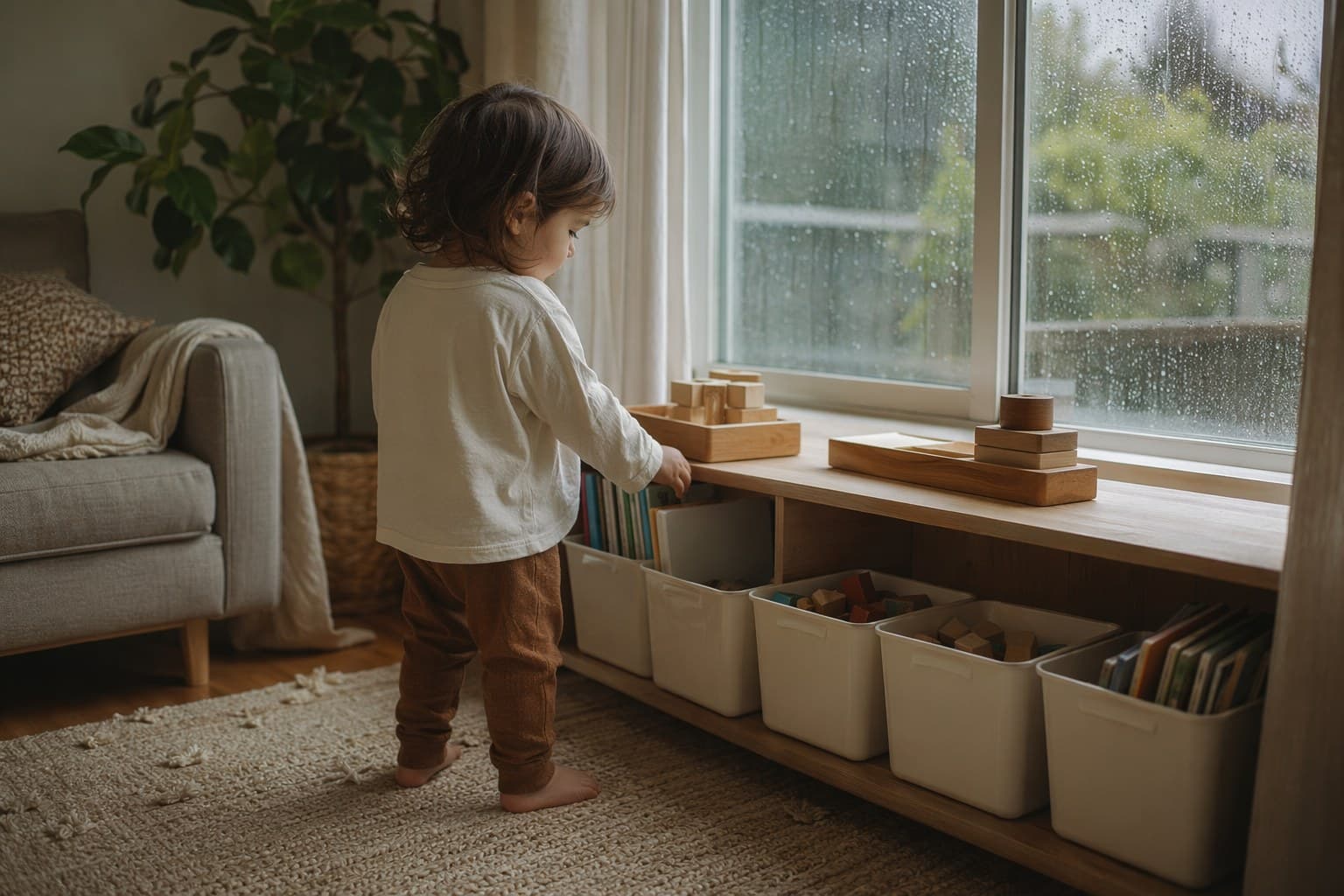
It is 8 a.m., the rain is coming down sideways, and the day stretches out long and indoor. The fastest fix is a screen, and there is no judgment here for the days you reach for it. But after years of weathering wet Mays with little kids underfoot, we have found something better: a rainy day station that is ready before the rain ever starts, stocked with activities that genuinely hold attention rather than buying you four restless minutes.
The difference between a station that works and a bin of junk nobody touches comes down to a few principles. This guide walks through exactly how to build one, what to put in it, and how to keep it from going stale by July.
Why a Station Beats a Toy Box
The problem with a full toy box is paradoxical: more options usually mean less play. When children face an overwhelming pile, they tend to dump it, paw through it, and drift off. Researchers at the University of Toledo demonstrated this in a 2018 study showing that toddlers given four toys played longer and more creatively than toddlers given sixteen. Abundance scatters attention. Constraint focuses it.
A station works because it limits choices to a handful of well-chosen, self-contained activities, each with a clear beginning and end. A child can see the whole field of options at a glance, pick one, and commit. There is no archaeology required to find the matching puzzle piece, because the puzzle lives in its own bin.
The second reason a station works is readiness. Decision fatigue is real, and it hits parents hardest at 8 a.m. on a gray day. When the materials are already sorted, already accessible, and already paired with a mental note of "this one buys forty minutes," you skip the scramble entirely. If you are working to build screen-free habits in your home generally, a physical station is one of the most effective tools you can set up, precisely because it removes friction in the moment your willpower is lowest.
How to Build the Station
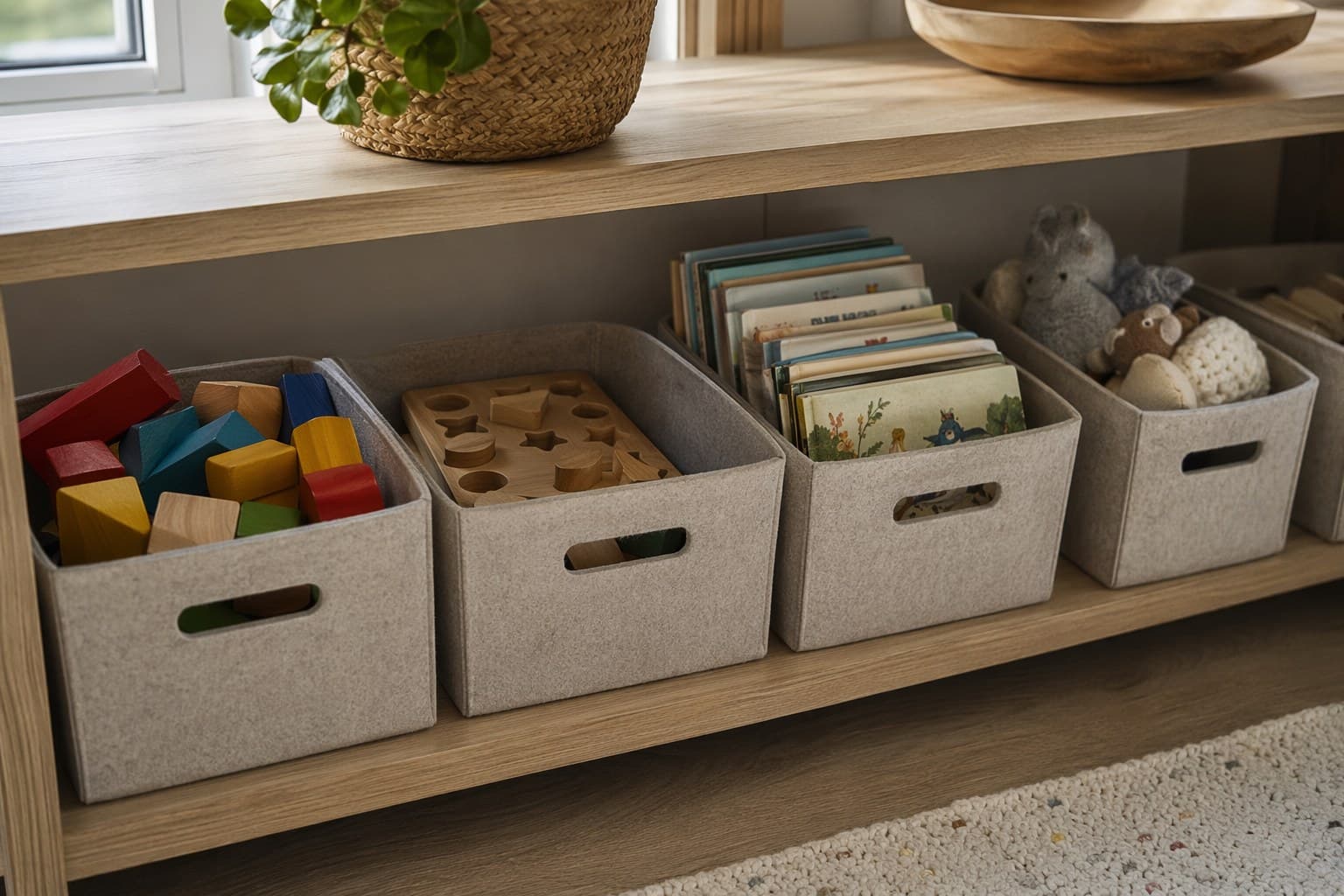
You do not need a dedicated playroom. A single low shelf, a cube organizer, or even a stack of three to five clear bins in a closet will do.
Pick a home base. Choose one spot the child can reach independently. Low and accessible matters more than pretty. A child who has to ask for help to start an activity will ask for a screen instead.
One activity per container. This is the rule that makes everything work. A puzzle goes in one bin. A set of blocks in another. A sorting tray in a third. When everything has a self-contained home, cleanup is a matter of matching, not chaos.
Keep only four or five out at a time. The rest lives in a closet, resting. A toy that has been out of sight for three weeks comes back feeling new.
Stage a grab-and-go craft tote. Open-ended supplies are the heart of any good station. A craft supply grab-and-go tote stocked with scissors, glue sticks, tape, construction paper, pom-poms, and googly eyes turns a recycled cereal box into an afternoon. When the urge to create strikes, the supplies are already corralled in one carry-anywhere container.
What Actually Holds Attention (By Type)
The activities that sustain real engagement share a profile: they are open-ended, they give the child control over the pace, and they reward effort with visible progress. Here are the categories that earn their shelf space.
Building Sets
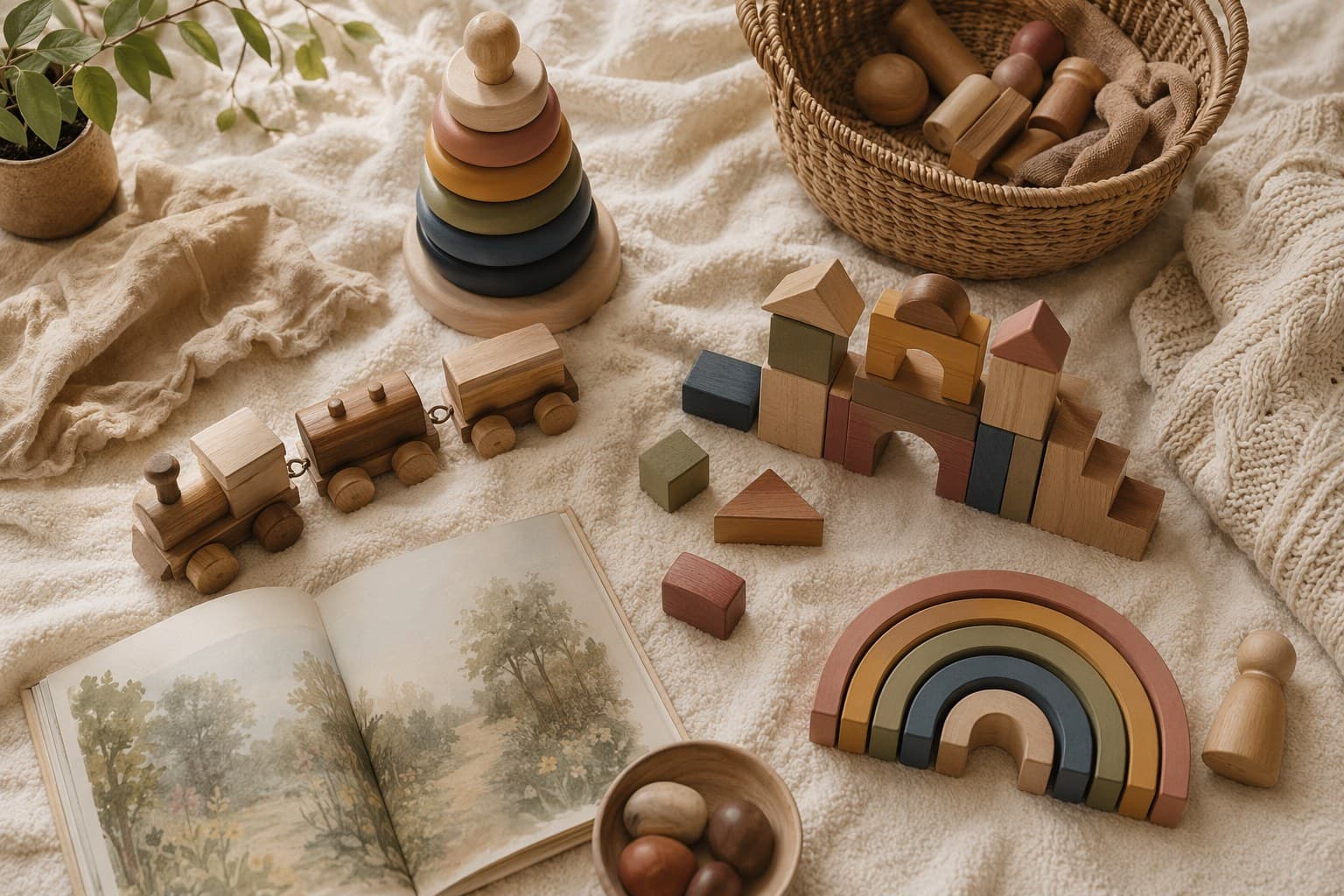
Open-ended construction is the gold standard for sustained, screen-free play. For toddlers and young preschoolers, large Duplo building block sets are nearly unbeatable — the chunky bricks are forgiving for small hands, and there is no "wrong" way to build. Older kids graduate to standard bricks or magnetic tiles, which add an engineering dimension as they discover how walls balance and roofs hold.
To deepen the play, add a small card with a building prompt: "Build the tallest tower that can hold a toy car," or "Build a house for this little figure." A prompt gives reluctant builders a doorway in.
Sorting and Sensory Trays
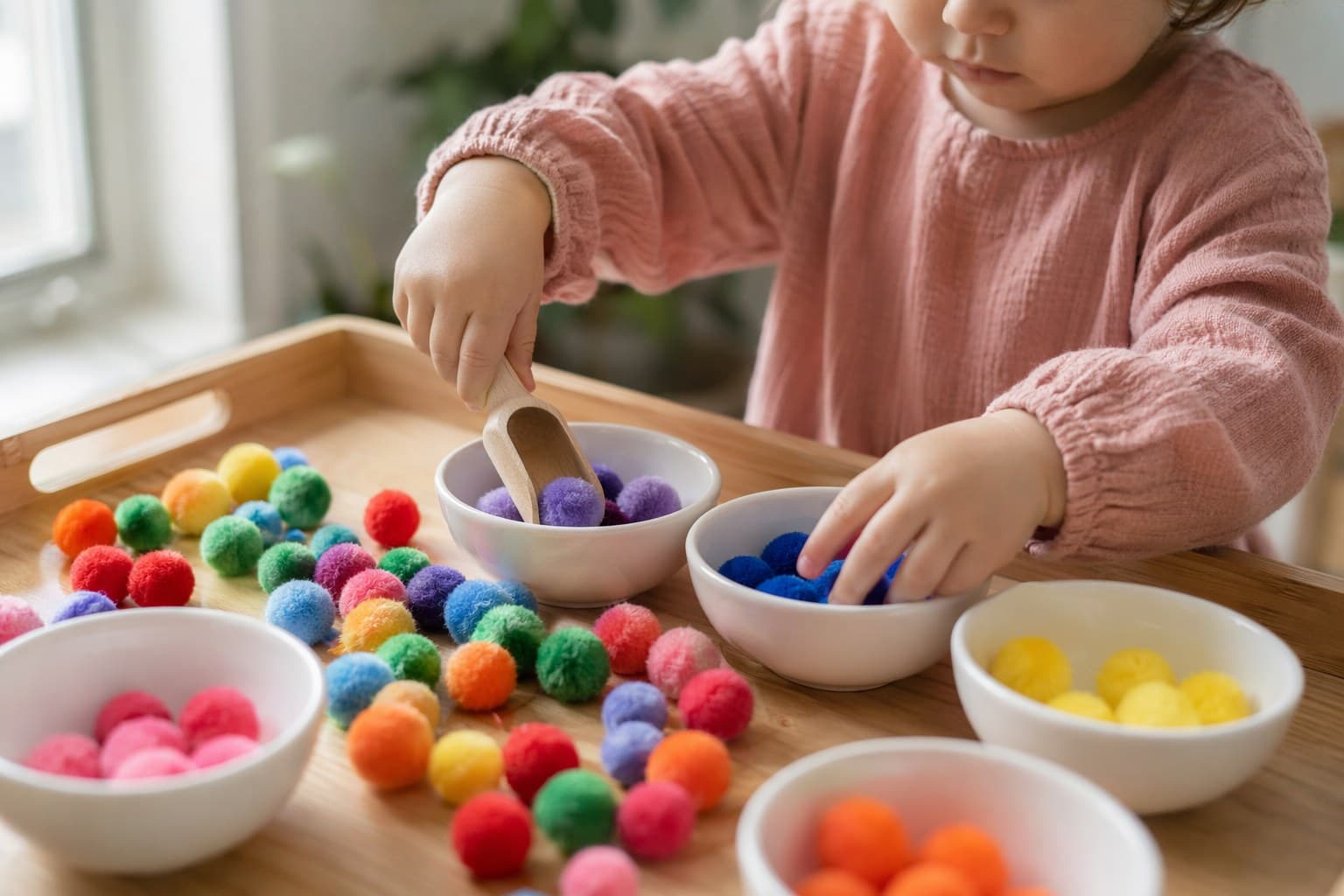
For toddlers especially, sorting is mesmerizing and quietly Montessori. A set of color sorting sensory bins with a scoop and a few small containers can absorb a two-year-old for twenty minutes — sorting, pouring, dumping, beginning again. The repetition that looks aimless to adults is exactly how young children build concentration and fine motor control.
Puzzles Matched to Age
A well-fitted puzzle is a complete, self-rewarding loop: a clear goal, immediate feedback, and a satisfying finish. The trick is the fit. A puzzle that is too easy gets one half-hearted run; one that is too hard gets abandoned in frustration. Keep a small range of puzzle sets by age — chunky wooden knob puzzles for toddlers, twenty-four-piece floor puzzles for preschoolers, and hundred-piece scenes for school-age kids — and let children reach for the one that meets them where they are.
A Living Book Basket
Never underestimate a basket of good books on a rainy day. A rotating storybook collection — twelve or so titles, swapped monthly — invites browsing in a way that a packed shelf does not. Pair the basket with a floor cushion and a soft blanket, and you have created a reading nook by accident. For independent readers, an audiobook playing while they build with blocks is one of the most reliable quiet-time combinations we know.
Keep It Fresh Without Buying Anything
The single biggest reason a station dies is staleness, and the cure costs nothing.
Rotate, do not replace. Swap one or two bins every week to ten days. Resist the urge to rotate daily — children need repetition to play deeply, and constant novelty actually trains shorter attention spans. The goal is a station that feels familiar with a small surprise.
Watch the floor. When a bin gets ignored for several days running, retire it to the closet and bring back something that has been resting. The play itself tells you when to rotate.
Add a movement bin for the wiggles. No station holds a child who needs to move. When the energy turns frantic, the answer is not another quiet activity — it is gross-motor play. A quick indoor obstacle course using couch cushions and painter's tape resets a stir-crazy body, and the calm that follows makes the quiet bins work again.
Borrow novelty. A toy swap with a friend's family refreshes both households for free. Box up four toys your child has outgrown the moment for, trade for four of theirs, and rotate them through the station for a month.
A Sample Setup for a Multi-Age Home
If you are juggling a toddler and an older sibling, build the station in layers so both children find their level.
- Toddler bins: large Duplo bricks, a color sorting tray with a scoop, three chunky knob puzzles, and a basket of board books.
- Big-kid bins: magnetic tiles with a building-prompt card, a hundred-piece puzzle, the grab-and-go craft tote, and an audiobook with headphones.
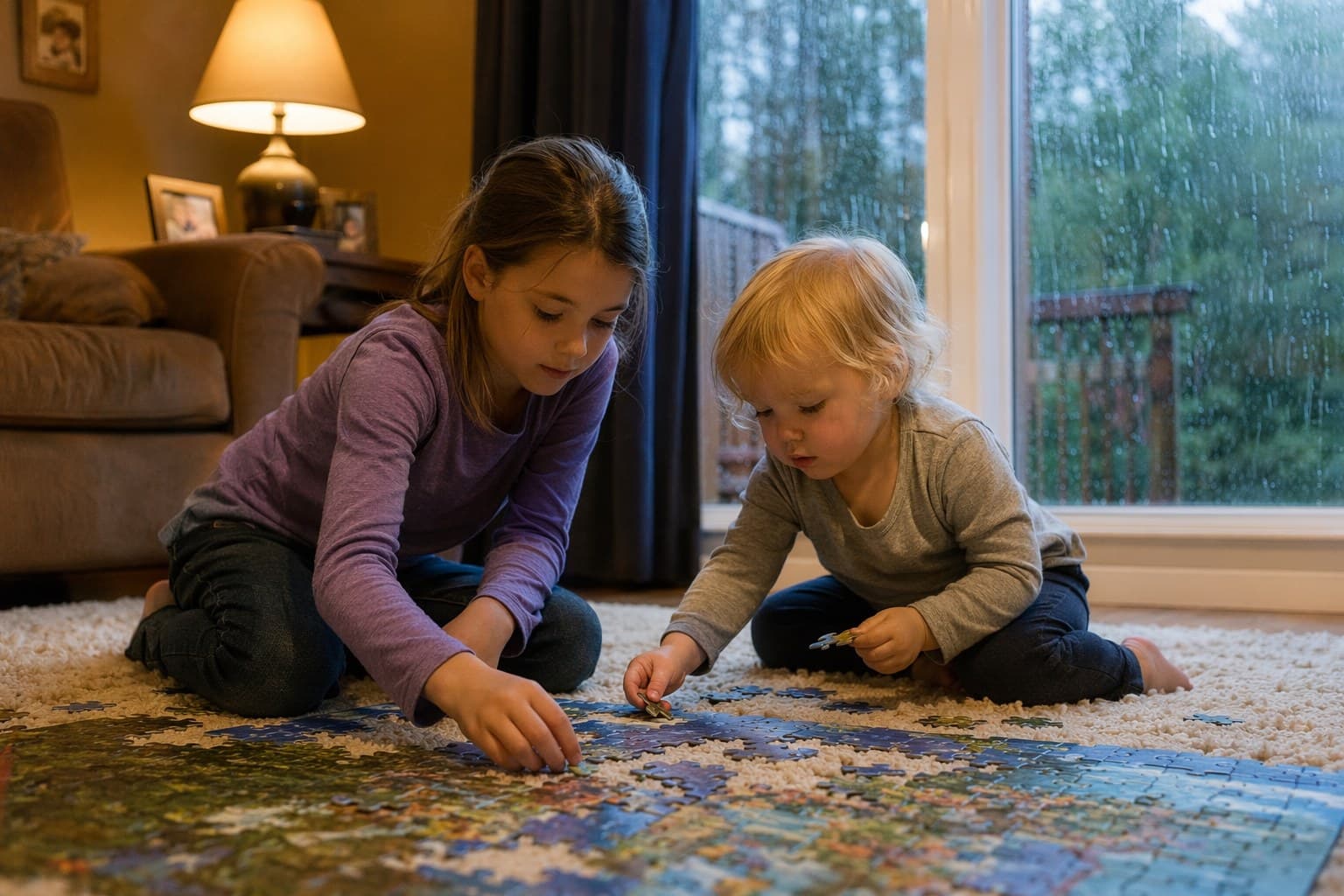
- Shared bin: a floor puzzle the two can do together, which doubles as a natural moment for the older child to mentor the younger.
Set a loose rhythm rather than a rigid schedule — a stretch of station play, a movement break, a snack, a read-aloud — and the morning fills itself. For a deeper bank of go-to ideas to fold into your rotation, our list of screen-free rainy day activities pairs perfectly with a well-stocked station.
The Real Goal
A rainy day station is not really about surviving the rain. It is about handing children the conditions for absorbed, self-directed play — the kind that builds concentration, competence, and the quiet confidence of a child who knows how to fill their own time. Set it up once, tend it lightly, and a gray May morning stops being something to dread and starts being one of the better days of the week.
Build the station before the next storm rolls in. Future you, standing at the window at 8 a.m. with rain on the glass, will be grateful it is already waiting.
Frequently Asked Questions
- How do I set up a rainy day station that actually keeps kids busy?
- Choose one low shelf or a stack of three to five bins, fill each with a single self-contained activity (blocks, a puzzle, a sorting tray, books, an open-ended craft kit), and store everything in one place so it is grab-and-go. The key is rotation: keep only four or five activities out at a time and swap one or two each week so the station always feels slightly new. Activities that hold attention longest are open-ended, have a clear beginning and end, and require the child's hands rather than just their eyes.
- Why do screen-free activities hold attention better than screens for some kids?
- Screens deliver fast, external stimulation that the brain does not have to work for, which can leave children restless when the screen turns off. Hands-on activities engage the body, build a sense of competence, and let a child set their own pace. A puzzle or a building set gives the same satisfying feedback loop — try, adjust, succeed — but the child is the one generating it, which is why deep, self-directed play often outlasts a video by a wide margin.
- What ages does a rainy day station work for?
- The station model works from about 18 months through age 10, as long as you match the contents to the child. Toddlers need chunky, low-piece-count activities like large blocks and sorting bins. Preschoolers can handle puzzles, simple crafts, and pretend play props. School-age kids want a challenge — harder puzzles, building prompts, and longer projects. In a multi-age home, stock a few bins for each level and let older children help younger ones.
- How long should rainy day activities last before I rotate them?
- Rotate one or two bins about every week to ten days, not every day. Children need repetition to go deep with an activity, and constant novelty actually shortens attention spans. Watch the play: when a bin gets ignored for several days, swap it out and bring back something that has been resting on a closet shelf. A rested toy feels brand new again.
Enjoying this article?
Get more ideas like this delivered to your inbox every week.