Camping Gear and Skills: Practical Tips for Families New to Camping
A no-nonsense guide to your first family camping trip — the gear that actually matters, the gear you can skip, and the kid-friendly skills that make the difference between a meltdown and a memory.
By The Slow Childhood
Every family that camps regularly started with one nervous first trip — a tent that took forty minutes and three arguments to assemble, a cooler packed entirely with the wrong things, and at least one child who woke up cold at 3 a.m. The good news is that camping is one of the most forgiving outdoor adventures you can take with kids. You do not need expensive gear, technical skills, or a remote wilderness location. You need a handful of the right items, a few basic skills, and a willingness to keep the first trip small.
This guide cuts through the overwhelming gear lists and "ultimate packing" articles to tell you what actually matters when you are camping with children. I will be honest about what is worth buying, what you can borrow, and what you can skip entirely. Spring and early summer are the ideal time to start — mild nights, long daylight hours, and campgrounds that are not yet packed for the season.
Start Smaller Than You Think
The single biggest predictor of whether a family enjoys camping is how ambitious the first trip is. New campers consistently overreach: they book three nights at a remote site two hours away and arrive exhausted with a car full of gear they have never used.
Do the opposite. For your first trip, book a single night at an established campground within an hour of home. Established means flush toilets or at least vault toilets, potable water, a fire ring, and a picnic table at each site. These campgrounds remove almost every variable that makes camping stressful. If something goes wrong — a forgotten item, a thunderstorm, a child who is genuinely miserable — home is a short drive away.
A backyard "dress rehearsal" is even better. Set up the tent in your yard, cook dinner on the camp stove, and sleep outside for one night. You will discover exactly which gear works and which sleeping bag is too thin before any of it matters. Families who do a backyard night first have dramatically smoother first real trips.
The Gear That Actually Matters
Camping gear divides cleanly into two categories: the few items that determine whether you sleep, eat, and stay warm, and everything else. Spend your money and attention on the first category.
Shelter: Buy One Size Bigger
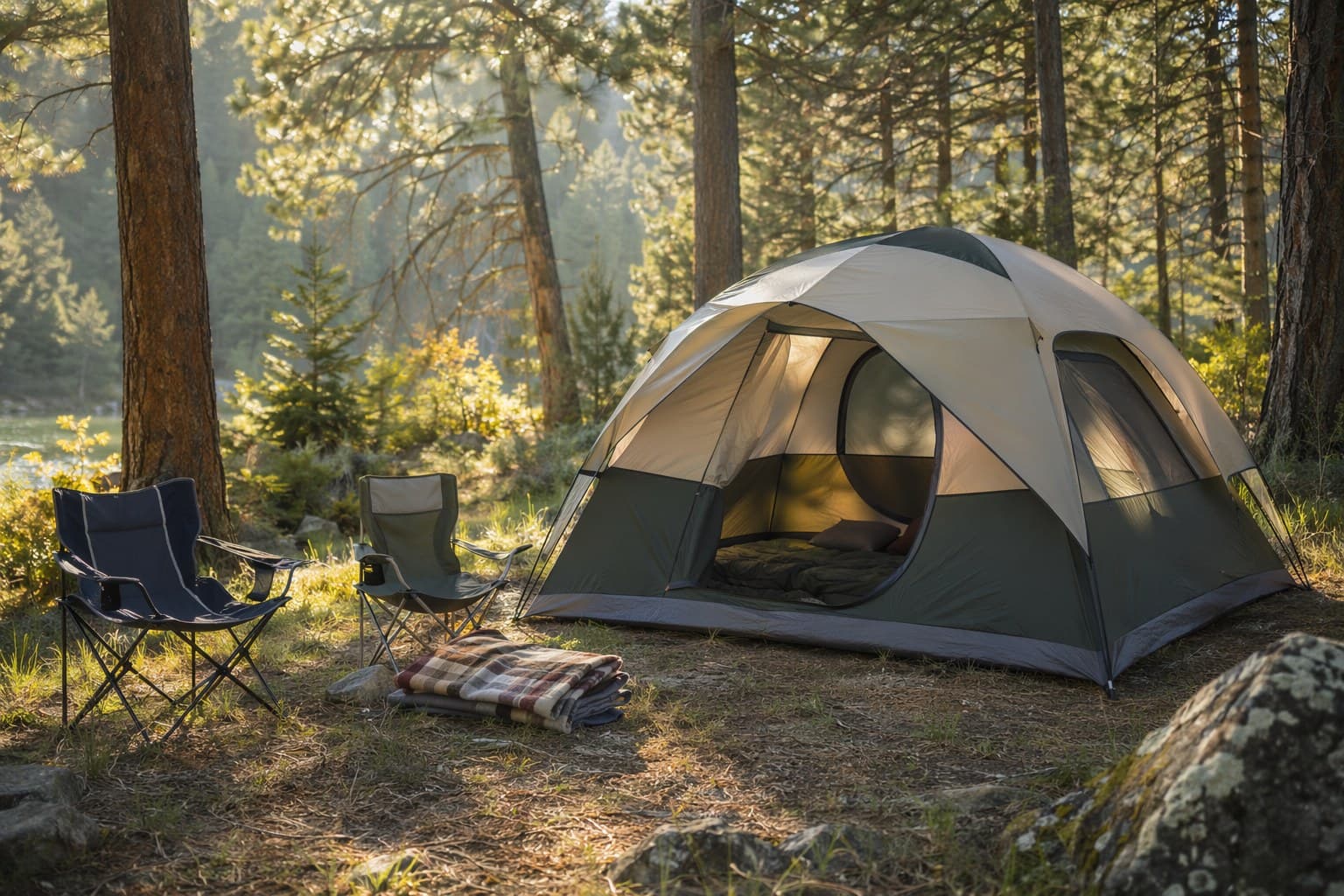
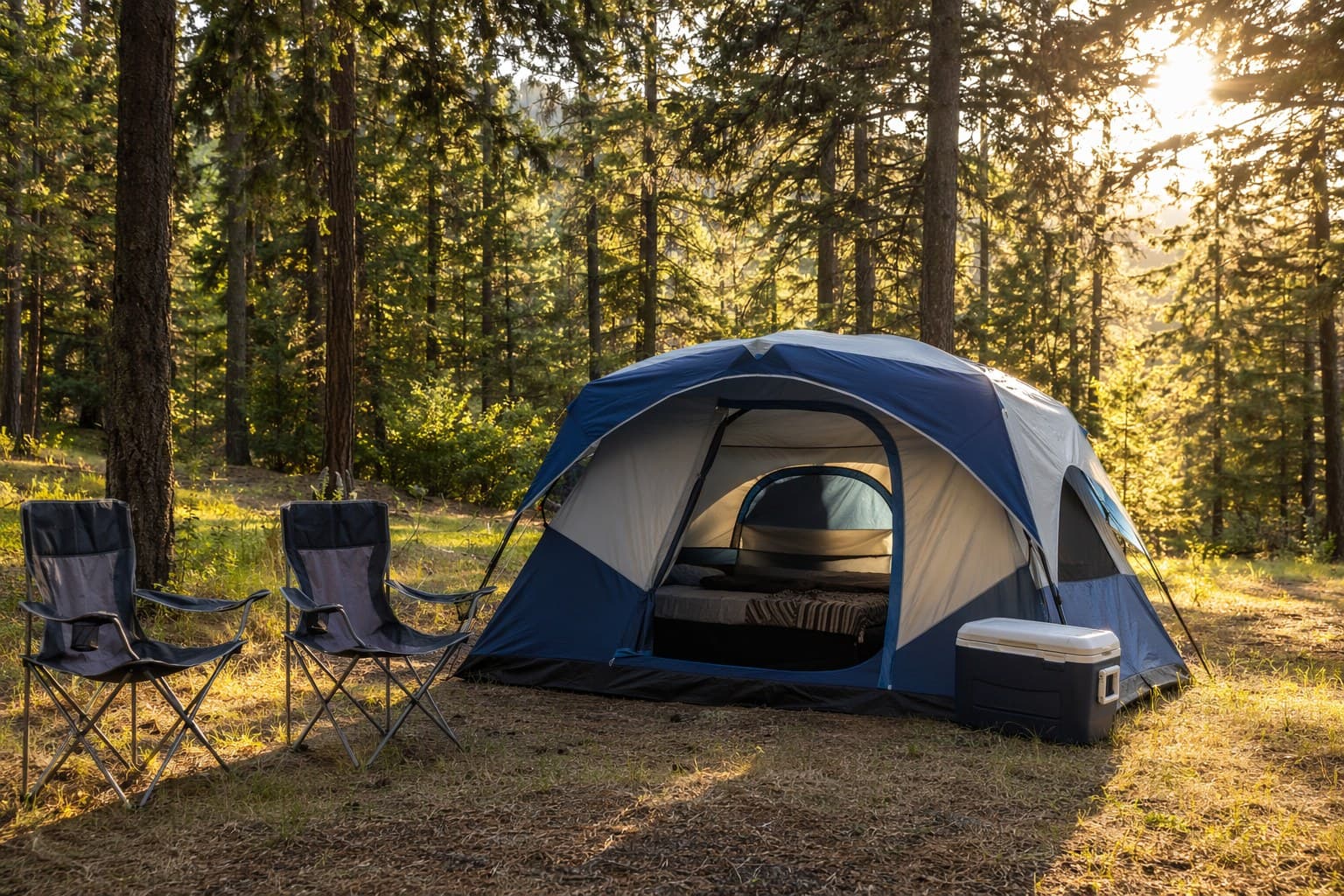
A tent is the one item worth getting right. Buy a tent rated for one or two more people than your family — a "6-person" tent comfortably sleeps a family of four with room for gear and a restless toddler. The Coleman Sundome 6-person tent is the workhorse of beginner family camping: under $150, sets up in about ten minutes once you have practiced, and handles light rain well with the included rainfly. Practice pitching it in the yard at least once before you go. A tent that takes ten minutes when calm takes forty when it is getting dark and a child is crying.
Sleep: Where Most First Trips Fail
Cold, uncomfortable sleep ruins more camping trips than rain ever will. Three things keep kids sleeping soundly.
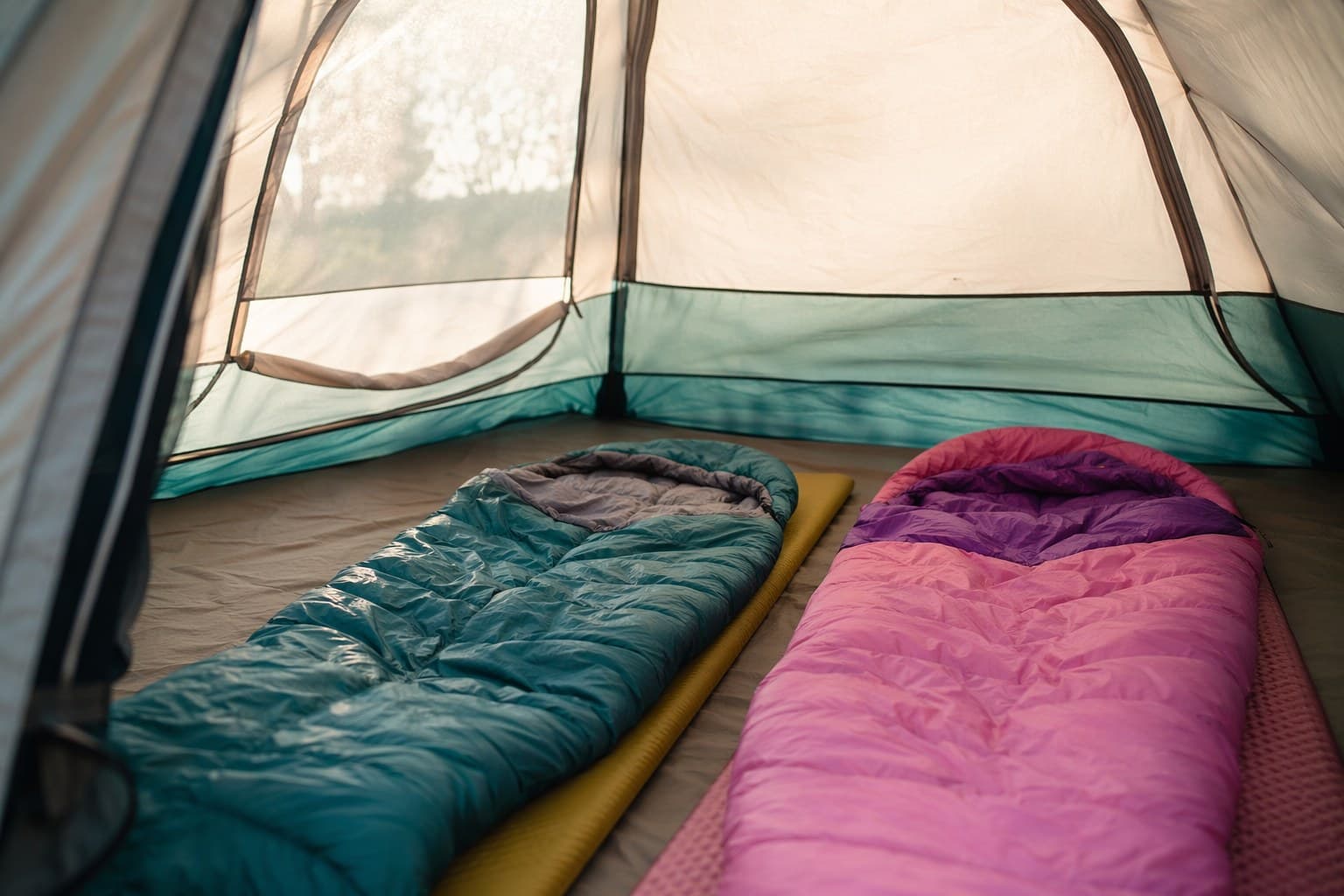
First, sleeping bags rated for the temperature you will actually face. For spring and summer camping, kids sleeping bags rated to 30 degrees give a comfortable margin. Match the bag's rating to at least 10 degrees below your expected overnight low, because temperature ratings are survival ratings, not comfort ratings.
Second, insulation underneath. The cold ground pulls heat from a body faster than cold air does. A foam pad or a self-inflating sleeping pad under each sleeper makes an enormous difference. Skip nothing here — a warm bag on bare tent floor still produces a cold, miserable child.
Third, dry bedtime clothes and a warm hat. Change kids into fresh, dry base layers before bed, even if their day clothes seem fine. A surprising amount of warmth escapes through the head, so a thin beanie is one of the highest-value items you can pack.
Light: One Per Person
Every family member needs their own light source, and headlamps beat flashlights because they keep hands free. A set of kids LED headlamps turns nighttime bathroom trips, tent organizing, and after-dark exploring from stressful to manageable. Add one rechargeable LED camp lantern to light the picnic table and tent interior. The soft glow of a lantern at the table after dark is also one of the quiet pleasures of camping — kids draw, play cards, and wind down in its light.
Kitchen: Keep It Simple
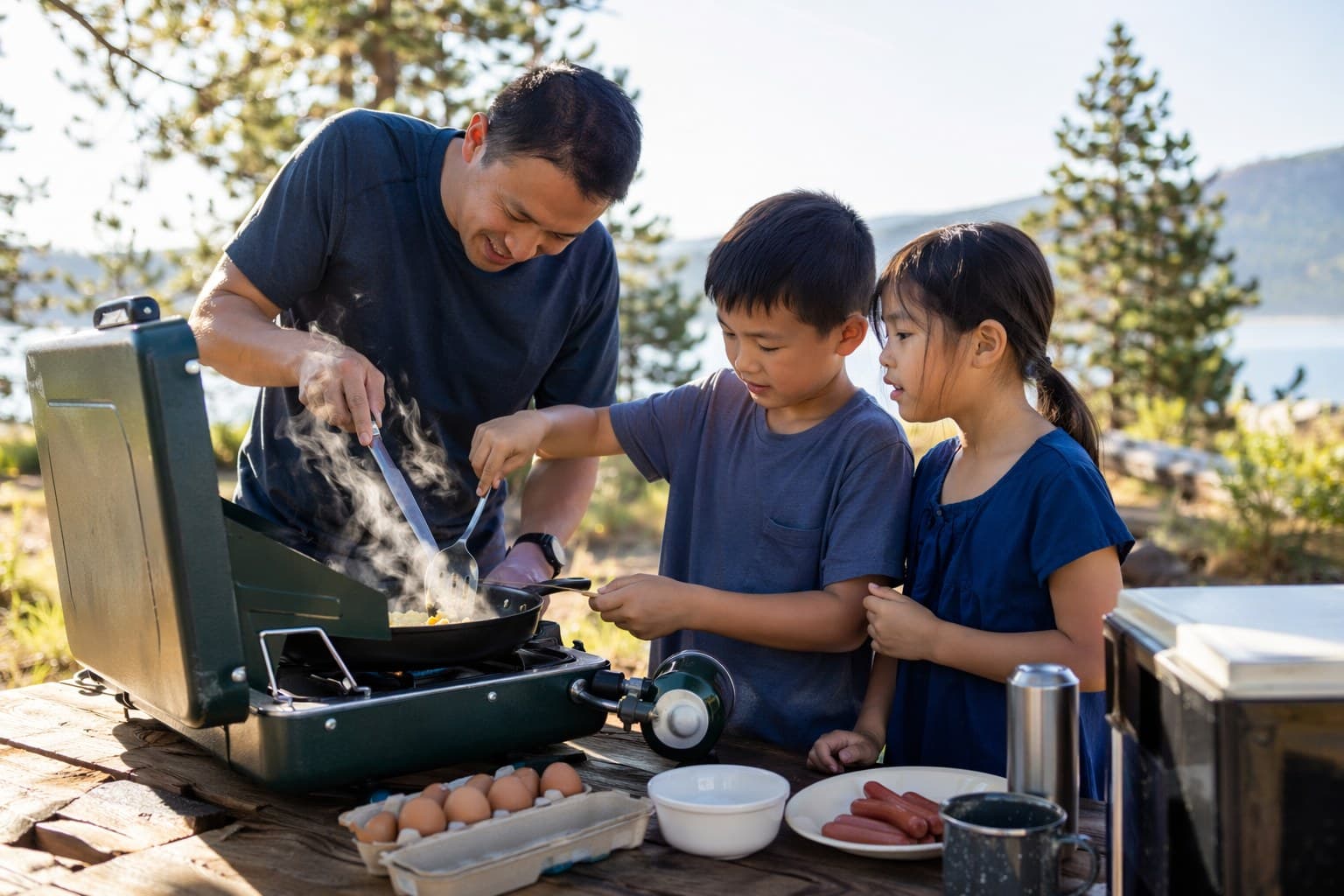
You do not need an elaborate camp kitchen for your first trips. A two-burner propane stove like the Coleman Classic camp stove cooks nearly anything you would make at home and works regardless of fire bans. Pair it with a basic camping cookware mess kit — a pot, a pan, and nesting plates and cups. Plan dead-simple meals for the first trip: pasta, foil-packet dinners, eggs and pre-cooked sausage, and plenty of snacks. Camp cooking is part of the fun, not a test of your culinary skills.
What You Can Borrow, Rent, or Skip
Resist the urge to buy everything at once. Camp chairs, a second cooler, a folding table, a hatchet, and a screen canopy can all be borrowed from friends or rented from outdoor retailers like REI for your first few trips. Many state parks rent gear too. Camping is having a moment, which means there is also a healthy used market — local buy-nothing groups and secondhand sites are full of barely-used tents and sleeping bags from families who tried it once. Borrow first, then buy the items you find you actually use.
Kid-Friendly Skills Worth Teaching
Gear gets you to the campsite. Skills are what make children feel capable and engaged once you are there. Giving kids real jobs is the surest way to head off the boredom and restlessness that lead to "Can we go home?" This is practical life learning at its best, the same competence-building you might already be doing through age-appropriate chores at home.
Setting up the tent. Even a four-year-old can carry poles, hold a corner, or push in stakes with a rubber mallet. Frame it as the family's first mission on arrival.
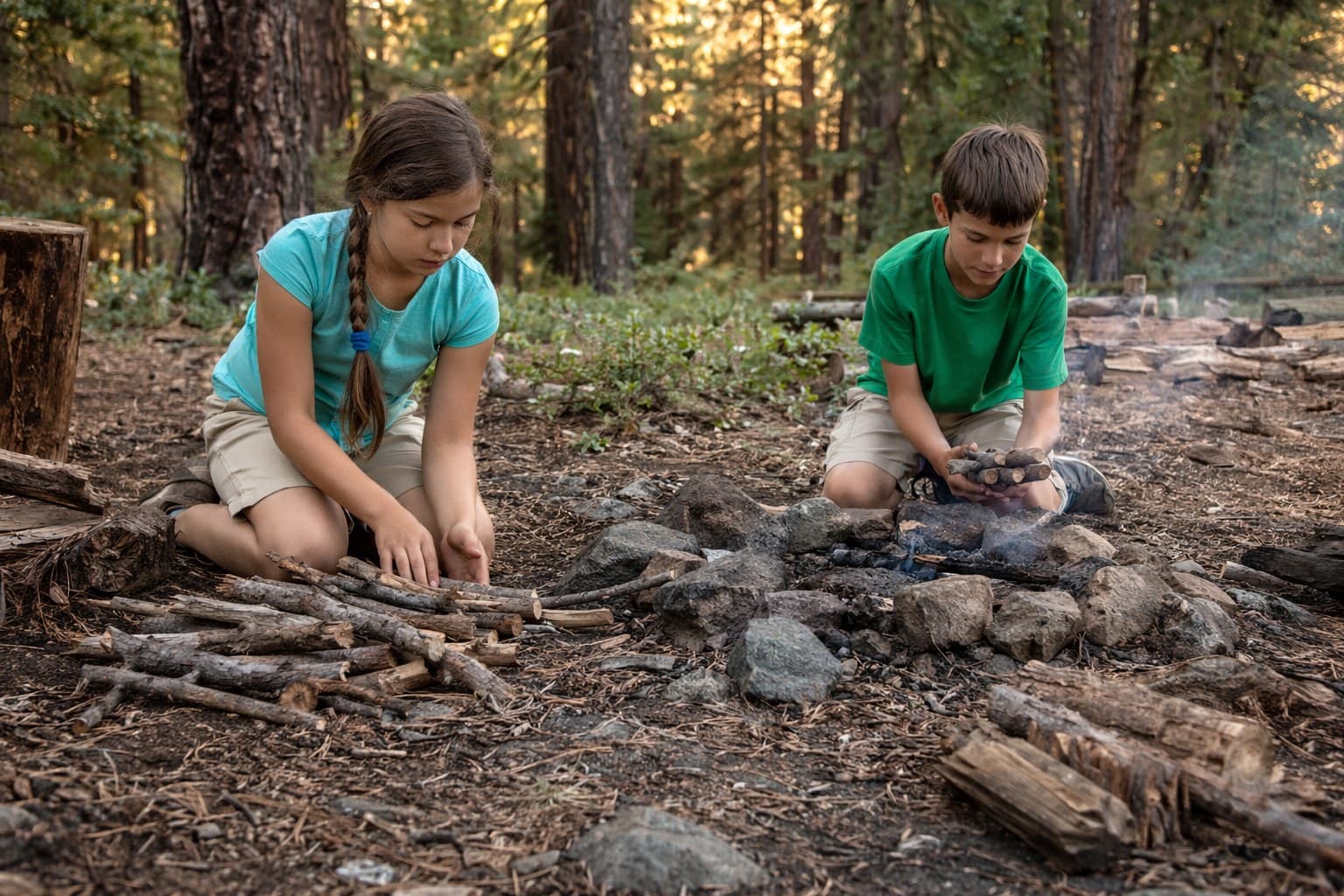
Gathering and sorting firewood. Teach the three sizes — tinder (pencil-lead thin), kindling (finger thick), and fuel (wrist thick). Sorting sticks into three piles is genuinely absorbing for young kids and produces a real, useful result.
Building and respecting the fire. Older children (roughly eight and up, with constant supervision) can learn to lay a teepee or log-cabin fire structure and understand fire safety: a clear ring, water nearby, and never leaving it unattended. Younger children learn the firm boundary of the "fire circle" they do not cross.
Reading the campsite. Walk the perimeter together when you arrive. Where is the bathroom? Where does the trail start? Where is the water spigot? Children who can navigate camp independently feel ownership of the experience and ask fewer "where is" questions.
Packing in, packing out. Teach Leave No Trace from the very first trip. Everything you bring in leaves with you, food scraps go in the trash or are packed out, and natural objects stay where they are. These habits, taught early, become second nature.
A Realistic First-Trip Schedule
A loose rhythm prevents both chaos and boredom. Arrive by mid-afternoon so you set up camp in daylight — never pitch a tent for the first time after dark. Let kids explore the immediate area while you organize. Cook an early, simple dinner. Build a fire as dusk falls, roast something sweet, tell stories, and watch the stars come out. Once you are at camp, there is no shortage of things to do — our guide to screen-free camping activities for kids covers the campfire games, scavenger hunts, and nature exploration that fill the hours from setup to bedtime.
The next morning, cook a relaxed breakfast, take one short walk or activity, then pack up without rushing. Resist the urge to cram in too much. The goal of a first trip is for everyone to end it wanting to come back.
Common First-Trip Mistakes to Avoid
A few predictable errors trip up nearly every new camping family. Forgetting that nights get cold even in summer — pack warm layers regardless of the daytime forecast. Underestimating snacks; hungry kids unravel fast, so bring far more than seems reasonable. Over-scheduling the trip with activities when unstructured time at a campsite is the whole point. And forgetting a few comfort items — a familiar stuffed animal or pillow makes a strange tent feel safe for a young child.
One more: do not forget rain gear and a tarp, even on a clear forecast. A surprise shower with no shade or dry layers turns a great trip sour, while a family that is prepared for rain simply moves under the tarp and keeps playing cards. The difference between a disaster and a story is usually just one piece of preparation.
Why It Is Worth the Effort
Camping asks more of a family than a trip to the playground, and it gives more back. Children who camp develop resilience through minor adversity, competence through real responsibility, and a comfort with the natural world that follows them for life. Research from the University of Colorado found that even a single weekend of camping resets the body's circadian rhythm and improves sleep for days afterward — a welcome side effect for screen-tired kids.
But the real reward is simpler. Around a campfire, with no screens and nowhere to be, families talk. Kids who barely look up at home will tell you their whole inner world while poking a fire with a stick. That is the gear that matters most, and it does not come from any store.
Borrow a tent. Pick a campground an hour away. Book one night. Go.
Frequently Asked Questions
- What camping gear do families with kids actually need to start?
- Start with the big four: a tent sized one or two people larger than your family, sleeping bags rated for the lowest temperature you expect, sleeping pads or air mattresses, and a light source for everyone. Add a basic camp stove, a cooler, a first aid kit, and headlamps for each child. You can borrow or rent the rest. Most families spend $400 to $700 on a starter kit, and good gear lasts a decade or more.
- What is the best age to take kids camping for the first time?
- Families can car camp with babies as young as six months, but the sweet spot for a low-stress first trip is ages three to eight. Toddlers need constant supervision near fire and water, while preschoolers and school-age kids can help with camp jobs and entertain themselves between activities. Whatever the age, keep the first trip to one night at a campground within an hour of home so you can bail out easily if needed.
- How do I keep kids warm enough at night when camping?
- Cold kids are the number one reason first trips go badly. Dress them in a dry base layer and a warm hat for sleeping, use a sleeping bag rated at least 10 degrees below the expected overnight low, and put an insulated pad underneath them — the cold ground steals more heat than the air does. A hot water bottle tucked into the bag at bedtime and a quick pre-bed snack also help kids hold their body heat through the night.
Enjoying this article?
Get more ideas like this delivered to your inbox every week.