Hiking with Young Children: Building Endurance and Love of Nature
Spring and early summer are the perfect window to start hiking with young children. Here is how to build real endurance one short trail at a time while growing a lifelong love of nature — with the gear, pacing, and motivation tricks that actually work.
By The Slow Childhood
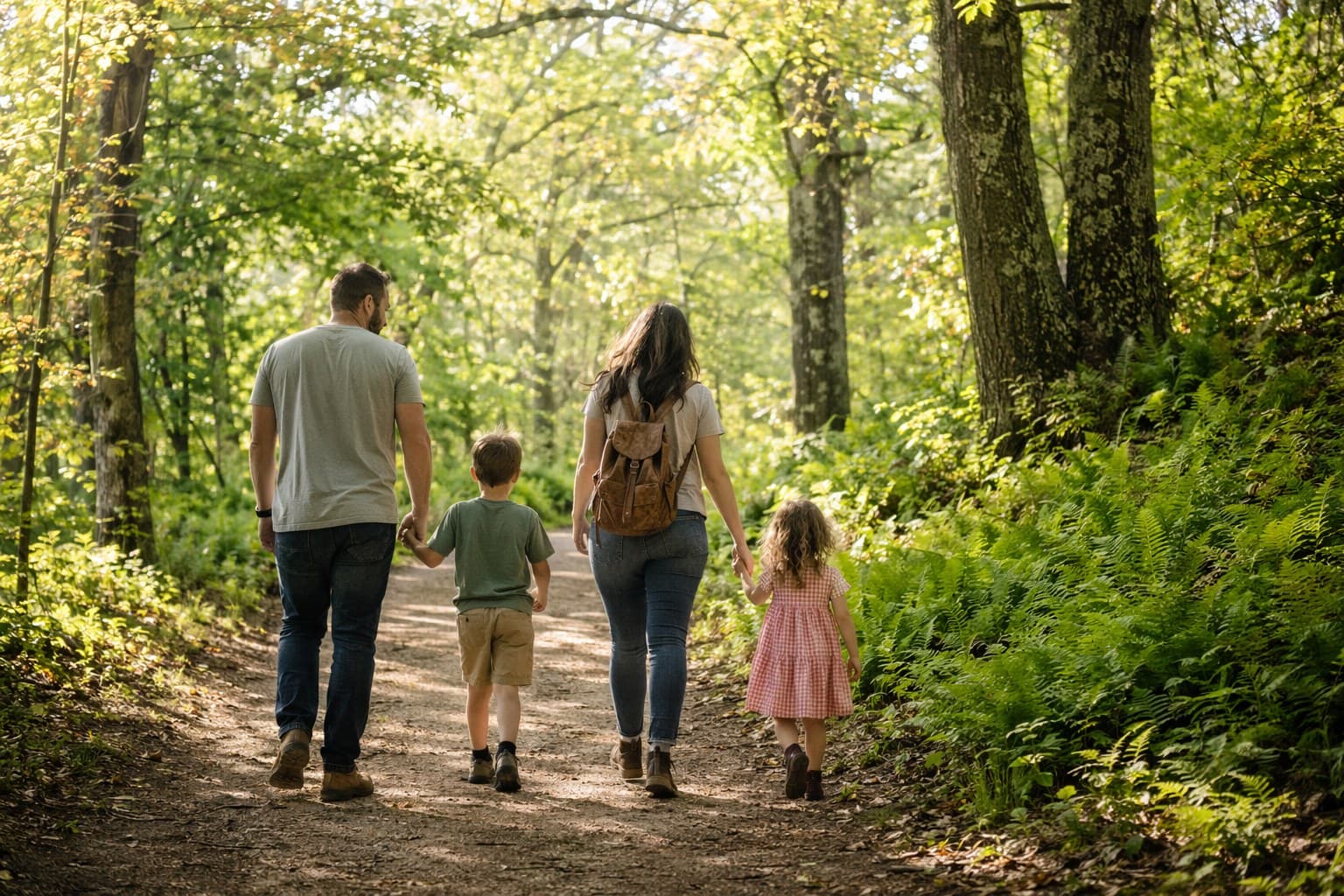
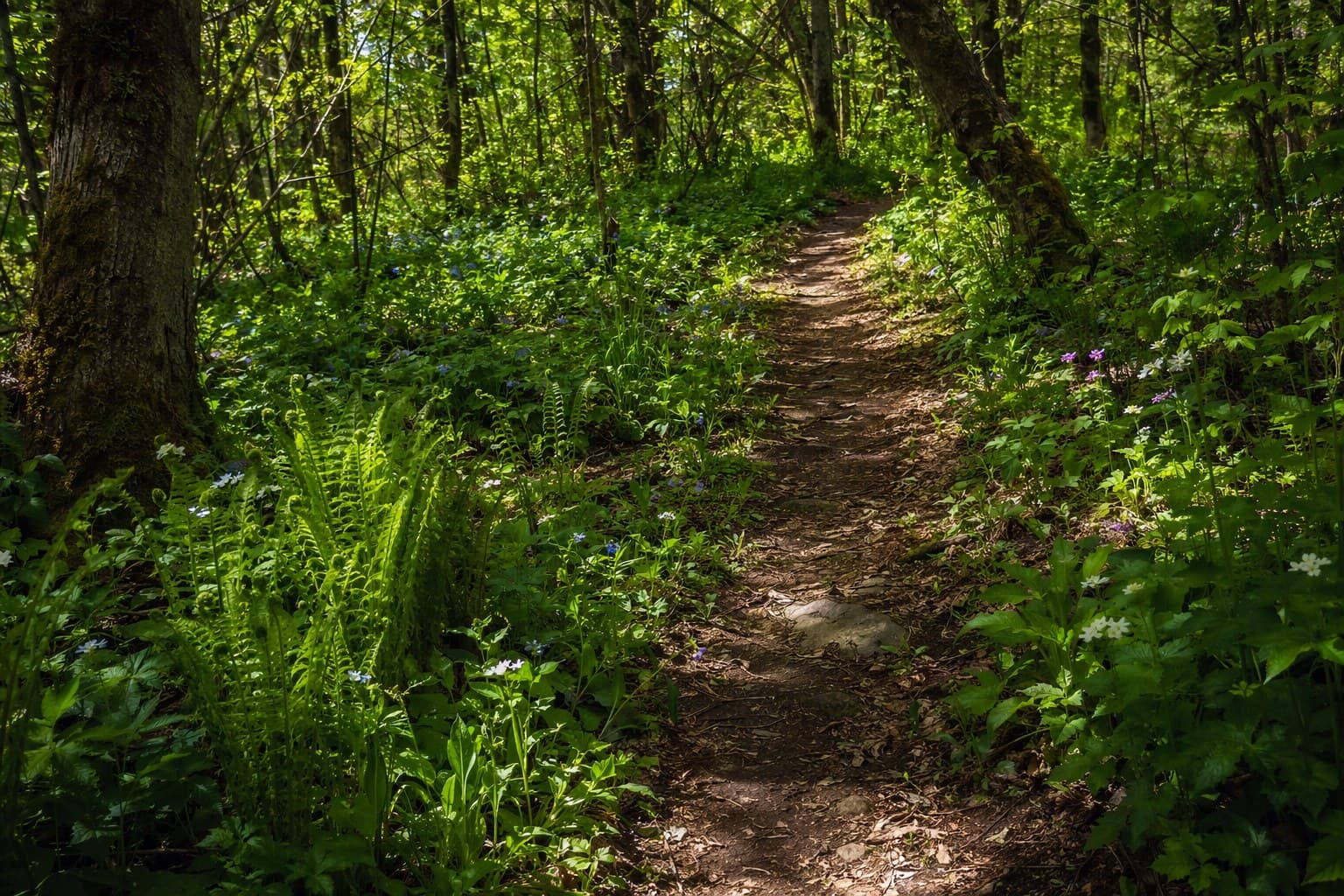
There is a specific kind of magic that lives on a spring trail: the smell of warming soil, the racket of frogs in a roadside pond, ferns uncurling like green question marks along the path. For a young child, all of it is brand new every single year. And that newness is your single greatest tool for building a hiker, because a child who is enchanted forgets to be tired. This is the season to start. Not because your child is suddenly ready for big miles, but because spring and early summer give you the gentlest possible runway to build real walking endurance — and to wire in a love of nature that will outlast any phase, any growth spurt, and any future eye-roll about "family time."
Endurance in a young child is not built the way it is in an adult. You do not train it through gritted teeth or distance goals. You build it almost by accident, by going out often, keeping the trail short enough to feel good, and letting wonder do the heavy lifting. This guide walks through exactly how to do that — the pacing, the gear that genuinely matters, and the dozen small tricks that turn "I'm tired" into "just one more bend."
Why Endurance Is Built, Not Pushed
A young child's stamina is real but fragile. Their legs are short, their cooling system is less efficient than yours, and their motivation runs almost entirely on interest rather than willpower. The moment a hike stops being interesting, the perceived effort doubles. This is why a four-year-old can run feral around a playground for two hours but collapse in despair half a mile into a trail. It is rarely the muscles giving out first. It is the engagement.
So the goal is not to test the limit. It is to spend most of your time comfortably under it. A child who finishes every hike still wanting to go a little farther is a child who will happily come back next weekend — and consistency, not intensity, is what actually grows endurance. A family that walks one easy mile most weekends will produce a far stronger little hiker by autumn than a family that attempts one heroic three-miler every month and leaves everyone in tears.
The physiology backs this up. Aerobic capacity in children responds to frequent, moderate, enjoyable movement far better than to occasional max efforts. Add in the uneven footing of a real trail — roots, rocks, gentle grades — and you are quietly training balance, ankle strength, and proprioception on top of cardiovascular fitness. None of it feels like training. It feels like a really good morning outside. If you are brand new to all of this, our beginner hiking tips and age-by-age trail ideas make a good companion read before your first outing.
The Spring Advantage: Start Now
Timing matters more than parents expect. Three things make spring and early summer the ideal launch window for building endurance:
The temperature does the work for you. In mild weather, a child's body is not fighting heat or cold while it adapts to longer distances. There is no overheating, no clammy chill, no energy burned on thermoregulation. That spare capacity goes straight into walking.
The trail is at peak interest. This is the loudest, busiest, most discoverable season in the woods. Tadpoles in the puddles, new leaves at a child's eye level, mud to inspect, salamanders under logs, the first wildflowers. Motivation is free and everywhere. A child stops noticing the distance because they are too busy investigating it.
Daylight is generous and forgiving. A hike that runs at toddler pace — which is to say, slowly, with frequent stops to examine every interesting pebble — still finishes in plenty of light. There is no time pressure souring the mood.
Starting now means that by midsummer your child has quietly racked up a dozen short outings and built a genuine base, ready for slightly bigger adventures when the family vacation or the camping trip arrives. If outdoor habits are still new to your household, weaving in some everyday outdoor nature activities between hikes keeps the momentum going on non-trail days.
Gear That Genuinely Helps Endurance
You do not need to spend a fortune to start hiking. But a few specific items remove the most common reasons young children give up early — sore feet, hunger, boredom, and tired legs. Spend here and skip nearly everything else.
Footwear comes first
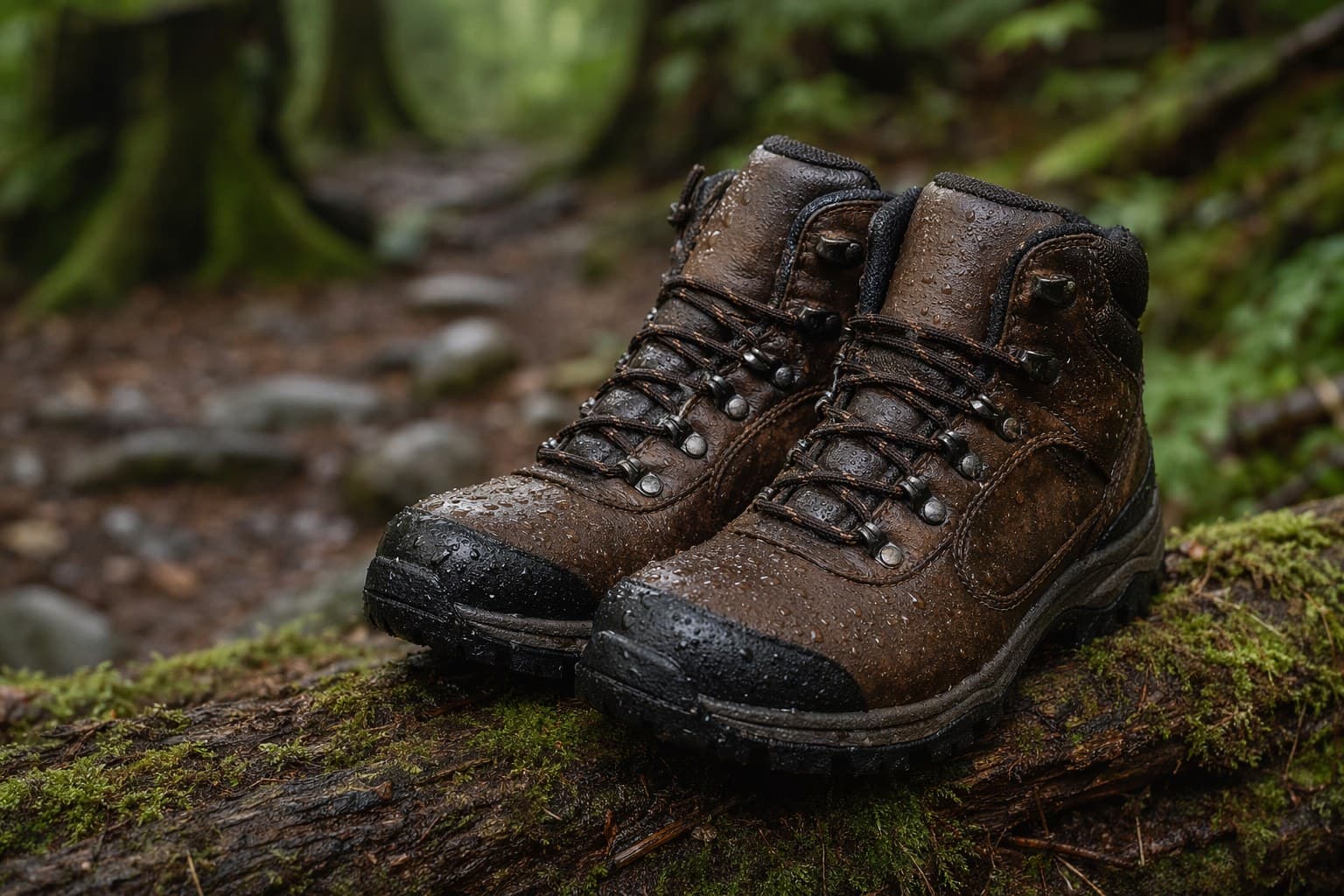
Nothing kills a hike faster than wet, blistered, or sloppy-fitting feet. Spring trails are muddy and stream-crossed, so waterproof matters. A pair of waterproof kids hiking boots with real ankle support and grippy lugs lets a child charge through the puddle instead of tiptoeing miserably around it. Size with a thumb's width of room and thick socks, and break them in on a couple of neighborhood walks before the trail. For drier, flatter outings, a sturdy kids trail shoe is lighter and just as capable.
The carrier safety net
For children under five, a framed child backpack carrier is the single best endurance-builder you can own, paradoxically because it lets your child walk more, not less. Knowing you can scoop up a flagging four-year-old for the last half mile means you can choose a slightly longer or more rewarding trail without betting the whole outing on little legs lasting. The child walks until genuinely done, then rides the rest in peace — and still gets full credit for the distance they covered.
Fuel, on a schedule
Young children burn through their reserves fast and hit "hangry" without warning. The fix is to feed early and often, before the crash. A dedicated reusable hiking snack pack with divided compartments lets your child graze on the move — trail mix, cheese, dried fruit, a few salty crackers. I treat snacks as the engine, not the reward: a small bite every fifteen or twenty minutes keeps energy steady far better than one big stop. Pair it with an insulated kids water bottle and offer sips constantly, because dehydration shows up first as crankiness and "tired legs."
Navigation and a sense of mission
Handing a child a job transforms them from a passenger into a participant, and participants walk farther. A waterproof trail map case clipped to a small backpack turns your preschooler into the official navigator, checking off landmarks and announcing each turn. It is a tiny prop that buys an astonishing amount of forward motion.
Poles for the wobble — and the fun
Around age four or five, a pair of kid-sized child trekking poles earns its keep. They genuinely help with balance on uneven terrain and downhill stretches, taking some load off little knees, but the real value is psychological: poles make a child feel like a Serious Mountaineer, and a child who feels capable keeps going. Look for adjustable, lightweight aluminum ones that lock securely.
That is the whole essential kit. Add sun hats, a packable rain layer for spring showers, and a small first aid pouch with tick tweezers, and you are genuinely equipped.
The Endurance-Building Plan, Week by Week
Here is the approach I recommend for the spring-to-summer arc. It is deliberately unambitious, which is exactly why it works.
Weeks 1 to 3 — Repeat one easy trail. Pick a flat, short loop close to home, ideally half a mile with something good at the end like a stream, a footbridge, or a big climbing rock. Walk it again and again. Familiarity breeds confidence; your child learns the route, anticipates the rewards, and stops fearing the unknown. Do not add distance yet.
Weeks 4 to 6 — Add one new trail. Introduce a second loop that is slightly longer or has a little gentle elevation. Keep the original easy trail in rotation for the weeks you want a guaranteed win.
Weeks 7 to 9 — Stretch the distance gently. Add a quarter mile, or fifty to a hundred feet of elevation gain, no more. The increment should be small enough that your child barely notices it.
Weeks 10 and beyond — Aim for the 80/20 trail. Choose hikes that are about 80 percent within easy reach and 20 percent genuinely challenging. That small stretch zone is where endurance and confidence both grow, as long as the bulk of the hike still feels achievable.
The guiding number to keep in your head: roughly half a mile of trail per year of age as a ceiling, halved again for rough terrain. Stay under it most of the time. When you are camping or away from home, the same principle applies — pair short morning hikes with the lower-key camping activities families love so nobody is overcooked by dinner.
Keeping Little Legs Moving: Motivation That Works
Endurance and motivation are the same thing in a young child. Here are the tricks that reliably extend distance.
Let them lead. Children walk farther and complain dramatically less when they are out front setting the pace and choosing the turns. The view of an adult's backside is uninspiring; the open trail ahead is an invitation.
The "just to that tree" game. When energy flags, point to a near landmark — that boulder, that bend, that fallen log — and aim only for it. Celebrate arriving, then pick the next one. Big distances are demoralizing; a string of tiny, visible goals is endlessly walkable.
Hunt for something. Give the hike a mission: find five kinds of green, a feather, animal tracks, a smooth stone, the loudest bird. Searching turns passive trudging into active exploration, and exploring does not feel like effort.
Stop for the wonder, not the rest. Build in real stops to flip a log, watch tadpoles, or float a stick down the stream. These pauses are not delays — they are the entire point, and they recharge legs and morale at the same time.
Bring the destination forward. "We are hiking to the waterfall" pulls a child along far harder than "we are going on a two-mile hike." Pick trails with a clear payoff and name it constantly.
Cultivating the Love, Not Just the Miles
Here is the part that outlasts the endurance: the relationship with nature itself. Distance is forgettable. The memory of crouching together over a salamander, or feeling the spray off a waterfall after an hour of effort, is not.
So let the trail be slow. Resist the urge to make good time. The five-minute investigation of a beetle is not interrupting the hike — for a young child, it is the hike. Name things as you go: the trillium, the woodpecker, the difference between a fern and a frond. You are not delivering a lecture; you are showing your child that this world is interesting enough to be curious about. That curiosity is what brings them back.
Let the weather be part of it, too. A drizzle is not a ruined hike; it is the day the trail smells incredible and the worms come out. Children who learn that they can be comfortable and even delighted in imperfect conditions become adults who do not need perfect conditions to go outside. That resilience — the quiet knowledge that discomfort is temporary and the body is capable — is one of hiking's deepest gifts, and it is being built every time your child works through a tired stretch with encouragement rather than rescue.
Most of all, keep your own emotional weather mild. Your child reads your mood on the trail more than the terrain. A relaxed, unhurried adult who treats the outing as a pleasure raises a child who experiences nature as a place of ease, not pressure.
When to Turn Back
Building endurance never means overriding genuine signals. Turn back if your child is truly distressed rather than just grumbling, if anyone is hurt beyond a quick fix, if the weather turns, or if you are losing daylight. There is real value in this, too: turning around teaches a child that finishing is never more important than feeling safe, and that trust is exactly what makes them willing to attempt the harder trail next time. An abbreviated hike is not a failed one.
Start This Weekend
You do not need mountains, expensive equipment, or any hiking experience of your own. You need decent shoes, a water bottle, a pocketful of snacks, and a willingness to walk slowly behind a small person who wants to look at everything.
Find the nearest short, easy trail — a park loop, a nature preserve, a greenway with a stream. Go this weekend while spring is doing all the persuading for you. Let it be short. Let it be slow. Let your child stop for every caterpillar. Then go back next weekend, and the one after that. The distance will grow on its own, quietly, while you are both busy noticing things. And one ordinary Saturday a year or two from now, you will look up and realize you are hiking alongside a genuine little adventurer — one you never had to push, only ever invited.
Frequently Asked Questions
How far can a young child actually hike? Use about half a mile of trail per year of age as a ceiling, then halve it for real terrain. Stay under that limit most of the time so endurance grows without meltdowns.
Why are spring and early summer the best time to start? Mild temperatures, peak trail interest, and long forgiving daylight all remove the obstacles that make a child quit early, giving you the gentlest possible runway to layer on distance.
Should I bring a carrier even if my child can walk? For children under five, yes — it is the safety net that lets you choose a better trail without gambling the whole outing on tired legs, and most families phase it out naturally between ages four and six.
Frequently Asked Questions
- How far can a young child actually hike?
- Use the rough rule of about half a mile of trail per year of age as an upper ceiling, then cut it in half for real terrain. A 3-year-old might comfortably manage half a mile to a mile of gentle trail, a 5-year-old one to two miles, and a 6 or 7-year-old two to three miles. These are walking distances, not carrier distances — and they assume frequent stops. Endurance grows fastest when you stay just under the limit rather than pushing past it, so a child finishes wanting more instead of melting down.
- Why are spring and early summer the best time to start?
- Mild temperatures mean no overheating and no frozen fingers, so the body has nothing to fight against while it adapts to longer distances. Trails are green, loud with birds and frogs, and full of the slow-motion discoveries — emerging ferns, tadpoles, wildflowers — that keep a young child motivated to keep walking. Daylight is long and forgiving, so a hike that runs slow does not end in the dark. It is the gentlest possible season to layer on distance week by week.
- Should I bring a carrier even if my child can walk?
- For children under about 5, yes. A carrier is not a failure — it is the safety net that lets you choose a slightly longer or more interesting trail without gambling the whole outing on tired legs. When a 3 or 4-year-old hits the wall a mile in, a carrier turns a potential meltdown into a peaceful finish, and the child still gets credit for the distance they walked. Most families phase the carrier out naturally somewhere between ages 4 and 6 as endurance climbs.
Enjoying this article?
Get more ideas like this delivered to your inbox every week.