15 Simple Nature Games the Whole Family Will Love
Easy nature games for families that need minimal supplies and work in backyards, parks, trails, or anywhere outdoors. Organized by setting with age ranges and player counts.
By The Slow Childhood
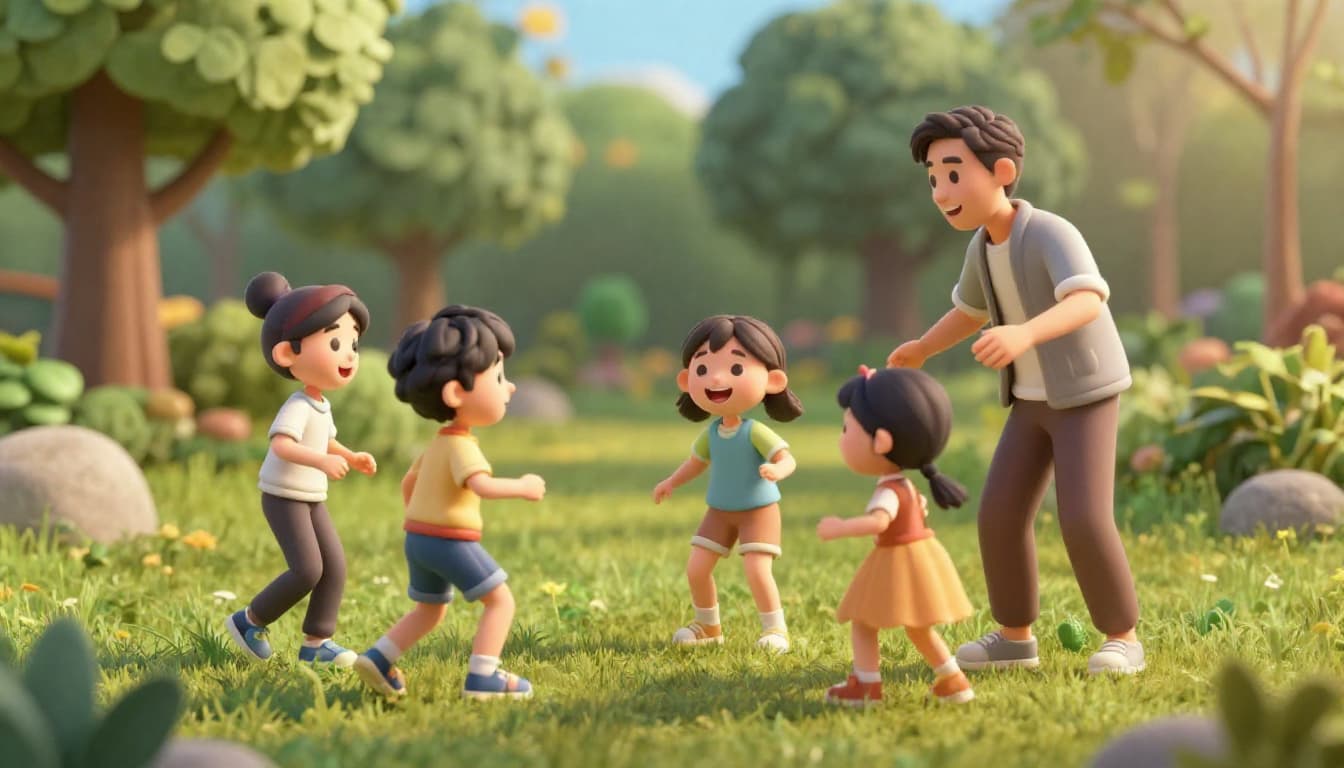
Some of our best family memories happened because someone said, "Hey, let's play a game" while we were already outside. Not a game we planned. Not a game that required a trip to the store. Just a simple game using whatever nature had available — sticks, leaves, trees, rocks, and a little imagination.
Nature games are different from indoor games in a way that is hard to describe until you experience it. They are looser, sillier, more physical, and more unpredictable. A gust of wind changes the game. A bug crawling across the playing field becomes a plot twist. Someone discovers a perfect climbing tree mid-game and everyone abandons the rules to scramble up it. That flexibility is the whole point.
The 15 games in this guide are organized by where you might play them — backyard, park, trail, or anywhere outdoors. Every game lists the recommended ages, number of players, and any supplies needed (most need none). We have played all of them with our own family and can vouch that they actually work with real children who have strong opinions and short attention spans.
Backyard Games
These games work in any outdoor space you have regular access to, from a sprawling yard to a small patio with a patch of grass nearby.
1. Leaf Rain
Ages 2+ | 1+ players | Supplies: none
Gather a huge armful of fallen leaves. Throw them straight up in the air and let them rain down. That is it. That is the game.
It sounds absurdly simple, and it is. But toddlers will do this for 30 minutes straight, shrieking with delight every single time. Older kids get into it by building the biggest leaf pile possible before the launch, timing how long the leaves take to fall, or trying to catch specific leaves as they flutter down.
Seasonal note: This is obviously best in autumn, but it works with grass clippings, flower petals, or even handfuls of sand at the beach. The joy is in the tossing and the shower of material coming down.
Extend the play: After Leaf Rain, sort the leaves by color, size, or shape. Press the prettiest ones between book pages. Use them for leaf rubbing art.
2. Bug Olympics
Ages 4+ | 2+ players | Supplies: none (optional: magnifying glass, sticks for course)
Find two or more bugs — pill bugs, beetles, ants, caterpillars, whatever you can gently catch or observe — and set up "Olympic events" for them. Place two pill bugs at one end of a flat stick and see which one reaches the other end first. Build a tiny obstacle course from twigs and leaves and guide a beetle through it. See which bug can climb the tallest grass blade.
The real fun here is the commentary. Encourage kids to give their bugs names and narrate the events like sports announcers. "And Speedy is rounding the leaf corner — oh, but Sir Crawls-a-Lot is making a comeback!"
Important rule: All bugs are returned safely to where they were found after the Olympics. We talk about being gentle scientists who observe without harming.
3. Nature Sound Bingo
Ages 3+ | 1+ players | Supplies: none (optional: paper and pencil for a grid)
Before starting, brainstorm a list of sounds you might hear outside: a bird singing, a dog barking, wind in the trees, a plane overhead, a car passing, a bee buzzing, a squirrel chattering, a door closing, a child laughing, leaves rustling. If you want, draw a simple bingo grid and write or draw one sound in each square.
Then sit quietly and listen. Mark off each sound as you hear it. First to fill a row wins — or just see how many you can check off in 10 minutes.
This game is wonderful because it requires stillness, which is something many kids resist until you give it a purpose. Sitting quietly is boring. Sitting quietly because you are listening for something specific is thrilling.
4. Barefoot Trail
Ages 3+ | 1+ players | Supplies: collected natural materials
Create a sensory path using whatever natural materials are available. Lay out a section of smooth stones, then a section of grass clippings, then pine needles, then sand, then damp mud, then dry leaves, then sticks laid side by side. Walk the trail barefoot with eyes closed (or open, for younger kids) and describe how each section feels.
You can make this as short as six feet or as long as your yard allows. Kids love helping to build the trail as much as they love walking it. Blindfold older kids and have them guess which section they are standing on.
Safety note: Walk the trail yourself first to remove any sharp objects. Avoid areas where you know there are thorns, broken glass, or fire ants.
5. Nature Art Challenge
Ages 3+ | 1+ players | Supplies: none | Time: 10-20 minutes
Give everyone 10 minutes to create something using only natural materials found in the yard. A face made from stones and sticks. A fairy house from bark and moss. A mandala from flower petals and leaves. An animal sculpture from mud and grass. There is no competition — just creation.
Set a timer so everyone works simultaneously, then do a gallery walk where each person explains their creation. Younger kids will make delightful abstract piles and give them elaborate names. Older kids will surprise you with their ingenuity.
This game is inspired by the land art movement and pairs beautifully with our collection of backyard games for summer.
Park Games
Parks give you more space, more variety of terrain, and usually more trees — which opens up a whole new set of games.
6. Camouflage
Ages 5+ | 4+ players | Supplies: none
One person is the Seeker and stands at a central point with their eyes closed. Everyone else has 30 seconds to hide — but they must be able to see the Seeker at all times. They can hide behind trees, crouch in tall grass, flatten against a log, or press into a bush, but they cannot fully disappear.
The Seeker opens their eyes and, without moving from their spot, tries to spot hidden players. They point and call out anyone they see. Anyone not found after one minute takes five giant steps closer, and the Seeker looks again. Repeat until everyone is found. The last person found becomes the next Seeker.
This game teaches kids to think about color, shape, and stillness in nature. They start noticing how animals use camouflage, and suddenly every nature walk becomes a chance to spot hidden creatures.
7. Eagle Eye
Ages 4+ | 3+ players | Supplies: 10-15 natural objects
One person is the Eagle and collects 10-15 natural objects — a pinecone, a specific leaf, a feather, an acorn, a piece of bark, a smooth stone, a seed pod. They lay the objects on a log or flat rock and give everyone 30 seconds to study them. Then everyone turns around while the Eagle removes one object and hides it behind their back.
Players turn back and try to identify what is missing. Whoever guesses correctly becomes the next Eagle.
Variation for younger kids: Use fewer objects (5-7) and give more study time. For older kids, remove two or three objects at once.
8. Scavenger Relay
Ages 4+ | 4+ players (two teams) | Supplies: none
Divide into two teams. Call out a natural item — "a yellow leaf!" — and one player from each team races to find it and bring it back. First team to return with the item gets a point. Then call the next item for the next pair of runners.
Good items to call: a stick longer than your arm, a perfectly round rock, something soft, a seed, something that smells good, a leaf bigger than your hand, three acorns, a piece of bark, something red, a feather.
This game burns enormous amounts of energy and works well for birthday parties, family reunions, and homeschool co-op gatherings. For more group game ideas, see our guide to cooperative games where everyone wins.
9. Treasure Hunt
Ages 3+ | 2+ players | Supplies: small objects to hide (optional)
One person hides 10-20 small items around a defined area of the park — pinecones, painted rocks, small sticks with ribbons tied around them, or whatever you have. Everyone else searches for them. You can make this competitive (most found wins) or cooperative (everyone searches together until all are found).
For toddlers, hide items in very obvious spots and give enthusiastic "warmer/colder" clues. For older kids, expand the search area and hide items more cunningly.
Zero-supply version: Instead of hiding items, give each player a list of natural things to find — a Y-shaped stick, a rock with sparkles in it, a leaf with holes in it, something an animal chewed, a seed still attached to its tree. First to find everything wins.
Trail Games
These games are designed for hiking and walking trails. They keep kids moving forward and engaged when legs get tired and "are we there yet" starts echoing through the trees. They pair perfectly with the tips in our hiking with kids guide.
10. Trail Bingo
Ages 4+ | 1+ players | Supplies: optional paper and pencil
Before the hike, brainstorm a list of things you might see on the trail: a mushroom, a fallen log, a spider web, animal tracks, a stream, moss, a bird nest, a wildflower, a rock with lichen, something a human left behind. Call them out or write them in a grid.
Check off items as you spot them during the hike. This game gives kids a reason to look carefully at their surroundings instead of staring at the trail under their feet. You can adjust difficulty by choosing common items (a green leaf, a brown rock) for younger kids and uncommon items (a woodpecker hole, a deer track) for older ones.
11. Story Stick
Ages 5+ | 2+ players | Supplies: one stick
One person holds the Story Stick and begins telling a story set in the environment you are walking through. "Once upon a time, a tiny mouse lived under this very log..." After 30 seconds or one minute, pass the stick to the next person, who must continue the story.
The stories get wild, funny, and surprisingly creative. Kids weave in things they see on the trail — real birds become characters, a creek crossing becomes a dramatic plot point, a strange rock becomes a dragon egg. This game makes miles disappear.
Variation: Instead of a continuous story, each person tells a short tale about one specific thing they see. "That old tree has been standing there for a hundred years. It has seen bears, and storms, and a family of owls that lived in that hole right there..."
12. Foxes and Rabbits
Ages 5+ | 4+ players | Supplies: none
One person is the Fox and walks 20 paces ahead on the trail. Everyone else is a Rabbit. The Fox stops, counts to five out loud, then turns around. Any Rabbit they catch moving has to freeze for one round. Rabbits try to sneak close enough to tag the Fox before being caught moving.
This is essentially a trail-adapted version of Red Light Green Light, and it works brilliantly for keeping a group moving forward on a hike. The Fox keeps walking ahead, so the whole group progresses along the trail while playing.
Anywhere Outdoors
These games work in any outdoor setting — backyard, park, trail, campsite, beach, or grandma's porch.
13. Animal Charades
Ages 3+ | 3+ players | Supplies: none
One person acts out an animal using only movements and sounds (no words). Everyone else guesses. This is a classic for good reason — kids adore it, and it is endlessly adaptable.
Nature twist: Only act out animals you have actually seen in real life, or animals that live in your region. This prompts great conversations about local wildlife and gives kids a reason to pay closer attention on future outings.
Toddler version: Skip the guessing. Just call out an animal and everyone acts it out together. "Be a bear! Be a butterfly! Be a snake!" Toddlers cannot wait for turns and do not care about guessing — they just want to stomp around being a dinosaur.
14. Listening Game
Ages 3+ | 1+ players | Supplies: one bandana for a blindfold (optional)
One person is blindfolded (or simply closes their eyes) and sits in the center of a defined area. Other players take turns sneaking toward the blindfolded person, who points in the direction they hear movement coming from. If the pointer gets the direction right, the sneaker has to go back and try again.
This sharpens listening skills remarkably. Children who play this game regularly start hearing wildlife sounds — distant bird calls, rustling in underbrush, insect hums — that they missed before.
Solo version: Sit with eyes closed for two full minutes. Count every distinct sound you hear. Try to beat your count each time you play. This is a beautiful mindfulness exercise disguised as a game.
15. Storytelling Circle
Ages 4+ | 3+ players | Supplies: natural objects collected beforehand
Sit in a circle. Each person places one natural object in the center — a rock, a feather, a leaf, a flower, a stick. The first person picks up one object and begins a story that features it. After a minute, the next person picks up a different object and continues the story, weaving their object into the plot.
By the end, you have a collaborative story that features every object. The stories are often absurd and always memorable. This is one of our family's favorite campfire games, and it works just as well in a sunny park as it does at a campsite.
Tips for Playing Nature Games With Your Family
Start by playing, not by explaining. Long rule explanations kill momentum with kids. Instead, say "I will show you" and start playing. Kids learn games by doing, not by listening to instructions.
Be willing to play too. Kids under 8 rarely sustain games on their own. Your participation is the fuel that keeps the game going. You do not have to play the entire time — often 10-15 minutes of adult involvement is enough before kids take over and keep going independently.
Adapt freely. Every game in this list is a starting point. If your 4-year-old wants to change the rules of Camouflage so that everyone hides and nobody seeks, let them. If your 10-year-old thinks Eagle Eye should have a speed round, go for it. The goal is engagement, not rulebook accuracy.
Let games evolve into free play. The best nature games are springboards. Camouflage turns into fort building. Bug Olympics turns into a 45-minute insect observation session. Treasure Hunt turns into an elaborate fantasy narrative. When a game dissolves into imaginative free play, that is a success, not a failure.
Rotate games. Keep a mental list of three or four games your family enjoys and rotate through them. Kids love familiar favorites, but they also need novelty. Introduce one new game each month.
Match the game to the energy level. Scavenger Relay and Foxes and Rabbits are for days when kids have energy to burn. Listening Game and Storytelling Circle are for winding down. Nature Art Challenge works when everyone needs quiet focused time. Read the mood and pick accordingly.
Games for Different Group Sizes
Playing with just one child: Leaf Rain, Nature Sound Bingo, Barefoot Trail, Nature Art Challenge, Trail Bingo, and the solo version of Listening Game all work beautifully one-on-one or even solo.
Playing with 2-3 people: Eagle Eye, Story Stick, Treasure Hunt, Storytelling Circle, and Animal Charades are all great for small families.
Playing with 4+ people: Camouflage, Scavenger Relay, and Foxes and Rabbits really shine with larger groups. These are our go-to picks for playdates, family gatherings, and homeschool co-op days.
A Note on Competition
You might notice that most of these games are either non-competitive or only mildly competitive. That is intentional. Nature play works best when the focus is on exploration, creativity, and shared experience rather than winning. When children are worried about losing, they stop noticing the hawk overhead or the interesting fungus on the log.
That said, some kids thrive on friendly competition, and games like Scavenger Relay and Eagle Eye provide it in small, manageable doses. Follow your child's lead. If competition causes meltdowns, stick to the cooperative games. If it fuels excitement, lean into it.
Getting Started
Pick one game from this list and play it this week. Just one. Do not try to memorize all fifteen or plan a nature game marathon. Choose one that matches your space, your children's ages, and your family's energy level. Play it, adapt it, and see what happens.
Nature games are not about perfection. They are about being outside together, laughing at the silly moments, and noticing things you would normally walk right past. The games are just the excuse to get out the door.
For more ways to get your family playing outside, check out our guides to hiking with kids, camping activities for kids and families, and cooperative games where everyone wins. Each one is packed with ideas that complement the games in this post.
Frequently Asked Questions
- What nature games can toddlers play?
- Toddlers do best with simple, sensory nature games like Nature Hide and Seek (hiding behind trees), Stick Sorting (big vs. small), Leaf Rain (tossing leaves in the air), and Listening Games (identifying outdoor sounds). Keep rules minimal and focus on the experience rather than competition.
- What outdoor games can you play with no equipment?
- Most games in this guide require zero equipment. Camouflage, Nature Sound Bingo, Barefoot Trail, Scavenger Relay, Eagle Eye, and Animal Charades all use only what nature provides. The few games that use supplies call for basic items like a bandana or a stick.
- How do I get my kids to play outside without screens?
- Start with a specific game rather than just saying 'go play outside.' Kids often resist open-ended outdoor time because they do not know what to do. Suggest one game from this list, play it with them for the first 10-15 minutes, and they will usually continue on their own or transition into free play.
- What are good outdoor games for mixed ages?
- The best mixed-age nature games have flexible rules that naturally accommodate different abilities. Camouflage, Nature Bingo, Treasure Hunt, and Storytelling Circle all work well because younger kids can participate meaningfully alongside older kids and adults without anyone feeling held back.
- Can you play nature games in a small backyard?
- Absolutely. Seven of the fifteen games in this guide work in any backyard, no matter the size. Leaf Rain, Bug Olympics, Nature Sound Bingo, Barefoot Trail, Animal Charades, Nature Art Challenge, and Storytelling Circle all need very little space.
Enjoying this article?
Get more ideas like this delivered to your inbox every week.