How to Create a DIY Outdoor Learning Space for Kids
A budget-friendly guide to creating outdoor learning spaces for kids — from mud kitchens and reading nooks to nature stations, art areas, sensory gardens, and gardening plots.
By The Slow Childhood
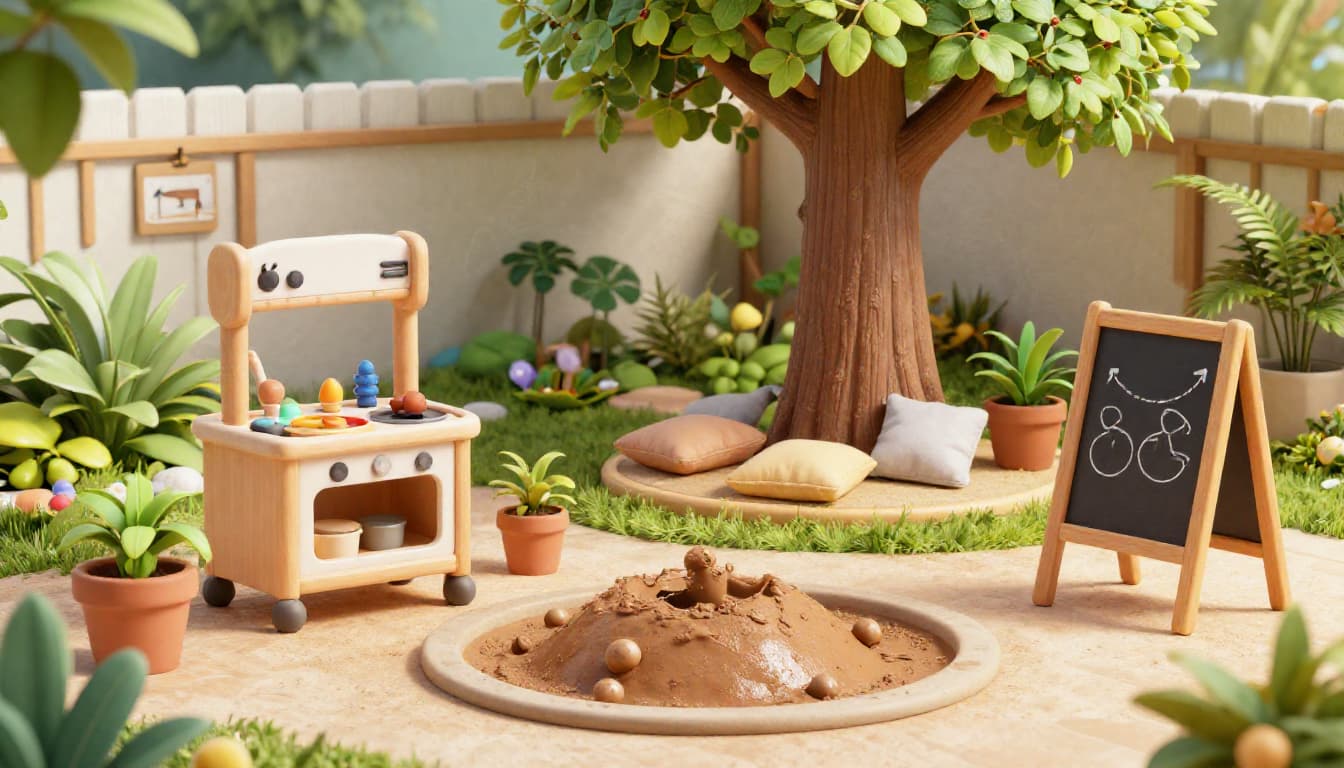
There is something that happens when children step outside to learn. The wiggles settle. The attention deepens. The questions multiply. We noticed it years ago during our own homeschool journey — the same child who squirmed through a worksheet at the kitchen table would spend forty-five focused minutes sorting rocks by size on the back porch. Nature is not a distraction from learning. It is the original classroom.
Creating a dedicated outdoor learning space does not require a sprawling property, a contractor, or a large budget. It requires intention, a willingness to start small, and an understanding of what your children actually need — which is almost always simpler than what Pinterest suggests.
This guide walks through six types of outdoor learning zones you can build on a budget, with practical tips for setup, materials lists, and ideas for making each space work across ages and seasons.
Why Outdoor Learning Spaces Matter
Before we dig into the how, a quick word about the why — because understanding the purpose behind each zone helps you make better decisions about what to build first.
The Research Is Clear
Study after study confirms what parents and educators have observed for generations: children learn better outdoors. Exposure to natural environments improves attention, reduces stress, supports physical development, and enhances creative thinking. For homeschooling families, outdoor learning spaces also solve a very practical problem — they give children a change of scenery that signals "this is learning time" without the confinement of four walls.
The Montessori Connection
Maria Montessori wrote extensively about the importance of nature in children's education. She believed that children needed direct contact with living things — soil, plants, water, animals — to develop fully. An outdoor learning space is essentially a Montessori prepared environment moved outside, where children can follow their curiosity at their own pace with carefully chosen materials available to them.
The Budget Reality
Here is the good news: outdoor learning spaces can cost almost nothing. The ground itself is a material. Sticks, rocks, leaves, pinecones, and mud are free. A secondhand bookshelf, a few thrifted pots and pans, and some containers from the dollar store can form the backbone of an entire outdoor classroom. We will note where it makes sense to invest in quality items, but the baseline cost is remarkably low.
Zone 1: The Mud Kitchen
A mud kitchen is often the single most-used element of any outdoor learning space. Children of every age are drawn to mixing, pouring, scooping, and stirring — and when the medium is mud, the sensory experience is unmatched.
What You Need
- A sturdy surface — an old table, a wooden pallet mounted on legs, a repurposed play kitchen, or a simple shelf unit
- Pots, pans, and utensils — check thrift stores for stainless steel pots, muffin tins, ladles, whisks, and measuring cups
- Bowls and containers — various sizes for mixing and measuring
- A water source — a bucket, a watering can, or a simple outdoor faucet nearby
- Natural loose parts — pinecones, flower petals, leaves, acorns, small stones, herbs from the garden
For a durable setup that lasts through seasons, a stainless steel mixing bowl set holds up far better than plastic, and a set of stainless steel measuring cups and spoons will survive years of mud play without rusting.
Setup Tips
Position the mud kitchen near a dirt patch or garden bed for easy access to soil. If your yard is mostly grass, dedicate a small area and remove the turf — a three-foot by three-foot patch is plenty. Keep a bucket of water nearby so children can control the consistency of their mud.
Mount hooks on the back of the kitchen for hanging utensils. Store loose parts in open containers on the surface so children can see and access everything independently. This is Montessori in action — when children can choose their own materials without asking for help, they stay engaged longer.
We have a full guide to mud kitchen ideas for the backyard if you want to go deeper on this one.
Learning That Happens Here
Do not let the mess fool you — mud kitchen play is rich learning. Children practice measuring, estimating, and basic math concepts. They develop fine motor skills through scooping and pouring. They experiment with states of matter (dry soil vs. wet mud vs. muddy water). They engage in elaborate imaginative play, build vocabulary, and negotiate roles with siblings or friends.
Zone 2: The Outdoor Reading Nook
Every child deserves a cozy place to read outside, and creating one is simpler than you might think.
What You Need
- Seating — a weather-resistant bean bag, outdoor cushions, a hammock, or even a blanket on the ground
- Shade — a tree canopy, a pop-up canopy, a patio umbrella, or a simple sheet draped over a frame
- A book display — a small outdoor shelf, a basket, or a hanging organizer
- A selection of books — rotate these from your indoor shelves; bring them inside after reading time
A waterproof outdoor blanket is worth the small investment here. It keeps everyone dry on dewy mornings and damp grass, rolls up easily for storage, and lasts for years.
Setup Tips
Choose a shaded spot — under a tree is ideal, but any area where you can create shade works. The key is making the space feel distinct and inviting, like a special destination rather than just "sitting outside." A canopy or fabric draped overhead creates that sense of enclosure that children find comforting.
Keep your outdoor book selection small and rotating. Five to ten books at a time is plenty. Choose nature-related titles to complement the outdoor setting — field guides, books about seasons, stories set in gardens or forests. Store them in a waterproof bin when not in use to protect them from unexpected rain.
Learning That Happens Here
Reading outdoors offers benefits beyond what indoor reading provides. The background sounds of birds, wind, and rustling leaves create a calming sensory environment that helps many children focus. Natural light is easier on the eyes. And the change of environment can re-engage a reluctant reader who has come to associate reading with "school at the table."
Zone 3: The Nature Station
A nature station is a dedicated area where children can observe, collect, sort, and study natural materials. Think of it as an outdoor science lab meets curiosity cabinet.
What You Need
- A flat surface — a small table, a tree stump, a wide shelf, or even a large flat rock
- Observation tools — magnifying glasses, a bug viewer container, tweezers, a simple microscope
- Collection containers — egg cartons, muffin tins, ice cube trays, small jars, bowls
- A nature journal and drawing supplies — for recording observations
- Reference materials — laminated nature identification cards or simple field guides
Setup Tips
Place the nature station near garden beds, trees, or anywhere that natural materials are abundant. Keep a set of collection containers always available so children can gather specimens whenever inspiration strikes. Rotate reference materials by season — wildflower guides in spring, leaf identification charts in fall, bird cards in winter.
Add a small clipboard with paper and a cup of colored pencils for nature journaling. Even toddlers can make marks on paper to "record" what they find, and this habit grows naturally into detailed observation drawing as children get older.
If you have been building a seasonal nature table indoors, the outdoor nature station is its perfect companion — children collect outdoors and curate indoors.
Learning That Happens Here
Nature stations develop observation skills, classification thinking, scientific vocabulary, and patience. When a child sorts a collection of leaves by shape, they are doing taxonomy. When they watch a caterpillar for fifteen minutes, they are practicing sustained attention. When they draw what they see through a magnifying glass, they are learning to look closely — a skill that transfers to reading, math, and every other academic area.
Zone 4: The Outdoor Art Area
Art and nature belong together. An outdoor art space frees children from worrying about mess and gives them access to natural materials, natural light, and the inspiration of the world around them.
What You Need
- An easel or vertical surface — a standing easel, a fence panel, or paper taped to an exterior wall
- A table or tray — for flat work like collage, clay, and drawing
- Basic art supplies — washable tempera paint, brushes of various sizes, crayons, chalk, glue, scissors
- Natural art materials — flower petals, leaves, twigs, seeds, stones, feathers, sand
- Water and cleanup supplies — a bucket of water, old towels, a drying rack or clothesline
A sturdy outdoor art easel is one item where spending a bit more pays off. Look for one with a tray to hold supplies and clips or knobs to hold paper securely. A wooden easel that can stay outside will get used constantly.
Setup Tips
Position the art area on a surface that is easy to hose down — concrete, pavers, or gravel. If your only option is grass, lay down a large tarp or plastic tablecloth. Keep art supplies in a portable caddy that can be carried outside and brought back in easily.
Set up a simple drying line with clothespins between two trees or posts. Children love hanging their own paintings, and the process of pinning wet paintings teaches fine motor skills and independence.
Combine natural materials with traditional art supplies for projects that connect creativity with nature. Leaf printing, stick weaving, flower petal collage, and rock painting all happen naturally when art supplies and nature are side by side.
Learning That Happens Here
Outdoor art develops creativity, fine motor skills, color theory, spatial awareness, and self-expression. It also builds a connection between children and their environment — when a child paints with colors they mixed to match the exact shade of a maple leaf, they are seeing the natural world with an artist's attention.
Zone 5: The Sensory Garden
A sensory garden engages all five senses through intentional plant choices and garden design. It is one of the most rewarding outdoor learning projects because it grows and changes with the seasons.
What You Need
- Containers or a garden bed — raised beds, large pots, or a dedicated ground-level patch
- Plants chosen for sensory qualities:
- Touch — lamb's ear (incredibly soft), ornamental grasses, succulents, moss
- Smell — lavender, mint, rosemary, basil, lemon balm, chamomile
- Sight — sunflowers, marigolds, zinnias, rainbow chard, purple basil
- Sound — ornamental grasses that rustle, dried seed pods that rattle
- Taste — cherry tomatoes, strawberries, snap peas, herbs
- Garden tools — child-sized trowels, watering cans, gardening gloves
- Pathway materials — stepping stones, mulch, or pea gravel for walking paths between plants
A set of child-sized gardening tools with real metal heads (not flimsy plastic) makes a real difference. Children take the work more seriously when their tools actually function, and real tools last much longer than toy versions.
Setup Tips
Start small — even three or four containers with different sensory plants create a meaningful garden. Choose at least one plant for each sense. Herbs are the best starting point because they grow quickly, smell wonderful, are useful in the kitchen, and most are easy to maintain.
Create a simple path between plants so children have a route to follow. This adds structure to the exploration and protects more delicate plants from being stepped on. Stepping stones, wood rounds, or even flat rocks spaced at child-step intervals work beautifully.
Label plants with their names and a simple illustration. Even pre-readers benefit from seeing the written word associated with the plant they are touching and smelling. This incidental literacy exposure adds up over time.
For more ideas on growing things with your kids, our gardening with kids beginner's guide covers everything from soil preparation to what to plant first.
Zone 6: The Gardening Plot
Distinct from the sensory garden, a dedicated gardening plot is where children experience the full cycle of growing food — from seed to harvest to table.
What You Need
- A growing space — a raised bed (even a 2x4-foot bed is enough), a row of large containers, or a section of ground
- Quality soil and compost — this is where the investment matters most
- Seeds and seedlings — choose fast-growing, child-friendly varieties (see below)
- Child-sized tools — trowel, hand rake, watering can
- Garden markers — popsicle sticks, painted rocks, or purchased plant labels
- A simple garden journal — for tracking planting dates, growth, and observations
Best Plants for Children
Choose varieties that grow quickly and produce something exciting:
- Radishes — ready in about 25 days, perfect for impatient young gardeners
- Sunflowers — dramatic growth that children can measure weekly
- Cherry tomatoes — prolific producers that children can snack on while gardening
- Snap peas — fast growing, fun to pick, delicious raw
- Lettuce — grows quickly, can be harvested as baby greens in just a few weeks
- Pumpkins — slow but dramatic, great for a long-term project
- Herbs — basil, cilantro, chives, and parsley are all forgiving and useful
Setup Tips
Give each child their own small section or container if possible. Ownership matters — a child who has "my garden" will check it daily, notice every new sprout, and care deeply about watering and weeding. This is responsibility that grows from genuine interest rather than obligation.
Start a garden journal from day one. Record the planting date, draw the seeds, measure growth weekly, and note observations about weather, insects, and changes. This journal becomes a beautiful record of learning and a natural integration of writing, math, science, and art.
Position the garden plot where it gets adequate sunlight (most vegetables need six or more hours) and near a water source. Make watering easy — a child-height faucet or a pre-filled watering can — because the biggest predictor of garden success is consistent watering, and that consistency comes from making the task simple enough for children to do independently.
Putting It All Together: Layout and Flow
You do not need all six zones to create a meaningful outdoor learning space. Start with the one or two that match your children's interests and your available space, then expand as the spirit moves you.
A Suggested Layout
If you have the space for multiple zones, think about flow and transitions:
- Active zones (mud kitchen, gardening plot) near each other and near a water source
- Quiet zones (reading nook, nature station) in a shaded, calmer area
- Creative zones (art area) on easy-to-clean surfaces
- Growing zones (sensory garden, gardening plot) where they get adequate sunlight
Keep pathways clear between zones so children can move independently. Visual boundaries — a change in ground cover, a low border of stones, a simple rope — help young children understand where one zone ends and another begins.
Seasonal Rotation
Your outdoor space should evolve with the seasons:
- Spring — emphasize gardening, sensory garden planting, nature observation of new growth
- Summer — add water play elements, focus on garden harvesting, move art and reading outside daily
- Fall — nature collection in full force, leaf art, garden cleanup and composting, harvest celebration
- Winter — bird feeding stations, frost and ice observation, winter nature journaling, indoor seed starting
Storage Solutions
The biggest challenge with outdoor learning spaces is keeping materials organized and protected. A few strategies that work:
- A weatherproof deck box for larger items — pots, pans, tools, blankets
- Sealed plastic bins with labels for art supplies, nature tools, and books
- Hooks and hanging storage on fences, walls, or posts for tools and utensils
- A "grab and go" caddy for supplies that travel in and out — art materials, journals, reference cards
Making It Work on a Real Budget
Here is how we would prioritize spending for an outdoor learning space, starting from zero:
Free or Nearly Free
- Clear a small dirt area for mud play
- Gather natural loose parts from your yard and neighborhood walks
- Repurpose kitchen items you already own for the mud kitchen
- Use blankets and pillows from inside for a temporary reading nook
- Start seeds from food scraps (lettuce bottoms, avocado pits, green onion roots)
Under $25
- Thrift store pots, pans, and utensils for the mud kitchen
- A pack of herb seeds and a bag of potting soil
- A magnifying glass and a few collection containers from the dollar store
- Sidewalk chalk and basic washable paint
Under $100
- A simple raised bed or a few large growing containers
- Quality soil and compost for the garden
- A basic easel or standing surface for outdoor art
- A pop-up canopy or shade cloth for the reading nook
- Real child-sized garden tools
The key is to resist the urge to buy everything at once. Start with free materials, observe what your children use most, and invest in quality versions of the things that get the most use.
For more budget-friendly ideas for your learning environment, our guide to budget homeschool room setup ideas has strategies that translate well to outdoor spaces too.
Getting Started This Week
If this all feels like a lot, here is your simplest possible starting point: choose one zone, gather what you already have, and set it up this weekend. Do not wait for the perfect materials or the perfect layout. A mixing bowl, a wooden spoon, and a patch of dirt is a mud kitchen. A blanket under a tree with a basket of books is a reading nook. A magnifying glass and an egg carton is a nature station.
The space will evolve. Your children will show you what they need more of and what they have outgrown. That is the beauty of outdoor learning — it is alive, it changes, and it meets your family exactly where you are.
Related Reading
If you are building out your outdoor learning environment, you might also enjoy our guide to mud kitchen ideas for the backyard, which goes deeper into setup, accessories, and play invitations. Our gardening with kids beginner's guide covers soil, seeds, and strategies for keeping young gardeners engaged through the whole growing season. And if you are working on your indoor learning space too, budget homeschool room setup ideas shares our best tips for creating a beautiful, functional homeschool environment without overspending.
Frequently Asked Questions
- How much does it cost to set up an outdoor learning space for kids?
- You can create a meaningful outdoor learning space for very little money. A basic setup using repurposed furniture, thrifted items, and natural materials can cost under $50. If you add a few purchased elements like a mud kitchen frame, weather-resistant storage, or a canopy, expect to spend $100-$300. The key is starting small with one zone and expanding over time as you find deals and observe what your children gravitate toward.
- What age is best for an outdoor learning space?
- Children of all ages benefit from outdoor learning spaces, but you can start as early as 12 months with simple sensory gardens and sand play areas. Toddlers (1-3) love mud kitchens and water play zones. Preschoolers (3-5) thrive with nature stations and gardening plots. School-age children (6+) enjoy more complex setups with reading nooks, art stations, and science observation areas. The beauty of outdoor spaces is that they grow with your child.
- What if I only have a small yard or patio?
- You absolutely do not need a large yard. A small patio or balcony can hold a container sensory garden, a compact art easel, a small nature shelf, and a few potted plants for gardening. Use vertical space with hanging planters and wall-mounted shelves. Even a single square meter of outdoor space can become a powerful learning environment with thoughtful planning.
- How do I protect outdoor learning materials from weather?
- Use weather-resistant storage bins with lids for supplies that need to stay dry. Bring delicate items like books and paper supplies indoors after each session. Choose naturally weather-resistant materials like stainless steel, treated wood, and stone where possible. A simple tarp or pop-up canopy protects a station during rain. For mud kitchens and nature tables, sealed and stained wood lasts longer than untreated wood.
- Do I need to set up all the zones at once?
- Not at all. We recommend starting with one or two zones that match your child's current interests and adding more over time. Observe what your child gravitates toward — if they love digging in dirt, start with a mud kitchen or garden plot. If they love books, begin with an outdoor reading nook. Building gradually also keeps things fresh and exciting, and it is much easier on the budget.
Enjoying this article?
Get more ideas like this delivered to your inbox every week.