Atlantic Hurricane Season Begins: Teaching Kids About Weather Safety
June 1 opens Atlantic hurricane season. Here are calm, age-appropriate ways to teach kids weather awareness, build a family emergency plan, and turn a scary topic into curiosity and quiet confidence.
By The Slow Childhood
June 1 marks the official start of Atlantic hurricane season, and it runs all the way through November 30. For families along the coast, the Gulf, and well inland too, that date is a useful annual reminder — not to scare anyone, but to do the calm, ordinary work of getting ready before there is anything to get ready for. And here is the part that surprises a lot of parents: hurricane season is one of the best science teachers your kids will ever have. Wind, pressure, temperature, the ocean, the sky — it is all happening in real time, right outside the window, with stakes that make a child actually want to understand it.
The goal of this guide is to help you teach weather awareness and emergency preparedness in a way that builds resilience instead of anxiety. Children take their emotional cues from us. A parent who treats storm prep like a matter-of-fact family project — the same energy as a fire drill or buckling a seatbelt — raises a kid who feels capable, not frightened. Let's walk through how to do that, from the science to the supplies to the conversations.

Start With Curiosity, Not Catastrophe
The fastest way to make a child anxious about hurricanes is to introduce them through the lens of disaster. The better path is to start with the everyday weather they already notice and let understanding grow from there. Why does the sky go that strange green-gray before a big storm? Why does it get so still and quiet right before the rain? Those questions are the doorway.
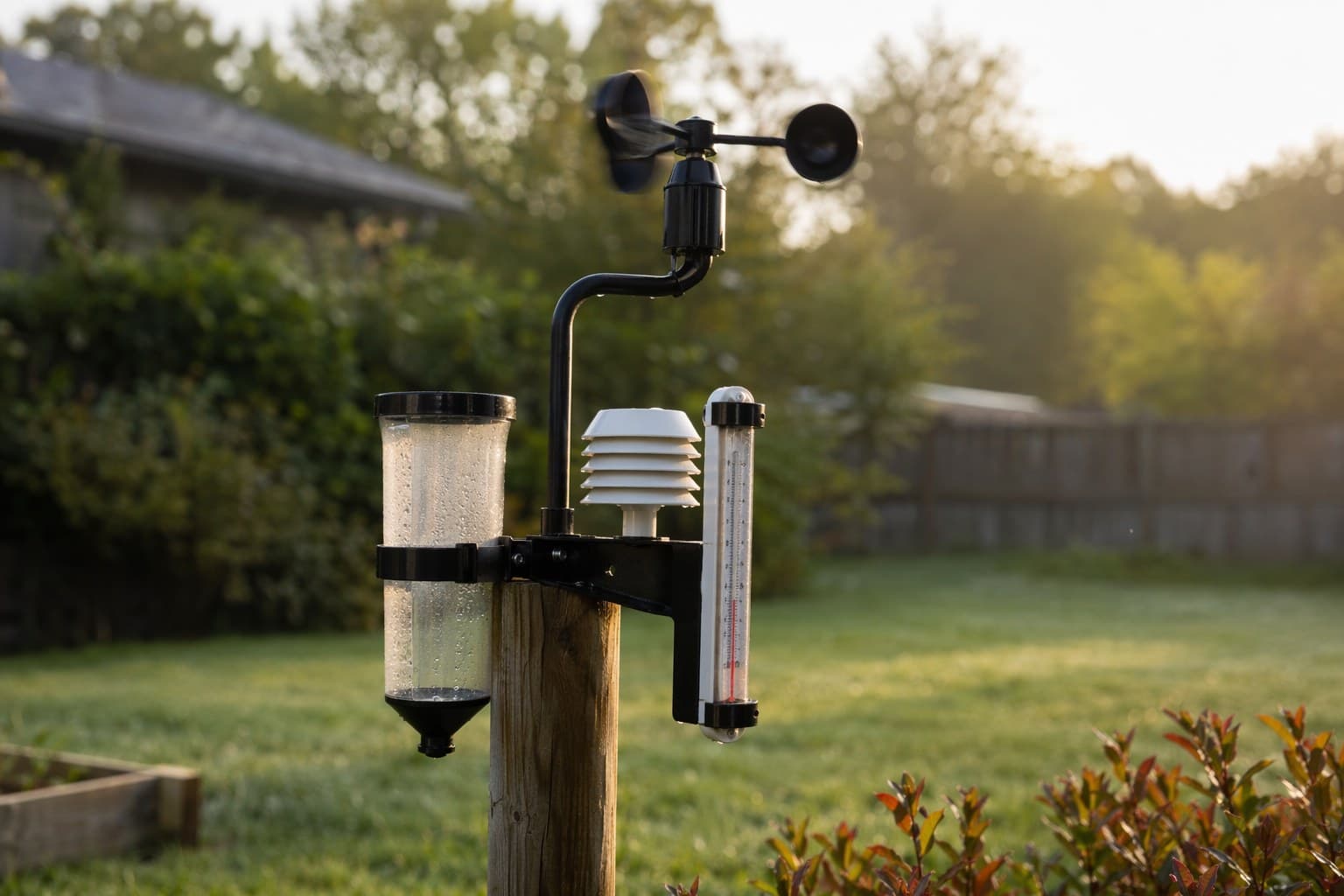
A home weather station kit turns this curiosity into a daily ritual. Many models display temperature, humidity, barometric pressure, and rainfall on a small indoor console, and kids quickly learn to read them. The single most powerful concept you can teach during hurricane season is barometric pressure — air pressure drops sharply as a storm approaches, and a child who watches that number fall on the console understands, viscerally, that the atmosphere is telling them something is coming. That is real science, observed firsthand, and it is far more memorable than any textbook diagram.
Pair the station with hands-on tools. An anemometer or handheld wind speed meter lets kids measure wind in miles per hour, which makes the Saffir-Simpson hurricane scale click into place: a Category 1 starts at 74 mph, a Category 5 tops 157. When a child has personally clocked a gusty 25-mph afternoon and felt how hard that pushed them around, the idea of 100-plus-mph winds stops being an abstraction. This kind of measurement-driven learning is exactly the spirit of our roundup of hands-on kitchen science experiments for kids — small instruments, real numbers, genuine wonder.
Track the Weather Like a Scientist
Observation becomes learning when it gets recorded, and recording is where you can lean into your child's natural love of routine. A simple weather tracking journal gives them a place to log the daily temperature, the pressure reading, the cloud types, and a quick sketch of the sky. Over a few weeks they start to see patterns — pressure falling, clouds thickening, wind shifting — and patterns are the foundation of forecasting.
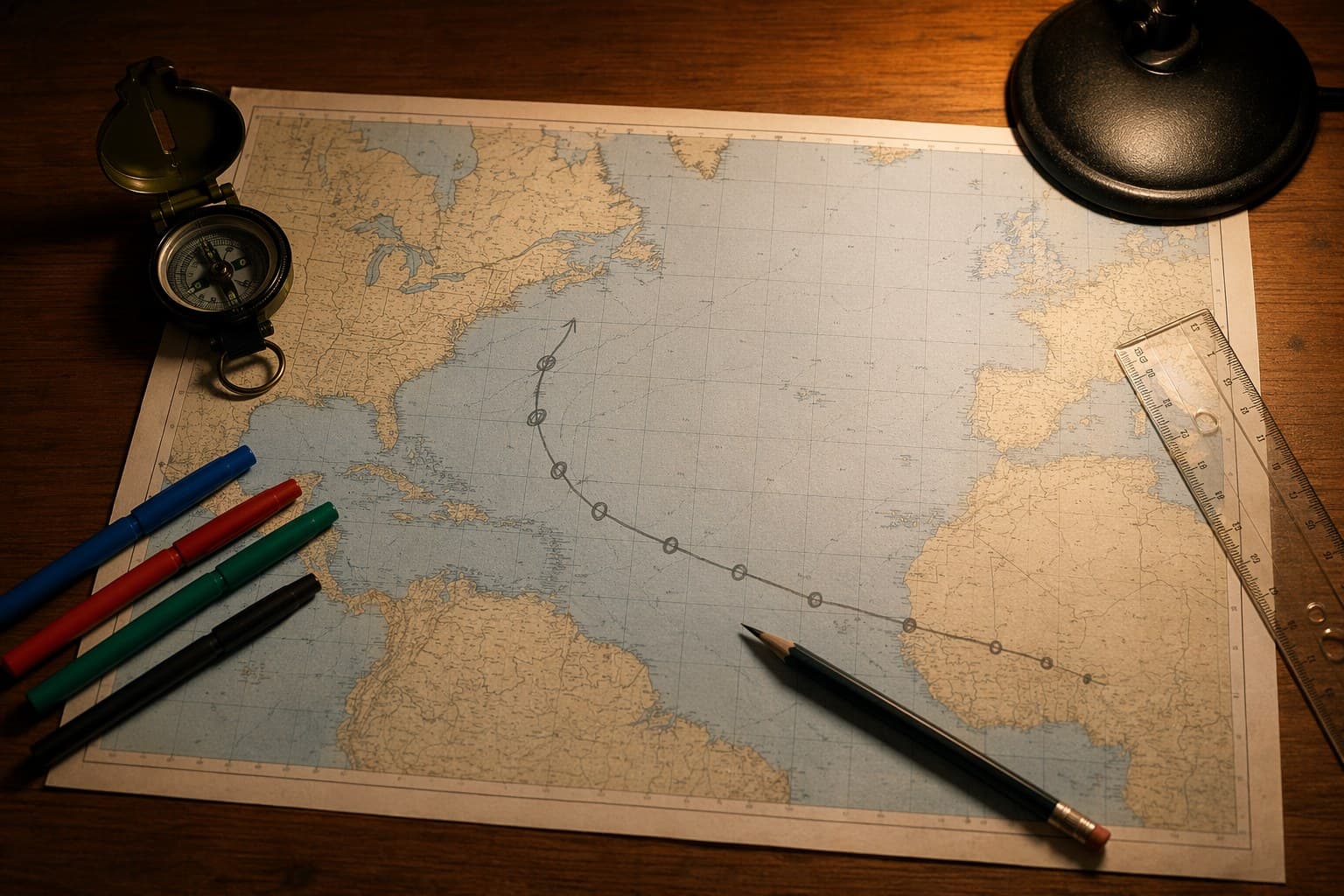
During an active season, add a hurricane tracking map. The National Hurricane Center issues advisories every six hours on any active storm, listing the storm's position in latitude and longitude. Kids can plot those coordinates on a printed Atlantic basin map and watch a named storm crawl across the ocean over several days. This is a quietly brilliant lesson: it teaches latitude and longitude, geography, and the reassuring truth that hurricanes are tracked and forecast days in advance — they do not appear out of nowhere. The plotting itself becomes a calming counterweight to the uncertainty, because the child is doing something active rather than absorbing dread.
If your family keeps a nature journal already, a weather log slots right in beside it. And for families who want to formalize the science, weather and meteorology fit naturally into the kind of structured study we cover in our guide to the best elementary science curriculum — many programs have a full earth-science strand built around exactly this.
Build the Family Emergency Plan Together
Here is the pivot from science to safety, and it is the most important part. Children feel safe when they see that the adults around them have a plan and that they themselves have a role in it. So make the planning visible and make the kids part of it.
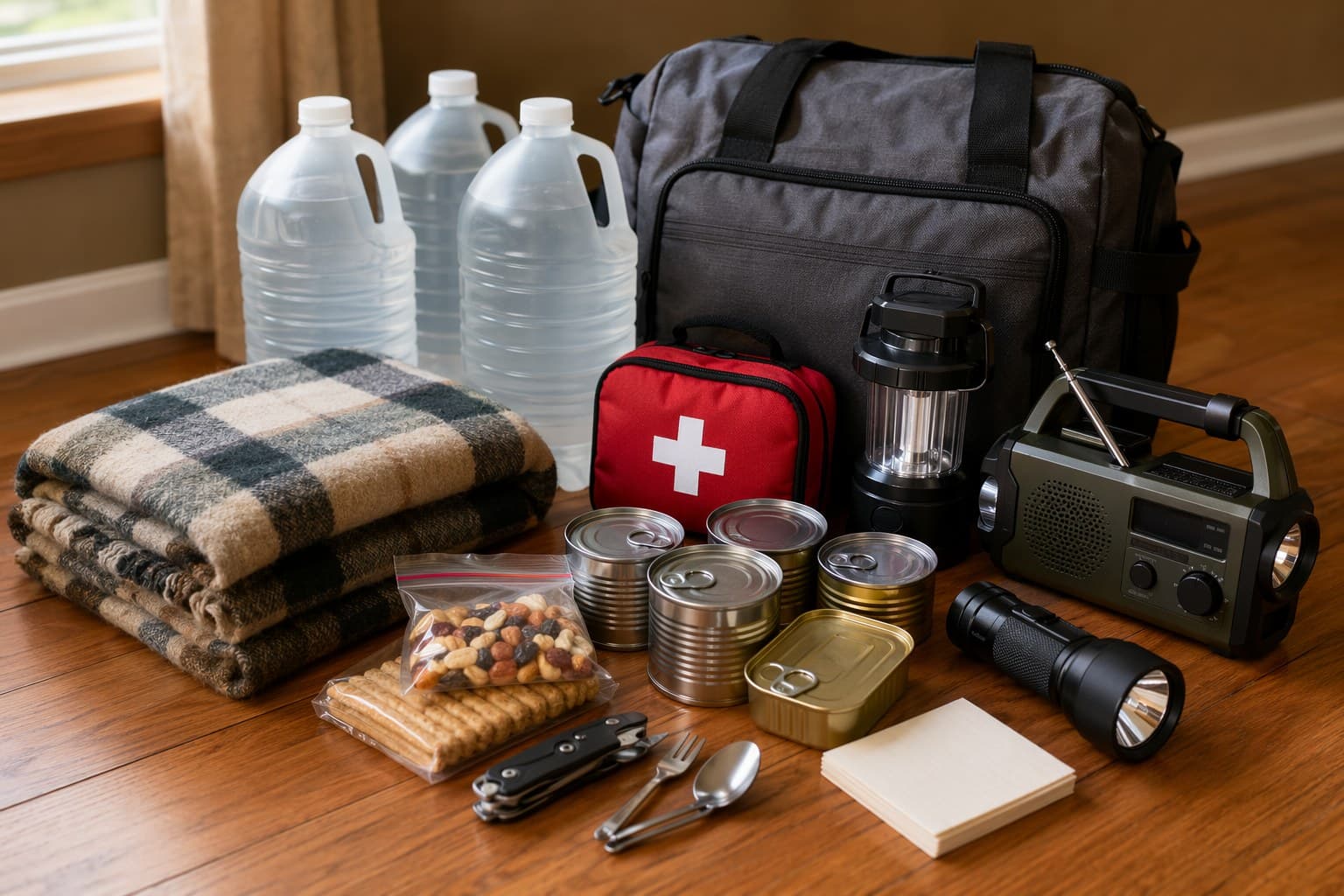
A ready-made family emergency preparedness kit is the simplest starting point, and then you customize it together. FEMA's baseline recommendation is one gallon of water per person per day for at least three days, plus a three-day supply of non-perishable food. Beyond the essentials, let your child add the things that matter to them — a favorite stuffed animal, a familiar snack, a deck of cards. A child who helped pack the kit knows what is inside it and feels ownership rather than helplessness.
Walk through the plan in plain language and let kids handle the gear:
- Lighting they control. Give each child their own LED flashlight or headlamp with spare batteries and let them practice using it in a dark closet. A power outage is far less scary when you have your own light and you have rehearsed.
- Staying informed. A hand-crank or battery emergency weather radio that picks up NOAA broadcasts works when the power and cell towers are down. Kids love that you power it by cranking — it makes "we will still get information" feel concrete.
- A meeting spot and a contact. Pick a place to gather and an out-of-town relative everyone can call or text. Have kids memorize one phone number.
Run it like a relaxed drill, not a fire-and-brimstone lecture. Practicing where to go and what to grab turns a frightening hypothetical into a familiar routine — the same reason fire drills work.
Keep Your Tone Steady and Honest
Whatever you teach, your demeanor teaches louder. The research on children and disaster is consistent: kids regulate their anxiety against their caregiver's visible calm. If you are matter-of-fact, they will be too.
A few principles that hold up across ages. Answer questions honestly but keep answers brief and age-sized — a five-year-old needs "we go to the safe room and wait it out together," not a discussion of storm surge fatalities. Turn off dramatic news coverage when children are in the room; the looping footage and urgent music do more to frighten kids than the actual weather. Validate feelings without amplifying them — "It is okay to feel nervous; storms are big. That is exactly why we have our kit ready." And give every child a job, because action is the antidote to fear. The child checking flashlight batteries or filling water jugs is a child who feels useful instead of powerless.
A clear, child-friendly weather safety guide for children — a picture book or workbook you read together in calm weather — gives kids a vocabulary for storms before one is ever on the radar, which makes the real conversations easier.
Turning the Season Into Confidence
By the time November 30 rolls around, the aim is for your kids to have a completely different relationship with big weather than fear. They will know how to read a barometer, plot a storm on a map, find the flashlights in the dark, and tell you exactly what is in the family kit. That is not a child who is scared of hurricanes. That is a child who understands them — and who has learned, through a real and slightly serious subject, that preparation is what turns worry into calm.
That is the quiet gift of teaching weather safety the slow way. You are not just getting ready for a storm. You are handing your child a lifelong template: face the thing, understand it, make a plan, and do your part. Start this June, keep it low-key, and let the season itself do the teaching.
Frequently Asked Questions
At what age can kids start learning about hurricane safety? Around age three with simple language, helping with the kit by five to seven, and tracking storms on a map by eight and up. Match the detail to their readiness and keep your tone steady — children calibrate their fear to yours.
How do I teach weather safety without scaring my child? Focus on what your family does, not on what could go wrong. A visible plan, a packed kit, and a real job to do make children feel capable rather than threatened. Keep dramatic news coverage off when they are nearby.
What should be in a family emergency kit for kids? The standard supplies — three days of water and food, a flashlight, batteries, first aid, and a weather radio — plus comfort items like a stuffed animal, a familiar snack, glow sticks, and a small flashlight that is theirs to manage. Let your child help pack it.
Frequently Asked Questions
- At what age can kids start learning about hurricane safety?
- You can start around age three with simple, calm language — naming wind and rain, talking about staying inside during storms. By ages five to seven, kids can help build an emergency kit and learn the family plan. By eight and up, they can track storms on a map, understand the categories of a hurricane, and take on real preparation jobs. The key at every age is matching detail to readiness and keeping your own tone steady, because children calibrate their fear to yours.
- How do I teach weather safety without scaring my child?
- Focus on what your family does rather than what could go wrong. Children feel safe when they see a plan in action — packing a kit, knowing where the flashlights are, having a job to do. Frame storms as something nature does that people have learned to prepare for, not as a threat looming over your home. Give them concrete, doable tasks, answer their questions honestly but briefly, and avoid leaving the news on in the background, where dramatic coverage does most of the frightening.
- What should be in a family emergency kit for kids?
- Beyond the standard supplies — water for at least three days, non-perishable food, a flashlight, batteries, a first-aid kit, and a battery or hand-crank radio — add comfort and engagement items for children: a favorite stuffed animal, a familiar snack, glow sticks, a deck of cards, a coloring pad, and a small flashlight that is theirs to manage. Let your child help assemble and pack the kit so they know what is inside and feel ownership of it.
Enjoying this article?
Get more ideas like this delivered to your inbox every week.