Observation Skills for Nature Walks: What to Look For and How to Document
Turn an ordinary nature walk into a real scientific investigation. Learn exactly what to look for, how to teach close observation by age, and simple ways to document findings so patterns become visible over time.
By The Slow Childhood
A nature walk can be two completely different experiences. In one, children march down the trail, glance at a few things, and arrive at the end having seen very little. In the other, they stop at a rotting log, turn it over, count the creatures underneath, notice that the underside is damp while the top is dry, and wonder aloud why. The difference is not the trail or the gear. It is observation — the trained habit of looking closely, asking questions, and recording what you find.
Observation is the foundation of all scientific thinking, and it is a skill that can be taught. Naturalists from Charles Darwin to modern field biologists built their careers on the same practice we can hand our children for free: slow down, look carefully, write it down. This guide walks through exactly what to look for on a nature walk, how to teach the skill at each age, and how to document findings so that patterns — the real payoff — start to emerge over weeks and seasons.
Why Observation Deserves to Be Taught Directly
We often assume children naturally notice the world, and to a degree they do. But research on attention suggests that careful, sustained observation is a learned competence, not an automatic one. A 2018 study in the journal Frontiers in Psychology found that children who were explicitly prompted to describe and compare natural objects showed measurably richer scientific reasoning than children simply told to "look." Direction matters.
This lines up with what Charlotte Mason argued more than a century ago. She believed children should develop the "habit of attention" through regular, close contact with nature, and she treated observation as a discipline worth practicing weekly. Modern outdoor educators agree: the act of truly seeing — distinguishing one shade of green from another, noticing that one branch grows toward the light while another does not — rewires how a child processes information everywhere, not just on the trail.
The good news is that the teaching is gentle. You are not lecturing. You are modeling curiosity and asking better questions.
What to Look For: A Field Framework
Children do better with a loose structure than with the vague instruction to "find something interesting." I teach families a simple framework I think of as the five lenses. On any walk, you can rotate through them.
1. Color and Light
Ask: how many different greens can you find? Where is the light coming from, and what does it do to color? Spring is ideal for this because new leaves come in dozens of shades. Have children collect three leaves of different greens and line them up darkest to lightest.
2. Shape and Pattern
Nature is full of repeating patterns — the branching of a tree mirrors the branching of a river or a vein in a leaf. Look for symmetry in flowers, spirals in pinecones and snail shells, and the way fern fronds repeat at smaller and smaller scales. Counting is observation too: how many petals, how many legs, how many rings on a cut stump?
3. Sound
Stand still and close your eyes for sixty seconds. List every distinct sound. Birds, wind, insects, water, a far-off dog. Sound mapping — marking on a rough drawing where each sound comes from — turns listening into recordable data.
4. Texture and Smell
Encourage touching (safely): smooth bark versus furrowed bark, the velvet underside of a leaf, the grit of lichen on stone. Crush a fallen leaf and smell it. These sensory details are exactly the kind young children record best, and they pair beautifully with outdoor sensory and nature activities you can build around a single walk.
5. Change and Evidence
This is the most advanced lens and the most rewarding. What evidence of living things can you find without seeing the animal itself? Chewed leaves, holes in a log, tracks in mud, feathers, scat, a half-eaten acorn. Teaching children to read evidence turns them into trackers and ecologists.
How to Document: Methods That Match the Child
Documentation is what separates a fun walk from a growing body of knowledge. The trick is matching the method to the child so that recording feels like discovery, not homework.
The Sketch-and-Note Method (Ages 6+)
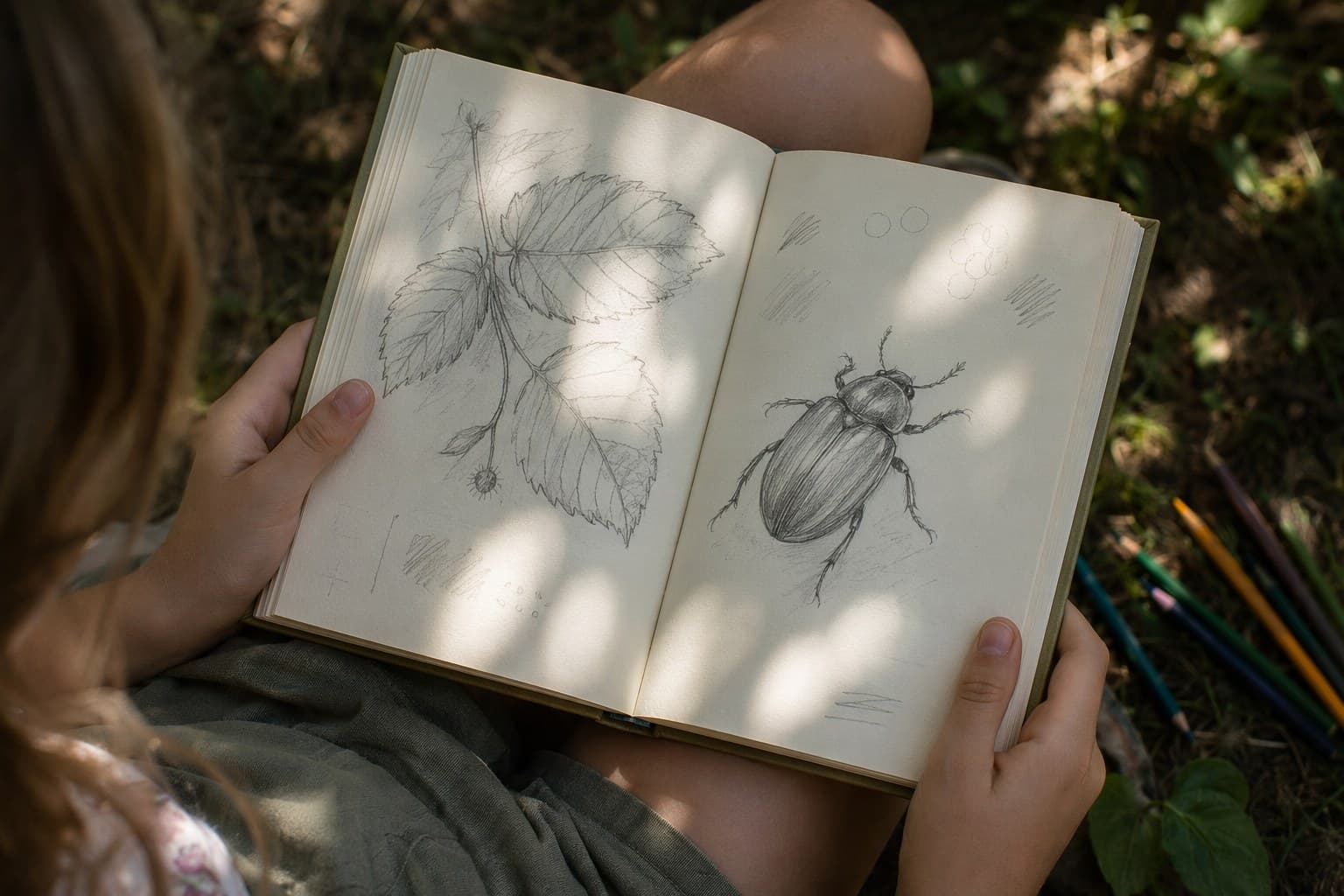
The gold standard is the field sketch with notes. Have the child draw what they see — accuracy matters more than beauty — then add three things beside it: the date and location, a measurement or count, and one question. A sturdy hardcover nature journal holds up to outdoor use, and a basic graphite sketch pencil set with a range of hardness lets older kids shade and add detail. If you want to go deeper on the journaling habit itself, our guide to nature journal ideas for kids covers prompts and seasonal pages in detail.
Photograph-and-Caption (Any Age)
For children who freeze at drawing, photography is a legitimate scientific tool. Hand them a simple camera or a phone and let them photograph a subject from three angles. Later, they caption each image with one observation. This removes the artistic pressure while keeping the looking sharp.
Collect-and-Press (Ages 3-6)
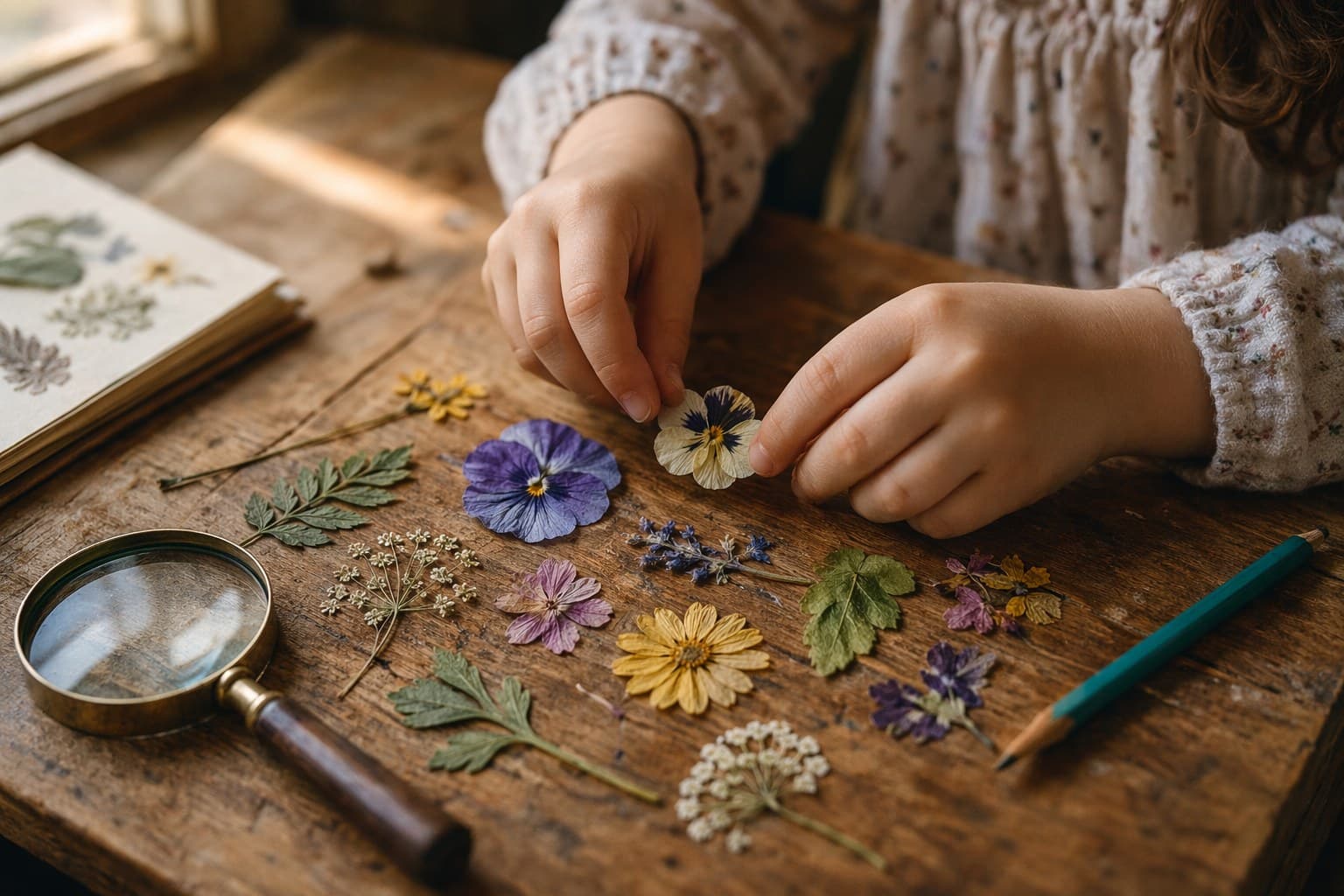
Young children document by gathering. A pocket or a small basket for fallen treasures — a feather, a seed pod, an interesting leaf — becomes the record. At home, flat finds get pressed and glued onto a page while you write down what they say about each one. The child observes and collects; the adult captures the words.
The Comparison Chart (Ages 8+)
Once children can write fluently, introduce simple data tables. Track the same tree weekly: date, number of open buds, leaf color, any insects present. After a month, the chart reveals change no single walk could show. This is the moment observation becomes science.
The Tools That Extend What Kids Can See
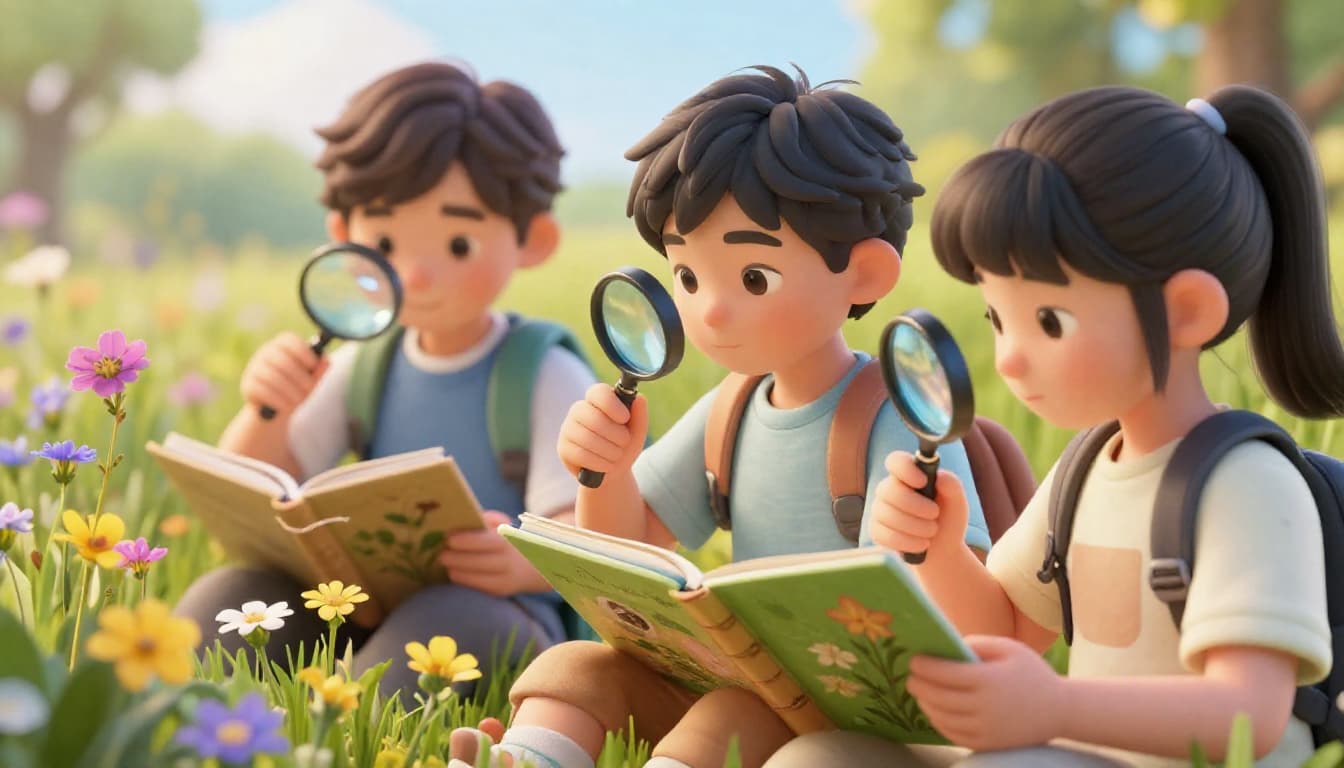
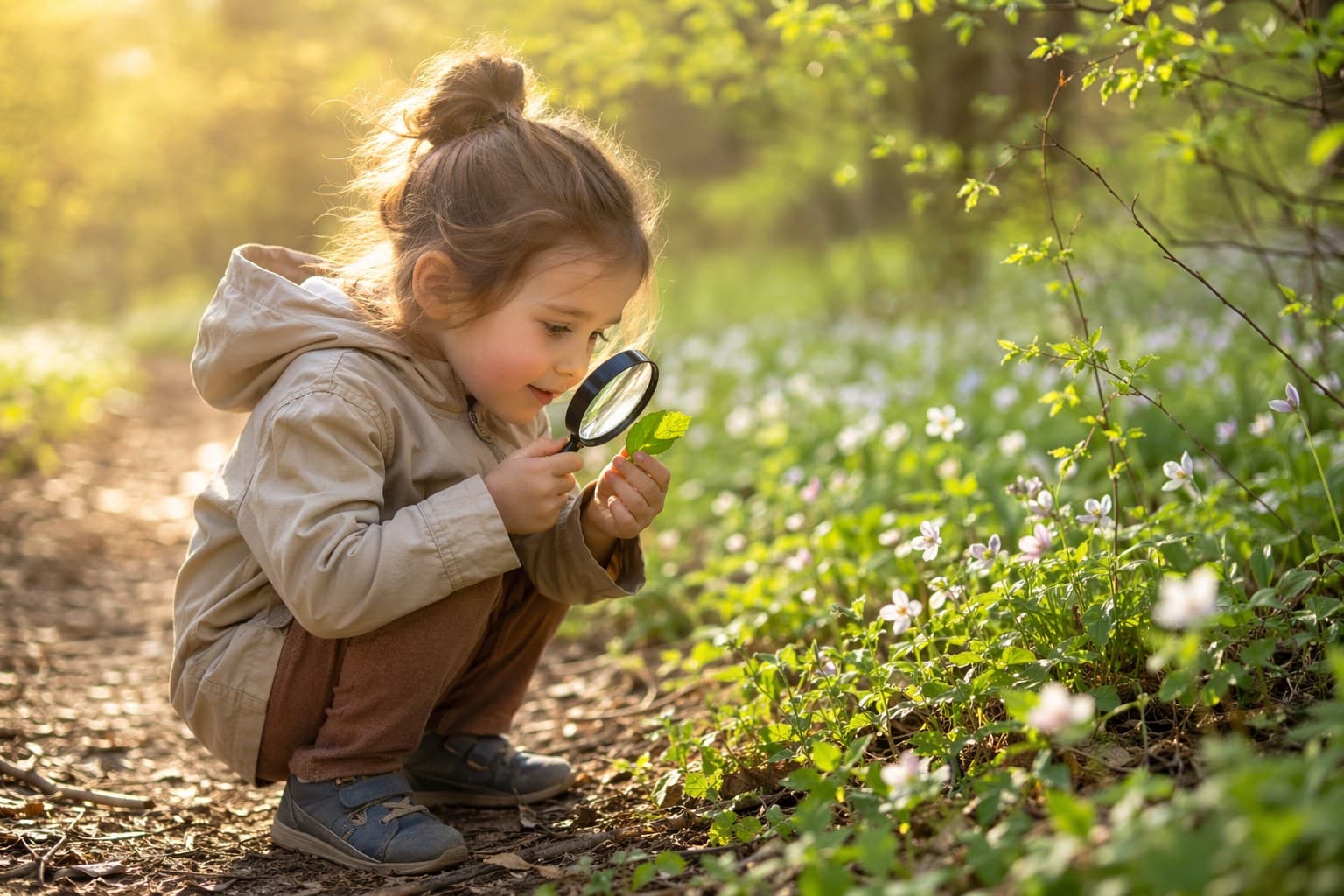
You truly need nothing to begin, but a few inexpensive tools dramatically increase what children notice. The single most transformative is a handheld magnifying glass or hand lens. A 10x lens reveals the segmented body of an ant, the structure of a moss colony, the tiny hairs on a stem — details that turn an ordinary walk into a wonder hunt.
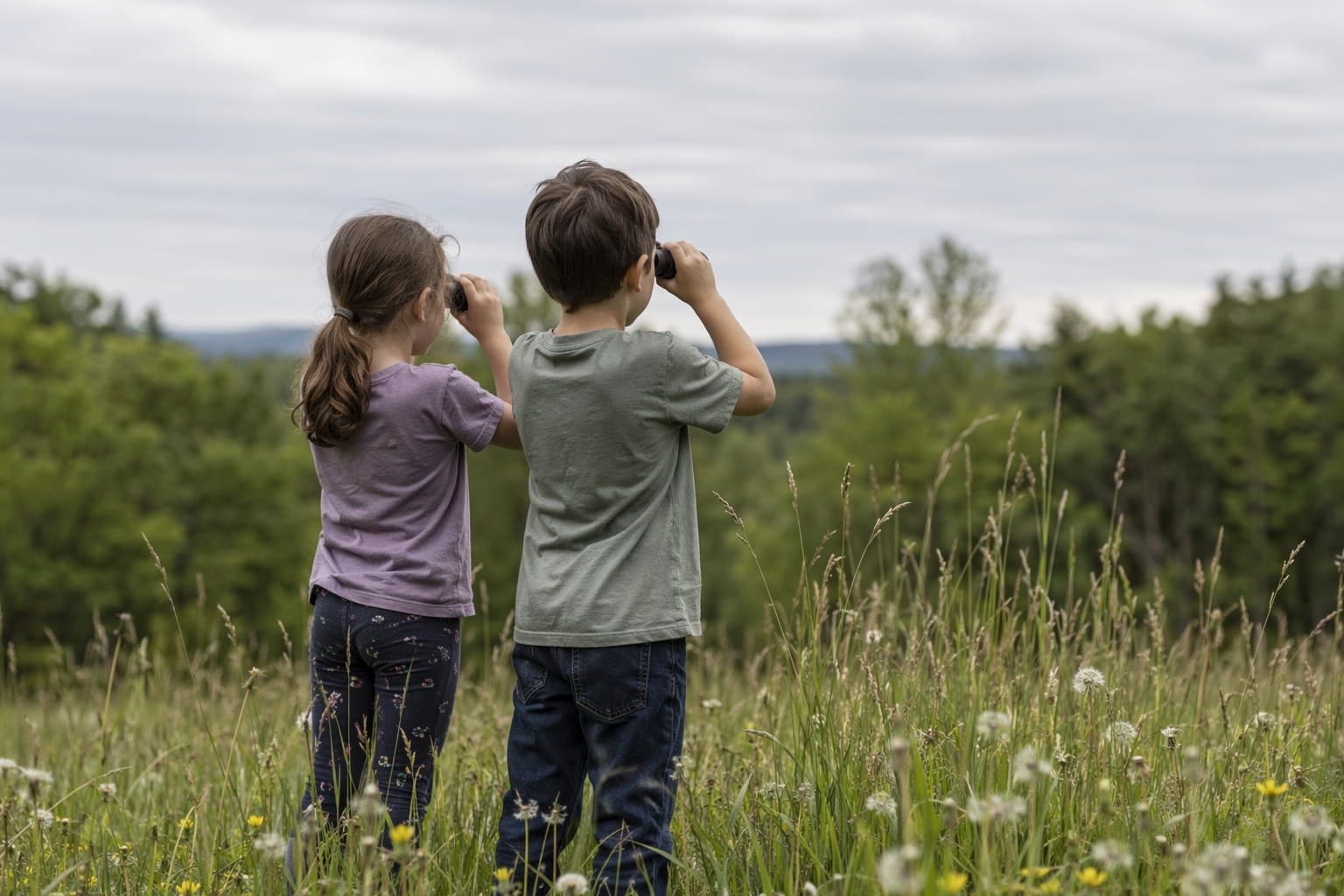
For older children fascinated by birds and distant wildlife, a rugged pair of binoculars sized for kids opens up the treetops without requiring you to creep close. And once your family starts asking "what is that?", a regional field guide to local plants lets children move from observation to identification — but always in that order, never the reverse.
Teaching Observation by Age
Match your expectations to development and the practice stays joyful.
- Ages 2-3: Pure sensory noticing. Name colors, point at sounds, touch textures. You do the recording. Success is one moment of genuine attention.
- Ages 4-5: Introduce the hand lens and counting. "How many legs? How many petals?" Short sketches and dictated notes.
- Ages 6-8: The sketch-and-note method. One subject per walk, drawn with a date, a count, and a question. Begin introducing field guides for naming.
- Ages 9-12: Comparison charts, repeat visits to the same subject, and reading evidence. Encourage hypotheses: "I think the buds open faster on the sunny side — let's check."
A wonderful way to keep older children motivated is to fold observation into a game. Our nature scavenger hunt ideas work especially well as observation prompts — instead of just "find a pinecone," try "find a pinecone and count its scales."
Frequently Asked Questions
How do I keep a walk from turning into a race to the end? Set a "stopping budget" before you start — for example, three mandatory stops where everyone observes for two minutes. Naming the stops in advance reframes the walk around looking rather than arriving.
My child says there's nothing to observe in our ordinary neighborhood. What now? Ordinary is the best laboratory. A sidewalk crack with weeds, a single street tree, ants on the curb, a puddle after rain — each holds dozens of observations. Constraint actually sharpens attention; challenge them to find five living things in one square yard.
What if I don't know the names of anything? You do not need to. Observation is describing, not naming. Model curiosity by saying "I wonder what that is — let's write down what it looks like and find out later." Looking things up together teaches more than having all the answers.
Bringing It Home
The most valuable thing you can give a child on a nature walk is not a fact about a particular bird or flower. It is the habit of paying attention — the ability to slow down, look closely, and ask a real question about the living world. That habit transfers to reading, to science class, to relationships, to nearly everything.
Start small this week. Take one short walk, choose one subject, look at it for a full minute before anyone speaks, and write down three things. Do it again a few days later with the same subject. When your child notices the first change — a bud that opened, a leaf the insects found — you will see the moment observation becomes their own. That is the whole practice, and it is waiting just outside your door.
Frequently Asked Questions
- At what age can children start practicing observation skills on nature walks?
- Children can begin around age 2-3 with sensory noticing — naming colors, sounds, and textures. By age 4-5 they can use a hand lens and count simple features like petals or legs. By 6-8 most can record short written notes and rough sketches, and by 9 and up they can track patterns over multiple visits and use field guides to identify what they find. Match the documentation method to the child rather than pushing writing too early.
- How long should an observation-focused nature walk last?
- Shorter and more frequent beats long and occasional. For preschoolers, 15-20 minutes of genuine noticing is plenty. Elementary-age children do well with 30-45 minutes, including time to stop and document. The goal is depth of attention, not distance covered — a walk where you study one log for ten minutes is more valuable than a fast loop around the park.
- What is the difference between observing and identifying?
- Observing is describing what you actually see, hear, and notice — the shape of a leaf, the number of legs on an insect, the sound a bird makes. Identifying is putting a name to it using a field guide. Observation should always come first. Naming too quickly short-circuits the looking, so encourage children to record details before reaching for a guide to find the species.
- Do we need special equipment to teach observation skills?
- No. A child's eyes, ears, and curiosity are enough to begin. That said, a hand lens, a simple notebook, and a pencil dramatically extend what kids can notice and record. Binoculars and a regional field guide are worthwhile additions once the habit is established, but none of it is required to start this week.
Enjoying this article?
Get more ideas like this delivered to your inbox every week.