Field Trip Planning: Nature Centers, Farms, and Botanical Gardens
A practical guide to planning spring field trips to nature centers, working farms, and botanical gardens — what to do before you go, how to document the day, and how to extend the learning for weeks afterward.
By The Slow Childhood
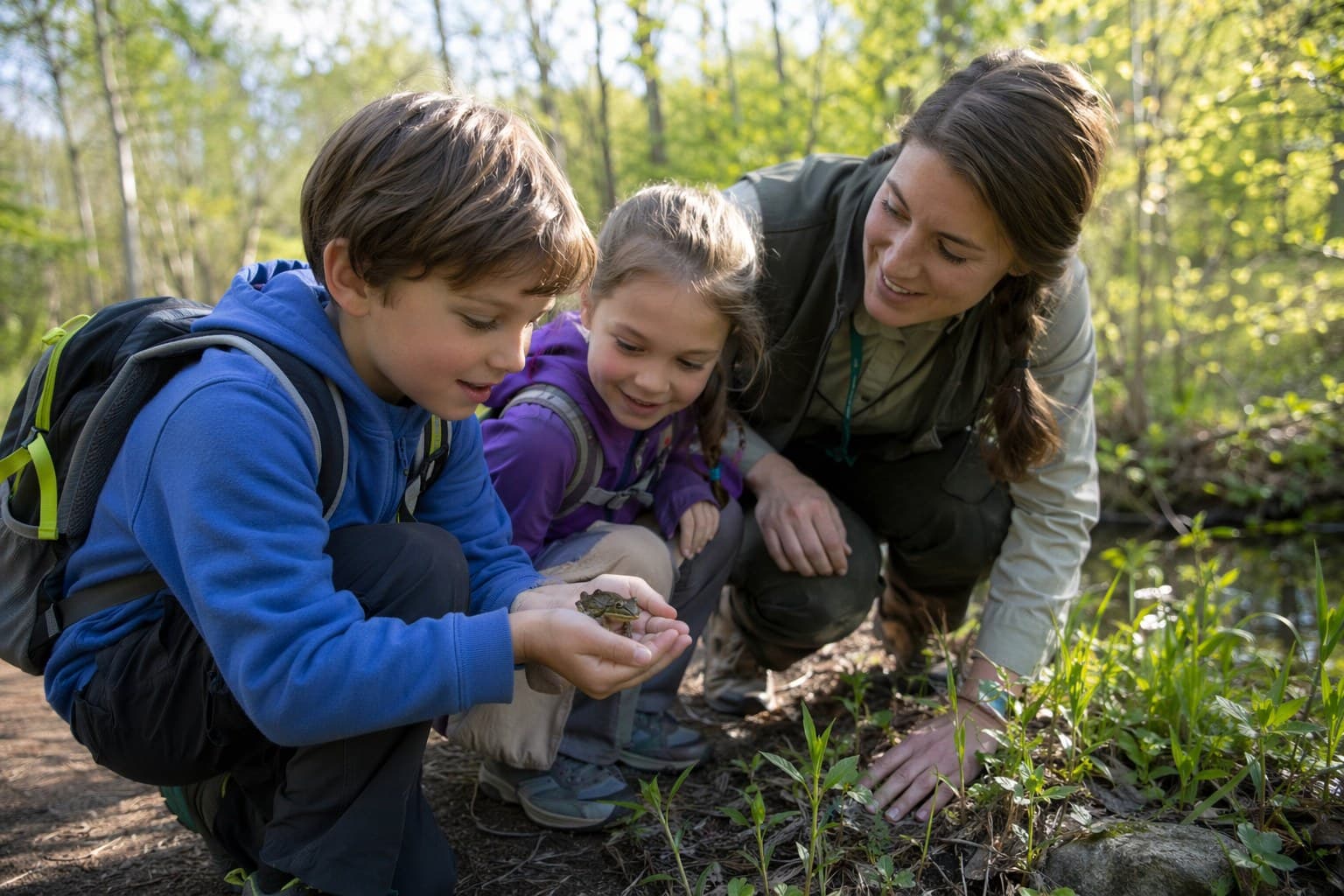
There is a particular kind of learning that no curriculum can manufacture: the moment a child cups a just-hatched chick, or presses their nose into a peony and pulls back with pollen on their face, or watches a naturalist tip over a rotting log to reveal the busy world underneath. Spring is the season that makes these moments easy to find. The farms have babies, the gardens are erupting into color, and the nature centers have programming built specifically around the season's explosion of life.
We try to take at least one substantial field trip every month, and spring is when we lean hardest into the three destinations that reward children most: working farms, botanical gardens, and nature centers. Each teaches something the others cannot, and each becomes far richer with a little planning. This guide covers how we choose and prepare for these trips, what to do while you are there, and — the part most families skip — how to keep the learning going for weeks afterward.
Why These Three Destinations Earn Their Place
Each destination type has a distinct educational personality, and knowing what each does best helps you set realistic expectations.
Nature centers are the most structured of the three. They almost always employ trained naturalists or educators, maintain native-habitat trails, and run hands-on programming — pond dipping, animal ambassadors, guided trail walks. This is where a child who is curious but unfocused gets channeled into real scientific observation. If your child loves the idea of nature but does not yet know how to look closely, start here.
Working farms teach systems. A child who visits a farm in spring sees the entire chain of food and life laid out in front of them: soil being turned, seeds going in, animals being born and fed, milk and eggs collected. Agricultural education research consistently finds that children who connect food to its source make healthier eating choices and develop stronger interest in biology. Look for farms that let children participate rather than just watch — collecting eggs, feeding goats, walking rows.
Botanical gardens teach attention and beauty. They are often the most affordable option (many are free or under ten dollars, and some offer free community days), and spring is their showcase season. The learning here is quieter — plant families, bloom cycles, pollinators, garden design — but it cultivates the kind of patient looking that underlies all of nature-based learning across subjects.
Before You Go: Planning the Trip
The difference between a field trip that fizzles and one your children talk about for months is almost entirely in the preparation, and most of it takes less than half an hour.
Call ahead, and ask the right questions. Email is fine, but a phone call to the education department surfaces options that never make the website. Ask about homeschool rates, group minimums, what is actually in bloom or being born that week, and whether a naturalist or farmer can spend a few minutes with your kids. Spring schedules shift with the weather, so confirm hours.
Do ten minutes of background reading. Even a quick picture book or a short look at the destination's plant or animal list transforms the visit. A child who knows what a praying mantis egg case looks like will hunt for one; a child who has never heard of it walks right past. For repeat nature-center families, our nature journal ideas for kids work beautifully as pre-trip warm-ups.
Set one small intention, not a curriculum. Pick a single thread — "today we are looking for pollinators" or "let's find out where the eggs come from." A narrow focus paradoxically opens children up, because they are not overwhelmed by everything at once.
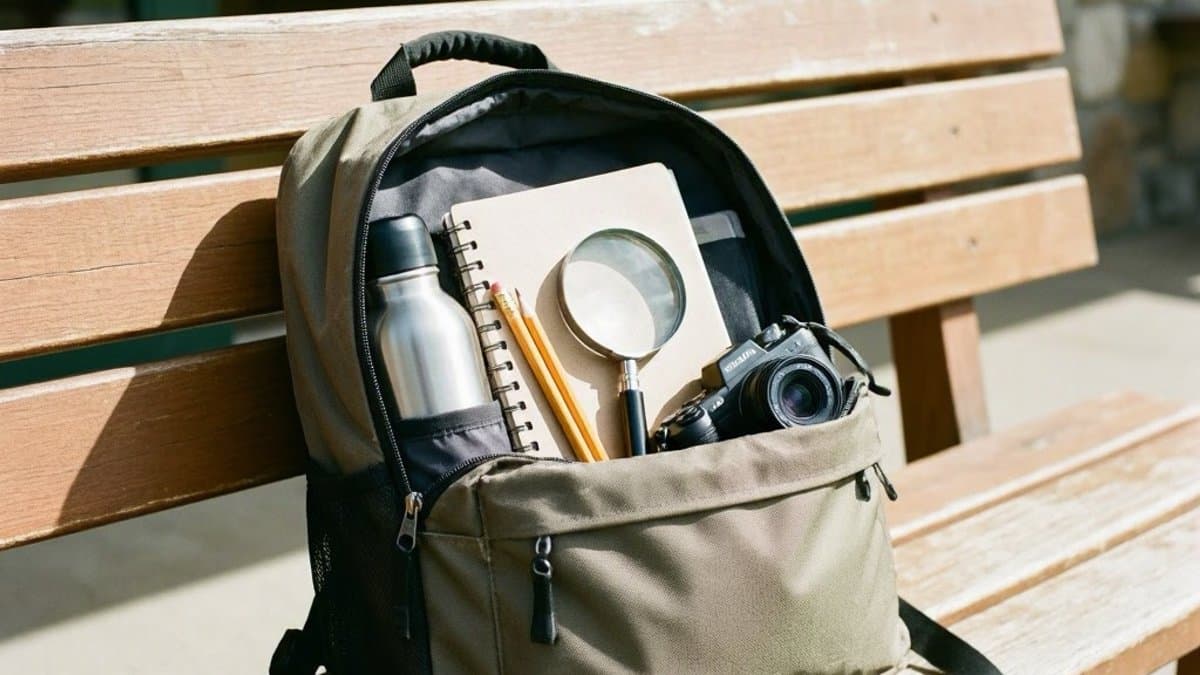
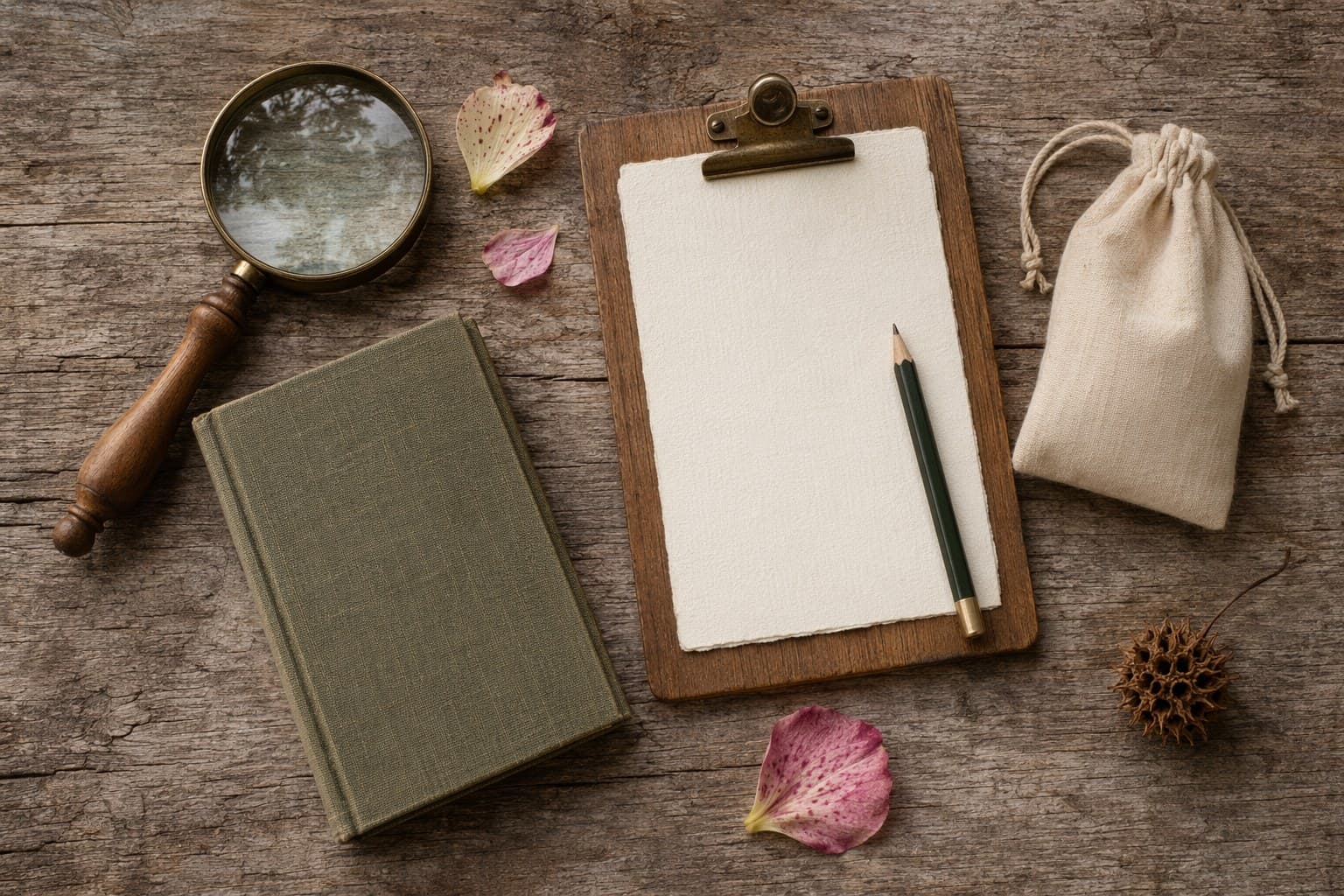
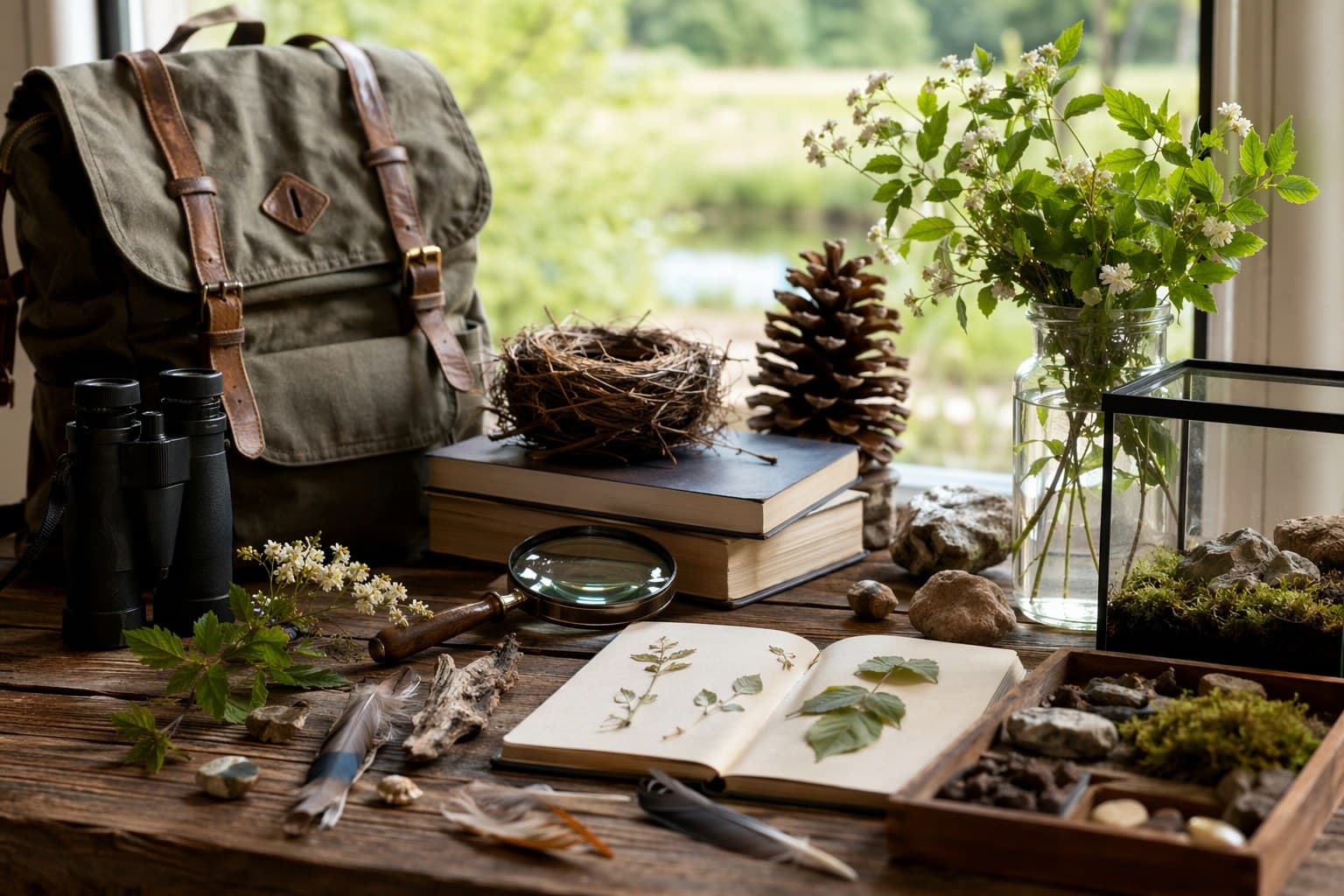
Pack a real field kit. This is where a little gear genuinely pays off. We carry a kids' magnifying glass and hand lens for examining bark, bugs, and seed heads, a regional nature identification field guide so children can name what they find on the spot, and a clipboard with an attached pencil for each child so there is no fumbling for a writing surface. A handful of reusable nature collection bags covers anything they are allowed to take home — fallen petals, an interesting seed pod, a shed feather. And do not forget water, snacks, and a printed field trip planning checklist taped inside the car so nothing essential gets left on the kitchen counter.
During the Trip: Make Looking Active
Once you arrive, the single most useful principle is this: give every child a job. Wandering with no purpose is how a promising trip dissolves into "I'm bored" within twenty minutes. Investigation, by contrast, is self-sustaining.
At a Nature Center
Join the guided program if one is offered — naturalists ask better questions than most of us can on the fly. Between programs, send children on a focused hunt: three different leaf shapes, two signs of an animal (tracks, chewed leaves, a nest), one thing that is changing because it is spring. If the center has a pond or stream station, let them get muddy. The tactile mess is the lesson.
At a Farm
Aim for participation over observation. Collecting eggs, scattering feed, watching a milking, or walking a freshly planted row gives children a body-memory of how food is produced. Encourage them to interview the farmer with one or two prepared questions — "How do you know when to plant?" or "What do the animals eat in winter?" Children remember conversations far longer than placards.
At a Botanical Garden
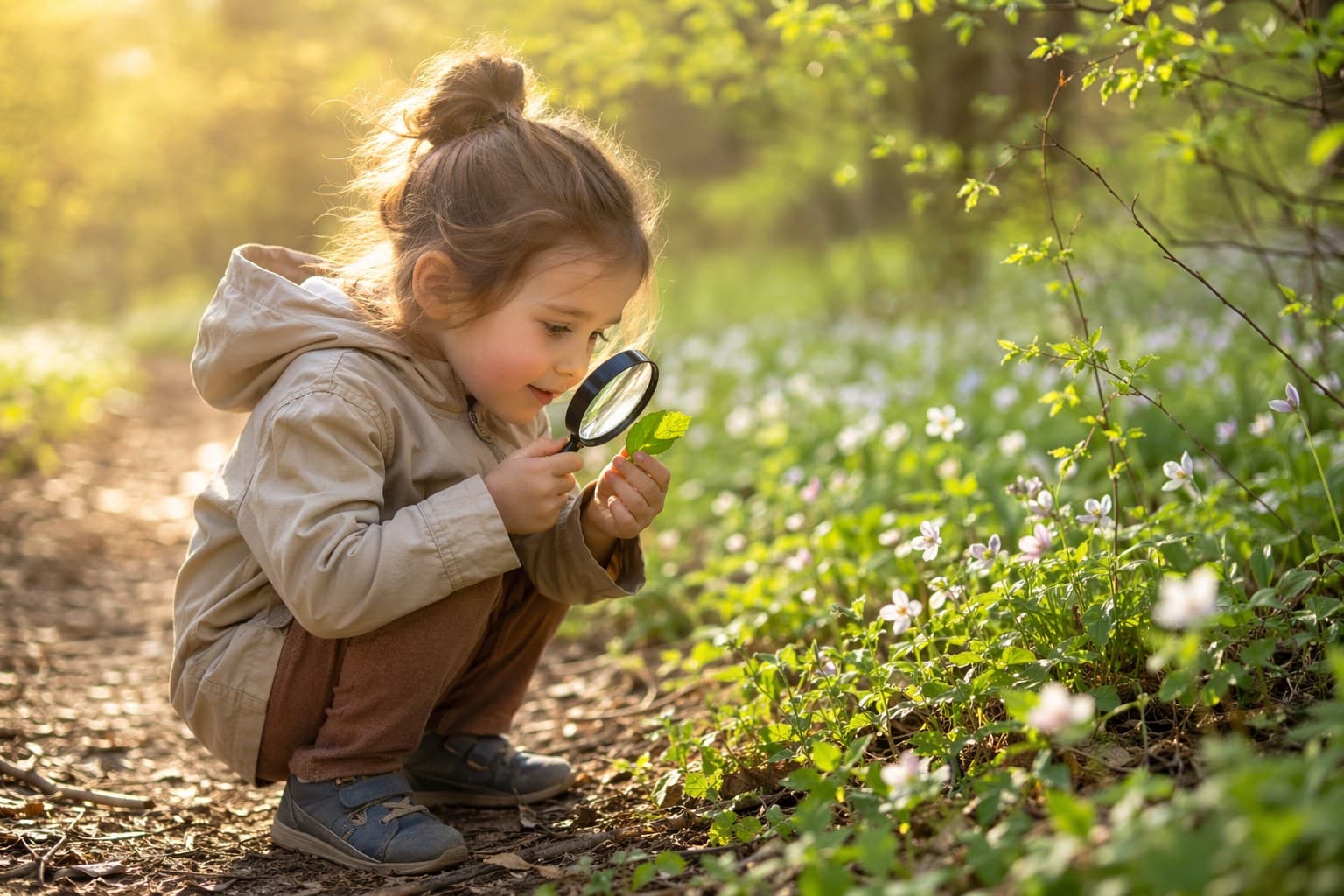
Slow everything down. Hand each child the magnifying glass and challenge them to find the smallest flower in the garden, count how many petals different blooms have, or stake out a single flowering shrub and tally every pollinator that visits in five minutes. Sketching beats photographing here — a child who draws a tulip has to truly see it. Resist reading every label aloud; let them ask first.
Across all three, take photos and notes together, and ask open-ended questions instead of quizzing: "What surprised you?" and "What would you want to come back and see?" These do more to cement learning than any worksheet.
After the Trip: Where the Learning Actually Sticks
A field trip is a spark, not a lesson. The retention comes from what you do in the following week, and even one small follow-up roughly doubles what children remember. This is also where field trips earn their keep in a portfolio — documenting them turns a fun day into legitimate, recordable schoolwork.
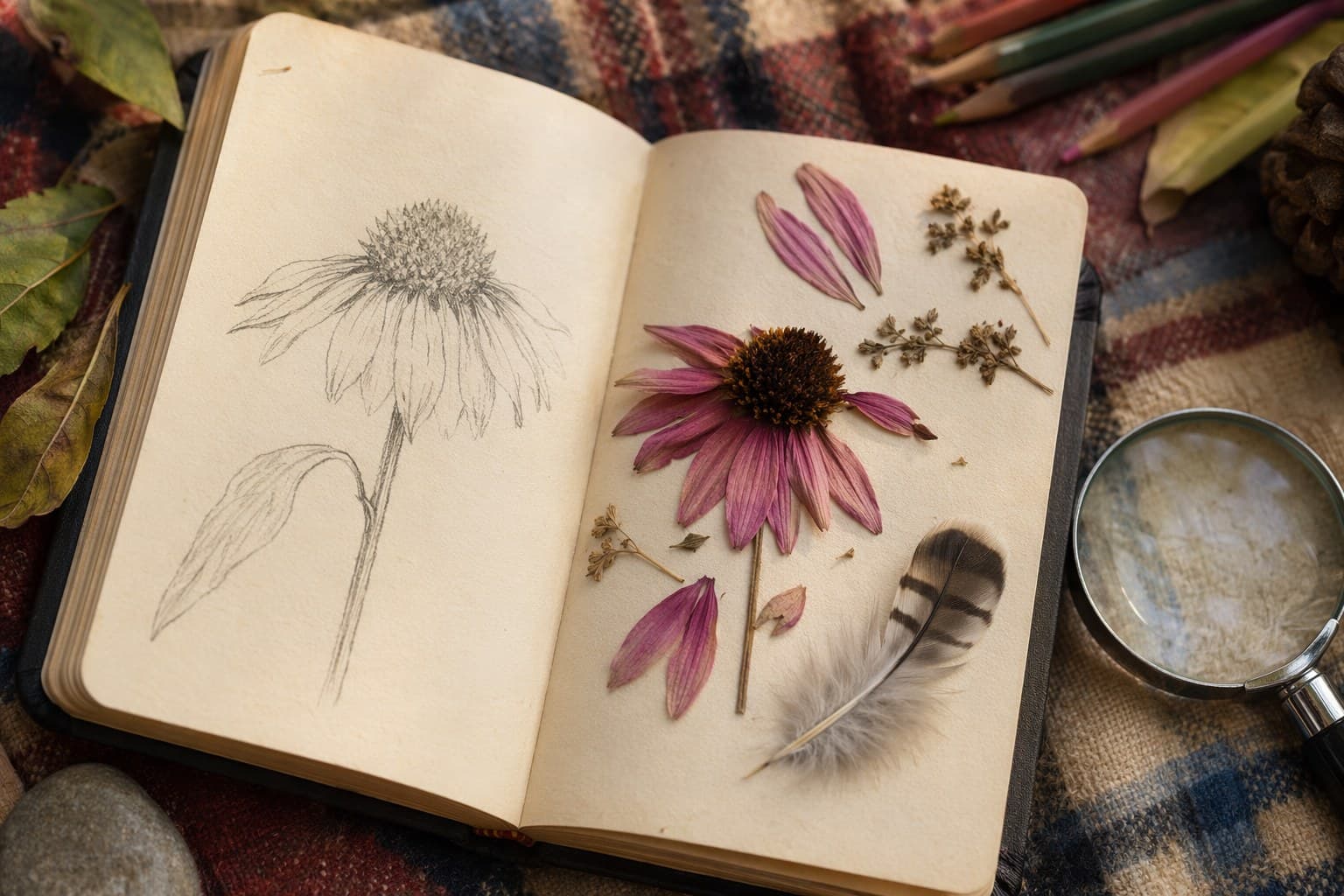
- Document the day. Print two or three photos, paste them beside the children's sketches and collected treasures, and add a sentence or two in their own words. This becomes a beautiful, low-effort record.
- Borrow library books on whatever your child fixated on — chickens, bees, a particular tree, composting. Follow the obsession.
- Plant something. If you brought home a seed pod or bought seeds at the farm stand, start them on the windowsill and track germination.
- Make art. Paint a flower from a photo, press the petals you collected, or build a clay model of an animal you met.
- Write a thank-you note to the farmer or naturalist. It practices real-world writing and teaches gratitude in one stroke.
A Simple Seasonal Rhythm
If you want a low-pressure plan for spring, we rotate through all three roughly once a month: a botanical garden in early spring when the bulbs and flowering trees peak, a farm in mid-to-late spring for baby animals and planting, and a nature center anytime the weather turns unreliable, since most have indoor exhibits as a rain backup. String three trips like that across April, May, and June and you have built an entire season of living science without ever opening a textbook — the same world-as-classroom philosophy behind our broader homeschool field trip ideas guide.
The point of all of this is not to manufacture a perfect educational outing. It is to put children in front of real living things, give them a reason to look closely, and then make space for the wondering to continue at home. Do that a few times this spring, and the curiosity you cultivate will outlast any single afternoon — which is, in the end, the whole point of a slow childhood.
Frequently Asked Questions
- When is the best time of year to visit a farm or botanical garden with kids?
- Mid-to-late spring is ideal. Farms have baby animals through April and May, and the spring planting season means children can see fields being prepared and sown. Botanical gardens peak from late April through June when bulbs, flowering trees, and early perennials are all in bloom at once. Aim for a weekday morning when crowds are thin and animals and staff are most active — call ahead to confirm hours, since many farms keep seasonal schedules.
- How do I find homeschool programs at nature centers?
- Start by calling the education or programs department directly rather than relying on the public events page. Most nature centers and botanical gardens run dedicated homeschool days or naturalist-led classes that are not heavily advertised, often at a discounted group rate. Ask specifically about homeschool pricing, group minimums, and whether they can tailor a session to your children's ages. Local homeschool co-op Facebook groups are also the fastest way to find which destinations near you are genuinely welcoming.
- What should kids actually do during the visit so it isn't just walking around?
- Give each child a clear job. A simple clipboard with three or four sketch boxes, a scavenger list, or a single observation question turns passive looking into active investigation. Younger children can collect (where permitted) and count; older children can sketch, label, photograph, and interview a staff member. The goal is one or two close observations done well, not seeing every exhibit. Resist the urge to read every sign aloud — let curiosity set the pace.
- How do I turn one field trip into more than a day of learning?
- The trip itself is the spark; the real learning happens in the week that follows. Borrow library books on something your child fixated on, plant a seed you collected, paint a flower from a photo, or write a thank-you letter to the farmer. Even a single follow-up activity roughly doubles what children retain, because it asks them to revisit and reorganize the experience in their own words and hands.
Enjoying this article?
Get more ideas like this delivered to your inbox every week.