Art in Nature: Land Art, Nature Mandalas, and Ephemeral Projects
A practical guide to land art and nature mandalas for kids — making temporary art from rocks, petals, and leaves that celebrates impermanence and a deeper connection to the natural world.
By The Slow Childhood
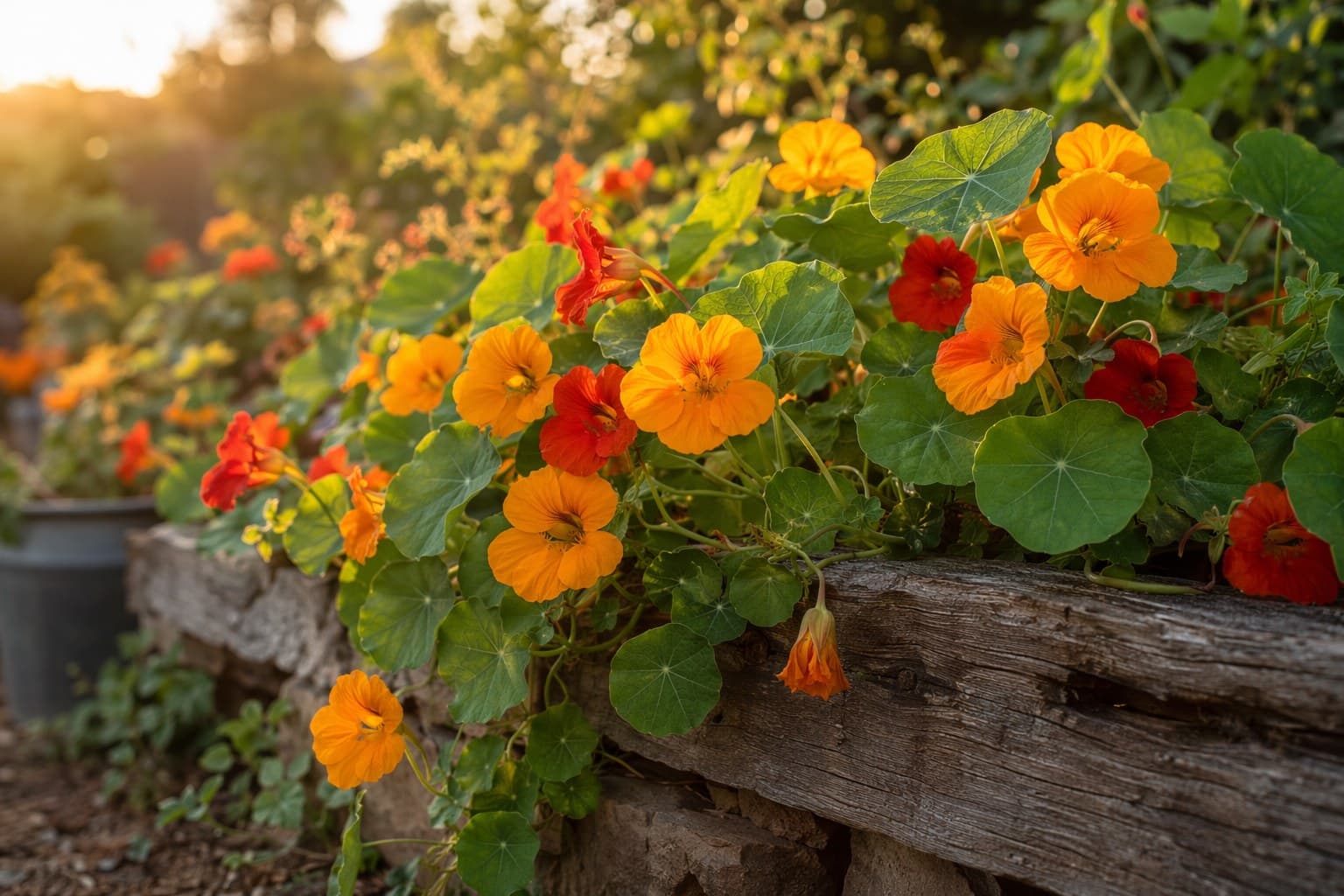
There is a particular kind of magic in making something beautiful that you know will not last. A circle of petals laid out on the grass at ten in the morning is gone by dinner — scattered by wind, nibbled by a squirrel, flattened by the dog. Land art asks children to pour real attention and care into something temporary, and in doing so it quietly teaches a lesson that permanent crafts never can: the value was always in the making, never in the keeping. This is art with no supply run, no glue gun, no finished product to find shelf space for. You walk outside, you look down, and you begin. What follows is a complete guide to land art, nature mandalas, and ephemeral projects for kids — what they are, how to make them well, and why the impermanence is the whole point.
What Land Art Actually Is
Land art, sometimes called earth art, is a movement that emerged in the late 1960s when artists left the gallery to work directly with the landscape. The name most worth knowing for our purposes is Andy Goldsworthy, the British sculptor who builds intricate, fleeting works from icicles, leaves stitched together with thorns, stacked stones, and ribbons of bright petals — then photographs them as they melt, collapse, or blow away. His work is the perfect introduction for children because it is recognizably made by a person yet uses nothing but what the place already offered.
For a child, land art strips creating down to its essentials. There is no blank page to intimidate, no "right" way to hold a brush, no expensive materials to waste. The ground is the canvas, the season decides the palette, and the only tools are hands and eyes. A four-year-old and a ten-year-old can work side by side on the same lawn at completely different levels of complexity, and both are doing real, satisfying art.
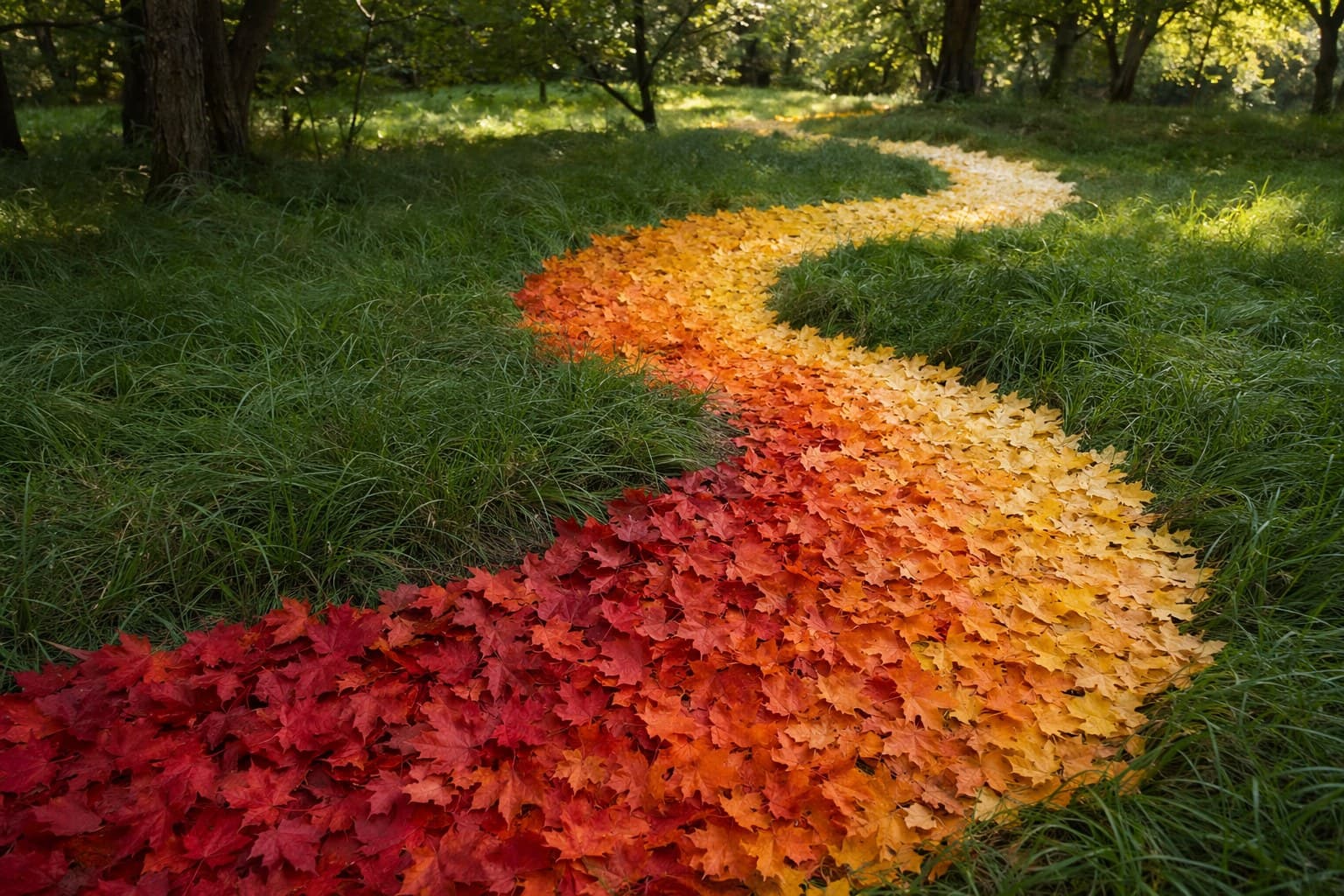
It also slows children down in a way that is increasingly rare. To build a good leaf gradient — say, a line that shifts from deep red through orange to pale yellow — a child has to actually look at leaves, sort them, compare shades, and notice differences they would otherwise walk straight past. That slow looking is the same habit at the heart of process-focused nature art projects, and land art is one of its purest expressions.
Gathering Materials the Right Way
The best part of land art is that the materials are free and underfoot, but how you gather them matters — both ecologically and for the quality of the work. Teach your child three simple rules before you start, and they will absorb a real ethic of stewardship along with the fun.
First, take only what has already fallen: dropped petals, windfall twigs, autumn leaves, loose stones. Living plants stay rooted. Second, take only what is abundant — if there are three pinecones, take none; if there are fifty, take a handful. Third, in protected places like nature preserves, dunes, or fragile shorelines, gather nothing and arrange in place instead. These habits turn a craft into a quiet lesson about reading a landscape and leaving it intact.
A small kit keeps the gathering tidy and turns an ordinary walk into a foraging mission. A simple natural materials collection basket for kids gives every find a home, and if you sort as you go — petals in one pocket, stones in another — the building stage is far less chaotic. A child-sized outdoor exploration kit with magnifier and bug viewer adds a layer of close looking that feeds directly into better art: a child who has studied the veins of a leaf under a lens arranges it more thoughtfully.
You do not have to rely entirely on what you find, either. A bag of smooth colored pebbles and river stones gives a reliable palette for mandalas on days when the garden is bare, and they can be rinsed and reused for years. This is the same open-ended, reusable thinking behind loose parts play — a collection of unfixed materials that a child returns to again and again, each time making something new.
Building Your First Nature Mandala
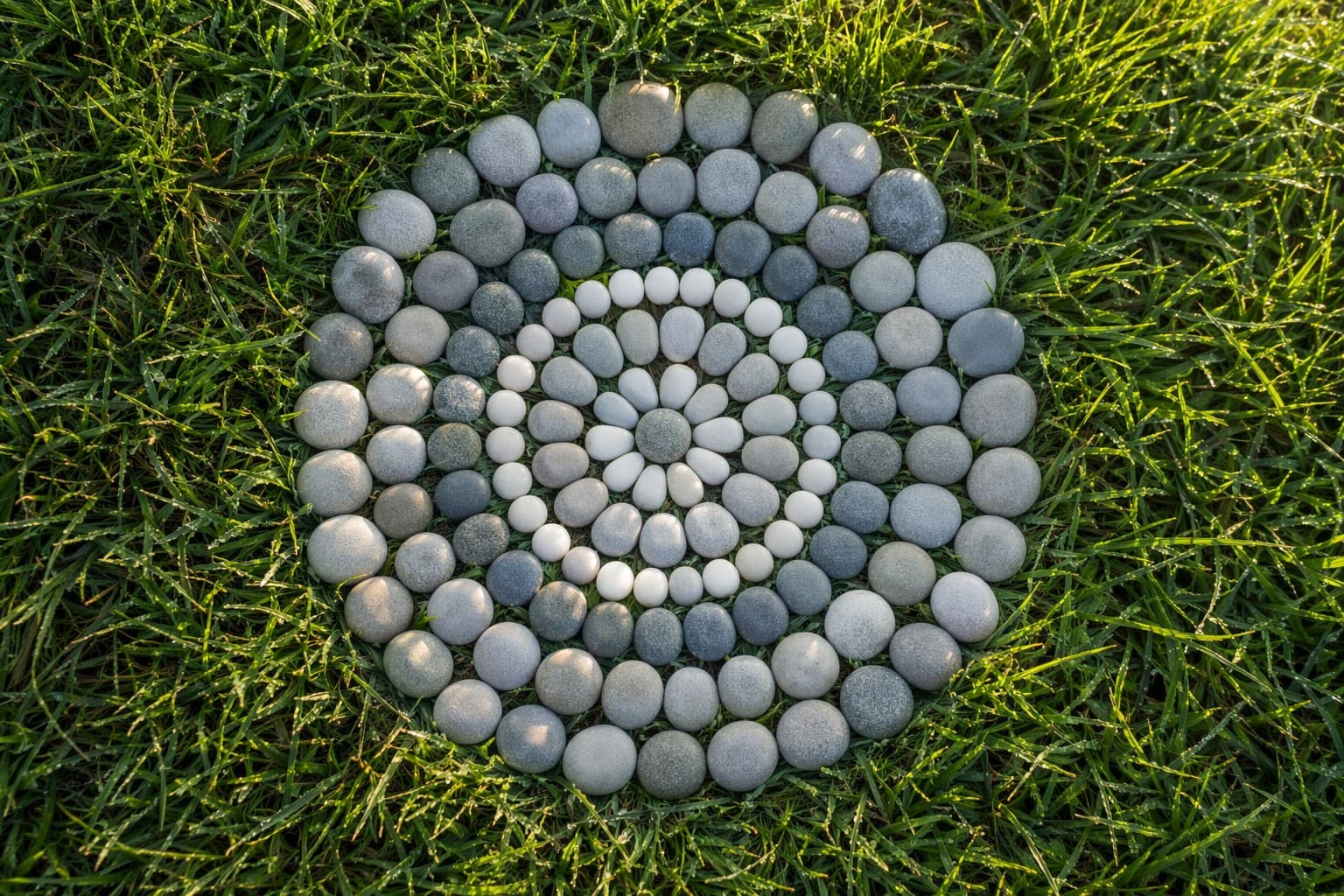
The mandala is the gateway project, and for good reason: the structure does half the design work, so even a beginner produces something striking. A mandala is simply a circular pattern built outward from a center, and the magic comes from repetition and symmetry.
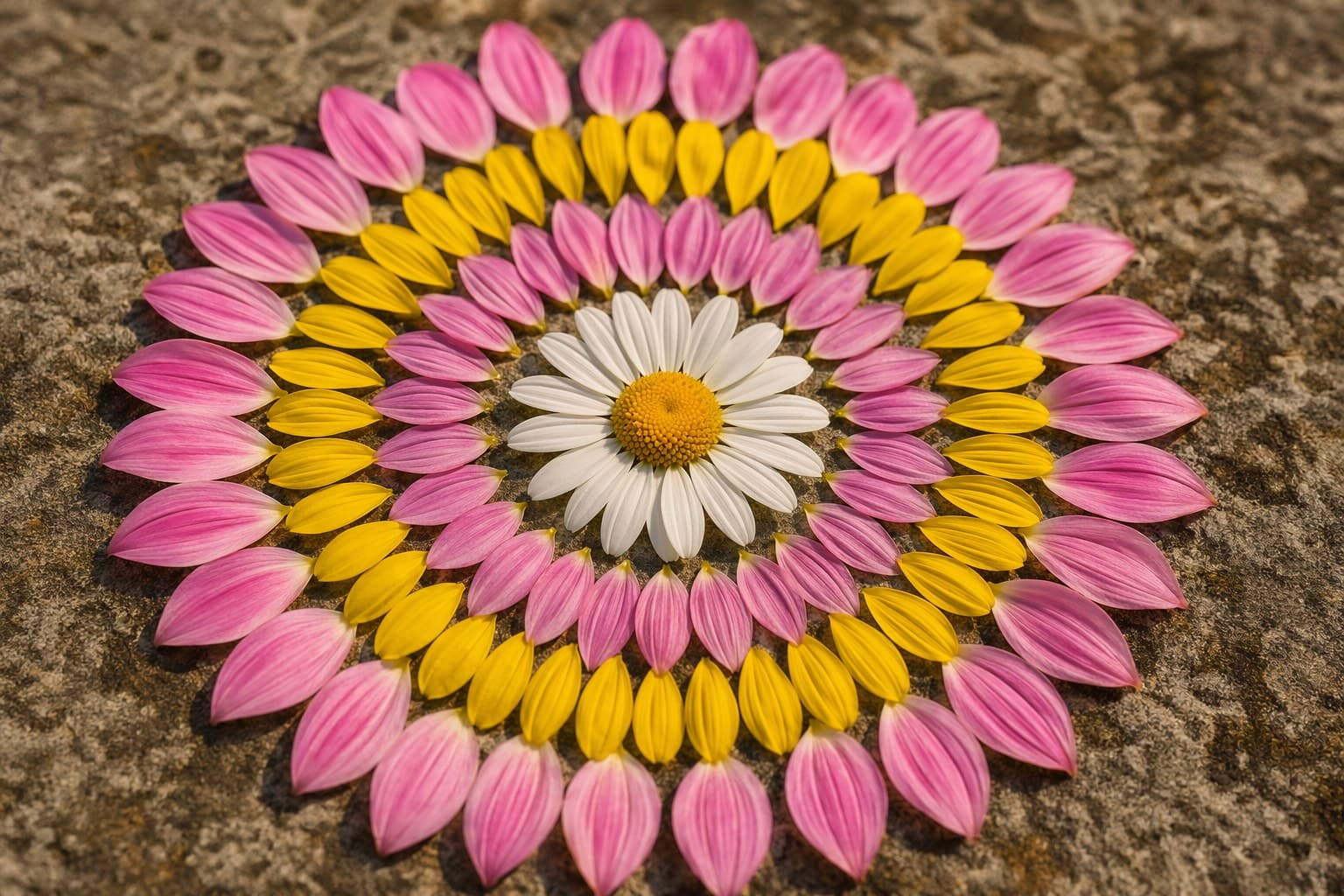
Start with a single anchor at the center — a daisy, a round white stone, a perfect pinecone. From there, build in concentric rings, and change the material with every ring. A circle of yellow petals, then a ring of small grey pebbles, then leaves arranged like the spokes of a wheel pointing outward, then a final border of red berries or acorn caps. The key instruction to give a child is to mirror and repeat: whatever you put on one side, echo it on the other. That single idea is the difference between a scattered pile and a piece that makes people stop and look.
Encourage sorting before building. Lay out all the petals, all the stones, all the leaves in their own little heaps first. The composing goes far more smoothly, and the sorting itself is quietly mathematical — grouping by color, size, and type, then arranging by count. Younger children love being given a number: "Let's put exactly six petals in this ring." Older children can experiment with gradients, working a ring from dark to light, or with radial symmetry that has eight, twelve, or sixteen identical segments.
This is unhurried, screen-free time that scales beautifully across ages, which is what makes it such a staple of outdoor nature activities for kids — a single mandala can absorb a focused child for forty-five minutes.
Beyond the Mandala: Eight Ephemeral Projects
Once the mandala has hooked your child, the form opens up. Here are projects that work across seasons and ages, all using found or reusable natural materials.
Stone stacks (cairns). Balancing flat stones into a tower is part art, part physics puzzle, and intensely absorbing. Children learn weight, balance, and patience without a single instruction. Photograph the tower, then knock it down — the demolition is half the joy.
Leaf gradients and lines. Lay leaves in a long line that shifts color gradually, or thread a curving river of leaves across the lawn. Autumn is the obvious season, but spring greens and summer flowers work too.
Petal rivers and color fields. Pour collected petals into flowing lines or fill a shape — a heart, a spiral, a child's name — with a single color. The contrast against grass or dark soil is what makes these photograph so well.
Stick weaving and frames. Lash four sticks into a square or use a forked branch as a loom, then weave in grasses, flowers, and feathers. This one can travel home if you want a keepsake.
Sand and shore art. At the beach, draw enormous spirals and patterns in the sand, edge them with shells and seaweed, and let the tide erase them. There is no more honest lesson in impermanence than watching the sea reclaim an hour's work.
Snow and ice art. In winter, press berries and evergreen sprigs into shallow water dishes and freeze them into sun catchers, or arrange dark stones on fresh snow for maximum contrast.
Clay-anchored sculptures. For pieces with a little more structure, a small block of organic air-dry modeling clay lets children press twigs, seeds, and petals into a base to build standing forms. It is the one project here that can dry and last if a child wants to keep it, which makes it a gentle bridge for kids who struggle with letting go.
Pressed-and-dried color palettes. Some flowers are worth saving. A simple flower pressing and drying kit preserves petals and leaves so a child can revisit a summer palette in the depths of winter, turning ephemeral finds into a slow, ongoing collection.
Documenting the Disappearing
Here is where the philosophy of ephemeral art becomes concrete. The work will vanish, so the photograph becomes the way you honor it. Handing your child the job of documenting their own piece transforms them from maker to curator and teaches a surprising amount about composition along the way.
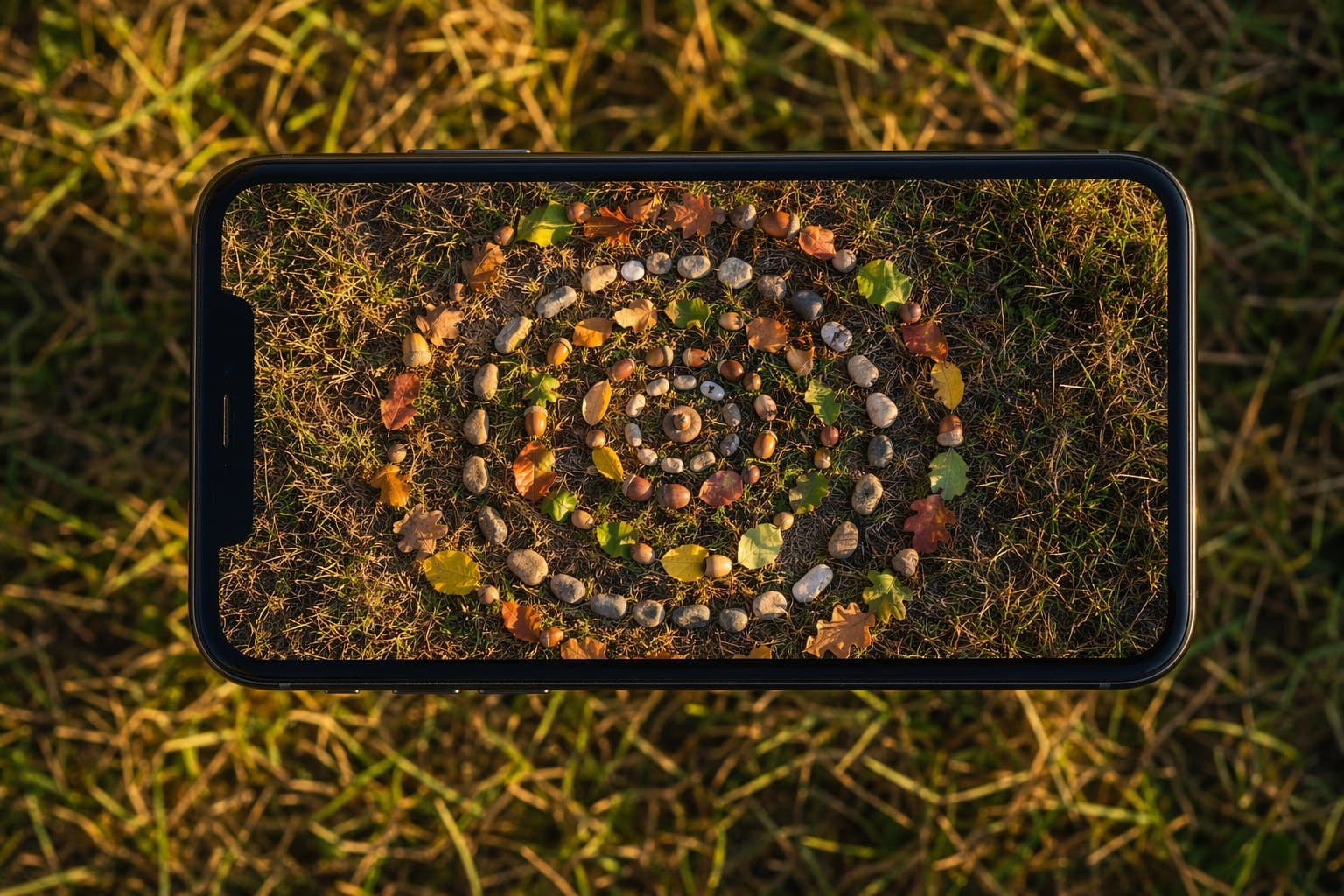
The single best tip is to shoot from directly overhead. Mandalas and ground-based land art are designed to be seen from above, and a phone or camera held flat over the work captures the symmetry that an angled shot flattens out. Let your child be the photographer — deciding when the piece is "done," choosing the angle, framing the edges — and the documentation becomes part of the art rather than an afterthought.
For families who want to make the keeping more deliberate, printing favorites and framing them turns fleeting work into a small gallery. An inexpensive photo display frame set on a hallway wall, rotated through the seasons, gives a child the genuine pride of seeing their work honored without ever needing to preserve the fragile original. Over a year, that wall becomes a quiet record of the changing garden and the changing child.
There is a real conversation to have here, too, especially with children who find impermanence hard. The photograph is not a consolation prize — it is the tradition. Goldsworthy's life's work exists for most of us only as photographs, because the pieces themselves were always meant to go. Framing it that way helps a child release the petals back to the wind without grief.
Why Impermanence Is the Lesson
It would be easy to treat land art as just another nature craft, but its deepest value is precisely the thing that frustrates our instinct to save and display. Children spend a great deal of their making time producing objects — drawings, models, painted rocks — that they expect to keep, and that adults dutifully store in overflowing bins. Land art flips that entirely. The point is not the artifact. The point is the hour spent looking closely, arranging carefully, and then, deliberately, letting go.
That practice does quiet work on a child. It builds a tolerance for transience that runs counter to a world of permanent digital records and accumulated stuff. It locates the reward in the doing rather than the having. And it ties creativity directly to the natural cycles a child is living inside — the leaves that fall, the tide that turns, the snow that melts. A mandala built from this morning's fallen petals is a small, hands-on encounter with the truth that beautiful things pass, and that this is not a loss to be fixed but a rhythm to be enjoyed.
There is a calmer, more attentive child on the other side of a season of this work — one who notices the first red leaf, who picks up an interesting stone and turns it over, who can sit with a project for half an hour because the project asks nothing of them but presence. That is worth far more than another keepsake for the bin.
Frequently Asked Questions
What is land art for kids? It is artwork made outdoors from natural materials found on site — stones, petals, leaves, sticks — arranged into patterns and left to be reclaimed by weather and time. It is free, low-pressure, and connects creating directly to the environment.
How do you make a nature mandala with children? Start with one object at the center and build outward in concentric rings, changing the material each time and mirroring both sides. Sort materials first, encourage symmetry, photograph from above, then leave it to return to nature.
Is it okay to collect natural materials? Yes, with a light touch — gather only what has already fallen and is abundant, never strip living plants, leave berries and acorns for wildlife, and in protected places arrange in place rather than collecting at all.
Start This Afternoon
You need nothing you do not already have. Walk into the yard, the park, or onto a path, look at what the season has dropped on the ground, and lay a single stone down as a center. Let your child build the rest. When it is finished, take one photograph from straight above, and then walk away and let the wind do what it does. The first mandala will be wobbly and asymmetrical and entirely wonderful, and by the third or fourth your child will be sorting petals by shade and counting out rings without being asked. That is land art doing exactly what it does best — turning an ordinary patch of ground into a place where a child slows down, looks closely, and makes something beautiful for the sheer joy of making it.
Frequently Asked Questions
- What is land art for kids?
- Land art is artwork made outdoors using only natural materials found on site — stones, leaves, petals, sticks, pinecones, sand, and snow — arranged into patterns, lines, or sculptures and left in place. For children it is a low-pressure, no-cost form of creating that connects art to the environment. Because the work is temporary and will be reclaimed by wind, rain, or tide, the focus stays on the process of making rather than on producing something to keep. Andy Goldsworthy, the British artist most associated with the genre, photographs his pieces precisely because they do not last.
- How do you make a nature mandala with children?
- Start with a single object at the center — a flower, a round stone, a pinecone. Build outward in concentric rings, changing the material with each ring: a circle of yellow petals, then a circle of small grey pebbles, then a ring of green leaves arranged like spokes. Symmetry and repetition are what make a mandala read as a mandala, so encourage your child to count and mirror rather than scatter. When it is finished, photograph it from directly above, then leave it to return to nature. Children as young as three can build simple ones with help.
- Is it okay to collect natural materials for land art?
- Yes, with a light touch and a few rules. Gather only what is already fallen and abundant — dropped petals, windfall sticks, loose stones, autumn leaves. Never strip living plants, and in protected parks, nature preserves, and along fragile shorelines, leave everything where it is and arrange in place instead. Leave acorns and berries for wildlife. Teaching children to take little and disturb less is part of what makes land art a lesson in stewardship rather than just a craft.
Enjoying this article?
Get more ideas like this delivered to your inbox every week.