Mother's Day Gifts Kids Can Make (No-Fail Craft Projects)
Simple, heartfelt Mother's Day gifts kids can make — handprint clay dishes, written appreciation books, pressed-flower cards, and more. Genuinely no-fail projects organized by age, with real techniques that work.
By The Slow Childhood
Last year, our seven-year-old spent the better part of a Saturday morning hunched over the kitchen table making her mom a "fancy restaurant menu" of breakfasts she promised to deliver in bed. The spelling was creative. The illustrations were ambitious. One option was simply "egg (the good kind)." It is, without exaggeration, one of the most treasured things in our house — far more than anything we could have ordered.
That is the quiet truth about Mother's Day gifts kids make themselves: the wobblier and more handmade, the better. A child's lopsided clay dish or misspelled card carries something no store-bought gift can. It holds the size of their hand this year, their handwriting this spring, the things they actually notice and love. The goal of this guide is to give you projects that are genuinely no-fail — meaning even if the execution is messy, the result is still meaningful and usable. I have organized them by age and by how much lead time they need, and I have included the specific techniques that keep these projects from collapsing into frustration.
Start With the Lead Time, Not the Craft
The single most common reason a homemade gift goes sideways is timing. Clay and pressed flowers both need drying days, and there is no rushing them. Before you choose a project, look at your calendar.
- Five or more days out: Anything goes — clay dishes, pressed-flower cards, painted pots with seeds planted inside.
- Two to three days out: Skip air-dry clay (it will not fully cure), but salt dough baked in the oven works, as do paint projects and most paper crafts.
- The day before: Stick to paper, drawing, writing, and assembly. An appreciation book, a coupon booklet, or a decorated photo frame all come together in an afternoon.
If you are working with multiple children of different ages at once, the rhythm matters as much as the materials — the same principles that make a homeschool day with multiple ages run smoothly apply here. Set the older child on a multi-step project and give the toddler something open-ended right beside them.
No-Fail Projects for Toddlers (Ages 1 to 3)
Toddlers cannot follow craft steps, and they should not be asked to. Their gifts are process art that happens to become a present. The trick is choosing materials where there is no wrong outcome.
Handprint and Footprint Keepsakes
Press a paint-covered hand or foot onto cardstock, a canvas, or a plain tea towel. That single print, dated on the back, is the gift. For paint, washable tempera works on paper, but use fabric paint if you are printing on a towel or tote so it survives the wash. A small set of paint markers is useful for an adult to add a date or a tiny caption afterward without smearing.
A Free-Painted Canvas
Tape down a small canvas board, set out two or three colors, and let them go. Resist directing it. A toddler who covers the whole board in joyful brown is making exactly the right gift. If you want the experience to be purely about exploration, our guide to process art for toddlers has twenty more open-ended ideas that double beautifully as gifts.
Salt-Dough Ornaments
Mix one cup flour, half a cup salt, and half a cup water into a dough. Let your toddler squish, roll, and press objects into flattened rounds, then poke a hole at the top with a straw. Bake at 200 degrees Fahrenheit for two to three hours until hard. Once cool, an adult or older sibling can paint and seal them. Thread them on decorative beads and twine to hang.
No-Fail Projects for Ages 4 to 7
This is the sweet spot. Children here can follow a few steps, take genuine pride in the result, and still need just enough support that the project stays low-stress.
The Handprint Clay Dish
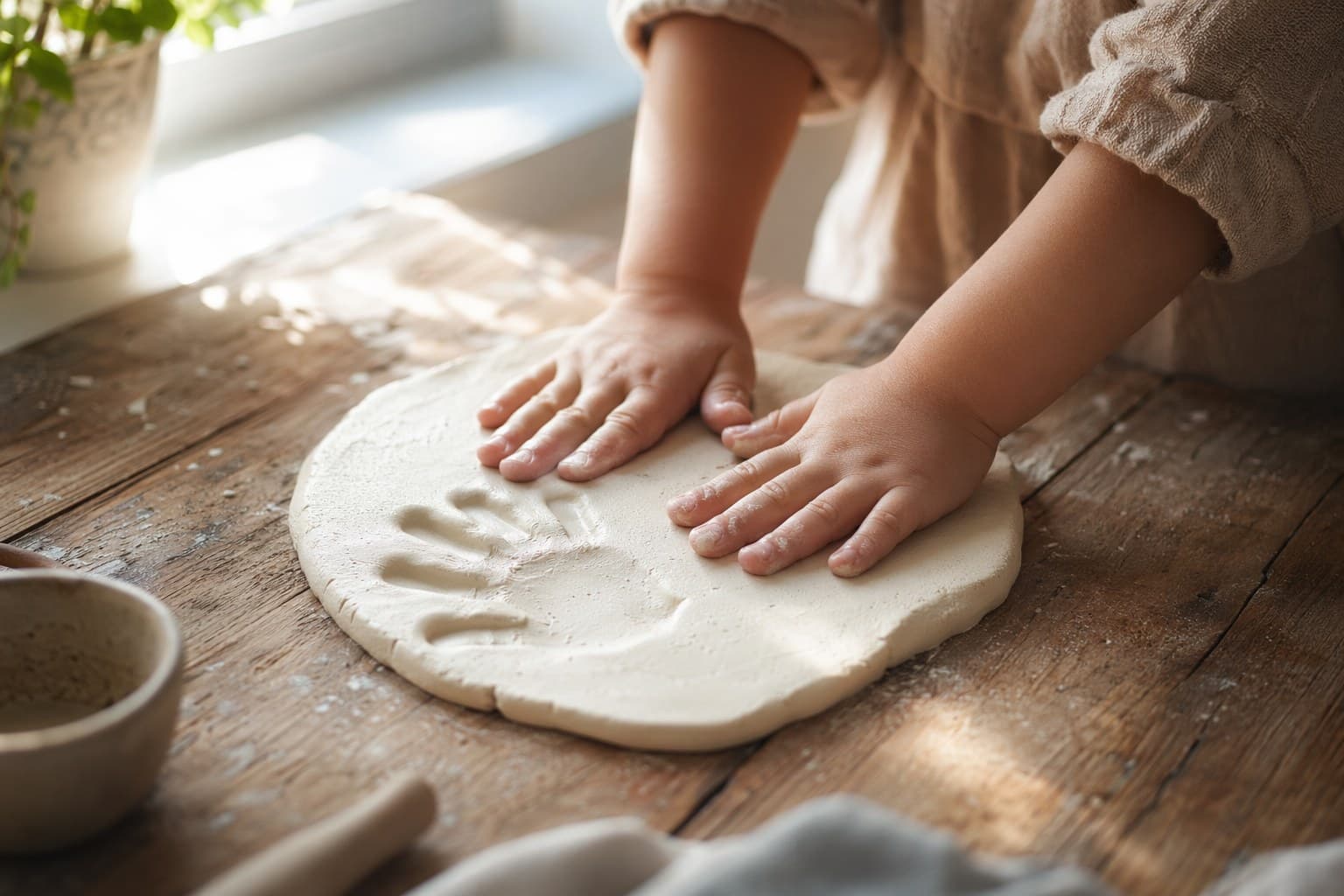
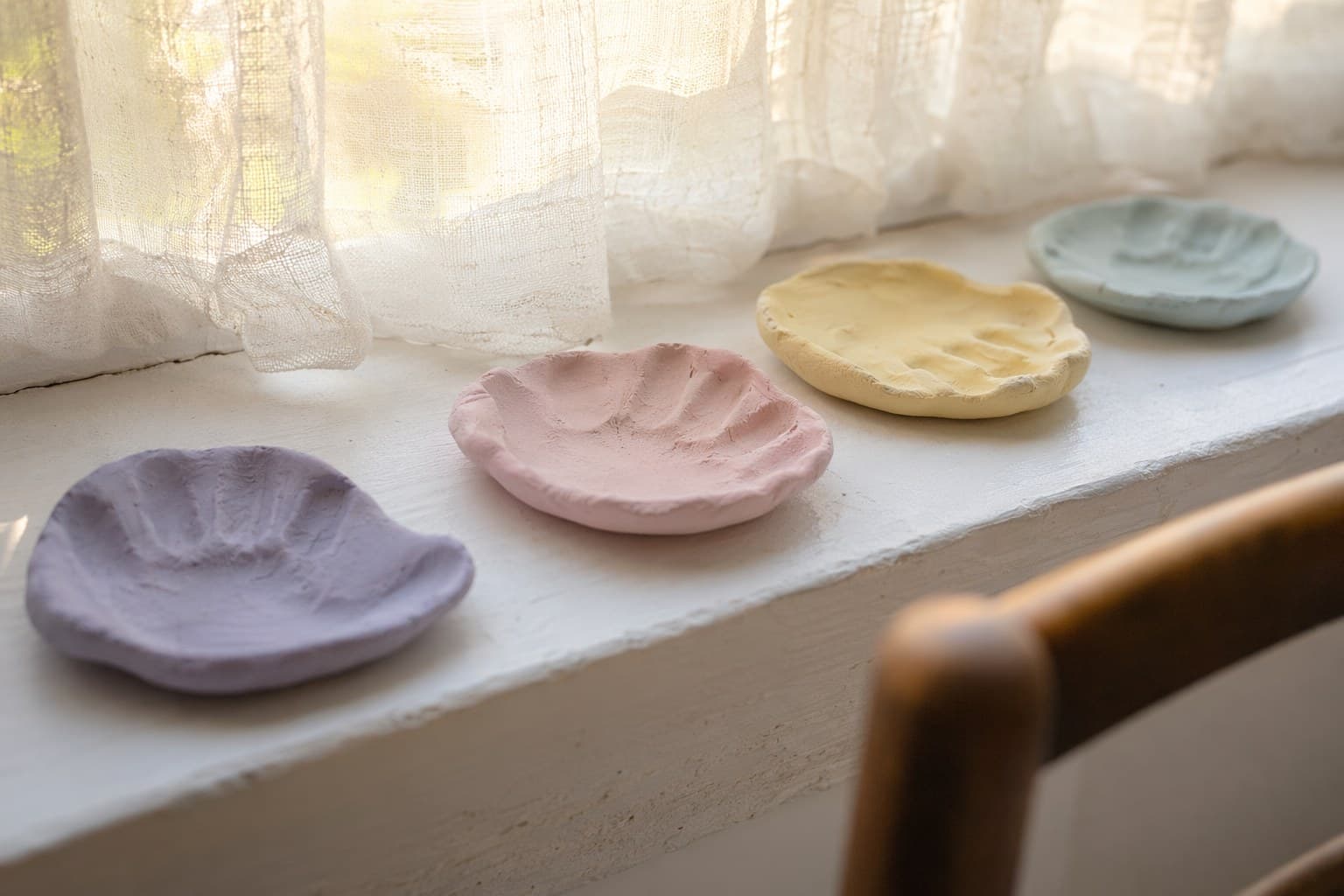
This is my single favorite kid-made gift, and it almost never goes wrong. Roll a ball of air-dry clay flat to about half an inch thick. Have the child press their open hand into it firmly, then lift straight up. Use a cup or bowl rim to cut a circle around the print, and gently curl the edges upward so it becomes a shallow dish. Let it dry undisturbed for two to three days, turning it once a day so it dries evenly and does not curl.
Once fully dry, paint it — a wash of one color in the recessed handprint, a different color on the raised edges, looks intentional and lovely. This same air-dry clay technique underpins dozens of projects in our easy clay and pottery guide, so a leftover block never goes to waste.
Pressed-Flower Cards
Pick flat flowers and leaves — violas, pansies, ferns, and small daisies press best; thick blooms like roses do not. Lay them between sheets of paper inside a heavy book and leave them three to four days. Then arrange and glue the dried flowers onto folded card stock. A thin layer of white glue, dabbed on with a fingertip, holds them without soaking through. This is a wonderful gift to start during a regular spring walk, gathering as you go.
A Decorated Pot With Something Growing In It
Let the child paint a small terracotta pot with paint markers — dots, stripes, and fingerprints all work, and markers dry far faster than brush paint. Plant a few seeds or a small herb start inside. The gift that keeps growing carries a built-in reason to spend time together later, watering and watching it come up.
No-Fail Projects for Ages 8 and Up
Older children can handle real technique, longer attention spans, and tools that demand a little care. These projects feel grown-up to make, which is half the appeal.
A Written Appreciation Book
Fold and staple several sheets together, or use a small blank book. Each page completes a prompt: "I love that you...," "You always...," "My favorite thing we do together is...," "You taught me how to...." The specificity is what makes a grown adult cry at the kitchen table. Encourage real memories over generic sweetness — "you stayed up fixing my science project" lands harder than "you are nice."
A Hand-Stitched Sachet or Bookmark
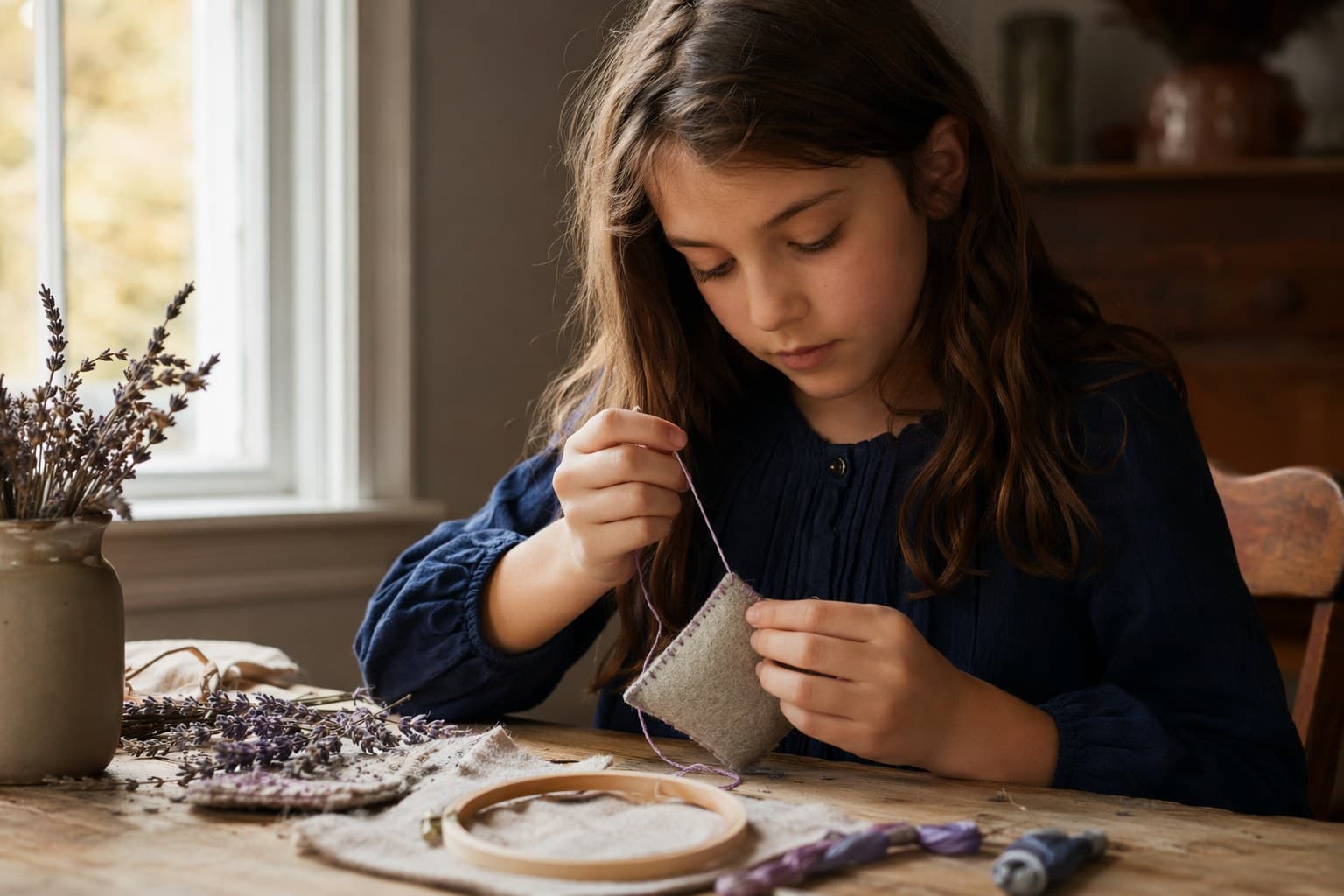
Cutting felt and running a simple whipstitch around the edges is achievable by most eight-year-olds, especially with a kid-friendly embroidery kit that includes blunt needles and pre-cut shapes. Stuff a small stitched pouch with dried lavender, or stitch two felt rectangles into a bookmark and add an embroidered initial. Learning a running stitch and a backstitch is a real, retainable skill that outlasts the holiday.
A Coupon Booklet of Acts of Service
This one is sneaky-genius because the gift is the child's own time and effort. Each coupon is good for one real thing: "one breakfast in bed," "I will fold the laundry without being asked," "one whole evening of no arguing about bedtime." Tie the writing of these to the age-appropriate responsibilities your child is already capable of, and the booklet becomes both a sweet gift and a quiet nudge toward contribution. Bind it with a hole punch and twine.
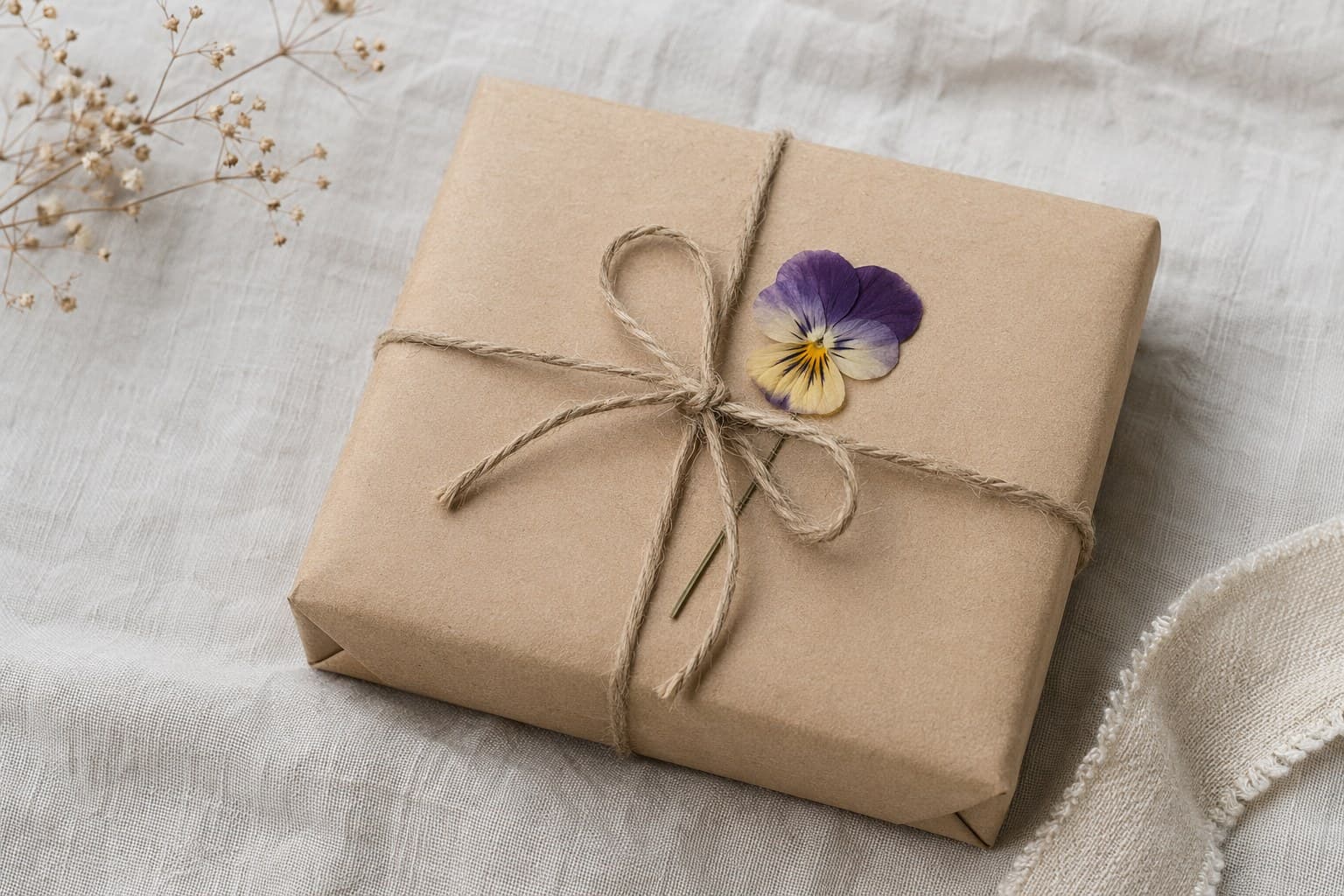
Wrapping and Presentation, the Easy Way
The wrapping is its own small craft, and it should be just as handmade. Brown kraft paper decorated with potato stamps or fingerprint flowers costs almost nothing and looks far better than store wrap. A gift box closed with a length of twine and a single pressed flower tucked under the knot is plenty. Let the child write the tag in their own hand — that handwriting is part of the gift, and it is the detail you will both treasure most in ten years.
Frequently Asked Questions
What is the best Mother's Day gift a young child can actually make? A handprint clay dish is the most reliable choice for ages 2 to 6. It captures the child's actual hand size at this exact age, it is forgiving to make, and it stays useful for years as a ring or trinket dish. Roll the clay flat, press the hand in firmly, cut a circle, curl the edges up, and let it dry fully before painting.
How far ahead do we need to start? At least four to five days for anything with air-dry clay or pressed flowers, since both need drying time — clay needs 48 to 72 hours and flowers need three to four days in a heavy book. Paper and written gifts can be made the day before.
What can a toddler too young to follow directions make? Process-based gifts that need no instructions: a free-painted canvas, a handprint card, a squished-and-stamped salt-dough ornament, or a pot covered in stickers and fingerprint dots. The imperfection is the charm.
The Point Is the Making
Years from now, the breakfast menu with "egg (the good kind)" will mean infinitely more than any polished, perfect present. That is the whole quiet argument for handmade. Give your child good materials, enough time, and the freedom to make it their own way — and then step back. The wobble is the gift.
Frequently Asked Questions
- What is the best Mother's Day gift a young child can actually make?
- A handprint clay dish is the most reliable choice for ages 2 to 6. It captures the child's actual hand size at this exact age, it is forgiving to make, and it stays useful for years as a ring dish or trinket tray. Roll air-dry clay flat, press the hand in firmly, cut a circle around it, curl the edges up slightly, and let it dry for two to three days before painting.
- How far ahead do we need to start a homemade Mother's Day gift?
- Start at least four to five days before Mother's Day for anything involving air-dry clay or pressed flowers, because both need drying time. Clay needs 48 to 72 hours to harden fully before painting, and flowers pressed in a heavy book need three to four days to flatten and dry. Paper and written gifts can be made the day before with no problem.
- What can a toddler too young to follow directions make for Mom?
- Toddlers do beautiful process-based gifts that need no instructions: a free-painted canvas, a handprint or footprint card, a salt-dough ornament they squish and stamp, or a decorated flower pot they cover in stickers and fingerprint dots. The charm of a toddler gift is precisely that it is authentic and imperfect, so lean into open-ended materials rather than a fixed outcome.
Enjoying this article?
Get more ideas like this delivered to your inbox every week.