Painting Outdoors: Nature-Inspired Art Projects in Spring Gardens
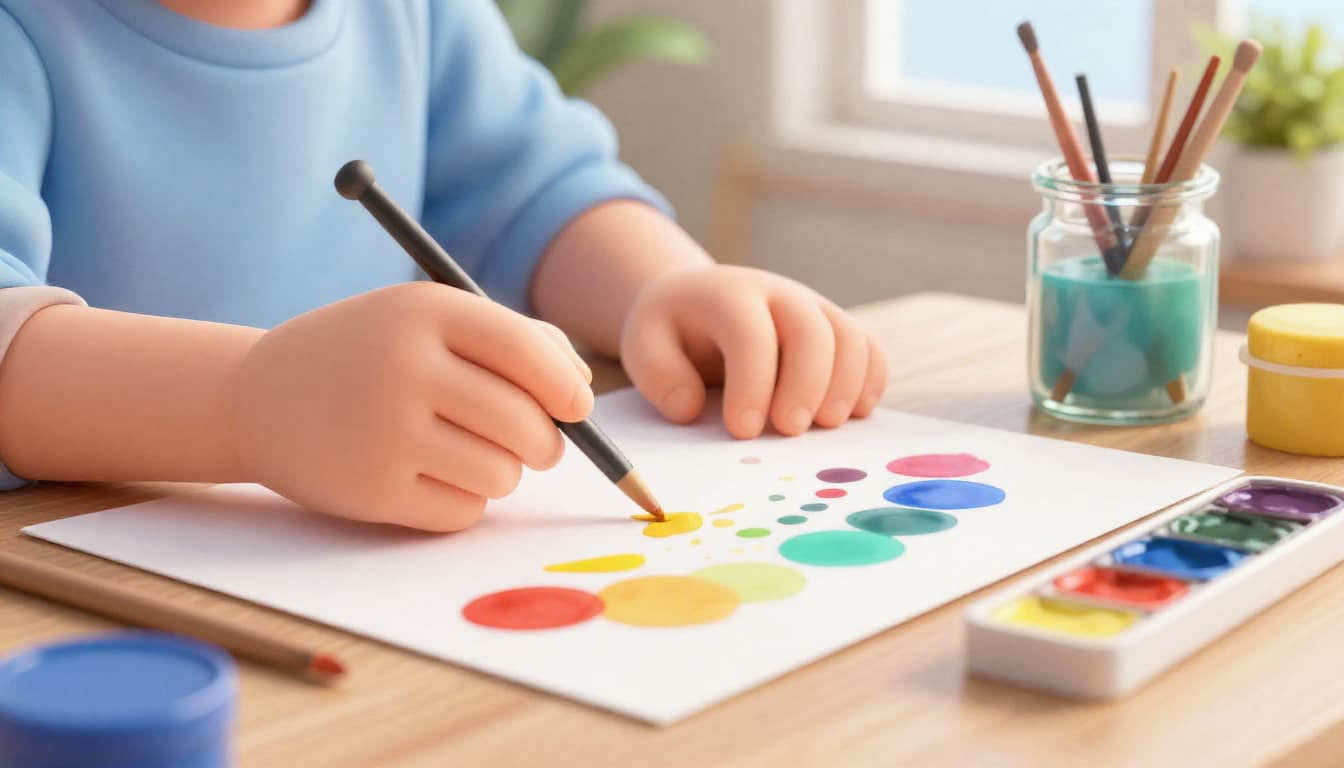
Set up a painting station in your spring garden and let real flowers, light, and color guide your child's brush. Here are the projects, the setup, and the supplies that actually hold up outdoors.
By The Slow Childhood
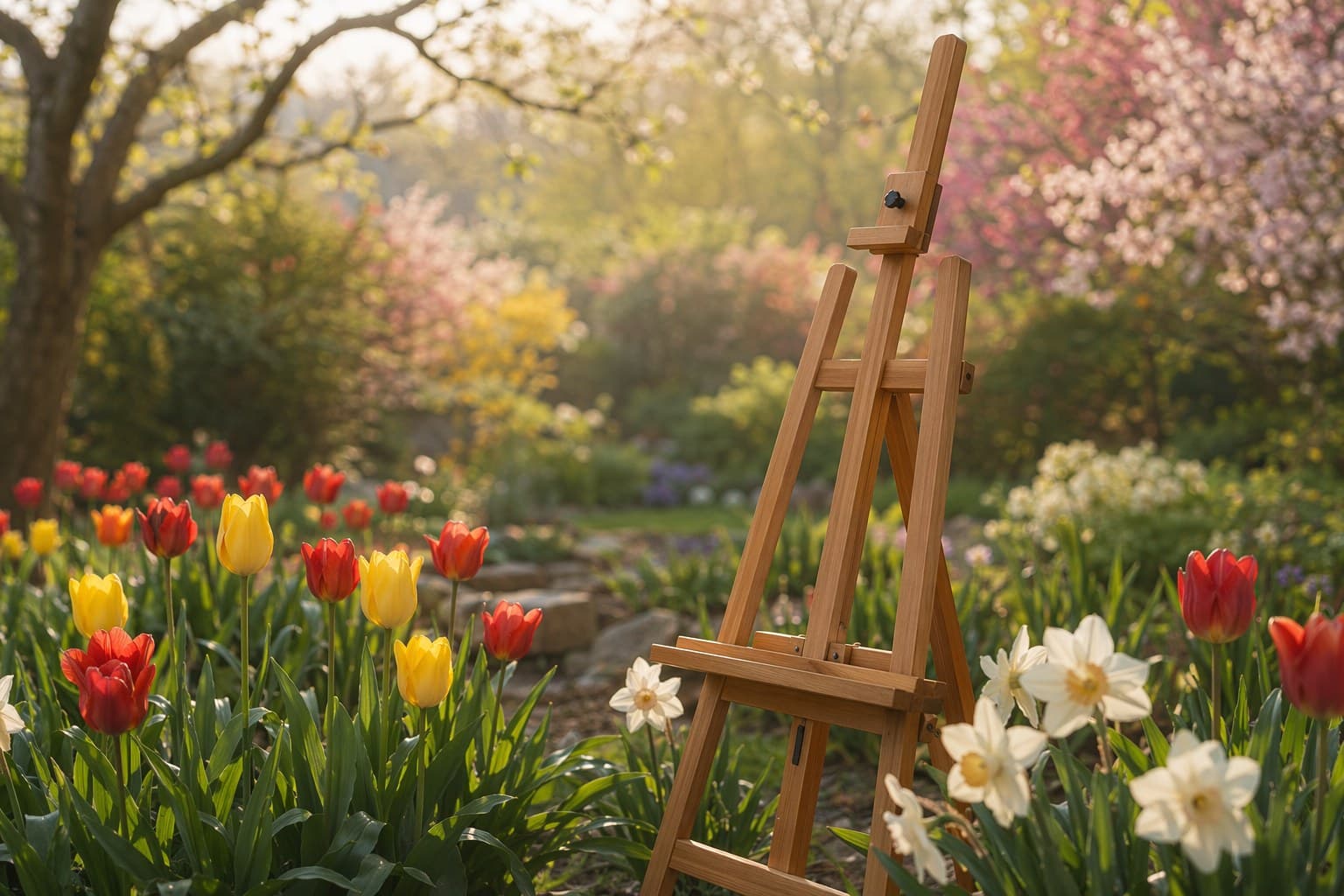
There is a particular kind of focus that only happens when a child paints outdoors. Inside, at the kitchen table, the reference for a flower is a memory or a photograph. Outside, in the garden, the flower is right there — moving slightly in the breeze, changing as a cloud passes, smelling of itself. The child looks up, looks down at the paper, looks up again. That looking is the whole lesson. Spring, when the garden refuses to hold still and the color arrives faster than you can name it, is the best season of the year to set up a painting station outside and simply let nature do the teaching.
We started taking our art supplies into the garden a few springs ago, mostly out of laziness — it was easier than scrubbing the table afterward. What we discovered was that the paintings got better, the sessions got longer, and the meltdowns nearly disappeared. There is something about open air and real light that takes the pressure off. Nobody is trying to make a masterpiece. They are trying to figure out why the underside of a leaf is a different green than the top, and that is a much more interesting problem than a blank sheet of paper indoors.
This guide covers how to set up an outdoor painting station that actually works, the spring projects we return to year after year, and the handful of supplies worth buying so the whole thing does not collapse the first time the wind picks up.
Why Spring Gardens Are the Best Outdoor Studio
Spring gives you three things no indoor setup can replicate, and all three improve children's painting.
The first is color you cannot get from a tube. A child mixing green to match new grass will reach for the bright yellow-green first, then notice the grass is actually bluer in the shade, warmer where the sun hits it. That single observation — that one color is really many colors — is the foundation of every painting skill that follows. Tulips alone offer a dozen reds, none of which match the red in the paint box.
The second is light that moves. Indoor light is flat and constant. Garden light shifts every few minutes, throwing long shadows in the morning, flattening everything at noon, glowing golden before dinner. Painting outdoors teaches children, almost by accident, that the same flower looks completely different at 9 a.m. and 5 p.m. This is the beginning of understanding light and shadow, and they learn it without a single lesson.
The third is subject matter that rewards close looking. A garden is not one thing; it is a thousand small things. A snail on a stem. The papery skin of a daffodil bud about to open. Bees working a patch of forget-me-nots. When a child paints from life, they slow down and notice detail they would otherwise walk right past. That slowing down is the entire point, and it is much easier to achieve outside than at a table where the reference is a screen.
Setting Up Your Outdoor Painting Station
A good outdoor station takes about ten minutes to set up and removes nearly every reason a painting session goes sideways. Here is what works.
Pick a Spot Out of the Wind
Wind is the enemy of outdoor painting — it tips easels, flips paper, and dries watercolor before a child can blend it. Choose a sheltered corner: against a fence, beside the house, under a tree, or on a patio with a wall at your back. Morning is usually calmer than afternoon, and morning light is gentler too.
Use a Real Easel (or Fake One Well)
A standing easel changes the whole posture of painting. Children stand back, see the whole composition, and use their shoulder instead of just their fingers. For outdoors you want something stable and weather-tolerant. A simple wooden tabletop or standing easel for outdoors that folds flat for storage is worth the modest investment if your family paints regularly. If you do not own one, a large piece of plywood or a sturdy cardboard box leaned against a chair does the job — just clip the paper down so it cannot flap.
Choose a Sturdy Surface to Paint On
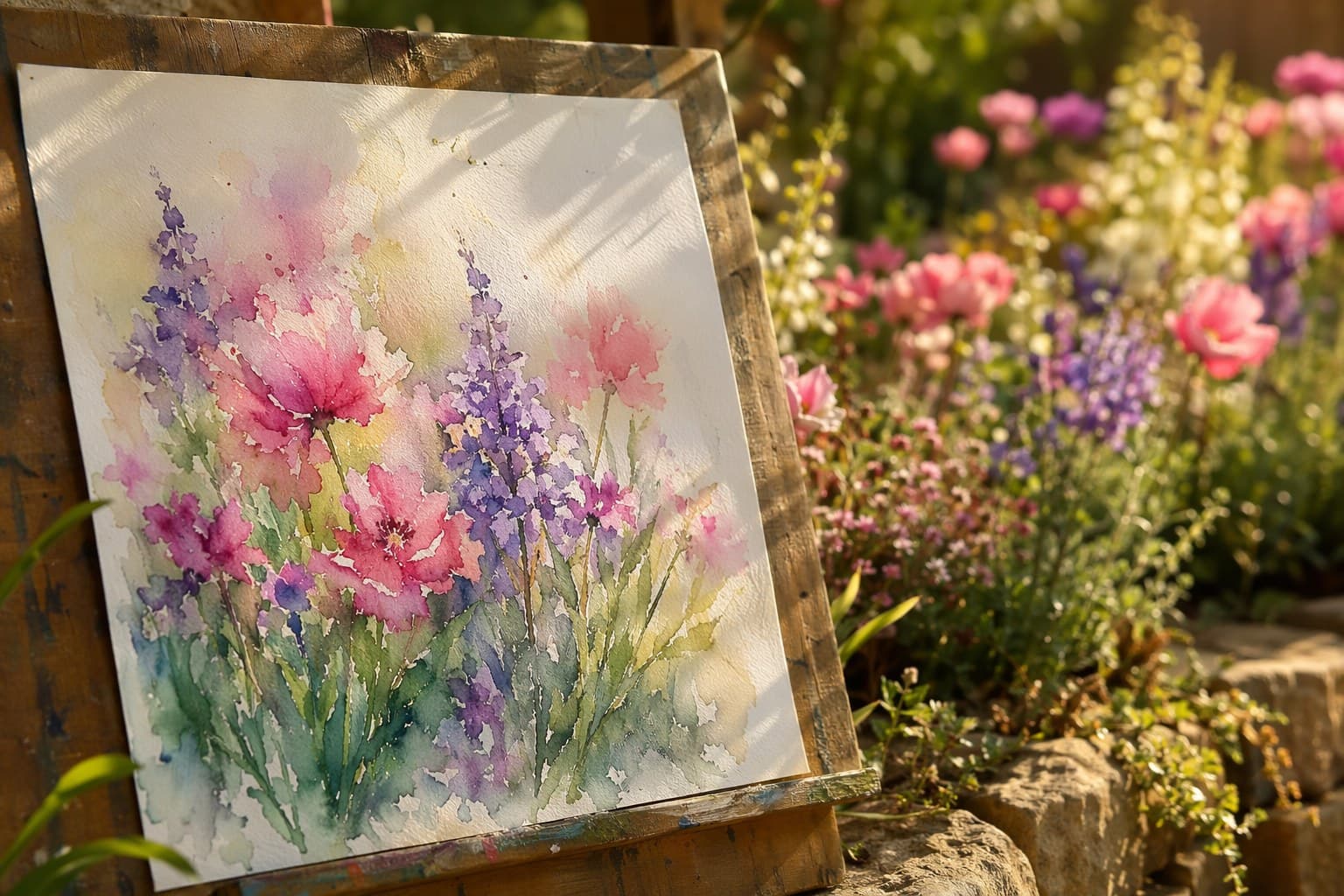
Watercolor paper buckles when wet and floppy paper is miserable to work on outdoors. Tape your paper to a board, or skip paper entirely and paint on canvas boards, which are rigid, will not warp, and feel satisfyingly permanent to a child who wants to keep the result. Canvas boards take watercolor, tempera, and acrylic, so they adapt to whatever medium you have on hand.
Corral the Supplies
The single biggest difference between a calm outdoor session and a chaotic one is keeping the supplies contained. A tray or shallow box holds everything so brushes do not roll into the flower bed and the water jar has a home. Weigh down loose paper with a couple of smooth stones from the path — they double as a quick lesson in using whatever the garden provides.
The Supplies That Actually Matter
You do not need much, but a few choices make a real difference outdoors.
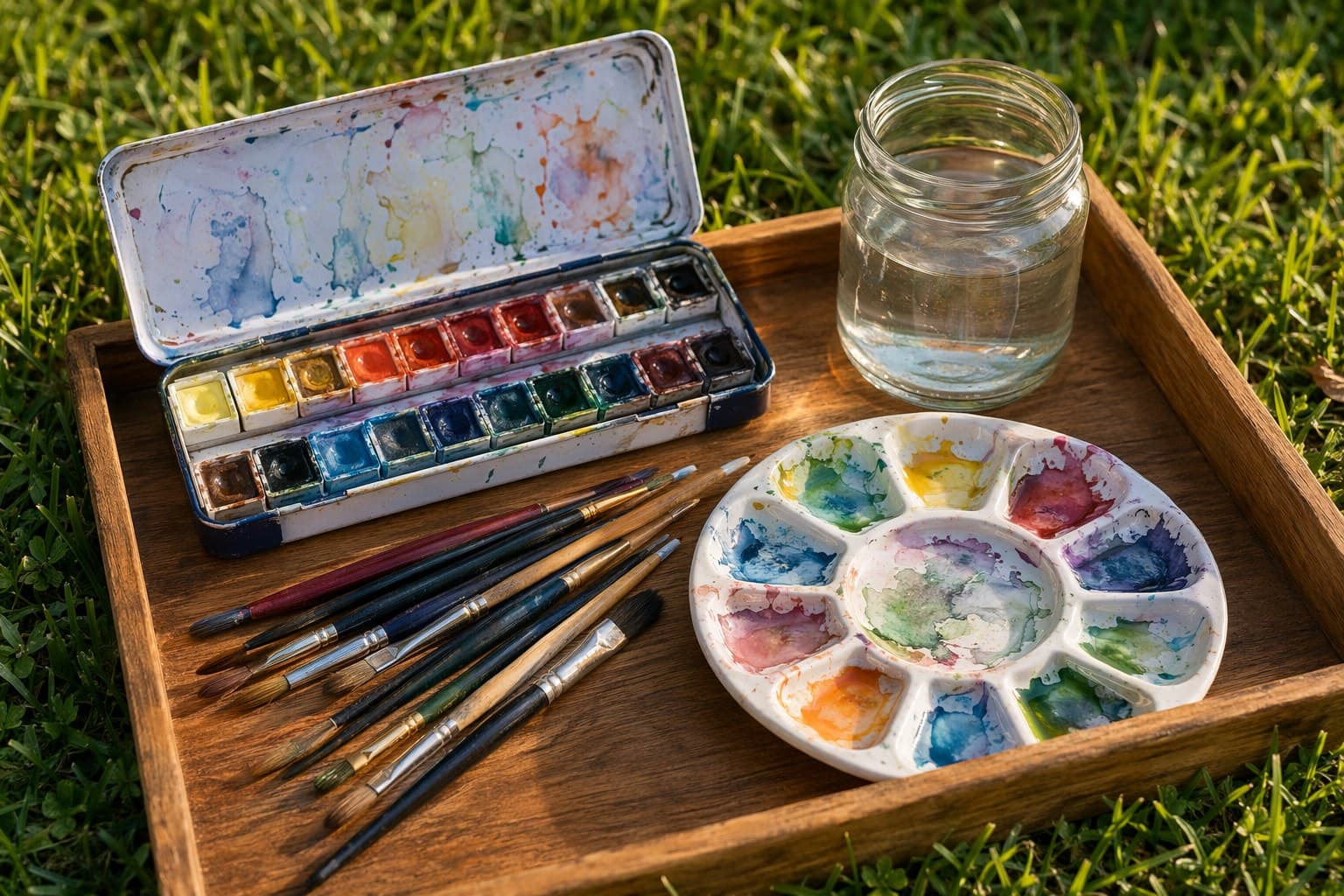
Watercolors. This is the medium we reach for outside nine times out of ten. It dries fast in open air, the colors match the soft translucence of petals and new leaves, and it rinses out of everything. A large watercolor paint set with at least 24 colors gives children enough range to mix what they actually see — the dozen greens of spring especially. Skip the dollar-store sets; their chalky, pale colors frustrate children and make matching a real flower nearly impossible.
A palette with wells. Outdoor color mixing is where the learning happens, and you need somewhere to do it. A paint palette with deep wells lets a child mix that exact tulip red in a clean space instead of muddying it on the painting. The wells also keep premixed colors from sliding around when the surface is not perfectly level.
A variety of brushes. One brush size does not fit a garden. You want a fat brush for skies and washes, a medium round for petals, and a fine tip for the veins of a leaf or the legs of a bee. A paintbrush variety set covers all of it. Teach children which brush does which job — it is one of the most concrete art skills there is, and they pick it up quickly when the choice obviously affects the result.
A stable water jar. A wide-mouth jar that will not tip is non-negotiable outdoors. Fill it only halfway so a spill is small, and keep a rag nearby. That is genuinely the entire mess-management plan.
For a fuller breakdown of building a home art kit that travels well between indoor table and outdoor garden, our guide to watercolor painting projects for kids goes deep on paint quality and technique.
Spring Garden Painting Projects
Here are the projects we come back to every spring, roughly easiest to most involved. None require following exactly — the garden is the curriculum, and these are just doorways in.
1. One Flower, Slowly
The simplest and most valuable project: pick a single bloom — a tulip, a daffodil, an early rose — and paint only that. Set it in a small jar of water on the tray, or paint it where it grows. The instruction is just "look more than you paint." Encourage your child to mix the exact color before touching the paper, then to find the second and third colors hiding in the same petal. A single flower painted over twenty quiet minutes teaches more about observation than a whole bouquet rushed in five.
2. The Color-Matching Hunt
Before painting anything, send your child to mix paint that matches things in the garden. Match the grass. Match the brick. Match the darkest leaf and the palest petal. Paint each match as a little swatch with a note beside it. This turns mixing into a game and produces a personal color chart of your own garden in spring. It is also pure science — observation, comparison, trial and error — disguised as art.
3. Wet-on-Wet Garden Sky
Spring skies are dramatic and forgiving to paint. Wet the whole upper half of the paper with clean water, then drop in blues, a touch of grey, maybe pink near the horizon, and let the colors bloom and run on their own. Children love that the paint does half the work. Once it dries, they can add the dark line of a fence, a tree, or the tops of flowers along the bottom. This is a confidence project — it almost always looks good.
4. Raindrop and Dew Studies
Spring mornings hand you a free still life: water beads on leaves and petals. Painting a single drop — the bright highlight, the shadow underneath, the way it magnifies the green behind it — is a genuine challenge that older children find absorbing. It is a small subject with a big payoff, and it trains the eye to notice the way light behaves on wet surfaces.
5. The Wide Garden Landscape
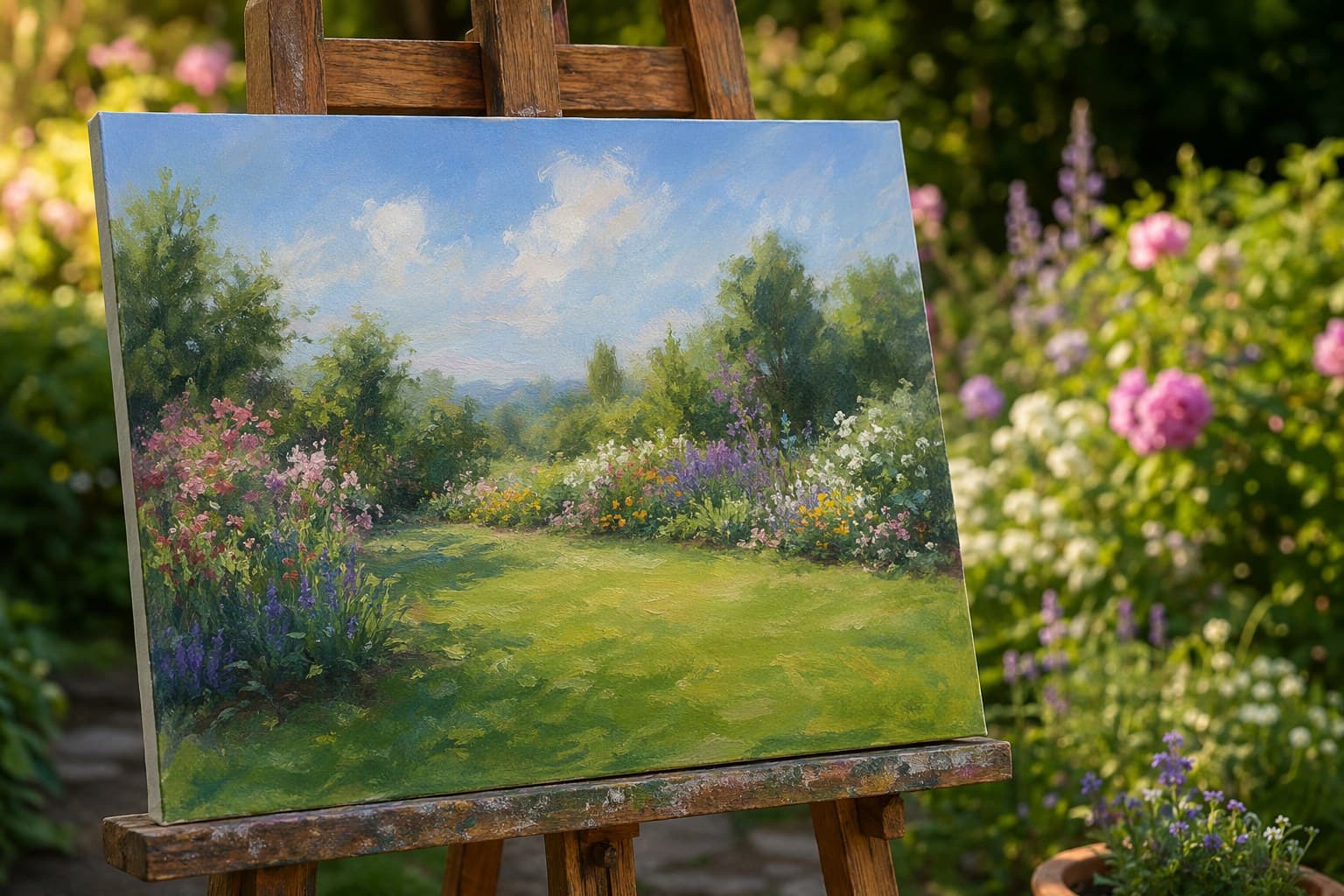
When a child is ready to handle the whole scene, set the easel back from a flower bed and paint the garden wide — bands of color, the line where lawn meets border, the shapes of bushes, the sky above. Do not worry about detail. The goal is composition and the relationship between big shapes and colors. Painting from life at this scale, even loosely, is how children start to understand foreground, background, and depth.
6. Bug and Bird Quick-Sketches
The garden is full of moving subjects, and that is good practice. A bee on a flower will not pose, so a child has to look fast, remember, and commit a few quick strokes to paper. These "gesture" paintings are loose and lively and free children from the pressure of getting every detail right. Keep a page going for the whole session and fill it with quick attempts.
Making It a Rhythm, Not a One-Off
The families who get the most out of garden painting are not the ones who do it perfectly once. They are the ones who do it again and again, casually, as the season unfolds. Spring is short and it changes weekly — the daffodils give way to tulips, the tulips to roses, the bare branches to full leaf. Painting the same garden every Saturday morning through April and May produces something quietly remarkable: a visual diary of a season.
You do not need a special occasion. Carry the tray out after breakfast, set up the easel in the same calm corner, and let the painting happen alongside everything else — the birds, the dirt, the slow waking-up of the yard. Pairing painting with broader outdoor nature activities for kids means the easel becomes one station among many, something a child drifts to and from rather than a scheduled lesson.
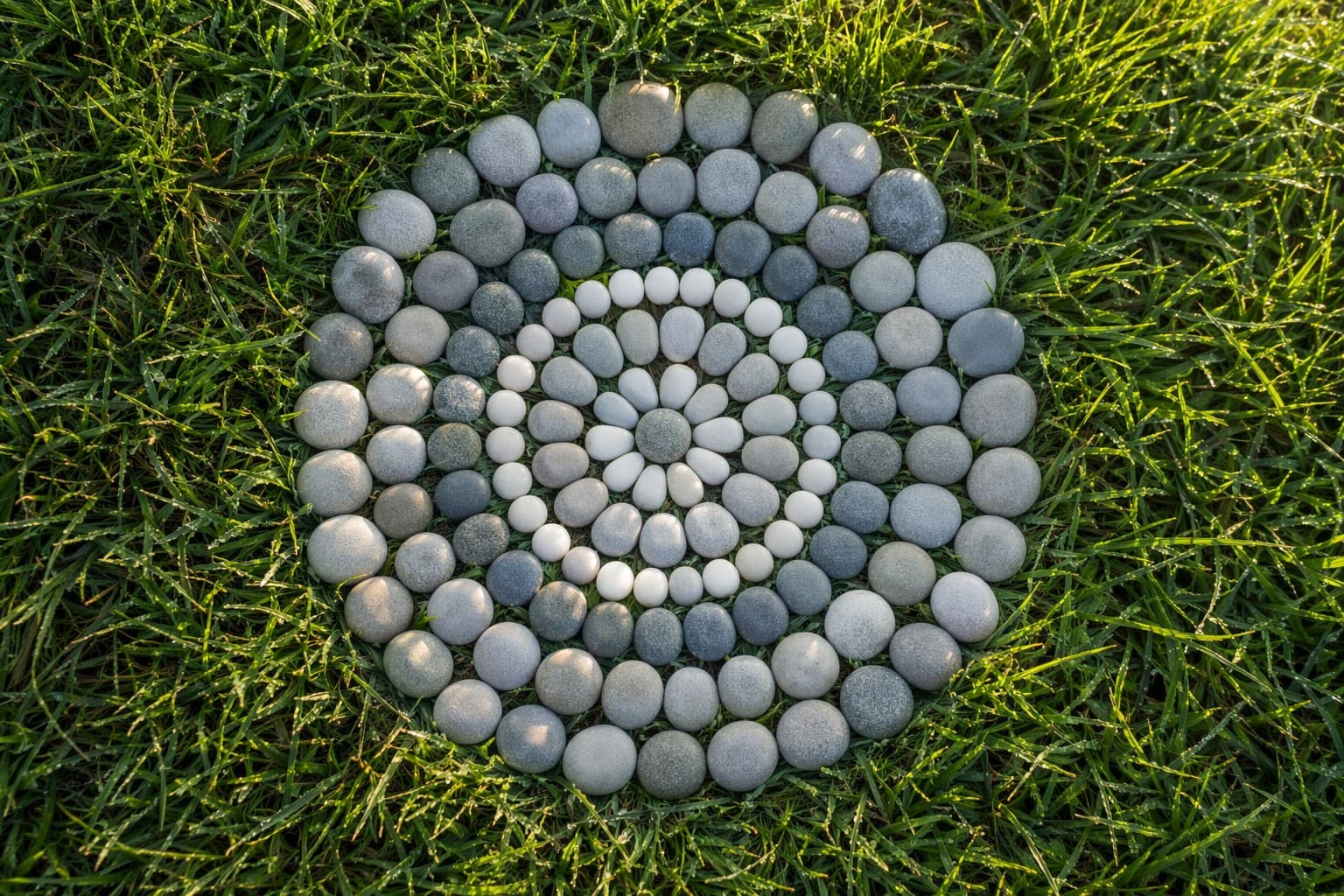
And resist the urge to fix or direct. If the sky is purple and the grass is orange because that is how your four-year-old experienced this particular morning, that is a true painting. The point was never accuracy. The point was the looking, the slowing down, the half hour spent outside paying real attention to something growing. For more on this hands-off approach and a deep well of project ideas using found materials, our collection of nature art projects for kids covers everything from leaf prints to garden mandalas.
A Few Practical Notes Before You Begin
- Mind the sun. Painting in full midday sun is hard on eyes and dries watercolor before it can blend. Aim for morning or late afternoon, or set up in dappled shade.
- Let wet paintings dry where they are. Spring sun dries watercolor in minutes. Lean finished pieces against the easel or a wall and let the same light that inspired them do the drying.
- Teach brush care from the start. Never leave a brush standing in the water jar — it bends the bristles for good. Rinse, reshape the tip, and lay brushes flat on the tray.
- Bring a small jar for one cut flower. If your child wants to paint a bloom up close but it is planted at an awkward angle, a single cut stem in a jar on the tray solves it without trampling the bed.
- Keep sessions short for the youngest. Twenty minutes of real focus beats an hour of forced sitting. End while they still want more, and they will come back to it eagerly next time.
Spring will not wait, and that is exactly what makes it the right season for this. The garden is changing too fast to capture all of it, which frees everyone to simply paint a piece of it — one tulip, one wet leaf, one purple-and-orange morning — and to do it again next week, when the garden has become something new. Set up the easel, fill the water jar, and let your child look closely at the living color in front of them. That looking is the whole gift.
Frequently Asked Questions
- What paint works best for painting outdoors with kids?
- Watercolor is the most forgiving choice for garden painting because it dries fast in open air, rinses out of clothing, and matches the soft, translucent quality of spring color. A large watercolor set with plenty of greens and pinks lets children mix what they actually see. Tempera and acrylic also work outdoors, but they dry too quickly in sun and wind and are harder to clean up, so save those for paved surfaces or older kids who want bolder, opaque results.
- How do I keep an outdoor painting station from blowing over or making a mess?
- Choose a sheltered spot out of direct wind, weigh down the easel legs or paper with a few smooth stones, and use a heavy rinse jar that will not tip. Bring a tray to corral supplies, clip paper to the easel or a board so it does not flap, and accept that grass and soil are part of the medium. A drop cloth is rarely necessary outside since dirt, water, and washable paint all belong in a garden.
- What can kids paint in a spring garden besides flowers?
- Flowers are the obvious subject, but spring gardens are full of paintable detail: unfurling fern fronds, the wet shine on new leaves, a robin at the feeder, raindrops on a petal, the long shadows of early evening, or the whole bed seen wide as a landscape. Encourage close looking at one small thing rather than trying to capture everything. A single tulip, painted slowly, teaches more about color and observation than a rushed picture of the entire yard.
Enjoying this article?
Get more ideas like this delivered to your inbox every week.