How to Transition from Public School to Homeschool: A Step-by-Step Guide
A practical guide for families transitioning from public school to homeschool — covering legal steps, deschooling, choosing curriculum, and helping kids adjust.
By The Slow Childhood

Making the decision to pull your child out of public school and begin homeschooling is one of the most significant choices your family will make. It is also one of the bravest. Whether you are leaving because the school is not meeting your child's needs, because the environment feels wrong, or simply because you believe you can do better — you are not alone, and you are not crazy.
We have been there. The sleepless nights, the guilt about taking our child away from friends, the fear that we would somehow fail. We did not fail. What most of us found on the other side was a slower, richer, more connected way of learning that we never wanted to give back.
This guide walks you through every step of the transition — from legal paperwork to emotional adjustment. If you are brand new to homeschooling, our complete beginner's guide covers the broader landscape. This article focuses specifically on the transition from an existing school placement.
Why Families Make the Switch
Families leave public school for dozens of reasons, and all of them are valid.
The child is struggling and not getting help. Whether it is a learning difference going unaddressed, a gifted child bored out of their mind, or a child who simply learns differently than the classroom allows — many parents realize the school cannot meet their child where they are. If your child has ADHD or dyslexia, our guide to curriculum for ADHD and learning differences may be especially helpful.
The child is unhappy. Anxiety, bullying, loss of confidence, tears every morning — these are not normal parts of childhood. When emotional health is deteriorating, something has to change.
The pace is wrong. School moves too fast in some subjects and too slowly in others. Your child does multiplication at home but sits through addition worksheets at school.
The family wants something different. Maybe you want a nature-based education, more time for music or art, more family time, or the freedom to travel.
It is okay to feel nervous. Nearly every parent making this transition feels a swirl of excitement and terror. Every one of those feelings is normal, and every one is manageable.
Step 1: Research Your State's Laws
Before you do anything else, understand what your state legally requires. Homeschool laws vary dramatically, and getting this right from the start prevents problems later. Find out whether you need to file a notice of intent, submit curriculum plans, conduct annual assessments, or keep attendance records.
The HSLDA website and your state's department of education page are good starting points. But the most reliable resource is often a local homeschool group — experienced parents in your county know exactly what your district expects.
Step 2: Notify the School and Withdraw
In most states, you write a formal withdrawal letter to the school principal stating that you are withdrawing your child to homeschool, effective on a specific date. Include your child's full name, date of birth, current grade, the withdrawal date, and a statement that you intend to homeschool in compliance with your state's laws. Keep a copy of everything.
You do not need to explain your reasons or ask for permission. Be polite, be clear, and be brief.
Before your child's last day, request copies of academic records and testing results, return school-owned materials, and if your child has an IEP, request copies — those documents contain valuable information about their learning profile.
Step 3: Deschool Before You Do Anything Else
This is the step most new homeschool families skip — and the one that matters most. Deschooling is a decompression period between leaving school and starting formal academics. It is not laziness. It is essential.
What Is Deschooling?
After years in a traditional school environment, your child has internalized certain beliefs: learning happens at a desk, work is measured by grades, and free time is earned after the "real" work. You have internalized beliefs too — that productivity means hours of seat work, and that if your child is not doing what school was doing, they must be falling behind. Deschooling is the process of gently dismantling those beliefs so you can build something better.
How Long Does It Take?
The common guideline is one week of deschooling for every year your child spent in traditional school. You will know it is working when your child starts showing curiosity again — picking up books voluntarily, starting projects on their own, no longer asking "Is this going to be on a test?"
What to Do During Deschooling
- Read aloud together every day. Novels, picture books, nonfiction about sharks or volcanoes — anything your child finds interesting.
- Go outside. Fresh air and unstructured outdoor time are profoundly restorative.
- Play. Board games, building projects, art, imaginative play. Our list of family board games is a great place to start.
- Rest. If your child is emotionally exhausted, let them sleep in and have slow mornings. This is healing.
- Follow curiosity. If your child wants to know everything about black holes, go to the library and get five books about space.
The Brave Learner by Julie Bogart is one of the best books on creating a learning environment rooted in curiosity and connection. If you read one book during your deschooling period, make it this one.
Step 4: Assess Where Your Child Is
Once deschooling winds down, get a sense of where your child is academically — but not through standardized tests. Have them work through math problems at different levels until you find where it gets challenging. Listen to them read aloud at different levels. Ask them to write a few sentences about something they care about. The goal is knowing where to begin instruction so your child is neither bored nor overwhelmed.
Step 5: Choose Curriculum — But Start Simple
New homeschool parents tend to panic-buy. Do not spend hundreds of dollars before your first day. Start with the essentials.
A math program. Choose one and commit to it. If your child is hands-on, consider Math-U-See or RightStart Math. Our math curriculum guide walks through the top options.
A reading program (if needed). If your child is still developing reading skills, a systematic phonics program is essential. If they are fluent, quality literature and daily read-alouds may be enough for now.
Library books. For science, history, and everything else, the library is your curriculum.
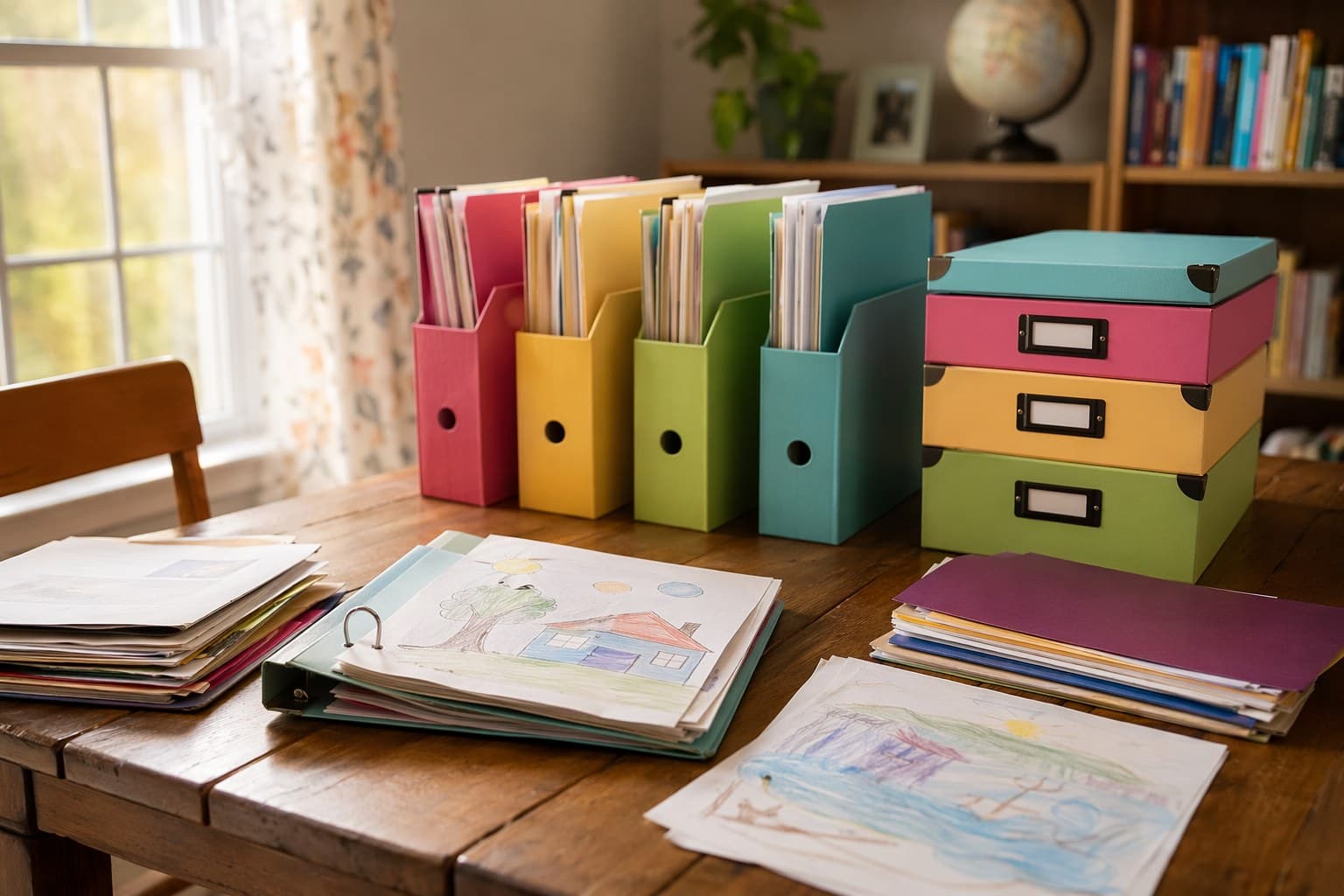
A simple planner. A homeschool planner or basic notebook where you jot down what you did each day is enough. Our planning and organization guide covers different approaches.
You do not need a boxed curriculum for every subject, a dedicated school room, or a four-year plan. You need enough to start, and permission to figure out the rest as you go. A good starter curriculum set can give you a structured beginning without the overwhelm of assembling everything separately.
Step 6: Build a Flexible Routine
Do not replicate school at home. You did not leave school to rebuild school in your kitchen.
For elementary-age children, formal academics take about two to three hours. That is not a failure — that is the reality of one-on-one instruction.
A sample routine for your first month:
- Morning: Wake up naturally, breakfast, morning chores
- Mid-morning: Math (20-30 minutes), break, reading or language arts (20-30 minutes)
- Late morning: Read-aloud time together (20-30 minutes)
- Afternoon: Free play, outdoor time, projects, art, music, sports
Some days you will finish before lunch. Some days you will skip formal lessons entirely for the zoo or a co-op field trip. All of that counts. For scheduling frameworks, our daily schedule guide covers block scheduling, loop scheduling, and the Charlotte Mason approach.
Even on flexible days, maintain three non-negotiables: read aloud together, do some math, and spend time outside.
Step 7: Help Your Child Adjust Emotionally
Leaving school is an emotional and social transition, not just an academic one. Your child may feel relief — the tears stop, the stomach aches vanish, the child you remember starts to reappear. They may also grieve the familiar, feel bored without someone telling them what to do every minute, or test boundaries by insisting "real school" was better.
Support them by talking openly about the change, letting them have input in what they learn, maintaining connections with school friends through playdates, and creating new special routines — a weekly library trip, a Friday coffee shop morning, a Tuesday nature walk.
Finding Your Community
Social connection does not happen automatically when your child is home all day. You have to build it intentionally — and the good news is that the homeschool community is welcoming and eager to help newcomers.
Homeschool co-ops range from casual weekly park meetups to structured programs with classes taught by rotating parents. They provide social time for kids and community for parents — both of which you will need.
Community classes and activities — art studios, music lessons, gymnastics, martial arts, swim teams, and theater programs — all welcome homeschoolers. Many offer daytime classes specifically for homeschool families.
Sports leagues in many areas now have homeschool-specific teams, and community recreation leagues are open to all children regardless of school enrollment.
Scouts, 4-H, library programs, and local homeschool groups round out the picture. Join a local Facebook group or co-op email list in your first week — these are where you will find field trip announcements, park day invitations, and the kind of "me too" encouragement that keeps you going on hard days.
The social life of a homeschooled child often ends up richer than what school provided. They interact with people of all ages in real-world settings rather than spending seven hours a day exclusively with same-age peers.
Common First-Year Mistakes to Avoid
Buying too much curriculum. Start with math and reading. Use the library for everything else. After a few months, you will know what you actually need.
Over-scheduling. Start with one or two regular activities. You will burn out if you fill every day with enrichment classes.
Comparing to school. Your child does not need to match the school's arbitrary timeline. They are learning at their own pace.
Skipping deschooling. Give your child and yourself time to decompress. The academics will go much better after everyone has reset.
Going it alone. Find at least one other homeschool family you can text on hard days. Isolation leads to burnout.
Expecting every day to be magical. Real homeschooling includes meltdowns, unproductive days, and cereal for dinner. Those days are normal.
What Your First Week Actually Looks Like
Monday: Wake up without an alarm. Read aloud for 20-30 minutes. One short math lesson. Go outside. That is the entire day.
Tuesday: Math. A short reading session. Afternoon at the library.
Wednesday: Math. Read-aloud. Simple science observation outside — sketch a plant, watch birds, look at clouds.
Thursday: Math. Language arts. Read-aloud. Your child might settle into the rhythm, or might resist. Both are normal.
Friday: Field trip to a museum, nature center, or new park. Or stay home and play math games instead of doing a formal lesson. Friday is for remembering that learning is everywhere.
At the end of the week, your child did math every day, heard beautiful stories read aloud, spent time outside, and started to relax into a new way of living. That is a successful first week.
You Are Going to Be Fine
You can do this. Not because you have a teaching degree or a perfectly organized schoolroom. You can do this because you know your child better than any teacher ever will, because you are willing to show up every day, and because love and attention are the two most powerful educational tools that exist.
The transition will be messy. There will be hard days. There will also be days — and they come sooner than you think — when your child curls up next to you and asks you to keep reading, when they finally understand a concept that baffled them for months at school, when they look up from a book and say, "I love homeschooling."
Trust the process. Start simple. Give yourself the same grace you would give your child.
You are not just changing schools. You are changing your family's story. And it is going to be a good one.
Frequently Asked Questions
- How long does it take to transition to homeschool?
- Most families need 2-4 weeks for paperwork and planning, plus 4-8 weeks of deschooling (one week per year in traditional school is a common guideline). Full adjustment typically takes one semester.
- Can you start homeschooling mid-year?
- Yes. Many families begin mid-year, and it's often easier than waiting because your child's frustration is fresh and motivation is high. Check your state's withdrawal requirements and notify the school.
- Will my child fall behind if we switch to homeschool?
- Most children actually catch up and move ahead within 6-12 months of homeschooling because of the one-on-one attention and personalized pacing. Don't worry about being 'behind' — focus on building a love of learning first.
Enjoying this article?
Get more ideas like this delivered to your inbox every week.