End-of-Year Homeschool Cleanup and Transition Activities
How we close out a homeschool year on purpose — a week of decluttering, portfolio sorting, honest review, and small celebration rituals that mark growth and clear the runway for an unhurried summer.
By The Slow Childhood
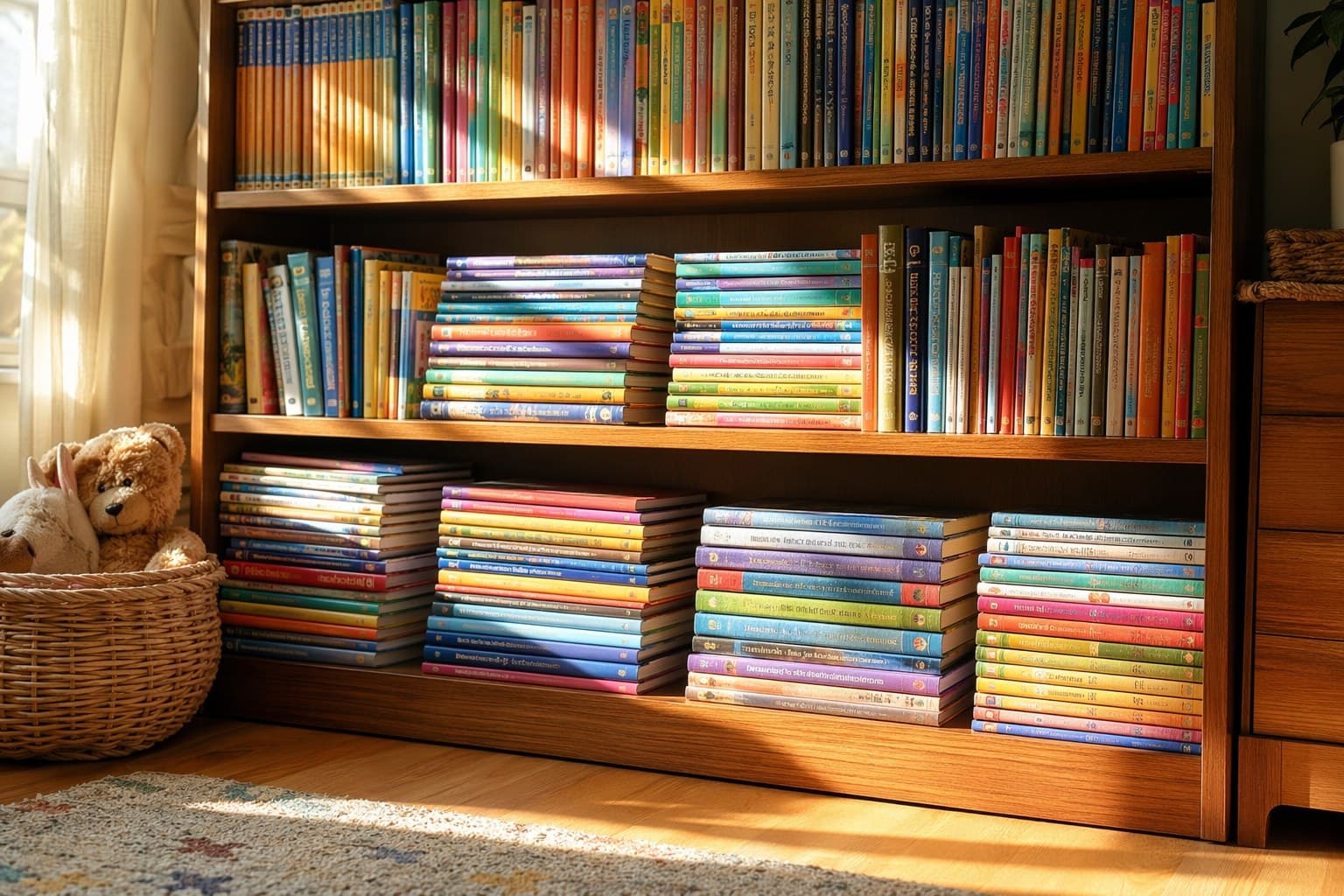
Every homeschool year deserves a real ending. Not a flat Friday where the last math lesson simply gets done and the books slump on the shelf until August, but a deliberate close — a few days of sorting, reviewing, and quietly celebrating what happened in your home over the past nine or ten months. We learned this the hard way. For years our school years just trailed off, and by July the dining table was still buried under March's worksheets, nobody could remember what we had actually accomplished, and the new year started under a cloud of last year's clutter.
A thoughtful end-of-year transition fixes all of that. It clears your physical space, it captures the year's growth before it evaporates from memory, and it gives your children the satisfying experience of completing something. Researchers who study habit and motivation talk about the power of "endings" — the way a clear finish line helps the brain consolidate effort and feel ready to begin again. Kids feel this too. They need to know a chapter has closed before they can fully relax into summer.
Here is the week-long rhythm we use, broken into small daily tasks so it never becomes a dreaded marathon. Spread it across the last week of school, or pull it out anytime the year has unofficially ended and you want to make it official.
Day One: The Great Declutter
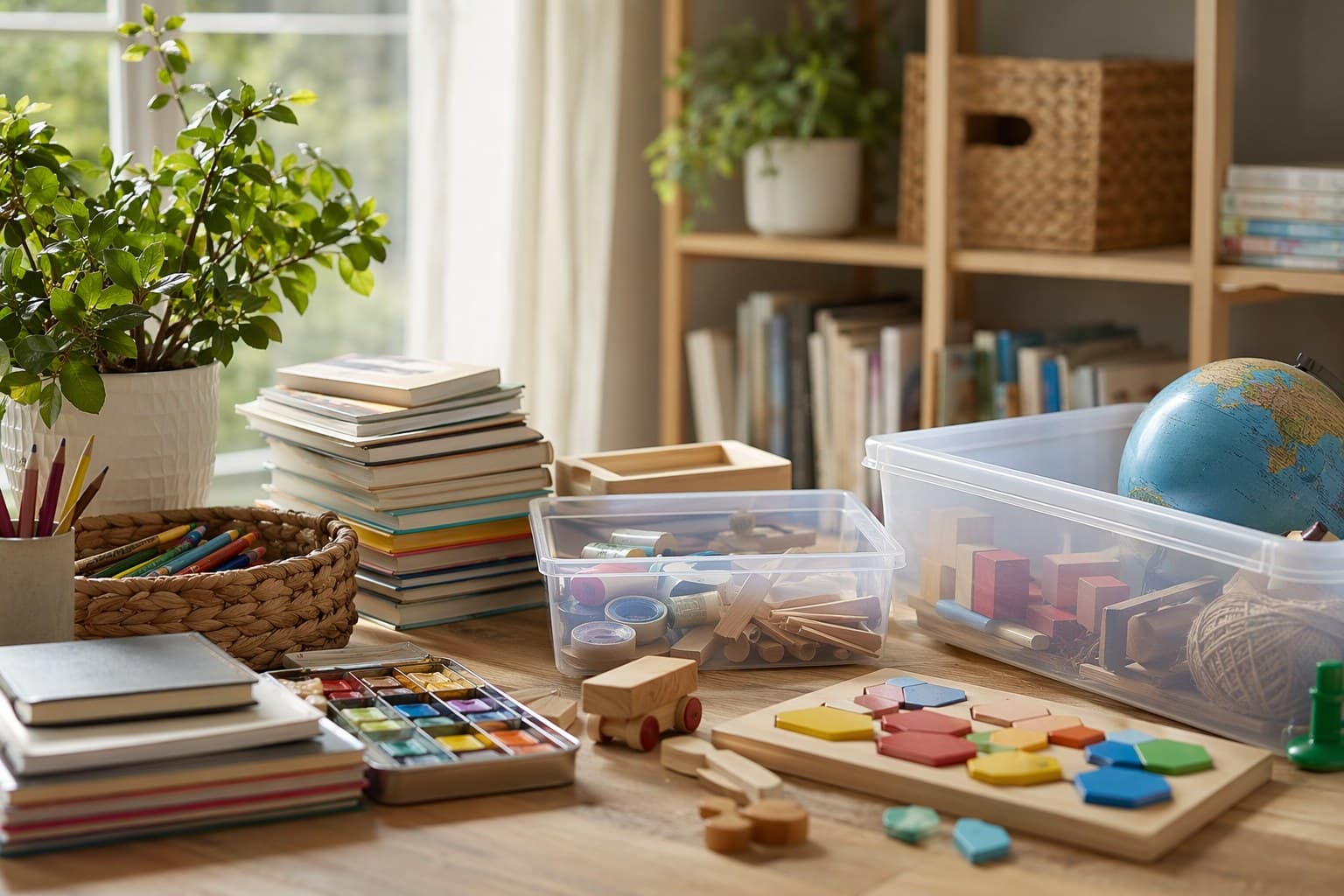
Start with the physical space, because a clear room makes every other task easier. Pull everything off the school shelves and out of the supply bins and sort it into four piles: keep and reshelve, store for a younger sibling, donate or sell, and recycle.
Be honest here. The half-used workbook your child cried over in November is not worth saving out of guilt. The dried-out markers are not coming back to life. We pull out a garbage bag set and a few boxes and move fast. Children are surprisingly good at this when you frame it as deciding what gets to stay — give a six-year-old veto power over their own crayon bin and they take the job seriously.
Curricula you have outgrown can fund next year. Homeschool buy-sell groups on Facebook and used curriculum sites move gently used materials quickly, especially popular programs in good condition. Sort those into a "to sell" box and photograph them this week while you still remember which level each one is.
If your school space doubles as a dining room or playroom, this declutter is also a reset for the whole house. For a deeper room overhaul once the shelves are empty, our guide to a budget homeschool room setup has practical, low-cost ideas for the fresh start.
Day Two: Sort and Build the Portfolio
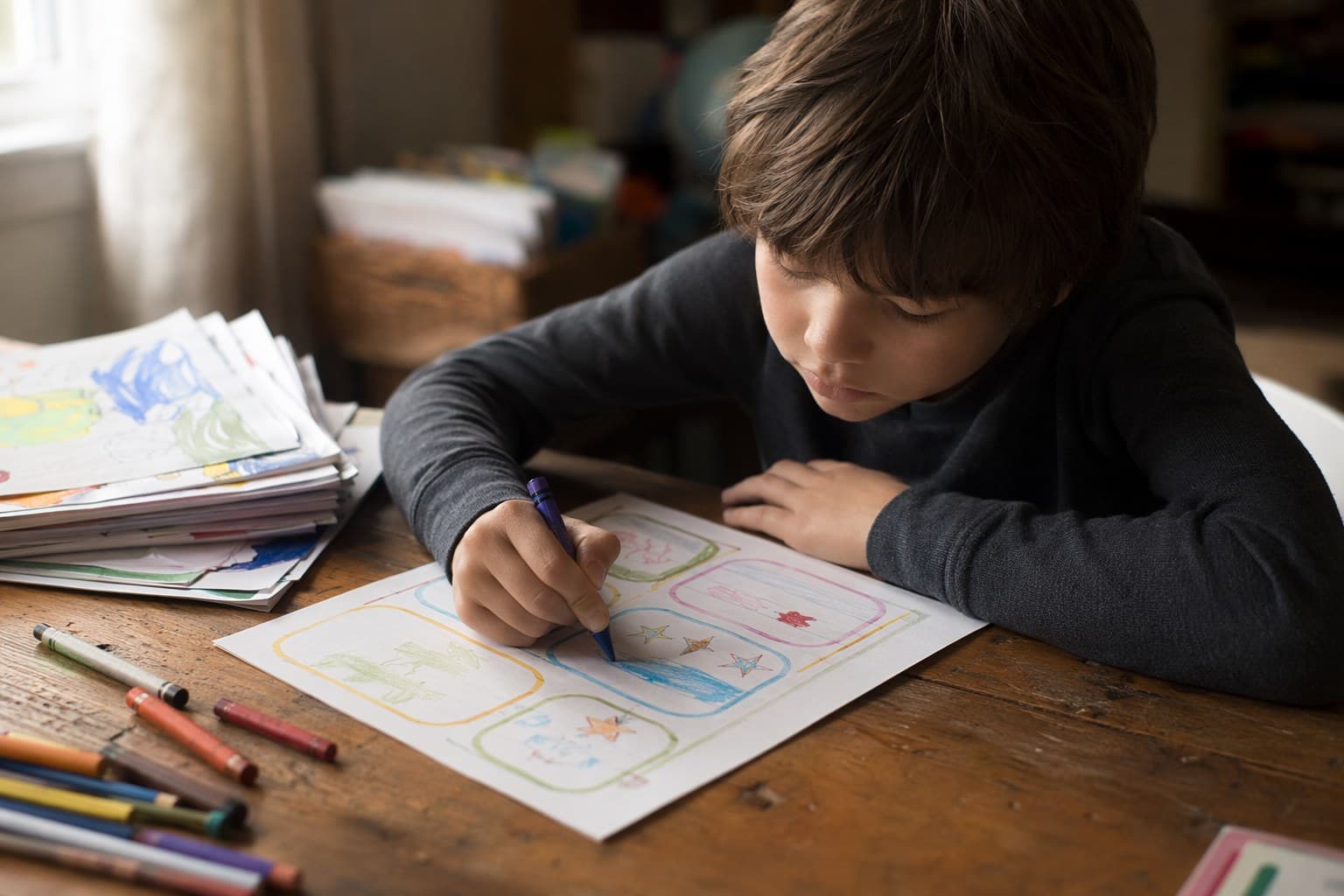
This is the heart of the week. Gather the year's accumulated paper — the stacks in the "to file" bin, the loose pages in folders, the artwork curling on the fridge — and turn it into a portfolio that tells the story of the year.
You do not save everything. The goal is two to four representative samples per subject that show growth: an early-fall writing sample beside a late-spring one, a September math page next to an April one. That contrast is the whole point. A single dated pair of writing samples does more to demonstrate a year of learning than a hundred undated worksheets.
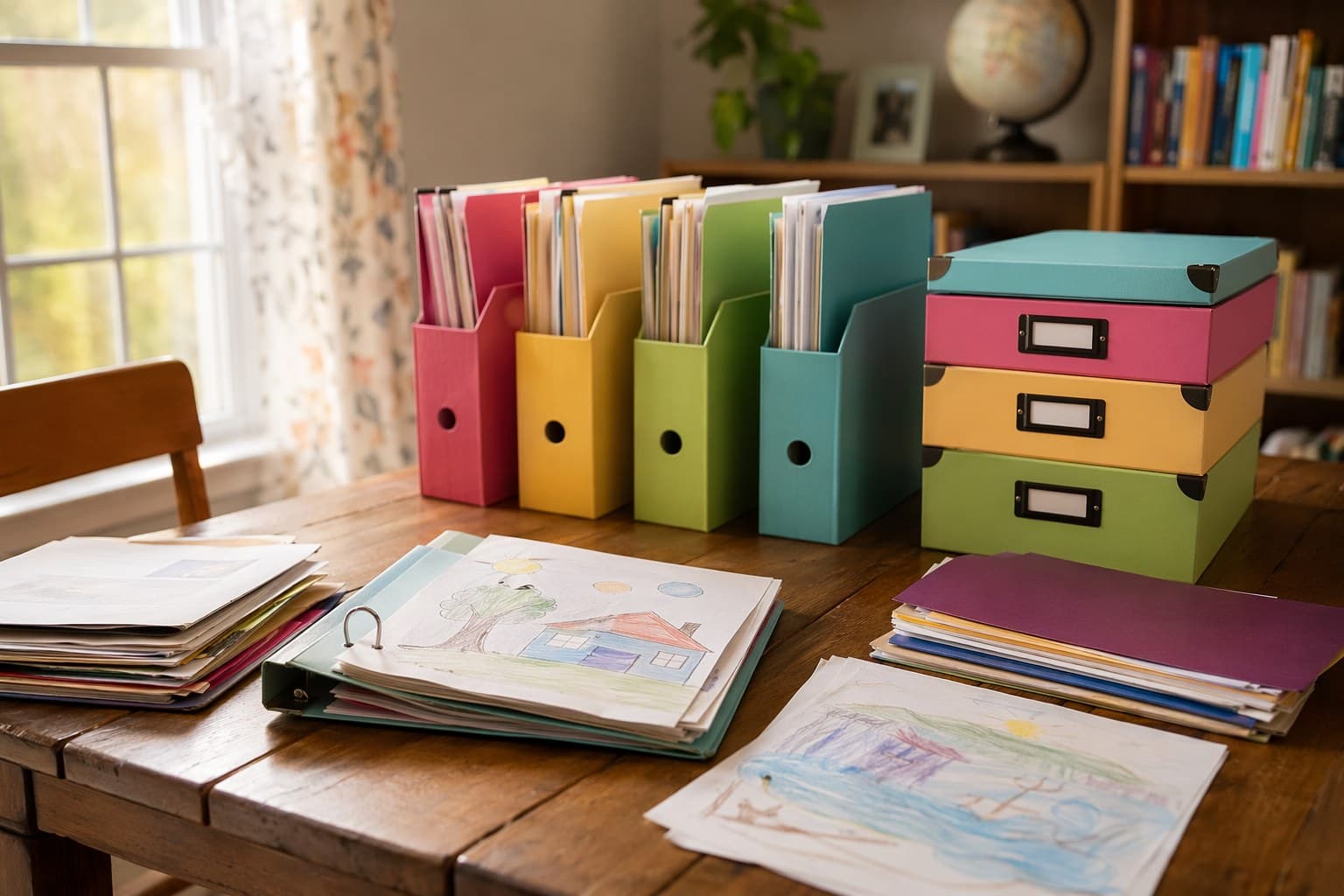
We use one portfolio folder set per child, with a tab for each subject, plus a few archival photo boxes for the bulky three-dimensional projects we only keep as photographs. Label everything clearly with a fresh set of organizing labels and markers so that next year's you can find August's spelling tests without a search party.
A few things worth gathering while you are at it:
- The reading list. If you kept one all year, beautiful. If not, sit down with your children and reconstruct it from memory and library records. This list always surprises families with how much got read.
- Photos of hands-on learning. Scroll your phone for the nature walks, kitchen science, building projects, and field trips that never produced paper. Drop the best ones into a labeled album.
- The attendance log, if your state requires it. Count your days now while the calendar is still nearby.
If your record-keeping fell apart somewhere around February, do not panic. Our full homeschool portfolio and record-keeping guide walks through how to rebuild a year's documentation in an afternoon and set up a weekly habit so next year builds itself.
Day Three: The Honest Year-in-Review
Before you decide anything about next year, you have to look clearly at this one. We sit down — adults first, then with the kids — and answer a short list of questions in writing.
For ourselves, the parents:
- Which curriculum did each child love, and which did we drag them through?
- Where did we fall behind, and was it the material, the schedule, or us being overcommitted?
- What did our best days look like, and what made them work?
- Did each child make real progress in reading, writing, and math?
Then we bring the children in for their own reflection. A simple year-end reflection sheet works wonders: What are you proud of? What was hard at first and got easier? What do you want to learn next year? Younger kids can draw their answers; older ones write. These pages go straight into the portfolio and become some of the most treasured pieces in it.
This review is not about grading yourself. It is about gathering data so that next year's plan starts from reality rather than from the fantasy spreadsheet we all build in optimistic July. When you are ready to translate these insights into an actual plan, our planning and organization guide covers how we turn an honest review into next year's roadmap.
Day Four: Archive and Store with Intention
Now that you know what you are keeping, give it a home so it survives the years. The completed portfolio folder is a keepsake — store it somewhere you will actually open it again, not the back of a closet you fear.
We use sturdy file storage boxes with lids, one per child, holding their portfolio for each year in chronological order. By the time a child finishes their elementary years, that box is a remarkable record of who they were becoming. Digital backups matter too: snap a photo of each saved sample and the reflection sheets, and tuck them into a cloud folder named for the school year. Paper is vulnerable; a backup is cheap insurance.
If you are inclined toward memory-keeping, this is the moment to assemble a simple year-end memory book — a few photos, the reading list, a sample or two, and your child's reflection. It does not need to be elaborate. A year-end memory book kit or a plain photo album with handwritten captions becomes something your family treasures far more than another perfect Instagram post.
Store next year's already-purchased curricula in a separate labeled bin, out of sight. There is real psychological value in not seeing everything you own at once — it keeps the start of the next year from feeling like an avalanche.
Day Five: Mark the Threshold
A year deserves a celebration, and it does not have to be a cap-and-gown affair. The goal is to mark the ending so it feels finished. Children genuinely need this — a clear threshold tells them the work is complete and they have permission to rest.
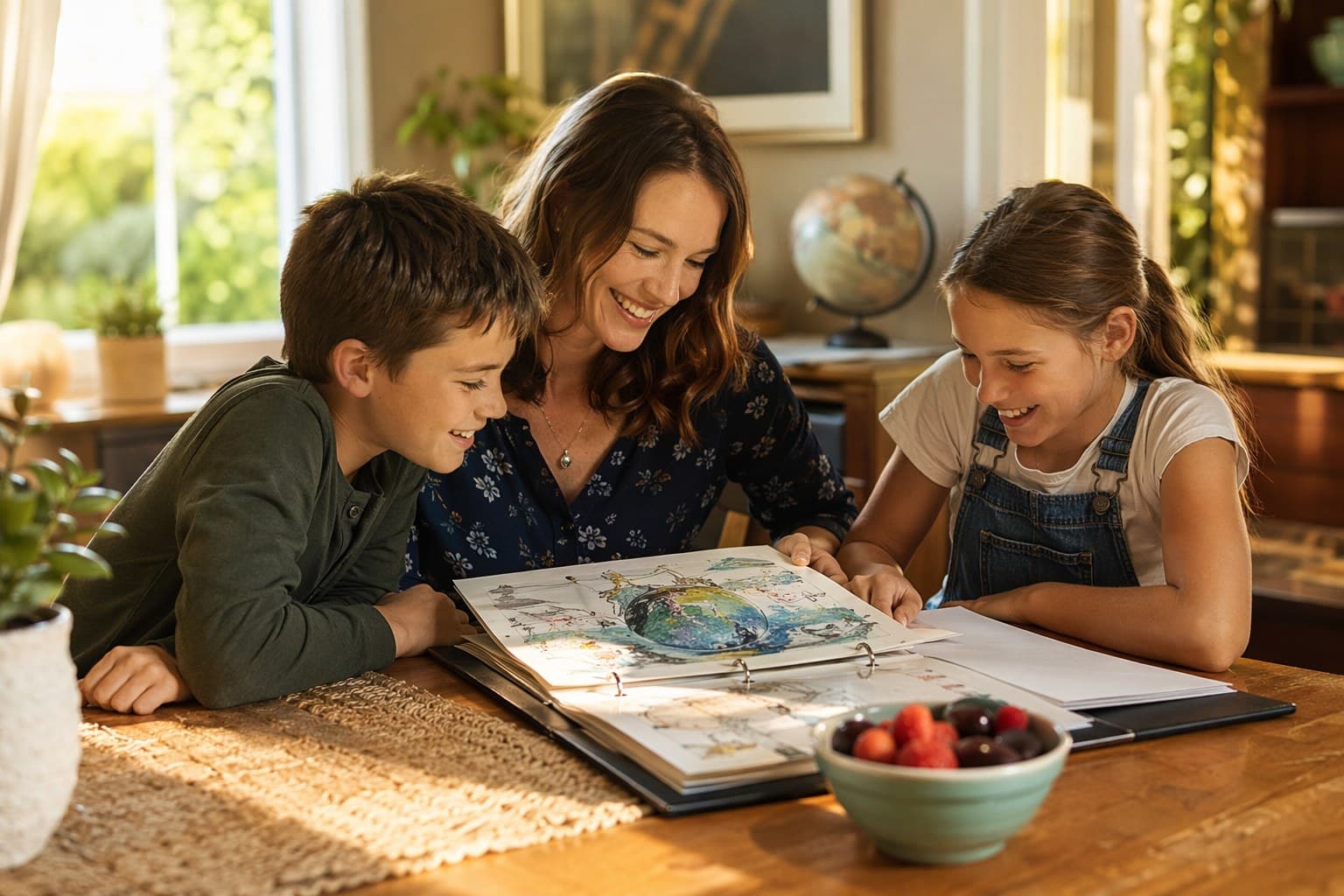
Our closing ritual is simple and repeatable. We page through each child's portfolio together and let them narrate it. We read the year's book list aloud, the whole astonishing length of it. Each child names one thing they are proud of and one thing they are excited to learn next. Then we do something they love — a favorite breakfast, an afternoon at the lake, ice cream sundaes on the porch.
Some families add a small gesture: a handmade certificate, a special book chosen as a gift, a "graduation" to the next grade level marked with a photo on the same front step every year. None of it needs to cost much or look impressive. What matters is the message: you worked hard, you grew, this year mattered, and now it is complete.
Easing Into an Unhurried Summer
The final piece of the transition is deciding, on purpose, what summer will hold. The shift from structured days to wide-open ones can be jarring for kids who thrive on rhythm, and "no plan at all" often dissolves into restlessness and conflict by the second week of June.
We choose a gentle summer rhythm during our year-end review. For most years that means keeping just two small anchors — a daily read-aloud and ten minutes of math review to prevent the well-documented summer slide — and leaving the rest of the day genuinely free for unstructured play, outdoor time, and boredom (which is where so much creativity is born). If you want a framework for designing that rhythm, our homeschool daily schedule guide can be adapted into a lighter summer version.
The deeper goal of this whole week is the same one that runs through everything we believe about a slower childhood: doing fewer things, but finishing them well. A year that ends with intention — sorted, reviewed, celebrated, and gently closed — gives your children the felt experience of completion, and gives you a clear, clutter-free runway into whatever comes next.
Frequently Asked Questions
How long does the whole end-of-year process really take? Spread across five days as small daily tasks, each step takes thirty minutes to about an hour. If you compress it into a couple of weekend afternoons, plan for roughly three to four hours total — more if your record-keeping needs serious catching up.
What if I have several kids of different ages? Do the shared steps together (the declutter, the review questions, the celebration) and the individual steps in parallel. Give each child their own folder and box, and let older kids sort their own portfolios while you help the younger ones. Working alongside each other turns the whole thing into a family project rather than a chore you do alone after bedtime.
We unschool or follow our interests loosely — does this still apply? Absolutely, and arguably more so. When your year is not defined by a curriculum's table of contents, a deliberate review and a documented portfolio are what make the learning visible — to your kids, to you, and to your state if it asks. Photos, reading lists, project documentation, and reflection sheets capture interest-led learning beautifully.
Is it ever too late to do an end-of-year cleanup? Never. If it is already mid-summer and you skipped this entirely, pull the box of papers out of the closet, set aside one quiet afternoon, and work the steps anyway. Closing the year late is far better than never closing it at all — and your fall self will thank you.
Frequently Asked Questions
- When should we start our end-of-year homeschool cleanup?
- Start the last full week of your school year, while the work is still fresh and your children remember what they did. We block out one short task each day for about five days rather than trying to do it all in a single overwhelming weekend. If you have already finished and are scrambling in summer, that is fine too — set aside two unhurried afternoons and work through the same steps.
- What should I actually keep from the homeschool year?
- Keep two to four representative work samples per subject that show growth from fall to spring, your reading list, your attendance log, and photos of hands-on learning. Save anything legally required by your state, plus a few pieces your child is genuinely proud of. Recycle or send home the rest. A curated folder tells a clearer story than a bulging box of every worksheet.
- How do I help my kids feel a sense of completion without a big ceremony?
- Children crave a clear ending more than a fancy one. A simple closing ritual works: read the year's book list aloud, page through their portfolio together, let them name one thing they are proud of, and share a special treat or a favorite outing. The point is to mark the threshold so the year feels finished, not to stage a production.
- Should we keep doing any schoolwork over the summer?
- Light, joyful maintenance beats a full schedule. Many families keep a short daily read-aloud and a little math review to prevent regression, then let the rest of the day be free. Decide this intentionally during your end-of-year review so summer has a rhythm you chose rather than guilt you carry.
Enjoying this article?
Get more ideas like this delivered to your inbox every week.