Beach Days with Young Children: Sand Play, Water Safety, and Fun
A practical, age-by-age guide to beach days with babies, toddlers, and preschoolers — what sand and water play actually teaches, the water safety rules that matter most, and the short list of gear worth packing.
By The Slow Childhood
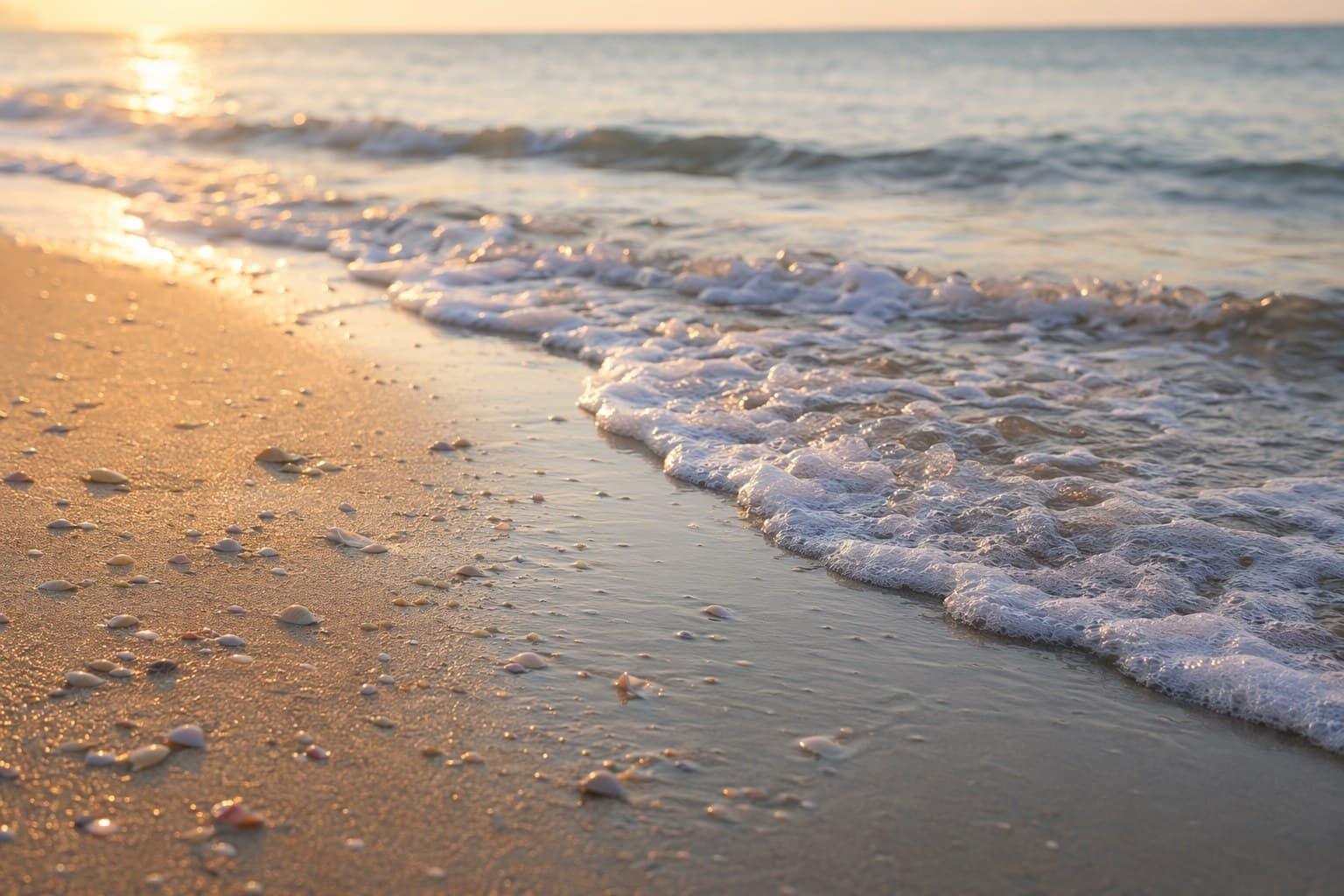
The beach is the most generous sensory environment a young child can stand in. Warm sand that shifts under bare feet, cool water that races up and retreats, the weight of a full bucket, the smell of salt, the roar that never quite stops. For a toddler whose whole job is to figure out how the physical world behaves, a few square feet of shoreline contains more genuine learning than a roomful of toys. But the same richness that makes the beach so valuable also makes it the one outing where a parent cannot relax their attention. Water and very young children demand a different kind of presence.
This guide is built around that tension. Beach play with babies, toddlers, and preschoolers is wonderful precisely because it combines water, sand, and open-ended sensory input — and it is safe and sustainable only when you understand what your child is developmentally ready for and how to supervise it properly. Below you will find age-by-age expectations, the water safety rules that actually move the needle, the sand and shore activities worth your time, and a short, honest list of gear. If you want a broader menu of shore activities once the safety foundation is solid, our guide to 20 beach activities for kids that go beyond sandcastles picks up where this one leaves off.
What the Beach Teaches a Developing Brain
It is easy to dismiss a toddler patting wet sand as "just playing." It is not. Pouring water from a cup builds the wrist rotation and grip strength that will one day hold a pencil. Watching a wave erase a line drawn in the sand is a first, wordless lesson in cause and effect and impermanence. Squeezing a sponge, dragging a stick, packing a bucket and tipping it over — each action is a small experiment in volume, weight, gravity, and texture.
A 2019 analysis of the BlueHealth research program in Europe found that time spent in coastal "blue space" was associated with measurably better mood and more physical activity than time in other outdoor settings. For young children specifically, the beach delivers the kind of multisensory, self-directed input that supports motor planning and sensory integration — the same developmental goals behind structured sensory play ideas for preschoolers, except here the materials are infinite and free. The work of the day is happening in the child's hands whether or not anyone names it.
The beach also rewards the slow, unhurried attention this site is built around. The best moments rarely arrive in the first ten minutes. Give a toddler thirty minutes at the water's edge with nothing to do and you will watch boredom dissolve into deeply absorbed, repetitive, satisfying play. Resist the urge to direct it.
Developmental Readiness: What to Expect by Age
Matching activities to readiness is the difference between a joyful outing and a meltdown. Here is roughly what each stage can handle.
Babies (6 to 18 months). Keep visits short — 20 to 45 minutes — and keep them shaded. Babies enjoy feeling cool sand sift through their fingers, watching the water move, and being held at the very edge so a thin sheet of water touches their toes. They will put sand in their mouths; a small amount is harmless, but this is a constant, hands-on stage. There is no independent play yet. The beach is something you experience together, on a blanket under a canopy.
Young toddlers (18 months to 3 years). This is prime sand-and-edge age. Toddlers dig, fill, dump, pat, and splash with total commitment. They are drawn to the water with no sense of danger whatsoever, which is exactly why this stage requires the most vigilant supervision of all. Keep play at the wet sand line, not in the waves. Expect short attention to any one task and lots of repetition. A toddler will fill and empty the same bucket forty times and be delighted each time.
Preschoolers (3 to 5 years). Now real play emerges. Preschoolers can build channel systems, attempt sandcastles, collect and sort shells, jump small waves while holding your hand, and follow simple safety rules if you set them clearly. They can sustain a beach day of a few hours with snack and shade breaks. This is the age to introduce the idea of a "water line" they cannot cross without an adult, and to start teaching basic water sense.
The principle that holds across every age: the younger the child, the closer the adult and the shorter the visit. A baby and a five-year-old can share the same beach, but they cannot share the same supervision plan.
Water Safety: The Rules That Actually Matter
Most beach safety advice is a long list. In practice, a handful of rules prevent nearly every tragedy. Internalize these.
- Touch supervision is the whole game. For children under five near water, one adult watches one or two children, stays within arm's reach, and keeps their eyes on the child — not the phone, not the conversation, not the surf. Drowning does not look like the movies. It is silent and takes seconds. If two adults are present, name out loud who is "on" duty so it is never ambiguous.
- Inflatables are toys, not safety devices. Armbands, rings, and pool floats give a false sense of security and can flip a child face-down. The only real flotation is a properly fitted, Coast Guard approved life jacket. If your child wears one, the type with a collar and crotch strap is best for non-swimmers.
- Read the beach before you let anyone in. Look for posted flags, ask a lifeguard about rip currents, and choose a gentle, gradually sloping shore with small waves for young children. Avoid steep drop-offs and strong shore break entirely with toddlers.
- Dress for visibility. Bright, contrasting swimwear — neon orange, hot pink, electric green — makes a child far easier to track against blue water and tan sand. Avoid blues and whites that vanish underwater.
- Set a physical water line. Draw a line in the sand with your foot and make it the family rule that little ones do not cross it toward the water without an adult's hand. Repetition makes it stick.
- Watch the sun and the heat as seriously as the water. Sun and dehydration sicken more young beachgoers than waves do. Reapply mineral sunscreen every two hours, push fluids constantly, and use shade.
Keys, a phone, and a small first aid kit are far safer in a dry waterproof bag for beach essentials than loose in a tote, where a rogue wave or a curious toddler can ruin them. None of this should make the beach feel frightening. It should make it feel managed, so you can actually exhale and enjoy it.
Sun and Shade: The Quiet Necessity
A young child's skin burns faster and more deeply than an adult's, and a single bad sunburn in childhood is no small thing. Sun management is not optional gear — it is core safety.
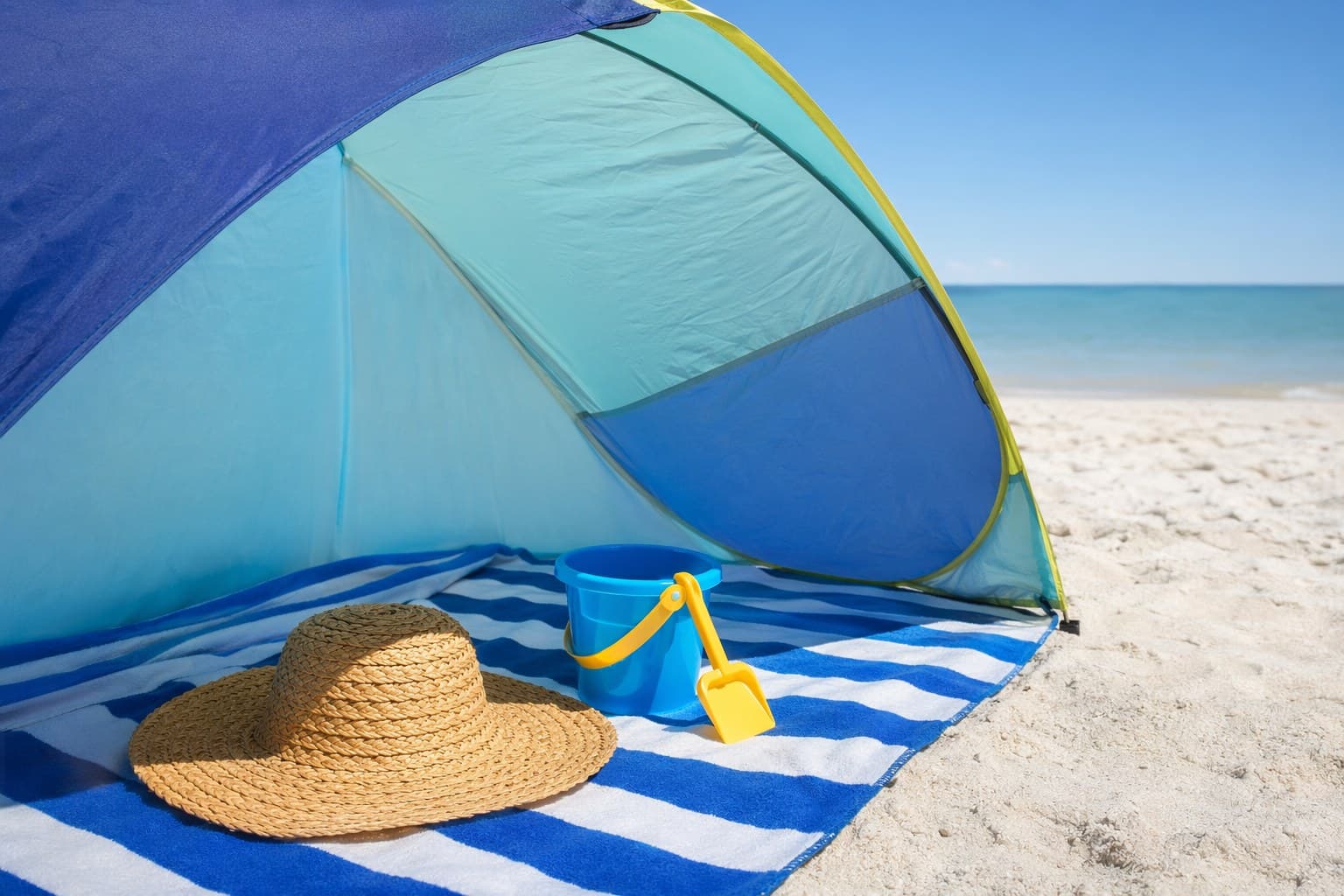
Start with shade you bring with you. A pop-up beach tent with UV protection gives babies and toddlers a cool base camp for naps, feeds, and breaks from the glare, and a good one sets up in under a minute. Layer clothing as your first defense: a long-sleeve sun protective rash guard rated UPF 50+ covers far more skin than sunscreen ever will, and a wide-brim hat protects the face, ears, and neck. For exposed skin, use a broad-spectrum mineral sunscreen (zinc oxide or titanium dioxide) of at least SPF 30, applied 15 minutes before going out and reapplied every two hours and after every dip. For babies under six months, shade and clothing do the work — minimize sunscreen on the very young and ask your pediatrician.
The youngest children also overheat quickly. Plan around the sun by arriving early morning or late afternoon and treating midday as nap or indoor time. The heat of the open beach is a thirst machine, so bring more water than seems reasonable.
Sand and Water Activities Worth Their Time
Once safety and shade are handled, the play takes care of itself. A few ideas that reliably hold young children, roughly easiest to most involved.
Fill, Dump, and Pour (18 months and up)
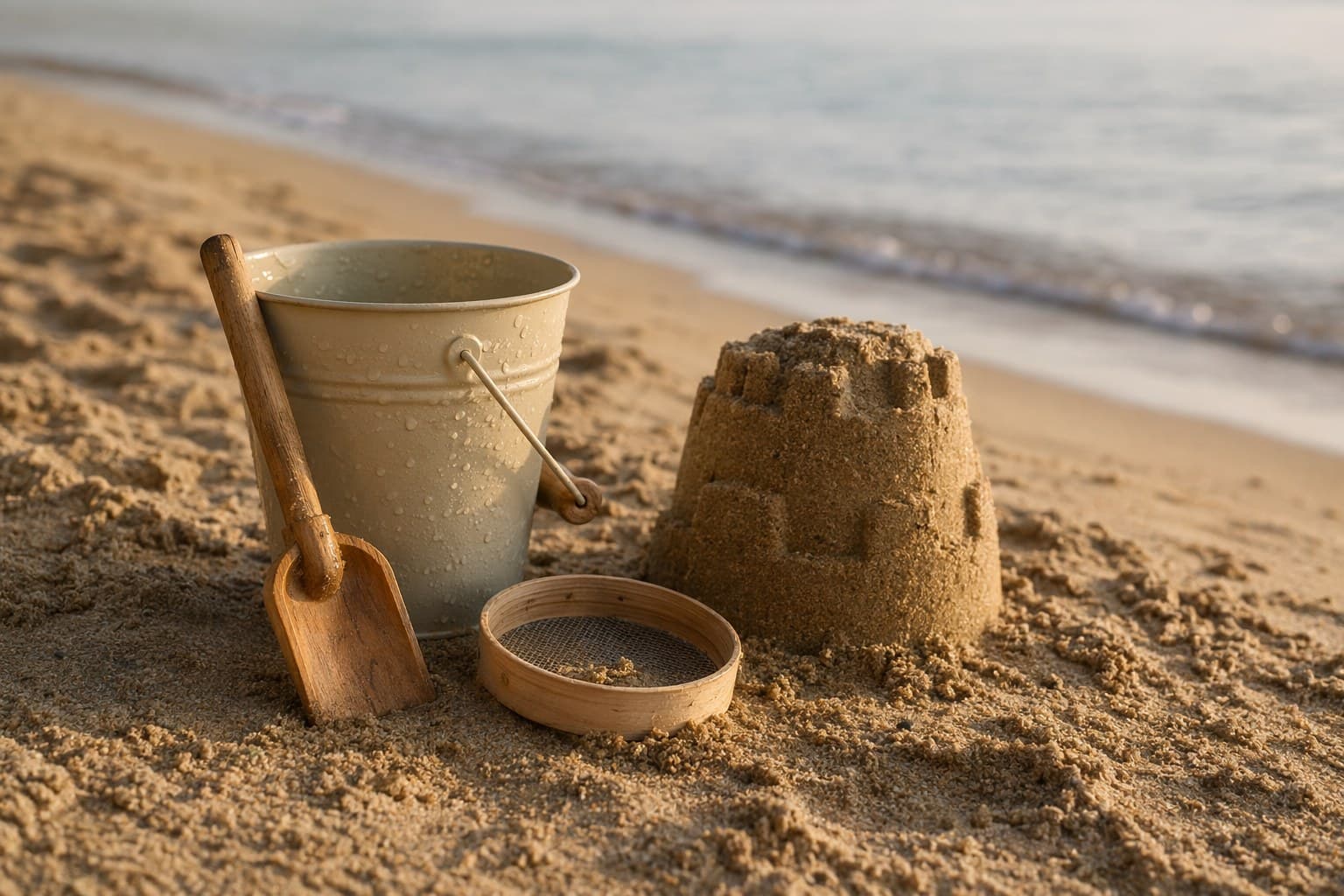
The simplest activity is the most absorbing for toddlers. Hand them a bucket and a cup and let them fill, carry, and dump near the wet sand line. Add a small sieve or colander and they will discover that dry sand pours through and wet sand sticks — a genuine scientific finding, made with their own hands. A basic bucket and shovel sand set is all you need, and a sturdy metal or thick plastic shovel outlasts the flimsy single-season kind.
Digging Channels and Water Rivers (3 and up)
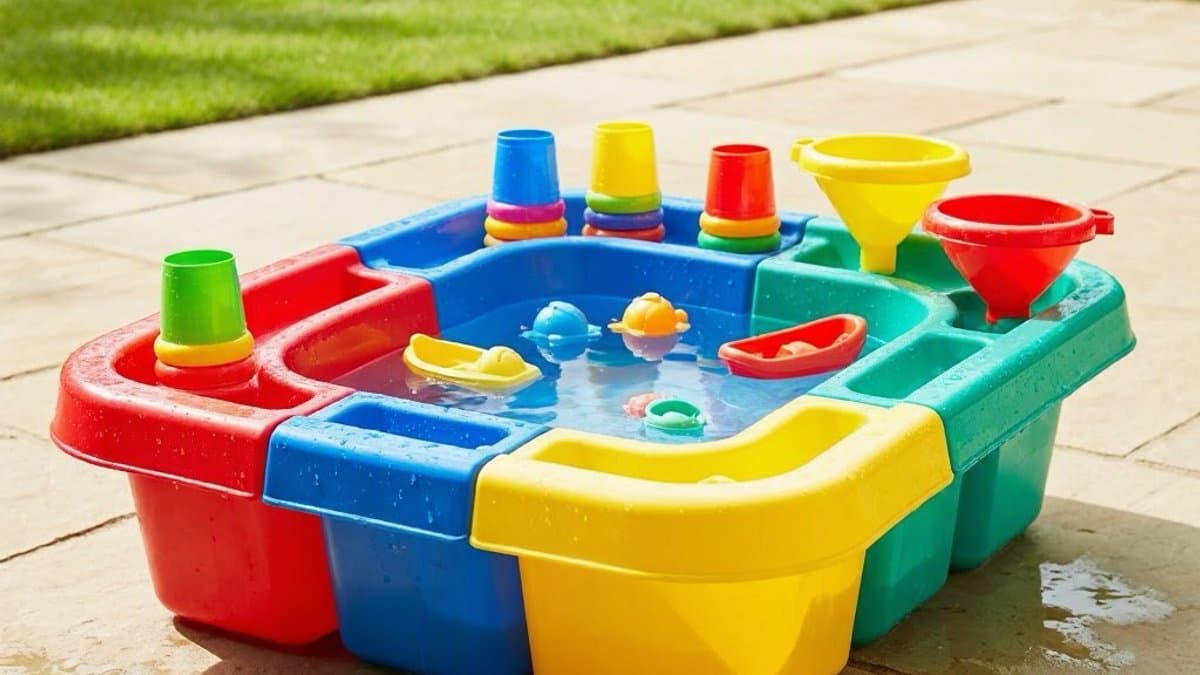
Dig a trench from higher dry sand down toward the water and pour bucketfuls in at the top. Watch it flow, pool, and seep away. Preschoolers will spend an hour widening, damming, and rerouting their river. This is open-ended engineering, and it pairs naturally with the kind of pouring-and-flow experimentation in our water play activities for toddlers guide — the beach is simply the largest water table ever built.
Sandcastles and Sand Sculpture (3 and up)
Real building requires the darker, wetter sand a few inches below the dry surface. Pack it firmly into a bucket, tip it out, and you have a tower. Young preschoolers care more about the patting and demolishing than the architecture, and that is exactly right. Use shells and sticks to decorate. The tide will take it, which is half the lesson.
Shell and Treasure Collecting (2 and up)
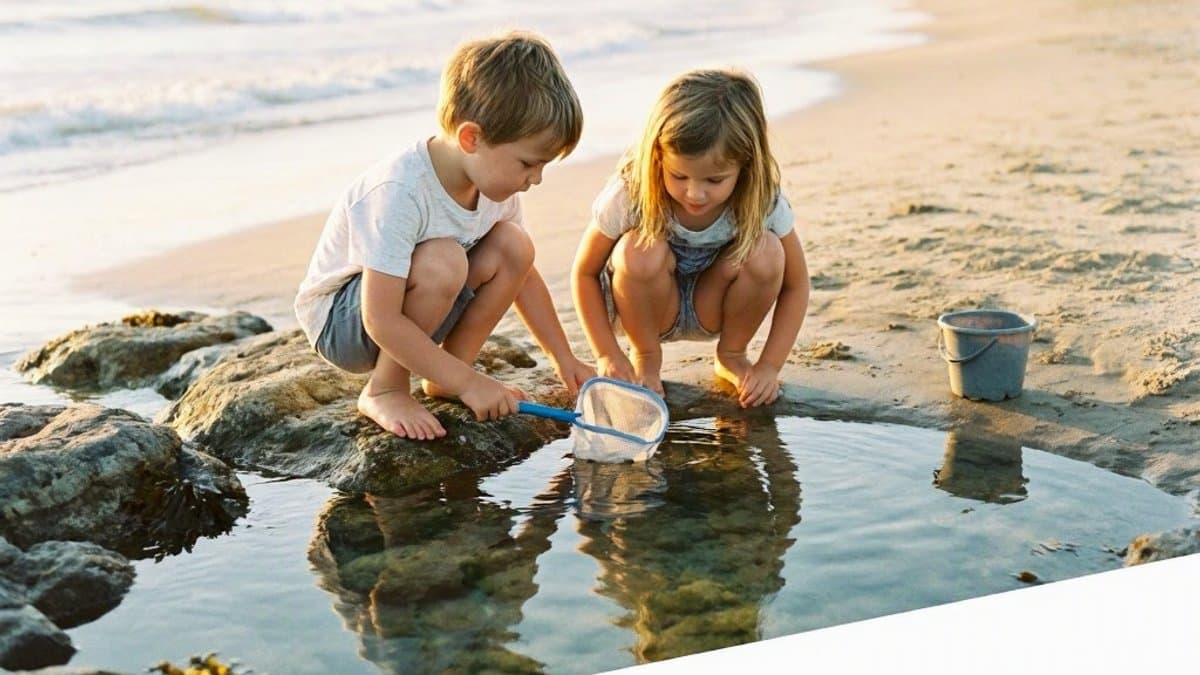
Give each child a small mesh bag or bucket and walk the high-tide line looking for shells, smooth stones, and sea glass. Sorting the haul by color or size back at the blanket extends the play and sneaks in early math. Teach the gentle ethic early: take only a few, leave living creatures be.
Wave Watching and Toe Dipping (all ages)
Sit at the very edge, hold hands, and let the thin sheet of retreating water rush over toes. For toddlers this is pure delight and a safe introduction to the water's rhythm. Name what the water does — "here it comes, there it goes" — and you are building language alongside the fun.
The throughline is restraint. Bring less, direct less, and let the beach and your child do the work.
The Short, Honest Gear List
You do not need a wagon full of equipment. You need a few things that earn their place.
Sun and shade first. The beach tent, rash guards, hats, and mineral sunscreen covered above are the non-negotiables. Everything else is comfort.
Sand tools, kept simple. One sturdy bucket and shovel set per child, plus maybe a sieve. The beach supplies the rest.
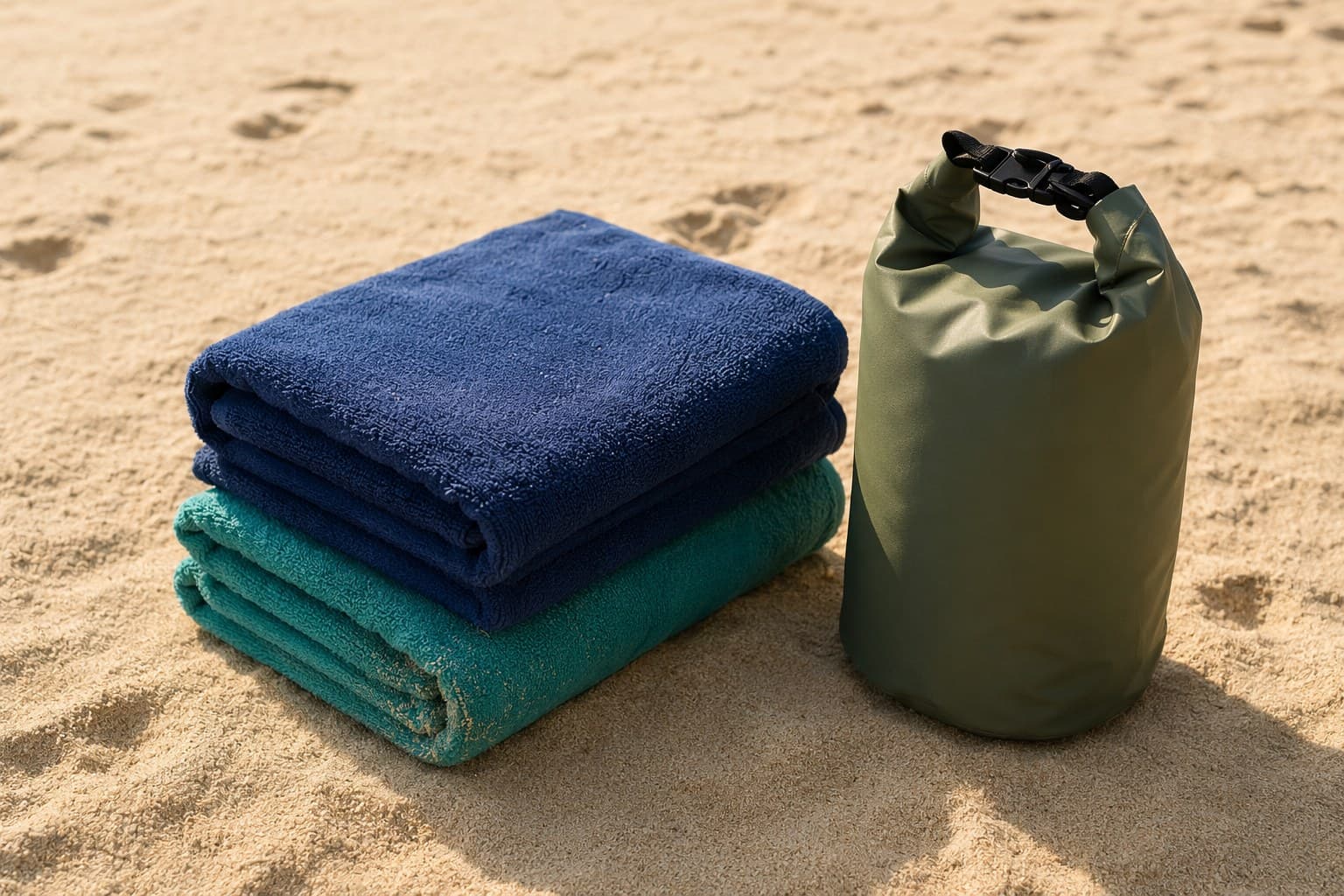
A waterproof bag. Keeping your phone, keys, wallet, and documents dry and sand-free is worth every penny of a good dry bag.
Quick dry towels. Standard cotton beach towels stay damp, hold sand, and take up half your bag. A quick dry microfiber beach towel for each person packs down small, shakes clean, and dries in the sun in minutes — a meaningful upgrade with young children who get wet and sandy on a loop.
Water and snacks, generously. More drinking water than you think, plus simple, salt-tolerant snacks. Sand play and sun are dehydrating, and a fed, hydrated toddler is a happy one.
Pack for a short, successful visit rather than an endurance event, especially for the first few trips. You can always stay longer; you cannot un-overwhelm an exhausted, sunburned toddler.
Building a Calm Beach Routine
The families who love beach days have usually stopped treating them as a production. They go often, stay loosely, and keep the bar low. A 45-minute morning visit with a baby counts. A two-hour preschooler session that ends with a snack and a nap in the car counts. You are not obligated to extract a full day from every trip.
Build a simple rhythm: arrive in the cooler hours, set up shade first, apply sunscreen before anyone touches the water, assign who is on water watch, and then let the play unfold without a plan. Take breaks in the shade, push fluids, and read your child's energy rather than the clock. When the meltdown signs appear — and with young children they will — leave a little before you have to, so the last memory of the day is a good one.
Done this way, the beach becomes one of the rare outings that is genuinely restorative for the child and the adult at once. The sand and water do the teaching. Your job is to keep it safe, keep it shaded, and keep your eyes on the small person who has no idea yet how much the sea deserves their caution — and their wonder. Pack light, go early, watch closely, and let the tide take the sandcastle. There will be another one tomorrow.
Frequently Asked Questions
- What is the safest age to take a baby or toddler to the beach?
- Babies as young as six months can enjoy the beach in short, shaded sessions, and toddlers from about 18 months are usually ready for real sand and water play at the edge. The deciding factor is not age but supervision ratio and sun management. A baby needs near-constant body contact or deep shade and a 20 to 45 minute visit; a toddler needs an adult within arm's reach at the water at all times. Avoid the harsh midday sun (roughly 10 a.m. to 4 p.m.) for the youngest children regardless of age, and keep first visits short so the experience stays positive rather than overwhelming.
- How do I keep a toddler safe near the water?
- Practice touch supervision: one adult assigned to one or two children, within arm's reach, phone away, eyes on the child rather than the horizon. Drowning is silent and fast, and a toddler can go under in seconds in inches of water. Choose beaches with gentle, gradual slopes and small waves, dress your child in a bright contrasting color so they are easy to spot, and treat a properly fitted Coast Guard approved life jacket as the only real flotation — never rely on inflatable armbands or rings. Set a clear water line in the sand that little ones are not to cross without you.
- What should I pack for a beach day with young children?
- Keep it short: sun protection (shade structure, hats, rash guards, mineral sunscreen), more drinking water than you think you need, simple sand tools, a quick dry towel each, a waterproof bag for phones and keys, and snacks. Skip the pile of plastic beach toys. A single bucket and shovel plus whatever the beach provides — shells, driftwood, smooth stones — will hold a young child's attention far longer than a bag of gadgets, and you will not mourn anything the tide carries off.
Enjoying this article?
Get more ideas like this delivered to your inbox every week.