Best Water Tables for Toddlers (2026 Buying Guide)
The best water tables for toddlers and preschoolers — Step2, Little Tikes, and premium options compared. Plus essential accessories and setup tips.
By The Slow Childhood
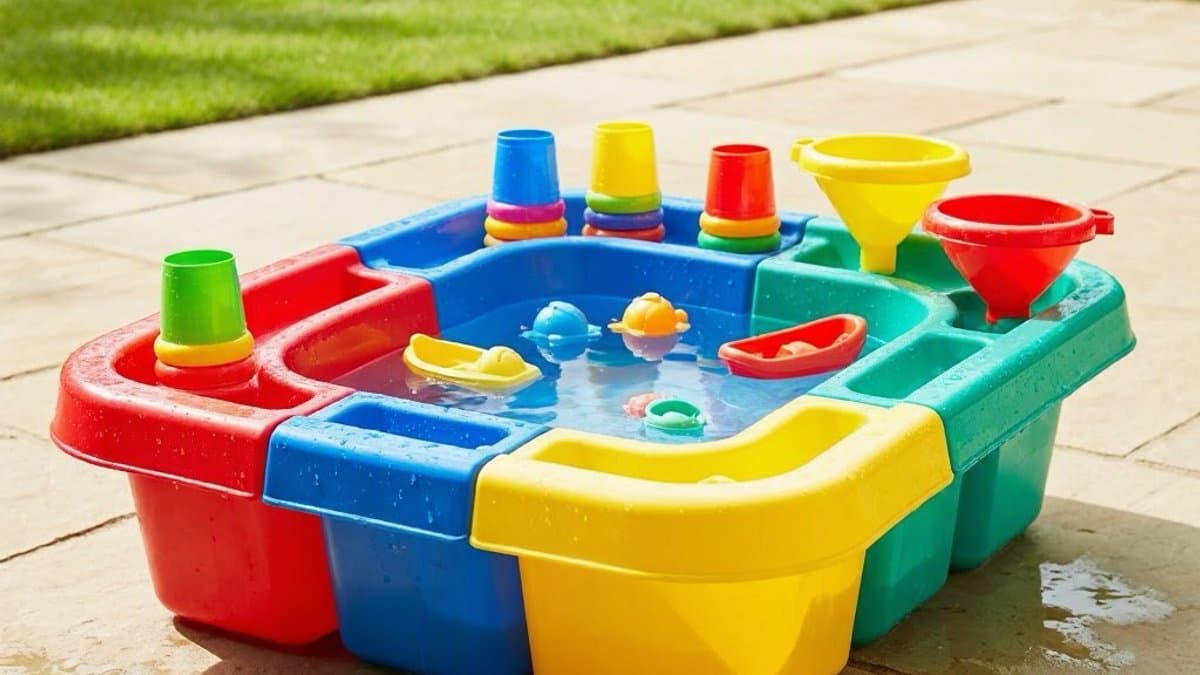
A water table is one of the highest-value toddler purchases you can make. The combination of sensory play, motor skill development, physics learning, and pure joy makes it an unmatched outdoor toy for ages 2-4. Children who would barely sit through a structured activity will spend an hour quietly pouring, scooping, and floating things in a water table.
This guide covers the best water tables on the market, the accessories worth adding, and the setup that makes them most successful in real backyards.
Best Mid-Size Water Tables
Step2 Rain Showers Splash Pond
The Step2 Rain Showers Splash Pond is the most popular water table for good reason. It includes multiple play features — a rain spout, dual ramps, spinning waterwheel, and floating toys. The two-tier design lets multiple children play together without conflict.
Pros:
- Multiple play features in one table
- Two-tier design accommodates 2-3 children
- Sturdy construction lasts years
- Includes floating toys to start
- Drain plug for easy emptying
- Holds significant water volume
Cons:
- Requires assembly (about 30 minutes)
- Larger footprint requires deck/patio space
- Can be heavy when full
Ages: 18 months - 5 years Price: About $80-100 Best for: Most families wanting a quality, feature-rich water table.
Little Tikes Anchors Away Pirate Ship Water Play
The Little Tikes Anchors Away brings imaginative play to water tables with a pirate ship theme. Children launch boats, climb the mast, and engage in extended pretend play scenarios.
Best for: Children who already love pretend play; pirate-loving toddlers.
Step2 Naturally Playful Sand & Water
The Step2 Naturally Playful Sand & Water is a dual-purpose table that holds water on one side and sand on the other. The combination provides more variety than water-only tables and accommodates different play preferences.
Best for: Families wanting versatility; older toddlers ready for combined water and sand play.
Best Premium Water Tables
Step2 Rain Showers Sand & Water Play Center
The Step2 Rain Showers Sand & Water is the largest, most feature-rich Step2 option. Multiple sections, including dedicated sand and water areas, plus rain spouts, ramps, and waterwheels.
Best for: Families with multiple children; those willing to invest in premium outdoor play equipment.
Best Compact Water Tables
For smaller yards, balconies, or budgets:
Little Tikes Spiralin' Seas Water Park
The Little Tikes Spiralin' Seas is a more compact water table with a vertical play tower featuring spiraling water tracks. Smaller footprint, lower water capacity, but excellent for limited space.
Best for: Apartment balconies, smaller yards, single-child families.
Step2 Duck Dive Water Table
The Step2 Duck Dive Water Table is a smaller round water table at a lower price point. Simpler features but still provides core water play experience.
Best for: Budget-conscious families; younger toddlers (under 2.5).
Best for Toddlers Under 2
For very young toddlers, simpler is better:
Plastic Storage Bins
A simple large plastic storage bin with cups and floating toys provides essential water play without spending on a dedicated table. For 12-18 month olds, this is often more than enough. Many families start here and upgrade to a proper table around age 2.
IKEA Kids Tables with Water Tubs
Some families convert an IKEA flisat-style children's table into a water play surface by setting plastic tubs into the surface. This is more DIY but extremely customizable.
Essential Water Table Accessories
Cup and Container Sets
Plastic measuring cup sets of varying sizes give children endless pouring possibilities. Volume comparison is one of the most enduring water table activities.
Kitchen Funnels
Inexpensive plastic kitchen funnels provide hours of pouring and target practice play.
Pipettes and Droppers
Large plastic pipettes develop pinch grip strength essential for later writing. Children love the precision of dropper play.
Floating Toys
Floating bath toys and plastic animals extend water table play into pretend scenarios. Plastic farm animals, sea creatures, and rubber ducks all work well.
Sponges
Large kitchen sponges introduce different water mechanics — squeeze, soak, drip. Inexpensive and surprisingly engaging for toddlers.
Water-Safe Pretend Food Sets
Adding water-safe play food turns water tables into restaurants, soup-making stations, and tea parties.
Setup and Maintenance Tips
Use a hard surface. Decks, patios, or driveway concrete work best. Grass under a water table dies quickly from repeated saturation.
Empty after use. Water sitting in tables develops algae and becomes a mosquito breeding site within a few days. Empty after each play session and let dry overnight.
Cover when not in use. Water table covers extend the life of plastic by protecting from UV damage. A simple tarp also works.
Refresh accessories regularly. Toddlers engage with novelty. Rotate the cups, funnels, and toys you put in the table. New objects spark new play.
Add a few drops of food coloring sometimes. Colored water transforms the experience. Consider blue for ocean play, green for swamp play, red for "lava." Avoid concentrations strong enough to stain clothes.
Indoor backup. A water table can move to a covered porch or even a kitchen for limited indoor use on rainy days. Towels underneath, smaller water volume.
Activities to Try
Sink or float experiments. Provide various household objects (apple, rock, cork, plastic spoon, marble, leaf) and let children predict and test.
Color mixing. Add primary colors to different cups and let children experiment with mixing.
Boat racing. Cork or stick boats with leaf sails race across the table.
Soap bubbles. A few drops of dish soap transforms the water into a bubble extravaganza.
Frozen treasure. Freeze small objects in ice cubes and add to the water table — children "rescue" the trapped items as the ice melts.
Watercolor painting outside. A water table beside an outdoor easel turns into the ultimate painting station.
For more outdoor play and sensory ideas, see our guides to water play activities for toddlers, sensory play for preschoolers, and backyard games for summer.
A water table earns its real estate in the backyard. The hours of focused, calming play it produces — for very little ongoing cost or effort — make it one of the highest-value outdoor toys for toddlers and preschoolers. Set it up well, refresh accessories occasionally, and let the water do the work.
Frequently Asked Questions
- What age is a water table best for?
- Water tables work best for ages 18 months through 5 years, with the sweet spot being ages 2-4. Toddlers love the sensory experience of water play, the simple mechanics of pouring and splashing, and the physics of floating and sinking. Older preschoolers add imaginative play — boats become ships, cups become characters, the table becomes the ocean. Most children outgrow water tables by age 5 or 6, when they prefer free water play (sprinklers, pools, outdoor splash play).
- Are water tables worth it?
- Yes, for most families with toddlers. Water tables provide hours of focused, calming, developmentally rich play. They develop fine motor skills, hand-eye coordination, early physics concepts (volume, flotation, gravity), and language development through narration of what's happening. Compared to most $50-80 toys that get used for weeks, a quality water table gets used through entire summers across multiple children.
- Where should I put a water table?
- Place water tables on a hard surface (deck, patio, concrete) rather than grass — grass underneath gets killed by repeated water exposure. Partial shade is ideal: enough sun to warm the water, enough shade to keep children comfortable. Near a hose or outdoor faucet makes refilling easy. Allow space around the table for splashing zone. Some families set up water tables in garages or covered porches for use in light rain.
- What accessories should I add to a water table?
- Beyond what comes with the table, add: a variety of cups in different sizes, plastic measuring cups and spoons, kitchen funnels, plastic pipettes or droppers, sponges in various sizes, plastic strainers and colanders, small floating toys (rubber ducks, plastic boats, plastic animals), and squeeze bottles. Avoid anything with sharp edges, small parts, or that breaks down in water. The simpler the accessories, the longer children stay engaged.
Enjoying this article?
Get more ideas like this delivered to your inbox every week.