Best Bikes, Balance Bikes, and Ride-On Toys for Kids by Age (2026)
The best bikes, balance bikes, scooters, and ride-on toys for every age from 1 to 10 — from first balance bikes to kid mountain bikes, plus what to skip entirely.
By The Slow Childhood
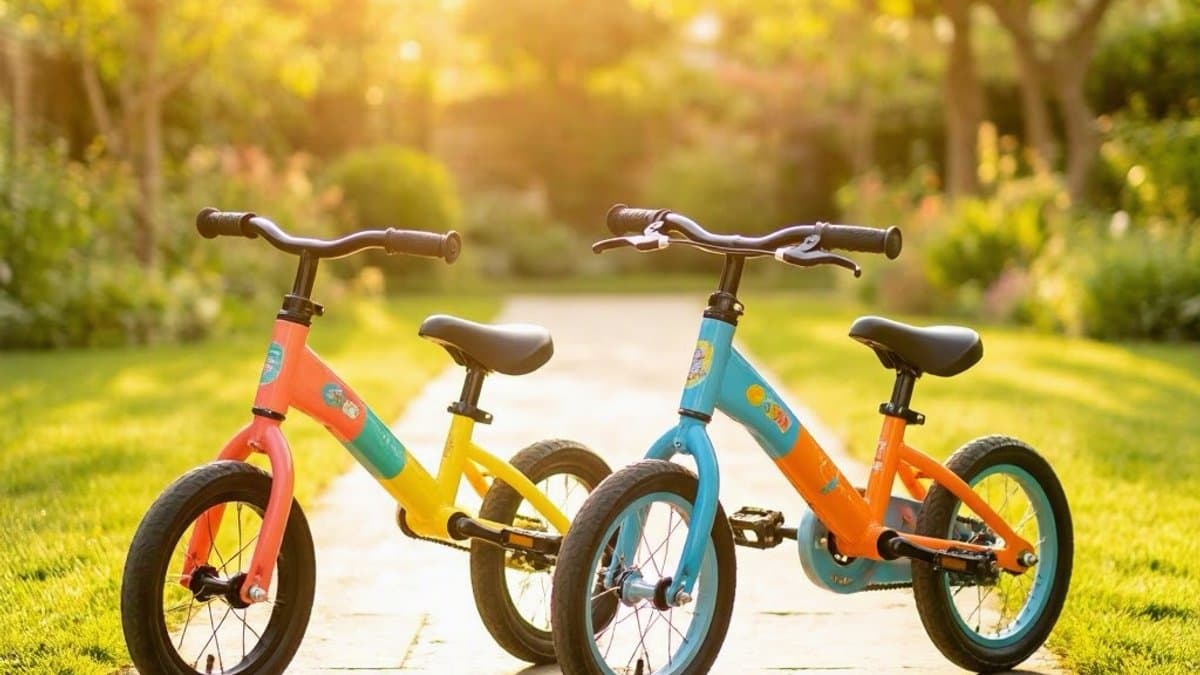
The right bike or ride-on toy at the right age can transform a child's relationship with movement, independence, and the outdoors. The wrong one — too heavy, too big, poorly designed — can frustrate them into giving up before they ever experience the pure joy of riding fast with the wind in their face.
We have tested and researched dozens of bikes, balance bikes, scooters, and ride-on toys across every age group. Below, we cover what actually works at each stage of development, what to skip, and how to choose the right size and style for your child.
Ride-On Toys for Toddlers (Ages 1-2)
Before a child is ready for a balance bike, simple ride-on toys build the leg strength, coordination, and confidence that make cycling possible later.
Best First Ride-On: Radio Flyer Scoot 2 Pedal
The Radio Flyer Scoot 2 Pedal is a low-to-the-ground ride-on that grows with your toddler. It starts as a scoot toy (feet on the ground, pushing along) and converts to a pedal trike as your child grows. The wide, stable base prevents tipping, and the low seat height works for children as young as 12 months.
Ages: 1-3 years Price: Around $50 Why we love it: The conversion feature means you buy one toy instead of two. The low seat lets very young toddlers use it safely, and the transition to pedaling happens naturally.
Best Indoor/Outdoor Ride-On: Wheely Bug
The Wheely Bug is a simple, beautifully designed ride-on with 360-degree caster wheels that let children spin, scoot, and zip in any direction. It works on hard floors and smooth outdoor surfaces. The animal designs (bee, mouse, cow, ladybug) are charming without being garish.
Ages: 1-3 years (small size) or 3-5 years (large size) Price: Around $70-80 Why we love it: The omnidirectional wheels make it uniquely fun and challenging. Children develop core strength and spatial awareness as they learn to control the unpredictable movement. It also looks good enough to leave out in a living room.
Balance Bikes (Ages 18 Months - 4 Years)
Balance bikes are the single most important cycling purchase you will make. A good balance bike teaches the actual skill of cycling — balance and steering — in a way that training wheels never can. Children who master a balance bike typically hop on a pedal bike and ride within minutes.
Best Overall: Strider 12 Sport
The Strider 12 Sport is the gold standard of balance bikes for good reason. It is lightweight (6.7 pounds), has an adjustable seat and handlebars that grow with your child, and uses maintenance-free foam tires. The footrests integrated into the frame let children glide and coast once they have mastered balance.
Ages: 18 months - 5 years Price: Around $120 Why we love it: The weight is critical — at under 7 pounds, even an 18-month-old can pick it up, maneuver it, and control it. Heavier balance bikes frustrate small children. The Strider's wide age range and excellent resale value make it a smart investment.
Best Premium: Woom 1
The Woom 1 is the lightest balance bike available at just 5.95 pounds, with an aluminum frame, pneumatic tires for better grip and cushioning, and geometry specifically designed for very small children. The rear handbrake introduces braking early, which transfers to pedal bikes later.
Ages: 18 months - 3.5 years Price: Around $200 Why we love it: The pneumatic tires make a real difference on rough surfaces and grass. The handbrake is a bonus that most balance bikes lack. If your budget allows it, the Woom 1 is the best balance bike money can buy.
Best Budget: Banana Bike LT
The Banana Bike LT offers solid quality at a lower price point. It weighs about 7.6 pounds, has an adjustable seat, and uses EVA foam tires. The frame is steel rather than aluminum, which accounts for the slight weight increase, but the overall design is sound.
Ages: 2-4 years Price: Around $60-70 Why we love it: If $120-200 is too much for a balance bike, the Banana Bike LT delivers the essential experience at a fraction of the price. Your child will still learn to balance and steer effectively.
First Pedal Bikes (Ages 3-5)
The transition from balance bike to pedal bike should happen when your child can glide on their balance bike with feet up for extended distances and steer confidently. For most children, this is between ages 3 and 5.
Best First Pedal Bike: Woom 2
The Woom 2 is a 14-inch bike designed specifically for the balance-bike-to-pedal-bike transition. At 11.2 pounds, it is remarkably light for a pedal bike, which makes the transition dramatically easier. The geometry is designed for small bodies — upright position, narrow handlebars, low standover height.
Ages: 3-4.5 years Price: Around $360 Why we love it: The weight difference between a Woom 2 and a department store bike of the same size is dramatic — often 5-8 pounds. For a 35-pound child, that difference is enormous. Children who struggle on heavy bikes often ride a Woom effortlessly on the first try.
Best Value First Bike: Prevelo Alpha One
The Prevelo Alpha One is a 14-inch bike that competes with the Woom on quality at a slightly lower price. It weighs 12.5 pounds, uses quality components, and has kid-specific geometry. The rear coaster brake plus a front handbrake gives children two braking options.
Ages: 2.5-4.5 years Price: Around $300 Why we love it: Excellent quality-to-price ratio. The dual braking system is a nice touch that helps children learn hand braking while still having the familiar coaster brake as backup.
Kids Bikes Ages 5-8
Once children are riding confidently, they need bikes that grow with them and handle the increasingly ambitious riding they want to do.
Best 16-inch: Woom 3
The Woom 3 continues the Woom philosophy at the 16-inch size. At 12.3 pounds, it remains extremely light, and the kid-specific geometry means children ride more comfortably and confidently than on heavier, adult-proportioned bikes.
Ages: 4-6 years Price: Around $400 Why we love it: If you started with a Woom 1 and Woom 2, the Woom 3 is the natural progression. The consistent quality and sizing across the Woom range means the transition between sizes is seamless.
Best 20-inch: Cleary Owl
The Cleary Owl is a 20-inch single-speed bike built with the same philosophy as the best smaller kids bikes — lightweight (around 17 pounds), kid-specific geometry, and quality components. The steel frame is durable enough for years of hard riding.
Ages: 5-8 years Price: Around $350 Why we love it: By the 20-inch size, children are riding seriously — longer distances, faster speeds, rougher terrain. The Cleary Owl handles all of it while remaining light enough for a 45-pound child to control easily. The single-speed drivetrain keeps things simple, which is appropriate for this age.
Scooters (Ages 2-10)
Scooters are an excellent complement to bikes, not a replacement. They develop different balance skills, are easy to transport, and give children another way to move independently.
Best First Scooter: Micro Mini Deluxe
The Micro Mini Deluxe is the best first scooter for preschoolers. The three-wheel design (two in front, one in back) provides stability while still requiring balance, and the lean-to-steer mechanism teaches body awareness. The low deck and T-bar handle fit small children perfectly.
Ages: 2-5 years Price: Around $90 Why we love it: The lean-to-steer design is intuitive — children lean their body weight in the direction they want to turn, which develops core strength and balance simultaneously. The build quality is excellent and it lasts for years.
Best Two-Wheel Scooter: Micro Sprite Xtreme
The Micro Sprite Xtreme is the best step-up scooter for school-age children ready for two wheels. It folds for easy transport, has a smooth and responsive ride, and the build quality is leagues ahead of cheap scooters that rattle apart within months.
Ages: 5-12 years Price: Around $100 Why we love it: Two-wheel scooters develop genuine balance and coordination in a way that three-wheel scooters do not. The Micro Sprite rides smoothly on sidewalks, paths, and even rougher surfaces, and the folding mechanism makes it easy to bring along on errands and outings.
What to Skip
Training wheels. They prevent children from learning the actual skill of balancing. Skip them entirely and use a balance bike instead.
Heavy department store bikes. A $70 bike that weighs 25 pounds is nearly impossible for a 40-pound child to ride. You will spend more in frustration and abandoned rides than you save on the purchase price.
Electric ride-ons for toddlers. Battery-powered cars and motorcycles require zero physical effort. They teach children to sit passively while a motor does the work. At an age when children should be developing gross motor skills, strength, and coordination, motorized ride-ons are a step backward. Choose human-powered toys that build bodies and skills.
Character-branded bikes. The princess bike or superhero bike at the big-box store is heavy, poorly made, and marketed to appeal to children rather than to function well. Your child will forget the character theme within weeks but suffer the poor ride quality for years.
Sizing Guide
Getting the right size matters more than brand. A perfectly sized cheap bike is better than a premium bike that is too big.
| Wheel Size | Inseam Range | Typical Ages |
|---|---|---|
| Balance bike | 12-17 inches | 18 months - 4 years |
| 12 inch | 14-17 inches | 2-4 years |
| 14 inch | 16-20 inches | 3-5 years |
| 16 inch | 18-22 inches | 4-6 years |
| 20 inch | 22-26 inches | 5-9 years |
| 24 inch | 26-30 inches | 8-12 years |
How to measure: Have your child stand against a wall in shoes. Place a book between their legs, spine up, pressed firmly against them. Measure from the floor to the top of the book spine. This is their inseam. Match to the chart above.
Never buy a bike for a child to "grow into." An oversized bike is heavy, hard to control, and dangerous. Children ride bikes that fit them. They do not ride bikes that are too big — they just do not ride at all.
Every child deserves the experience of riding fast under their own power, wind in their face, legs pumping, grinning so wide it hurts. The right bike at the right time makes that possible. Choose well, size correctly, and let them ride.
Frequently Asked Questions
- What age should a child start riding a balance bike?
- Most children can start a balance bike between 18 months and 2 years old, as soon as they can walk confidently and straddle the bike with both feet flat on the ground. Balance bikes teach the hardest part of cycling — balance and steering — without the complication of pedals. Children who learn on balance bikes typically transition to pedal bikes much faster and more confidently than children who use training wheels.
- Are training wheels a good idea?
- Most cycling experts and experienced parents now recommend skipping training wheels entirely. Training wheels teach children to rely on a crutch that prevents them from learning the actual skill of balancing. Children who use training wheels often develop a leaning habit that makes the transition to two wheels harder and scarier. A balance bike followed by a pedal bike is a smoother, faster, and less frustrating path to independent cycling.
- What size bike does my child need?
- Bike size is determined by wheel diameter and inseam, not age. A child should be able to straddle the bike with both feet touching the ground and reach the handlebars comfortably. For balance bikes, both feet should be flat on the ground. For pedal bikes, tiptoes are acceptable. Common sizes: 12-inch for ages 2-4, 14-inch for ages 3-5, 16-inch for ages 4-6, 20-inch for ages 5-9, and 24-inch for ages 8-12. Always measure your child rather than buying by age alone.
- How much should I spend on a kids bike?
- Budget $100-200 for a quality balance bike and $200-400 for a good pedal bike. Cheap department store bikes (under $100) are heavy, poorly assembled, and often frustrating for children to ride. Quality brands like Woom, Strider, Prevelo, and Cleary use lighter frames, better components, and proper geometry that makes learning easier. A good bike holds its resale value well — many families recoup 50-70 percent by selling used.
Enjoying this article?
Get more ideas like this delivered to your inbox every week.