Best Outdoor Exploration Kits for Kids (2026 Guide)
Our tested picks for the best outdoor exploration kits, binoculars, magnifying glasses, bug catchers, and field guides that actually get kids outside exploring nature.
By The Slow Childhood
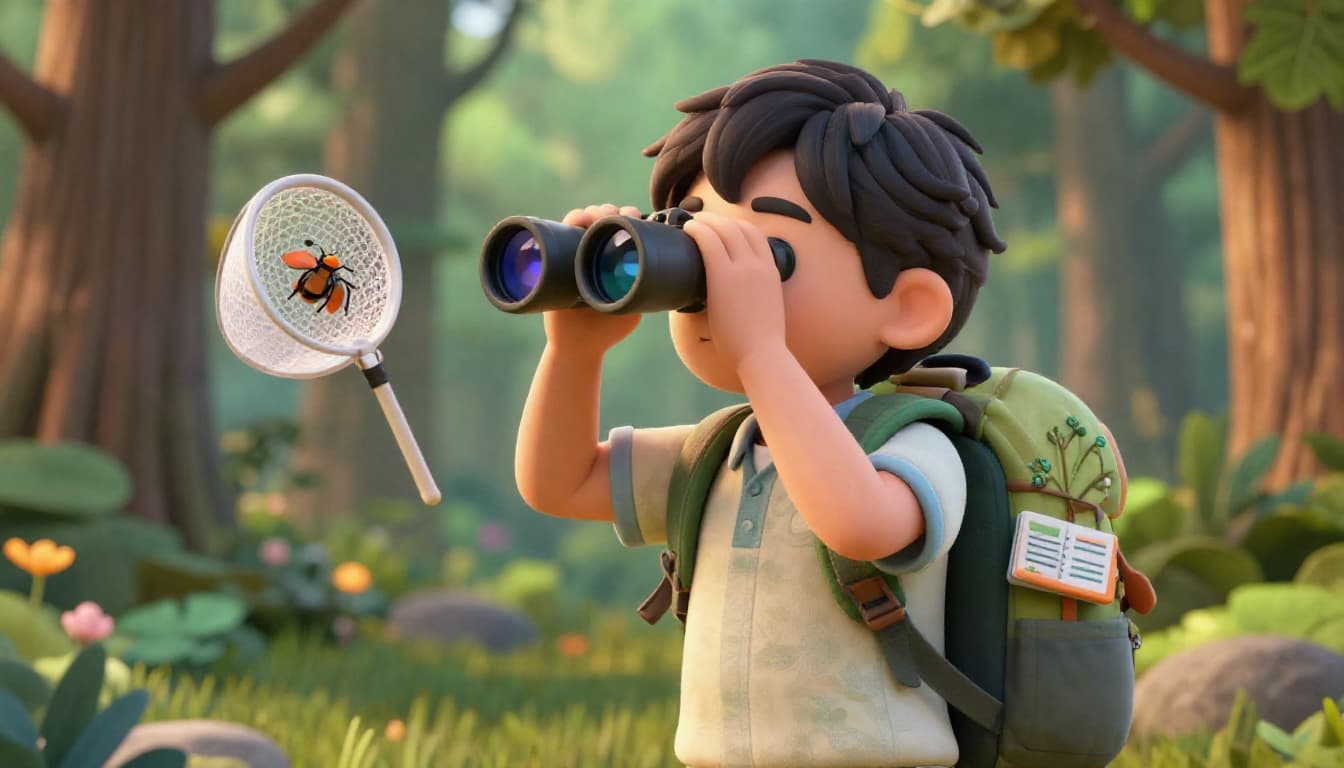
There is something magical about handing a child a pair of binoculars or a magnifying glass and watching their whole posture change. Suddenly they are not just walking through the backyard — they are exploring it. They crouch down to examine a beetle. They scan the treetops for bird nests. They flip over a rock and gasp at the pill bugs underneath. The right exploration tools do not just entertain children. They shift how kids see the world around them, turning an ordinary afternoon into a genuine adventure.
We have tested dozens of outdoor exploration kits, binoculars, magnifying glasses, bug catchers, and field guides over the past few years with our own kids and with families in our homeschool co-op. Some were fantastic. Some fell apart within a week. This guide shares only the gear that held up to real use by real children — along with budget-friendly DIY alternatives for families who want to keep things simple.
Whether you are looking for a birthday gift, building a nature exploration set for your homeschool, or just want to get your kids outside more, these are our honest picks for 2026.
What to Look for in Outdoor Exploration Gear for Kids
Before we get into specific products, here are the qualities that matter most in kids' exploration gear:
- Durability — It will get dropped, thrown, sat on, and left in the rain. Rubber coating and sturdy construction are non-negotiable.
- Real functionality — Toy-grade tools with plastic lenses or flimsy nets frustrate kids quickly. Spend a few dollars more for gear that actually works.
- Size appropriate — Tools should fit small hands comfortably. Oversized binoculars or heavy field guides discourage use.
- Easy to carry — A mesh bag, backpack, or vest that lets kids carry their own gear builds independence and ownership.
- Open-ended — The best tools encourage free exploration rather than following a rigid set of instructions.
Best Complete Outdoor Exploration Kits
These all-in-one kits are the easiest way to get started. They make excellent gifts and provide everything a child needs for their first nature expeditions.
1. ESSENSON Outdoor Explorer Kit (Best Overall)
Ages 3-12 | Around $20-25
This is the kit we recommend most often because it hits the sweet spot of quality, variety, and price. It typically includes binoculars, a compass, a magnifying glass, a butterfly net, bug collection containers, a flashlight, a whistle, and a drawstring carry bag.
The binoculars are not professional-grade, but they are surprisingly functional for the price — good enough to spot birds in nearby trees and watch squirrels across the yard. The magnifying glass is sturdy with a real glass lens. The butterfly net is lightweight enough for a 4-year-old to swing but holds up to regular use.
We have gifted this kit to at least five families and every one of them reported their kids using it regularly months later.
Shop the ESSENSON Outdoor Explorer Kit on Amazon
2. National Geographic Mega Fossil and Gemstone Dig Kit (Best for Rock Lovers)
Ages 6-12 | Around $25-30
If your child is the type who fills their pockets with rocks on every walk, this kit channels that interest beautifully. Kids excavate real fossils and gemstones from dig bricks using included tools. It comes with a detailed learning guide that identifies each specimen.
This is not strictly an outdoor kit, but we include it because it pairs perfectly with outdoor rock hunting. After digging through the kit at home, kids naturally start examining every rock they find outside with new eyes. We have seen it spark genuine interest in geology that lasts for years.
Shop National Geographic Dig Kits on Amazon
3. Kidz Xplore Outdoor Adventure Set (Best for Younger Kids)
Ages 3-7 | Around $20
This set is designed specifically for younger explorers with chunkier tools that fit small hands well. It typically includes a bug vacuum, tweezers, magnifying glass, compass, and collection containers in a sturdy carry case. The bug vacuum is the standout piece — it lets little ones catch insects without touching them, which is a game-changer for kids who are curious but cautious.
The carry case doubles as a collection box, and everything snaps into place so cleanup is simple. This is our go-to recommendation for preschoolers and young kindergarteners.
Shop Kidz Xplore Adventure Set on Amazon
Best Binoculars for Kids
Binoculars transform ordinary outings. Suddenly your child can see the hawk circling above the field or the heron standing at the edge of the pond. If you buy only one exploration tool, make it a good pair of binoculars.
4. Occer 12x25 Compact Binoculars (Best Overall Kids Binoculars)
Ages 6+ | Around $30-35
These are not marketed as kids' binoculars, which is actually why we love them. They are compact enough for children but deliver genuinely clear optics that adults enjoy using too. The 12x25 magnification brings distant birds and wildlife into sharp focus. The rubber armor survives drops, and the fold-down eyecups work well for kids who wear glasses.
At about 8 ounces, they are light enough for kids to carry on hikes without complaint. We keep a pair in our nature backpack at all times and they have held up through three years of heavy use.
Shop Occer Compact Binoculars on Amazon
5. Obuby Real Binoculars for Kids (Best Budget Option)
Ages 3-8 | Around $10-15
For younger children or families who want an affordable entry point, these rubber-coated binoculars are surprisingly good for the price. The 8x21 magnification is appropriate for kids just learning to use binoculars, and the lightweight design means even a 3-year-old can hold them up.
They are not as optically sharp as the Occer pair, but they are sharp enough to delight a child who has never looked through binoculars before. We consider these the perfect "first binoculars" — inexpensive enough that you will not stress when they inevitably get dropped in a creek.
Shop Obuby Kids Binoculars on Amazon
Best Magnifying Glasses and Bug Catchers
These are the tools that get kids down on the ground examining the tiny worlds they normally walk right over.
6. Carson BugLoupe 5x Magnifier (Best Magnifying Tool)
Ages 4+ | Around $8-10
This stand-up magnifier is brilliant in its simplicity. Set it on the ground over a bug, leaf, or flower and look down through the 5x lens. Kids do not have to hold it steady or figure out the right distance — they just place it and look. This makes it far more usable than a traditional handheld magnifying glass for younger children.
It also works wonderfully as a desk magnifier for examining collected specimens, seeds, feathers, and rocks. At under $10, it is an absurdly good value.
Shop Carson BugLoupe on Amazon
7. Nature Bound Bug Catcher and Viewer Set
Ages 3-10 | Around $10-15
This set usually includes a pop-up butterfly habitat, ventilated bug jars with magnifying lids, and soft-grip tweezers. The magnifying lids are the key feature — kids catch a bug, drop it in the jar, and can examine it up close through the built-in lens before releasing it.
We always emphasize catch-and-release with our kids, and these jars make that easy. The ventilation holes keep insects alive during observation, and the wide openings make release simple. Pair this with a simple insect identification chart and you have a complete entomology station.
Shop Nature Bound Bug Catcher Set on Amazon
Best Field Guides and Nature Journals for Kids
Tools get kids looking. Field guides and journals help them see — and remember what they found.
8. National Audubon Society First Field Guide Series
Ages 6-12 | Around $8-12 each
These field guides are the gold standard for young naturalists. The series covers birds, insects, trees, wildflowers, mammals, reptiles, rocks and minerals, and more. Each book uses clear photographs rather than illustrations, which makes identification much easier for kids.
The entries are written in accessible language with range maps and key identification features highlighted. We keep the bird and tree guides in our nature backpack permanently. Start with whichever topic your child gravitates toward — you do not need the whole series at once.
Shop Audubon First Field Guides on Amazon
Nature Journals: Our Approach
Rather than recommending a specific nature journal product, we encourage families to use any blank or lightly lined notebook. A simple composition book works beautifully. What matters is the habit, not the journal.
That said, if you want something designed for the purpose, look for journals with a mix of blank pages for drawing and lined pages for writing, along with prompts that encourage observation (draw what you see, record the weather, note three sounds you hear). We share our full approach in our guide to nature journal ideas for kids.
For younger kids who are not yet writing, a simple sketchbook and a box of colored pencils is perfect. Let them draw what they find. These drawings become treasured keepsakes.
Building Your Own Exploration Kit on a Budget
You absolutely do not need to buy a premade kit. Here is how to build a fantastic exploration set for under $20:
The essentials:
- A magnifying glass from the dollar store ($1)
- Small jars or containers from your recycling bin (free)
- A butterfly net — you can often find these at dollar stores seasonally ($1-3)
- A small notebook and pencil for nature journaling (under $3)
- A mesh bag or old backpack to carry everything (free)
Nice additions when budget allows:
- A pair of budget binoculars ($10-15)
- A Carson BugLoupe ($8-10)
- One field guide in your child's area of interest ($8-12)
From around the house:
- Old pill bottles make excellent specimen containers
- A white bed sheet spread on the ground under a bush catches falling insects for observation
- Empty egg cartons become collection trays for rocks, seeds, and small treasures
- A kitchen strainer works as a pond-dipping net
How to Actually Use Exploration Gear (Without Turning It Into a Lesson)
This is where many well-meaning parents go wrong. We buy the kit, hand it to our child, and immediately start quizzing them. "What kind of bird is that? Can you find it in the field guide? What family does this insect belong to?"
Resist that urge, especially at first.
The most important thing you can do is model curiosity without requiring answers. Try statements instead of questions:
- "I wonder what that bird is eating."
- "Look at the pattern on this leaf — I have never noticed that before."
- "I think I hear a woodpecker somewhere."
Let your child wander. Let them look at whatever catches their attention, even if it is just a stick. The binoculars might sit untouched for the first three outings and then suddenly become their favorite thing. Give it time.
For toddlers (ages 2-3): Hand them the magnifying glass and follow their lead. They will examine dirt, their own shoes, a dandelion — everything is new and fascinating. That is the whole activity.
For preschoolers (ages 3-5): Set up a simple exploration mission: "Let's see how many different bugs we can find." Use the bug catchers and magnifying glass. Count together. No identification needed — just observation and wonder.
For early elementary (ages 5-8): Introduce field guides alongside exploration. After catching a butterfly, look it up together. Start a nature journal. Go on focused walks — a bird walk, a tree walk, a rock walk.
For older kids (ages 8-12): Let them specialize. Provide the field guide and binoculars and let them build expertise in birds, or insects, or wildflowers. Many kids this age love keeping life lists of species they have identified.
Favorite Ways to Use Exploration Gear
Here are some of our favorite activities that put exploration gear to use:
- Bug safaris — Spend 30 minutes flipping rocks, checking under logs, and searching in tall grass. Use the bug catcher to examine finds up close, then release everything.
- Bird watching walks — Bring binoculars and a bird field guide on a slow walk. Stop frequently. Listen for calls. See how many species you can spot.
- Magnification stations — Spread a white sheet on the ground and shake a bush over it. Examine what falls using magnifying glasses.
- Specimen collection walks — Bring jars and bags. Collect interesting rocks, feathers, seed pods, leaves, and bark samples. Sort and examine at home.
- Pond dipping — Use a net or strainer to scoop water from a pond edge. Pour into a white container and use magnifying glasses to see what is swimming around.
- Night exploration — A flashlight and a white sheet hung between two trees attracts moths and other night insects for observation. Binoculars are useful for spotting bats at dusk.
For more outdoor activity ideas that pair perfectly with exploration gear, browse our full list of outdoor nature activities for kids.
Caring for Exploration Gear
A few quick tips to make your gear last:
- Store everything in one bag or bin. If gear gets scattered around the house, it never makes it outside. A dedicated nature backpack hung by the door is ideal.
- Dry everything after wet outings. Open jars, shake out nets, and wipe down binoculars with a soft cloth.
- Let kids take ownership. When children are responsible for packing and caring for their own gear, they use it more and treat it better.
- Replace consumables. Keep the nature journal stocked with fresh pages and the pencil box sharpened. A dead journal kills the habit.
Final Thoughts
The best outdoor exploration kit is one that actually gets used. That might be a $25 Amazon kit or a magnifying glass from the dollar store tucked into a sandwich bag with a notebook. What matters is that your child has tools that spark curiosity and a grown-up willing to slow down and explore alongside them.
You do not need to know the names of every bird or bug. You do not need to live near a national park. You just need to step outside, hand your child a magnifying glass, and say, "Let's see what we can find."
If you are looking for more ways to explore nature with your family, our guide to hiking with kids covers everything from trail selection to keeping little legs motivated. For activity ideas that do not require any gear at all, check out our nature scavenger hunt ideas or our collection of camping activities for kids and families.
Frequently Asked Questions
- What age is best to start with outdoor exploration kits?
- Children as young as 2-3 can enjoy basic exploration tools like magnifying glasses, bug catchers, and collection bags. Look for kits with chunky, durable pieces designed for small hands. By age 5-6, kids are ready for more advanced tools like binoculars and field guides.
- Are outdoor exploration kits worth the money?
- Budget kits in the $15-25 range provide excellent value and can spark years of outdoor interest. You do not need to spend a lot — a quality magnifying glass, a small net, and a jar can provide just as much learning as an expensive kit. We also share DIY alternatives throughout this guide.
- What should I look for in kids' binoculars?
- Choose binoculars with 8x21 magnification for most kids. Look for rubber-coated bodies that survive drops, easy-to-turn focus wheels, a neck strap, and lightweight construction under 8 ounces. Avoid toy binoculars with plastic lenses — the blurry images frustrate kids quickly.
- How do I get my child interested in nature exploration?
- Start with what they already love. A child fascinated by bugs needs a magnifying glass and bug catcher. A bird-loving kid needs binoculars. Let them lead the exploration rather than turning it into a lesson. Keep early outings short, pressure-free, and focused on wonder rather than identification.
- Can I make my own outdoor exploration kit instead of buying one?
- Absolutely. A homemade kit with a magnifying glass, small jars, a butterfly net from the dollar store, a notebook, and some crayons works beautifully. We include DIY options alongside store-bought picks throughout this guide.
Enjoying this article?
Get more ideas like this delivered to your inbox every week.