Best Educational Subscription Boxes for Kids (Honest Review)
An honest review of the best educational subscription boxes for kids — KiwiCo, Little Passports, Lovevery, and more. What's actually worth the money and what to skip.
By The Slow Childhood
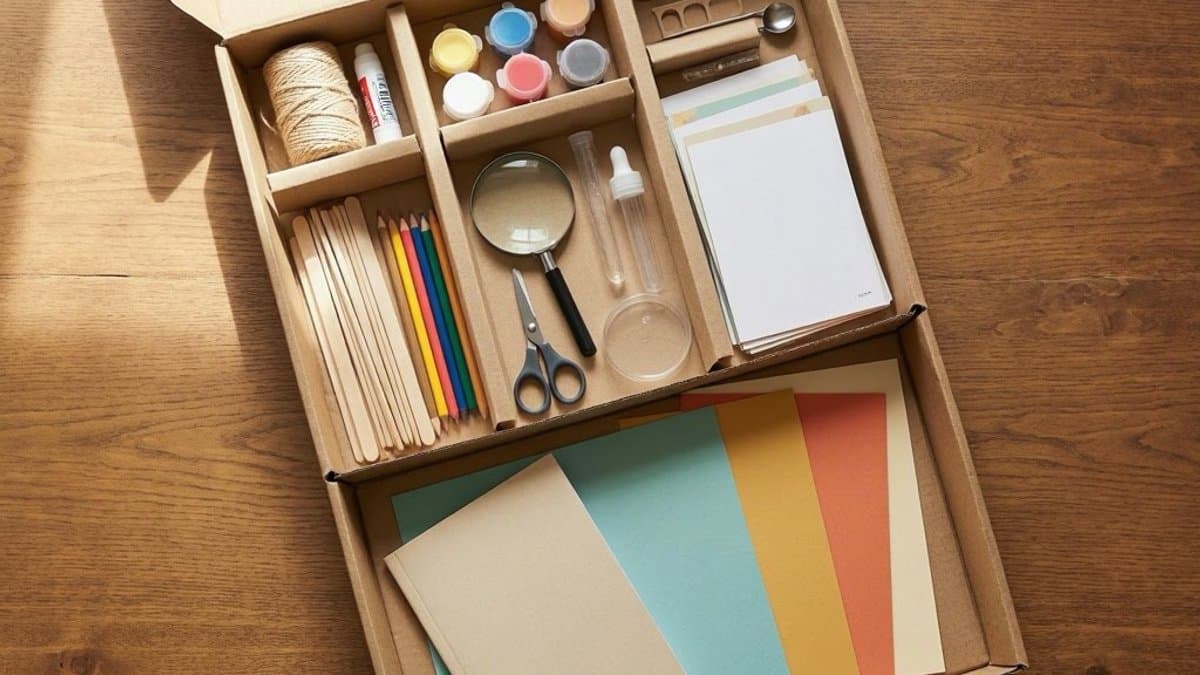
Educational subscription boxes have become a massive industry, and the quality varies enormously. Some boxes deliver thoughtfully designed experiences that introduce children to genuinely new skills and concepts. Others are overpriced craft kits dressed up with educational-sounding marketing. We have subscribed to most of the major options ourselves, talked with many families, and reviewed what actually arrives in the box each month. Here is our honest assessment.
What Makes a Good Subscription Box
Before the specific recommendations, understand what separates the good boxes from the mediocre ones:
Quality materials. The best boxes include real tools, durable components, and thoughtfully chosen supplies — not flimsy cardstock and dollar store accessories.
Educational substance. Good boxes teach something real. A science box should actually demonstrate a scientific concept. A geography box should actually build geographic knowledge. If the educational value is a thin veneer over a craft kit, the box is not worth it.
Completion possibility. The best boxes can be completed by a child with reasonable adult support. Boxes that require elaborate preparation or skilled adult execution miss the point.
Rewatchable/reusable. The ideal box creates something children use, play with, or reference after the initial opening. Boxes where the activity is consumed in 15 minutes and then discarded are expensive entertainment rather than learning.
Age-appropriate challenge. The best boxes stretch children without overwhelming them. Too easy and children disengage; too hard and they give up.
Best Overall: KiwiCo
KiwiCo (formerly KiwiCrate) is the standard by which other educational subscription boxes are measured. KiwiCo runs multiple lines targeting different age groups, and the quality is consistently high across all of them.
KiwiCo Age Lines
Panda Crate (0-24 months) — Developmentally appropriate play items for babies and toddlers, often with Montessori-inspired design.
Koala Crate (2-4 years) — Preschool-age hands-on activities emphasizing imagination, early science, and creativity.
Kiwi Crate (5-8 years) — The flagship line. Science and art projects with real educational substance. Each crate typically includes enough materials for 2-3 activities.
Atlas Crate (6-11 years) — Geography and culture exploration with each crate focused on a different country.
Tinker Crate (9-16 years) — STEM and engineering projects that build real working devices.
Eureka Crate (14-104 years) — Serious engineering and maker projects.
Doodle Crate (9+ years) — Art and design projects with quality materials.
KiwiCo Pros
- Consistent quality across all age lines
- Genuinely educational content, not just craft kits
- Materials are durable enough for repeated use
- The accompanying magazines and instructions are thoughtfully written
- Monthly variety keeps things fresh
- Easy online cancellation
KiwiCo Cons
- Premium pricing ($20-30/month depending on line and plan length)
- Some boxes contain more plastic than families might prefer
- Activity complexity varies — some boxes require significant adult help
- Not a replacement for structured curriculum
Price: $20-30/month depending on plan length (longer commitment = lower monthly rate) Best for: Families who want high-quality, well-designed monthly projects across a wide age range.
Best for Toddlers and Babies: Lovevery
Lovevery Play Kits are the premium subscription option for babies and toddlers (0-48 months). Each kit is shipped every 2-3 months rather than monthly and contains research-backed, beautifully designed toys targeting specific developmental milestones.
Lovevery Pros
- Exceptional quality — real wood, organic cotton, durable materials
- Rigorously research-based developmental approach
- Beautiful aesthetic that fits Montessori-inspired homes
- Toys are built to last through multiple children
- Strong resale value (Lovevery has an active secondary market)
- Accompanying parent guide is genuinely useful
Lovevery Cons
- Expensive (about $120 per kit shipped every 2-3 months = roughly $50/month averaged)
- Less activity variety per kit than other boxes
- Some activities are brief (toys meant for developmental moments, not extended play)
- Can feel prescriptive for families who prefer open-ended toys
Price: $80-120 per kit, shipped every 2-3 months Best for: Parents of babies and toddlers who want research-backed, beautifully made developmental toys.
Best for Geography: Little Passports
Little Passports takes children on an around-the-world adventure through monthly shipments featuring a different country or region. Each box includes a country-specific booklet, activities, stickers, souvenirs, and often a hands-on project.
Little Passports Pros
- Genuinely builds geographic knowledge over time
- Integrates culture, history, and geography naturally
- Monthly variety maintains engagement
- Multiple product lines for different ages (Early Explorers, World Edition, USA Edition, Science Expeditions)
- Good accompanying online content
Little Passports Cons
- Activities can feel surface-level (sticker books, simple crafts)
- More expensive than the educational depth sometimes justifies
- Some families find the "passport" concept contrived
Price: $22-25/month Best for: Families who want to introduce world geography and cultural awareness through a fun, consistent monthly touchpoint.
Best for STEM: MEL Science / MEL Chemistry
MEL Science subscription boxes deliver genuinely serious science experiments. The MEL Chemistry line for older children includes actual chemistry kits with real chemicals (appropriately safe), real lab equipment, and experiments that demonstrate college-level concepts.
MEL Science Pros
- Real science, not watered-down craft activities
- Quality lab equipment that builds a legitimate home science setup
- Accompanying app with explanations and additional content
- Multiple lines: MEL Kids, MEL Chemistry, MEL Physics, MEL STEM
MEL Science Cons
- Expensive ($30-40/month)
- Requires adult supervision for many experiments
- Some experiments may involve smells or mess
- Chemistry line requires an investment in starter equipment
Price: $30-40/month Best for: Children genuinely interested in science; families who want serious experimentation rather than fluff.
Best Budget Option: Green Kid Crafts
Green Kid Crafts offers eco-friendly craft and science kits at a lower price point than premium boxes. Each monthly box focuses on a theme (space, ocean, architecture) with 4-6 related activities.
Green Kid Crafts Pros
- More affordable than premium boxes (around $20/month)
- Eco-conscious materials
- Good variety of activities per box
- Theme-based approach helps children go deeper on topics
Green Kid Crafts Cons
- Activities tend to be more craft than substantive science
- Material quality is lower than KiwiCo
- Instructions can be less clear
Price: About $20/month Best for: Families wanting monthly activities at a lower price point and who prioritize eco-friendly materials.
Subscription Boxes to Skip
Generic "STEM" boxes from unknown brands. Amazon is full of subscription boxes claiming to be educational. Most are cheap craft materials with minimal educational content. Stick to established brands with published reviews.
Celebrity-endorsed subscription boxes. Marketing-driven boxes often under-deliver on actual educational value. The fact that a celebrity has their name on it does not indicate quality.
Character-themed subscription boxes. Disney, Marvel, and similar character-branded boxes typically emphasize the character over the educational content. Your child is better served by character-free educational content that teaches something substantive.
Any box you cannot easily cancel. If the subscription terms are unclear or cancellation requires phone calls and lengthy processes, move on. Reputable companies make cancellation easy.
How to Get the Most Value From Subscription Boxes
Start with a short commitment. Almost all boxes offer month-to-month plans at a premium, or discounted longer commitments. Start with a 3-month plan to evaluate quality before committing to a year.
Save completed projects. Many families discover that subscription boxes produce their most-displayed kid art, their most-used science equipment, and their most-loved educational tools. Keep the good stuff; donate or recycle what does not resonate.
Use them as curriculum supplements. Subscription boxes work beautifully alongside a structured homeschool curriculum rather than as replacements. The box adds variety, novelty, and hands-on engagement that enrich the main curriculum.
Share with another family. Some families split subscriptions with neighbors or friends, taking turns using the materials. This reduces per-family cost and often increases engagement (shared projects can be more fun).
Pause during busy seasons. Most services allow pausing. If you have a month of travel, holidays, or overwhelming life, pause the box rather than letting it accumulate unused.
Gift Subscription Boxes
Subscription boxes make excellent gifts from grandparents, aunts, uncles, or family friends who want to give something more substantive than plastic toys. A 3-month KiwiCo or Little Passports subscription provides months of engagement and a clear reminder each month of the giver. If you are the recipient, politely suggest that gift-givers consider subscription boxes instead of one-off toys for birthdays and holidays.
For more on quality toys and educational resources, see our guides to the best LEGO sets by age, best magnetic tiles for kids, and best homeschool curriculum.
Educational subscription boxes, chosen thoughtfully, can genuinely enrich a child's learning life. The wrong box is expensive entertainment. The right box becomes a monthly anticipation and introduces concepts and skills your child would not have encountered otherwise. Start with one, evaluate honestly, and keep what works.
Frequently Asked Questions
- Are educational subscription boxes worth the money?
- Some are, some absolutely are not. The best boxes (KiwiCo, Little Passports, Lovevery for younger ages) deliver genuinely educational, well-designed materials that children use repeatedly. The worst subscription boxes are overpriced craft kits that could be assembled from a dollar store. The honest answer: boxes are worth it if they consistently introduce your child to new skills, concepts, or interests they would not otherwise explore. They are not a substitute for an organized homeschool curriculum.
- What age are subscription boxes best for?
- Subscription boxes work best for children ages 3-12, with different boxes targeting specific age bands. Toddler and preschool boxes (Lovevery, KiwiCo Panda) focus on developmental milestones and open-ended play. School-age boxes (KiwiCo's Kiwi, Koala, and Tinker crates) introduce STEM concepts and hands-on projects. Tween boxes (KiwiCo Eureka, MEL Chemistry) teach more advanced concepts. Pick based on your child's age and interests, not on perceived educational prestige.
- Can I cancel a subscription box easily?
- Most reputable subscription box companies offer easy online cancellation without calls or emails. KiwiCo, Little Passports, and Lovevery all allow cancellation through your account page. Before subscribing, verify the cancellation policy — some less reputable boxes make cancellation deliberately difficult. Always start with a single-month or 3-month plan rather than committing to a full year, so you can evaluate the quality before a larger investment.
- How are subscription boxes different from educational toys?
- The main difference is the curation, progression, and novelty. A subscription box delivers a different, age-appropriate experience each month, often introducing topics you would not think to buy. Educational toys purchased individually tend to be used intensively for a while, then shelved. Boxes maintain freshness and variety that individual toys cannot match. The trade-off is cost — a good subscription box runs $20-35/month, whereas a quality educational toy bought once might cost the same and be used for years.
Enjoying this article?
Get more ideas like this delivered to your inbox every week.