Best Magnetic Tiles for Kids (Magna-Tiles vs PicassoTiles vs Connetix)
An honest comparison of the best magnetic tile brands — Magna-Tiles, PicassoTiles, Connetix, and more. What to buy, what to skip, and how many tiles you actually need.
By The Slow Childhood
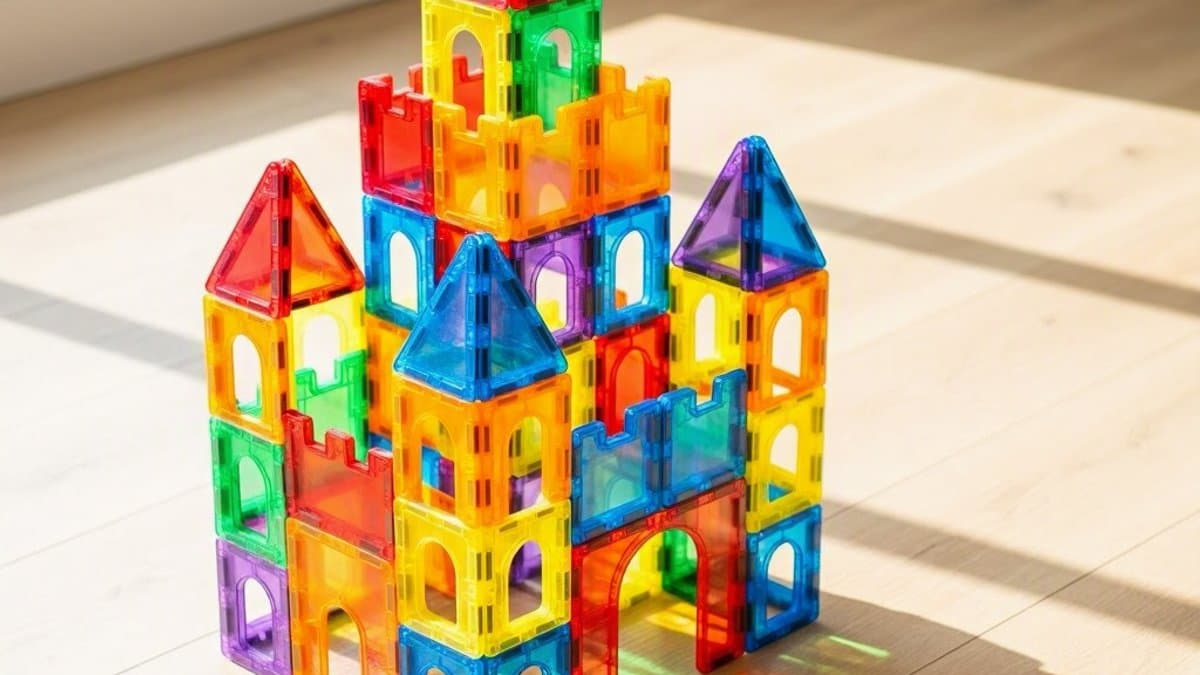
Magnetic tiles might be the single best toy of the last twenty years. They are truly open-ended — children use the same set at age 2 to build simple stacks and at age 10 to construct intricate geometric architectures. They develop spatial reasoning, engineering intuition, symmetry recognition, and color theory naturally through play. They have no batteries, no screens, no themes to outgrow. A good set will be pulled out daily for years.
But not all magnetic tiles are equal. The brand, magnet strength, plastic quality, and shape variety matter enormously. A weak set collapses constantly and frustrates children. A strong set supports complex builds that make children feel like engineers. We have bought, tested, and lived with every major brand — here is the honest comparison.
The Quick Answer
If you can afford it: Connetix or Magna-Tiles. These are the premium options with the strongest magnets, best durability, and most vibrant colors.
For best value: PicassoTiles has closed the gap significantly and offers 80 percent of the premium experience at roughly half the price.
Avoid: Very cheap no-name brands from discount retailers. The magnets are too weak for meaningful building, the plastic cracks easily, and the magnets can detach from the frames.
Magna-Tiles — The Original
Magna-Tiles are the original magnetic tiles, invented in 1997 and still made in the USA. They are what most people picture when they hear "magnetic tiles." The pastel translucent colors are iconic, the magnets are strong, and the plastic is exceptionally durable — we have sets that have survived 10+ years of use.
Strengths:
- Strongest magnets in the industry (along with Connetix)
- Made in USA with strict quality control
- Legendary durability — these are generational toys
- Available in stores nationwide, including Costco when on sale
- The classic pastel translucent colors photograph beautifully in light play
Weaknesses:
- Most expensive of the major brands
- The clear/pastel palette can feel muted — some children prefer brighter colors
- Fewer shape variety options than Connetix in the standard sets
Recommended set: The 100-piece Clear Colors set is the sweet spot — enough tiles for serious building, a mix of squares and triangles, and the classic aesthetic.
Price: $100-130 for 100 pieces
Connetix — The Premium Challenger
Connetix is the Australian brand that has become the darling of modern Montessori and Waldorf homes. The tiles have rivet-reinforced corners, beveled edges for easier separation, and a broader range of shapes and sizes than any competitor. The translucent rainbow colors are absolutely stunning.
Strengths:
- Magnets equal to or stronger than Magna-Tiles
- Rivet-reinforced corners prevent the magnet-popping-out issue that plagues older magnetic tile sets
- Exceptional shape variety — windows, doors, arches, clear base plates
- The most vivid, saturated translucent colors available
- Beveled edges make disassembly easier (a real usability improvement)
Weaknesses:
- Most expensive brand per piece, often significantly more than Magna-Tiles
- Availability fluctuates — sometimes hard to find in stock
- Shipping from Australia can delay delivery depending on retailer
Recommended set: The Connetix 100-piece Rainbow Pack or the Connetix 62-piece Ball Run Pack if you want to add ball-run elements.
Price: $130-170 for 100 pieces
PicassoTiles — The Budget Champion
PicassoTiles has dramatically improved over the past several years and now offers magnetic tiles that rival the premium brands in all but magnet strength. The shapes are similar, the colors are more saturated than Magna-Tiles, and the price is often less than half.
Strengths:
- Best price-to-quality ratio on the market
- Bright, saturated colors that children often prefer
- Huge variety of accessory sets — cars, letters, numbers, ball runs
- Widely available with frequent sales
- Good enough quality for most families
Weaknesses:
- Magnets are noticeably weaker than Magna-Tiles or Connetix — large builds can collapse
- Plastic quality is slightly less durable (though still good)
- Some reports of magnets loosening over years of heavy use
- The brighter color palette may not fit Montessori-aesthetic homes
Recommended set: The PicassoTiles 100-piece Classic Set or the PicassoTiles 200-piece Magnet Building Blocks for maximum value.
Price: $50-80 for 100 pieces, $90-130 for 200 pieces
Tytan Magnetic Tiles — Another Budget Option
Tytan is another budget-friendly option similar to PicassoTiles in quality and price. The colors are vivid, the shapes are standard, and the magnet strength is comparable to PicassoTiles (weaker than Magna-Tiles and Connetix but adequate for most building).
Best for: Families who want a budget option and prefer Tytan's color palette or shape selection.
Price: $45-70 for 100 pieces
Shape Variety — What to Prioritize
Most starter sets include squares and triangles, which are sufficient for basic building. Adding specialty shapes dramatically expands what children can build:
Must-Have Shapes
- Squares (the backbone of any build)
- Equilateral triangles (for pyramids, angles, reinforcement)
- Rectangles (for bridges, longer walls)
High-Value Additions
- Clear base plates — transformative for large builds, they anchor structures and allow stability on any surface
- Window and door pieces — make houses feel real
- Arches and curves — enable organic shapes and bridges
- Longer rectangles — for spans and beams
Fun But Not Essential
- Cars with magnetic wheels — fun but children often prefer using the cars separately from building
- Letters and numbers — can serve a learning purpose but distract from architectural creativity
- Ball runs — an entirely different toy experience that uses magnetic tiles as structure
How Many Tiles Do You Actually Need?
Starter level (32-62 pieces): Adequate for toddlers doing basic stacking and simple flat designs. You will quickly want more as building skills develop.
Core level (100-120 pieces): The sweet spot for most families with one or two children. Enables genuine building — houses, bridges, towers, complex geometric patterns.
Serious level (200+ pieces): Necessary for multiple children building simultaneously, for large-scale architectural projects, or for families whose children are magnetic tile obsessed. Once you pass 200 pieces, you can build almost anything.
The accumulation pattern: Most families start with a 100-piece set, then add a 60-100 piece expansion 6-12 months later, then specialty shapes (windows, arches, base plates) over the next year. Ending up around 200-250 pieces total is common and entirely justified by how much they get used.
Care and Longevity
Magnetic tiles are nearly indestructible with reasonable care:
- Clean with a damp cloth. Do not submerge — water can get inside the plastic and damage the magnets over time.
- Check for cracks regularly. A cracked tile exposing a magnet should be removed immediately (small magnets are a choking and intestinal hazard).
- Store in a box or bin. A dedicated storage solution extends life dramatically and makes cleanup faster (which means kids actually clean up).
- Keep away from electronics. Magnets and credit cards or hard drives do not mix.
A quality set of magnetic tiles is one of the best long-term toy investments you can make. A $130 set of Magna-Tiles purchased when a child is 3 will still be in heavy rotation when they are 10. Few toys offer that kind of staying power.
Pairing with Other Toys
Magnetic tiles are at their best combined with:
- Wooden blocks — wooden unit blocks and magnetic tiles complement each other beautifully
- Small figures or animals — Schleich or Safari Ltd figures inhabit magnetic tile cities and castles
- Cars and vehicles — for garage, highway, and ramp building
- Fabric scraps — children drape "fabric" over structures to make roofs, tents, and hiding places
For more open-ended play ideas and how to set up an environment that encourages this kind of deep play, see our loose parts play guide.
The best toys are the ones that adapt to the child rather than the other way around. Magnetic tiles do exactly this — a 3-year-old building a wobbly tower and a 10-year-old constructing a geodesic dome are using the same pieces, each engaging at their own level. That is what every toy should aspire to, and why magnetic tiles belong in every child's play collection.
Frequently Asked Questions
- What age are magnetic tiles appropriate for?
- Magnetic tiles are recommended for ages 3 and up due to small magnet safety concerns. However, under supervision, many families introduce them to children as young as 18 months with careful attention to any damaged tiles (which should be immediately removed). From ages 3 through 10+, magnetic tiles are one of the most versatile and engaging toys available, growing with children from simple stacking through complex architectural builds.
- How many magnetic tiles do I need?
- A starter set of 32-60 tiles is enough for basic building. For serious building, 100+ tiles is the sweet spot, and families with multiple children often end up with 200-300 tiles over time. Start with a 100-piece set if budget allows — you will not regret having more, but you will regret having too few. Mixed shapes (squares, triangles, rectangles) are more useful than all squares.
- Are expensive magnetic tiles worth it?
- Generally yes, though the gap has closed. Premium brands like Magna-Tiles and Connetix have significantly stronger magnets, more durable plastic, better beveled edges, and noticeably crisper colors. Budget brands like PicassoTiles have improved dramatically and now offer good quality at about 40-50 percent of the premium price. The real difference shows up in large builds — weak magnets can cause structural collapse that frustrates children and limits creativity.
- Do all magnetic tile brands work together?
- Mostly yes. Magnetic tiles from different brands are generally compatible in size and magnet polarity, so you can mix them freely. However, the magnet strength varies significantly between brands, so mixing a strong brand like Connetix with a weaker brand can lead to uneven building. Most families find that sticking to one primary brand and supplementing with a budget brand for basic tiles works well.
Enjoying this article?
Get more ideas like this delivered to your inbox every week.