Best Science Experiment Kits for Kids (Honest Reviews 2026)
The best science experiment kits for kids by age — chemistry sets, crystal growing, dissection, electricity, and more. What actually teaches science and what's just gimmicks.
By The Slow Childhood
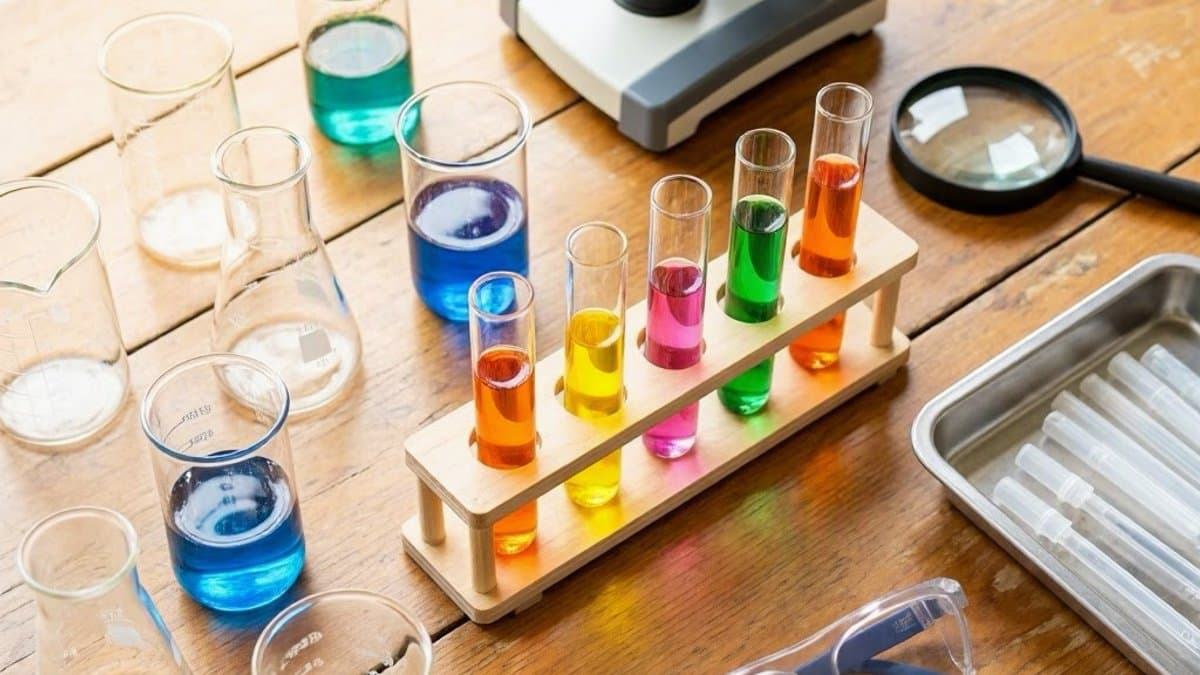
A good science kit can spark a lifelong love of investigation, curiosity, and evidence-based thinking. A bad one produces fifteen minutes of fizzing entertainment followed by a trash can full of disappointing components. The marketing around children's science kits is often misleading — boxes promising "100+ experiments!" that deliver novelty chemistry tricks, or "real lab" kits with plastic beakers that cannot actually hold anything.
This guide covers the science kits we have tested, used in our homeschool, and seen work beautifully in real families. We are honest about what is genuinely educational and what is just entertainment with a science costume.
What Makes a Good Science Kit
Before specific recommendations, understand what separates a genuinely educational kit from a disappointing one:
Real equipment. Quality kits include actual lab equipment that can be used for further experimentation — real beakers, real test tubes, real microscopes. Plastic "pretend" science equipment that breaks after one use is not science — it is theater.
Clear scientific content. The best kits include substantive explanations of what's happening and why. Children learn real concepts, not just how to execute recipes.
Repeatability and variation. Good experiments can be repeated with variables changed. A one-time magic trick teaches little. An experiment that can be run 10 times with different conditions teaches hypothesis testing, observation, and the scientific method.
Connection to larger concepts. Quality kits place individual experiments in the context of broader scientific understanding — biology, chemistry, physics, ecology.
Age-appropriate challenge. The best kits stretch children without overwhelming them or requiring heavy adult intervention for basic operation.
Best Science Kits by Age
Ages 3-5: Early Science Exploration
At this age, science is primarily about observation, curiosity, and hands-on exploration rather than formal experiments.
Learning Resources Primary Science Mix & Measure Set
The Primary Science Mix & Measure Set includes kid-sized beakers, droppers, safety goggles, and measuring cups. These are real tools scaled for young children's hands — the foundation of a home science setup.
Ages: 3+ Price: About $30 Why we love it: Children who have their own real measuring tools, beakers, and goggles feel like scientists. The tools grow with them — a four-year-old mixing colored water becomes a nine-year-old running actual experiments with the same equipment.
Nature Bound Bug Catcher Kit
A Nature Bound Bug Catcher with a container, magnifying glass, and tweezers turns outdoor time into biology fieldwork. Observation is the foundation of science, and studying real insects is a wonderful starting point.
Ages: 3+ Price: About $20 Best for: Introducing biological observation through direct experience.
Ages 6-9: Gateway Science Kits
This age is ready for more structured experiments with genuine scientific content, provided the kit is well-designed.
National Geographic Mega Crystal Growing Kit
The National Geographic Mega Crystal Growing Kit grows multiple types of crystals with quality components and clear explanations of the chemistry involved. Children learn about saturation, crystallization, and molecular structures through a genuinely impressive process.
Pros:
- Real chemistry with clear educational content
- Quality display specimens and tools
- Process takes days, teaching patience and observation
- Resulting crystals are genuinely beautiful and keepable
- Well-written educational materials
Cons:
- Requires setup and multiple days of observation
- Not an immediate-gratification kit
Ages: 8+ Price: About $30-40 Best for: Children ready for patience-based experiments with impressive results.
Thames & Kosmos Kids First Science Kits
Thames & Kosmos Kids First Chemistry Set and similar Thames & Kosmos kits are designed specifically for elementary-age children with real (but age-appropriate) chemistry and physics content. Thames & Kosmos is the German-quality leader in children's science kits.
Pros:
- Well-designed with real scientific content
- Clear instructions and explanations
- Durable components
- Progression from simple to complex experiments
- Multiple levels available as children grow
Cons:
- Kits are relatively small for the price
- Some experiments are brief
- Adult involvement needed for most experiments
Ages: 6+ Price: $25-50 Best for: Quality-focused families wanting legitimate chemistry introduction.
National Geographic Break Open Geodes Kit
The National Geographic Break Open Geodes provides real geodes, safety goggles, and a guide to identifying what's inside. The moment a child cracks open a geode to reveal sparkling crystals inside is genuinely magical.
Pros:
- Real geological specimens
- Memorable "wow" moment for children
- Teaches about mineral formation
- Specimens are keepable for a rock collection
- Good educational guide
Cons:
- One-time experience per geode
- Requires adult help for cracking
- Can be messy
Ages: 6+ Price: $30 for 10 geodes Best for: Children interested in rocks, minerals, and natural sciences.
Ages 10+: Serious Science Kits
Older children are ready for substantive kits that teach real scientific concepts and methodology.
MEL Chemistry Subscription
MEL Chemistry is a monthly subscription (covered in detail in our educational subscription boxes guide) that delivers real chemistry experiments with actual chemicals and quality lab equipment.
Pros:
- Monthly variety maintains engagement
- Real chemistry content, not dumbed-down
- Builds a genuine home lab over time
- App-based instruction with videos
- Safe but substantive experiments
Cons:
- Subscription cost ($40+/month)
- Requires adult supervision
- Equipment investment adds up
Ages: 10+ Best for: Children seriously interested in chemistry; families wanting ongoing science content.
Thames & Kosmos Chem C3000
The Thames & Kosmos Chem C3000 is the premier home chemistry set — a comprehensive kit with 333 experiments and quality lab equipment. This is the kit serious home-schooled high school students use for chemistry.
Pros:
- Genuinely comprehensive chemistry education
- Real lab equipment that supports further experimentation
- 333 experiments covering broad chemistry topics
- Written at a level that teaches genuine chemistry concepts
- Used by high school chemistry programs
Cons:
- Expensive ($200+)
- Requires significant adult supervision and time
- Some experiments use chemicals that require careful handling
Ages: 12+ (with supervision) or high school Best for: Families using this for actual high school chemistry instruction.
Home Science Tools Microscopy Kits
Home Science Tools offers quality microscopes with prepared slides and dissection materials. A real microscope opens biology in a way no video can — children seeing actual cells, microorganisms, and specimens develop genuine understanding.
Pros:
- Real scientific instruments
- Opens an entirely new world of observation
- Supports biology curriculum at any level
- Quality microscopes work for years
Cons:
- Quality microscopes are expensive ($100-300+)
- Setup and slide preparation require some learning
Ages: 8+ (with supervision), excellent for 10+ Best for: Serious biology study or homeschool science curriculum.
SNAP Circuits Pro SC-500
SNAP Circuits Pro teaches electronics through snap-together components. Children build actual working circuits — radios, alarms, motors, lights — learning how electronics work through hands-on construction.
Pros:
- Teaches real electronics concepts
- Over 500 projects in the Pro version
- Durable and reusable indefinitely
- Components snap together safely
- Covers introductory to advanced concepts
Cons:
- Smaller sets have fewer projects
- Some find the instruction book dense
- Sequence matters — works best starting from simple projects
Ages: 8+ Price: $100-150 Best for: Children interested in engineering, electronics, or tinkering.
Dissection Kits
Real dissection is one of the most powerful biology experiences available. These kits provide the specimens and tools for genuine anatomy study.
Home Science Tools Frog Dissection Kit
The Home Science Tools Frog Dissection Kit provides a preserved specimen, real dissection tools, and a clear guide. Middle and high school students who dissect at home gain experiences otherwise reserved for classroom labs.
Pros:
- Real biology experience
- Reasonable cost ($30-50)
- Teaches anatomical structure genuinely
- Builds comfort with biology as a physical science
Cons:
- Not for squeamish children
- Requires adult willingness to participate or supervise
- Strong chemical smell (preservative)
Ages: 10+ Best for: Serious biology students, particularly middle and high school.
Owl Pellet Dissection Kit
An Owl Pellet Dissection Kit offers a less intense introduction to dissection — children pull apart an owl's regurgitated pellet to find tiny rodent skeletons. Fascinating, educational, and less intimidating than traditional dissection.
Ages: 7+ Best for: Introduction to dissection concepts.
Physics and Engineering Kits
K'Nex Education Introduction to Simple Machines
K'Nex Education Simple Machines teaches levers, pulleys, wheels and axles, wedges, and inclined planes through hands-on construction. Children build working machines that demonstrate real physics principles.
Ages: 7+ Best for: Physics introduction through building.
LEGO Technic (Beyond Play)
LEGO Technic sets (covered in our LEGO sets by age guide) include serious mechanical engineering — gears, pistons, suspension, pneumatics. Often more educational than dedicated "physics kits."
Ages: 9+ Best for: Mechanical engineering through play.
What to Skip
"1000 experiments!" kits. These typically include 10 actual experiments repeated with minor variations. Count the real, distinct experiments — it is usually 15-30, not 1000.
Cheap chemistry kits with fake chemicals. Some inexpensive chemistry kits use food coloring and baking soda variations to simulate chemistry. These are just entertainment. Real chemistry is worth more than pretend chemistry.
Single-purpose novelty kits. "Grow your own butterfly," "Erupt your own volcano" — these one-shot kits offer a single experience at relatively high price points. Reserve them for gift-giving when you know the child will use them immediately.
Kits marketed with social media hype. Brightly colored, Instagram-ready kits often prioritize aesthetics over substance. Check reviews focused on educational content, not just photos.
Building a Home Science Lab
Beyond individual kits, every science-interested family benefits from a permanent home science setup:
- Quality microscope — a real compound microscope opens endless biological investigation
- Magnifying glasses in various sizes
- Safety goggles for each child (essential, inexpensive)
- Measuring equipment — graduated cylinders, beakers, droppers
- Scale — a small digital scale for measuring dry ingredients
- Thermometers — kitchen and outdoor
- pH strips — for testing acidity of various liquids
- Magnets — various sizes and strengths
- Flashlights — for optics experiments
- A notebook dedicated to observations and hypotheses
Add individual kits to a home setup like this, and each kit's value multiplies because children can extend experiments beyond the kit's instructions.
For more on science learning, see our guides to best science curriculum for elementary, best nature study curriculum, and kitchen science experiments.
The best science kit is the one that launches a child into investigation beyond what the box contains. A child who builds one SNAP Circuits project and is bored is not served by a better kit — they need a different passion. A child who finishes their Thames & Kosmos chemistry kit and immediately asks "can we try it with this instead?" has learned what science is actually about. Choose kits that open doors rather than close them, and science learning becomes something children pursue on their own.
Frequently Asked Questions
- Are science kits actually educational?
- The best ones are genuinely educational, teaching real scientific concepts and methodology. The worst are entertainment dressed up as science — quick experiments that wow but don't teach anything transferable. Good signs: clear explanations of what's happening and why, experiments that can be modified or repeated with variations, real equipment that could be used for further experimentation, and instructions that introduce the scientific method. Red flags: single-use novelty experiments, no explanation of underlying science, and plastic 'lab' equipment that breaks after one use.
- What age is appropriate for chemistry kits?
- Basic chemistry concepts can be introduced as young as age 4-5 with very simple experiments (vinegar and baking soda reactions, color mixing, observing states of matter). More substantive chemistry kits with actual chemicals and real lab equipment are best for ages 10+, with close adult supervision. Most 'chemistry kits' marketed for ages 6-9 are actually color-changing and fizzing experiments that are more entertaining than educational — fun, but not genuine chemistry.
- Do science kits require adult supervision?
- Yes, especially for experiments involving chemicals, fire, heat, sharp tools, or dissection. The best science experiences are shared experiences — an engaged adult who asks questions, encourages hypotheses, and helps troubleshoot turns a good kit into a great learning experience. Even 'kid-safe' kits benefit from adult participation. The idea that children can independently do serious science with kits is generally marketing, not reality.
- What should be in a home science kit?
- Beyond specific experiment kits, every home with curious kids should have: a basic magnifying glass, a microscope (even a simple USB model), a collection of safety goggles, measuring tools (graduated cylinders or measuring cups dedicated to science), pH strips, a small scale, assorted beakers or jars, a magnet set, a thermometer, and a notebook for recording observations. This permanent home lab supports any specific kit you add plus independent exploration.
Enjoying this article?
Get more ideas like this delivered to your inbox every week.