Graduation Season: Celebrating Learning Milestones at Home
How to celebrate learning milestones at home — from finishing a grade to completing a curriculum — with meaningful rituals, simple ceremonies, and keepsakes that honor your child's growth without the pressure of a big production.
By The Slow Childhood

Every May, social media fills with caps and gowns, stadium ceremonies, and tearful speeches. And every May, a quiet question surfaces in homeschool families: do we do something too? When there is no school auditorium, no principal handing out diplomas, and no class of two hundred to graduate alongside, it can feel like our children's milestones might slip by unmarked.
They should not. The end of a learning chapter — whether it is finishing kindergarten, completing a beloved curriculum, or graduating from high school — deserves to be noticed and honored. Not because children need a trophy for everything, but because marking milestones helps kids see their own growth, builds genuine confidence, and weaves a sense of progress into the long, sometimes invisible work of learning at home.
The good news is that you get to design these celebrations on your own terms. No script, no pressure, no comparison to anyone else's ceremony. This guide walks you through why milestones matter, which ones are worth marking, and how to create celebrations that feel meaningful rather than performative — from a five-minute living-room ceremony to a backyard graduation party.
Why Marking Milestones Actually Matters
There is a tendency in thoughtful, slow-living homeschool circles to be a little suspicious of celebration. We worry about raising children who expect a parade for ordinary effort, or about turning learning into a performance for applause. Those are reasonable concerns. But the research on motivation points to something more nuanced.
Psychologist Carol Dweck's work on growth mindset shows that children are most encouraged not when we praise their intelligence ("you're so smart") but when we acknowledge their effort, strategies, and progress ("you stuck with that hard math chapter all year"). A well-designed milestone celebration does exactly this. It names the journey, not just the result. It says, in effect, look how far you have come — which is one of the most powerful messages a learning child can receive.
Milestones also do something practical for the homeschool parent: they create natural punctuation in a calendar that otherwise blurs together. When you teach the same child year after year in the same house, the years can run on like one long sentence. A clear ending — and a clear beginning — gives everyone a sense of accomplishment and a fresh start. This is part of why we recommend building intentional rhythms into your year, the same way we do with a thoughtful daily schedule plan that gives the day shape and predictability.

Which Milestones Are Worth Celebrating
You do not need to throw a party every May, and you certainly do not need to manufacture significance where there is none. The trick is matching the size of the celebration to the genuine weight of the milestone.
The big ones — the milestones that warrant a fuller celebration with extended family, a real ceremony, and keepsakes — are typically:
- Kindergarten completion, especially for a first child. It marks the real beginning of the school journey, and young children feel enormously proud to have "finished" something.
- High school graduation, the most significant of all. This deserves a true ceremony, a diploma, and all the celebration your family can muster.
- Completing a major curriculum, like finishing a multi-year math program or reading every book in a literature sequence. These multi-year accomplishments are easy to overlook precisely because they take so long.
The medium ones — worth a certificate and a special dinner, but not a guest list — include finishing a grade level, mastering a hard skill (reading fluently, learning multiplication facts, swimming the length of the pool), or completing a self-directed unit study the child poured weeks into.
The small ones — worth a high-five, a sticker, a note on the fridge — are the daily and weekly wins. Finished the spelling list. Read a chapter book independently for the first time. These do not need ceremony; they need a parent who notices out loud.
A useful rule of thumb: if you celebrate everything with equal fanfare, nothing feels special. Reserve the big gestures for the big moments, and let the small wins be acknowledged simply and warmly.
Designing a Simple Home Ceremony
A homeschool graduation ceremony can be as short as five minutes or as elaborate as a backyard event with relatives. Either way, a few core elements give it shape and meaning.
Start with a gathering. Bring the family together in one spot — the living room, the dining table, the backyard. Even a small audience of two parents and a sibling turns an ordinary afternoon into an occasion. If grandparents or close friends can join, all the better, but it is not required.
Name specific accomplishments out loud. This is the heart of the ceremony and the part children remember. Skip the generic "we're so proud of you." Instead, say the real things: "This year you learned to read whole chapter books on your own. You finished your entire math book, including the long-division chapter that made you cry in March and that you conquered by April. You raised three caterpillars into butterflies and kept a nature journal every week." Specificity is what makes a child feel truly seen.
Present something tangible. A diploma or certificate gives the moment a physical anchor. You can print one on heavyweight diploma paper and fill it in by hand, or design a simple certificate template set on the computer. For younger children, a set of ribbon award medals draped over the shoulders is pure delight and costs almost nothing.
Add a ritual touch. Many families like a small repeatable element: ringing a bell, lighting a candle, or having the child sign their own name on a year-end document. For high schoolers, a real cap and tassel and a homemade gown turn the moment into something they will photograph and keep.
Decorating Without Going Overboard
The slow-childhood approach to decoration is "warm, not Pinterest-perfect." You want the space to feel special without spending a weekend and a paycheck on it.
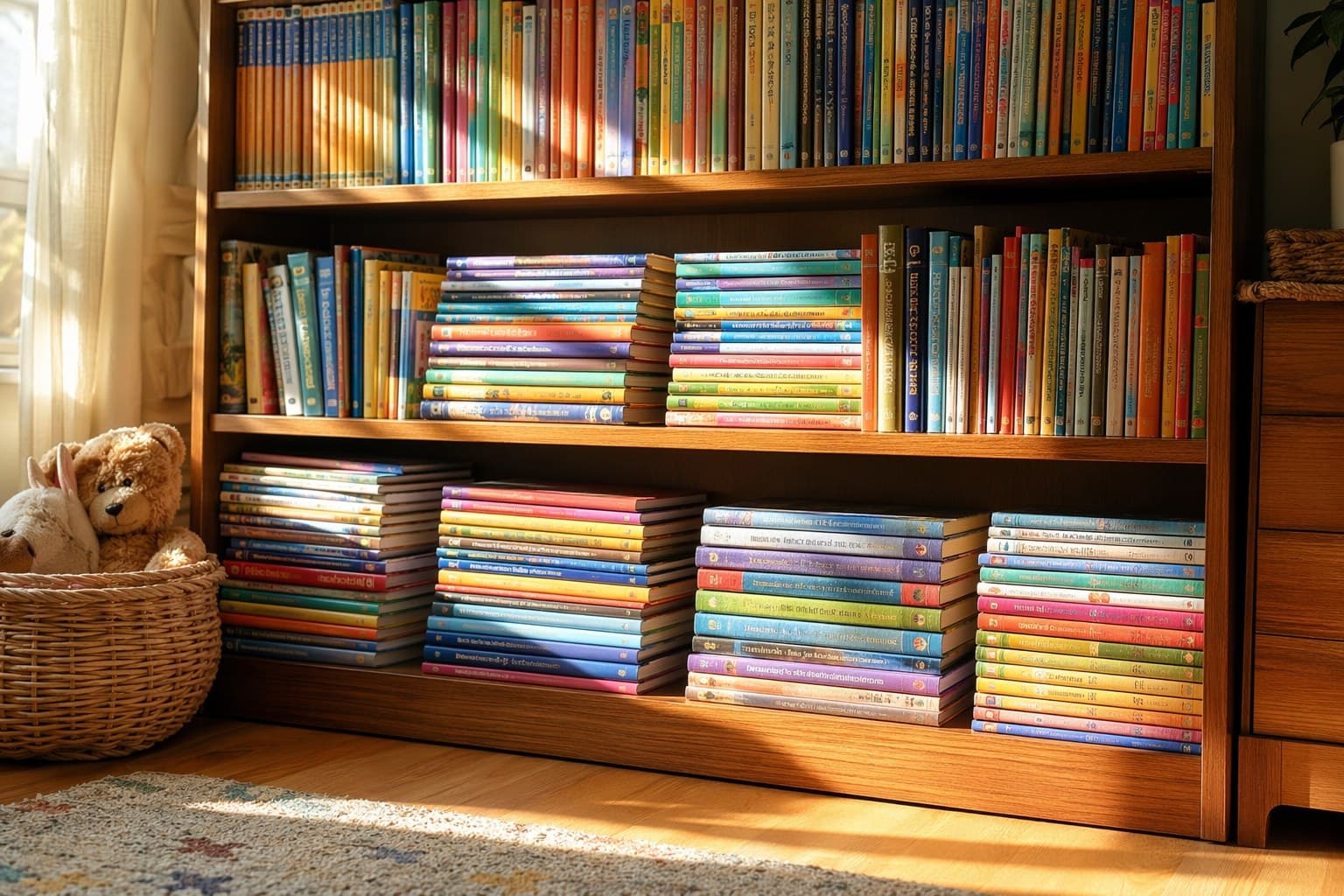
A few inexpensive touches go a long way. String up a photo banner with string lights and clip up pictures from across the year — the field trip, the science fair project, the messy art day. Children love seeing their year displayed, and it doubles as a conversation starter. Set out a small table displaying the year's work: a stack of finished workbooks, a few favorite art pieces, the chapter books they conquered, the nature journal. This "evidence table" makes the abstract idea of a year of learning suddenly concrete.
If you do this kind of organizing as you go, the year-end display practically assembles itself. The same habits that make a tidy, functional budget homeschool room setup easy to maintain — labeled bins, a designated spot for finished work — pay off when it is time to pull a celebration together in an afternoon.

Keepsakes and Memory-Making
The celebration lasts an evening; the keepsakes last for decades. This is where a little intention now creates something your family will treasure later.
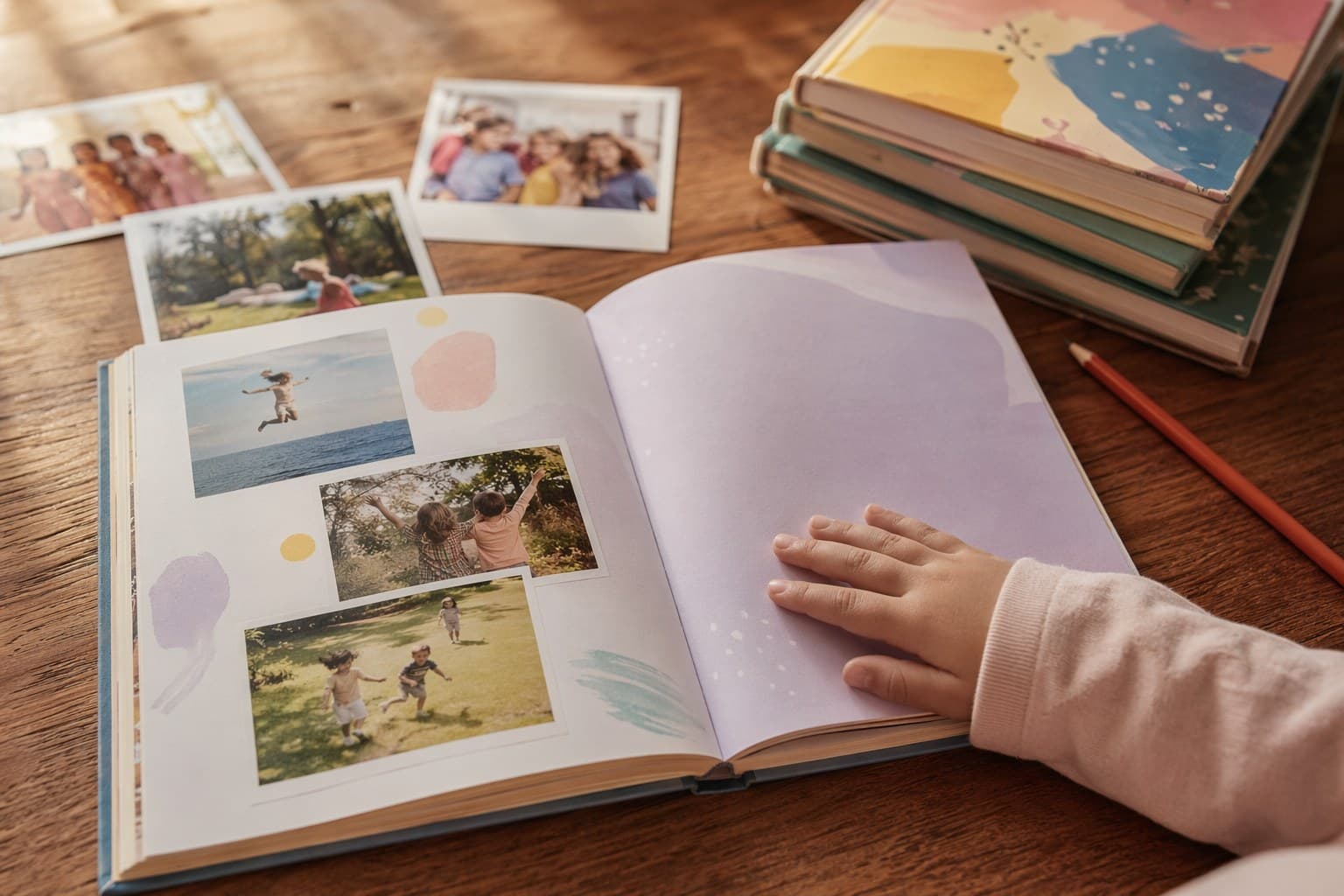
The year-end memory book. Each spring, compile a simple book of the year — a year-end memory book kit or even a plain blank journal works. Include a current photo, a hand-traced outline of your child's hand (watching that grow year to year is astonishing), a list of books read, a favorite project, and a short interview: What was your favorite thing you learned? What was hard? What do you want to learn next year? These interviews become priceless. The handwriting alone tells a story.
The growth comparison. Take the same photo every year — child holding a sign with the grade just completed, standing in the same doorway. Stacked side by side over the years, these become some of the most meaningful images you own.
The reflection page. Before the celebration, sit down together and have your child fill out a simple reflection. What are you proud of? What surprised you? This is not only a keepsake but a genuine learning exercise in metacognition — thinking about one's own thinking and growth.
If you keep a portfolio or records through the year, much of this material is already at your fingertips. Pulling celebration keepsakes from your existing files is far easier than starting from scratch, which is one more reason a steady planning and organization system pays dividends in May.
The Celebration Meal and Gathering
Food turns an event into a memory. You do not need a caterer — a favorite home-cooked meal chosen by the graduate works beautifully. Let your child pick the menu: that is part of the honor. For a high school graduation or a milestone with extended family, a simple potluck or dessert reception keeps the focus on connection rather than production.
A few gentle touches make the meal feel celebratory: a tablecloth you only use for special occasions, the "good" plates, a homemade cake with the grade or graduation year on top, and a toast. Going around the table and having each person share one thing they admire about the graduate is a ritual children remember long after the cake is gone — and it models for siblings the kind of specific, warm acknowledgment that builds a close family.
Celebrating Across the Ages
The right celebration shifts as children grow, and reading those shifts is part of the slow-parenting craft.
Preschool and kindergarten. Keep it joyful and concrete. Badges, stickers, a special dinner, a little certificate. At this age the celebration is mostly about feeling proud and grown-up. If you want guidance on what a gentle early-years education even looks like, our preschool curriculum guide frames the whole stage with the same light touch — celebration included.
Elementary. A certificate, a small ceremony, naming accomplishments out loud, and the year-end memory book. This is the sweet spot for building the annual tradition your family will carry for years.
Middle and high school. The ceremony grows up with the child. High school graduation in particular deserves a real event — a cap and gown, a guest list, a diploma, a speech if the graduate wants to give one. By this age, let your teen co-design the celebration; ownership matters more than ever.
Frequently Asked Questions
Does celebrating every milestone spoil children or make them entitled? Not when you match the celebration to the milestone and focus your words on effort and growth rather than empty praise. A child who hears "you worked hard and stuck with it" learns that accomplishment comes from persistence. The danger is not celebration itself but indiscriminate, identical fanfare for everything — which is easy to avoid by reserving the big gestures for genuinely big moments.
What if my child is shy and does not want a ceremony or attention? Honor that. Some children find being the center of attention stressful rather than delightful. For them, a quiet one-on-one moment — a walk, a special breakfast, a heartfelt note tucked into their memory book — celebrates just as meaningfully. The goal is for the child to feel their growth acknowledged, not to perform for an audience.
How do I handle graduation when we are mid-curriculum and there is no clean "end"? Many homeschool families learn year-round and do not have a tidy June finish line. In that case, choose your own marker. You might celebrate on a calendar date (the end of May), at the completion of a major book or program, or on a "homeschool anniversary." The milestone you celebrate is the one you decide to honor — that freedom is one of the quiet gifts of learning at home.
A Final Word
The cap-and-gown ceremonies you see each spring are beautiful, but they are not the only way — or even the best way — to honor a child's learning. The celebrations that children remember are rarely the biggest. They are the ones where someone who loves them looked them in the eye and named, specifically and truthfully, how far they had come.
You have something a stadium ceremony can never offer: you watched the whole journey. You saw the tears over long division and the morning your child read a whole page without sounding out a single word. So mark the milestones, large and small, in whatever way fits your family. Light the candle, fill in the certificate, take the photo in the doorway. Then sit down to your favorite meal and tell your child the truest thing you know — that you are proud of who they are becoming, and that the next chapter is going to be good.
Frequently Asked Questions
- How do you celebrate a homeschool graduation or grade promotion?
- You do not need a stadium or a procession. The most meaningful homeschool celebrations are small and personal: a homemade diploma or certificate, a short ceremony where you name specific things your child accomplished, a favorite meal, and a keepsake like a photo book or memory box. Match the size of the celebration to the size of the milestone — finishing first grade calls for something lighter than completing twelfth.
- What should I write on a homemade homeschool diploma or certificate?
- Keep it simple and specific. Include your child's full name, the milestone (for example, 'Completion of Fourth Grade' or 'Diploma of Graduation'), the school year, and a line that names something real they grew in — 'who learned to read fluently this year' or 'who finished her first full math curriculum.' A signature from a parent makes it official and personal.
- At what ages should we mark homeschool milestones?
- Any age, but keep the tone age-appropriate. Younger children love badges, stickers, and a special dinner. Elementary kids enjoy a certificate and a small ceremony. The two milestones most families mark with a fuller celebration are kindergarten completion and high school graduation, with lighter rituals for the years in between.
Enjoying this article?
Get more ideas like this delivered to your inbox every week.