Sensory Play Outdoors: Exploring Textures, Sounds, and Natural Materials
Take sensory exploration outside, where mud, water, bark, leaves, and stone offer infinite tactile learning. A practical guide to setting up outdoor sensory play that engages every sense and costs almost nothing.
By The Slow Childhood
The best sensory materials on earth are sitting in your backyard right now, and they are free. A handful of cool soil, a bucket of water, smooth river stones warmed by the sun, the rough bark of a fence post, a pile of fallen petals — these engage a child's senses more richly than anything you can buy in a kit. Outdoor sensory play takes the same developmental power that makes indoor sensory bins so valuable and removes the two biggest obstacles: the cost of materials and the dread of the mess. Outside, the mess belongs there. This guide covers how to set up outdoor sensory play across all five senses, which natural materials work best, how to adapt it by age, and how to keep it interesting through every season.
Why Take Sensory Play Outside
Sensory play is any activity that stimulates touch, sight, sound, smell, or taste, and the research on its value is well established. The National Association for the Education of Young Children notes that sensory exploration builds neural pathways, develops fine motor strength, supports language as children name what they feel, and lays the groundwork for early scientific thinking. A child squeezing wet mud is testing cause and effect; a child describing a stone as "cold and smooth" is building vocabulary.
Taking it outdoors multiplies the benefits. Natural materials are more varied than anything in a plastic bin — no two handfuls of dirt feel quite the same, and the offerings change with the weather and the seasons. There is far more space, which invites full-body movement alongside fine motor work. And critically for tired parents, the cleanup standard drops to almost nothing. Mud on grass washes away in the next rain. If you have ever hesitated to set up a sensory activity because of the aftermath, the yard solves that problem.
Outdoor sensory play also folds in two things no indoor setup can match: sunlight and fresh air. It pairs naturally with the unstructured outdoor time that builds confidence and curiosity, and it is one of the easiest ways to start nature-based learning across subjects without any formal curriculum at all.
Touch: The Richest Sense Outdoors
Touch is where outdoor play truly shines, because the natural world offers a spectrum of textures impossible to replicate indoors.
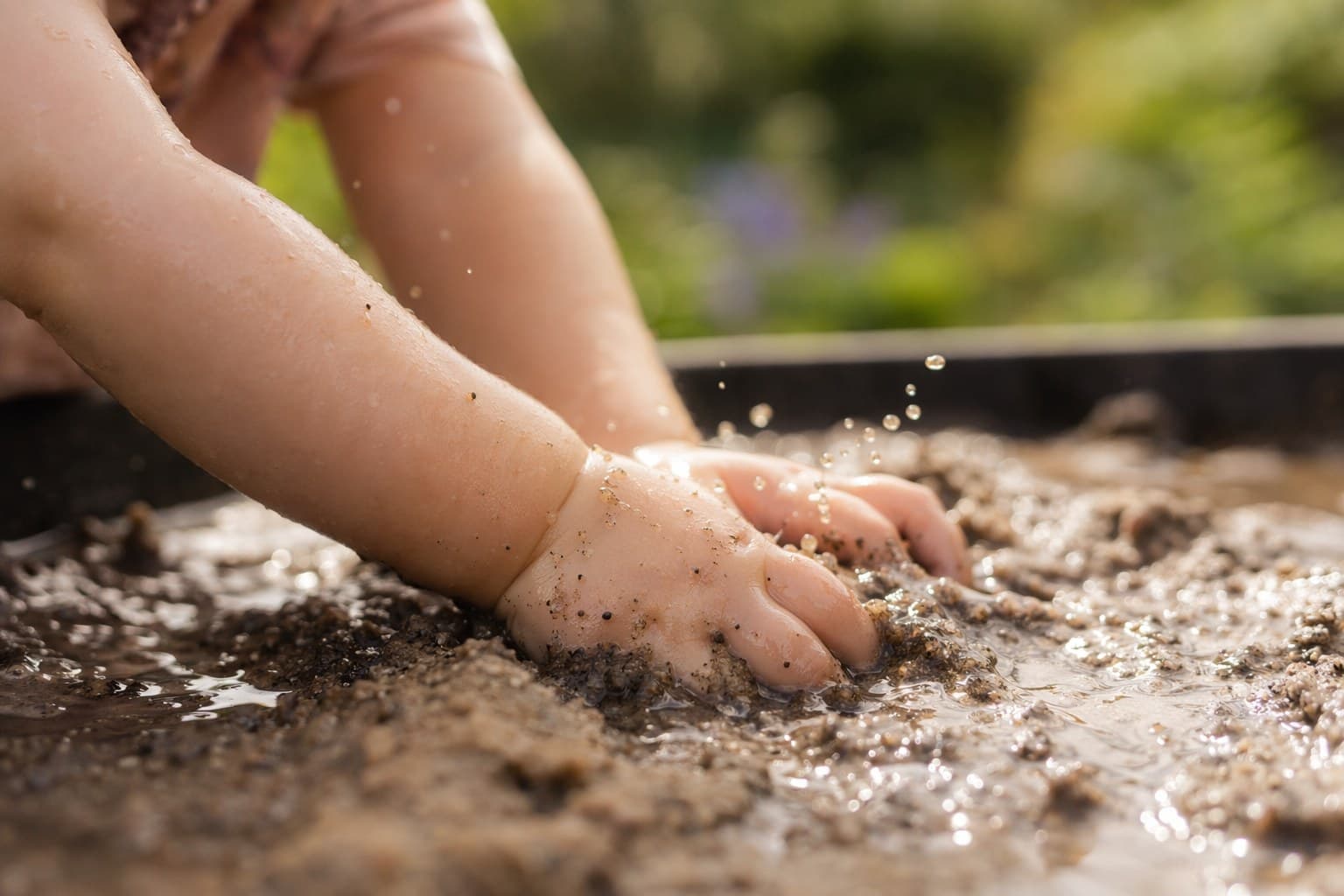
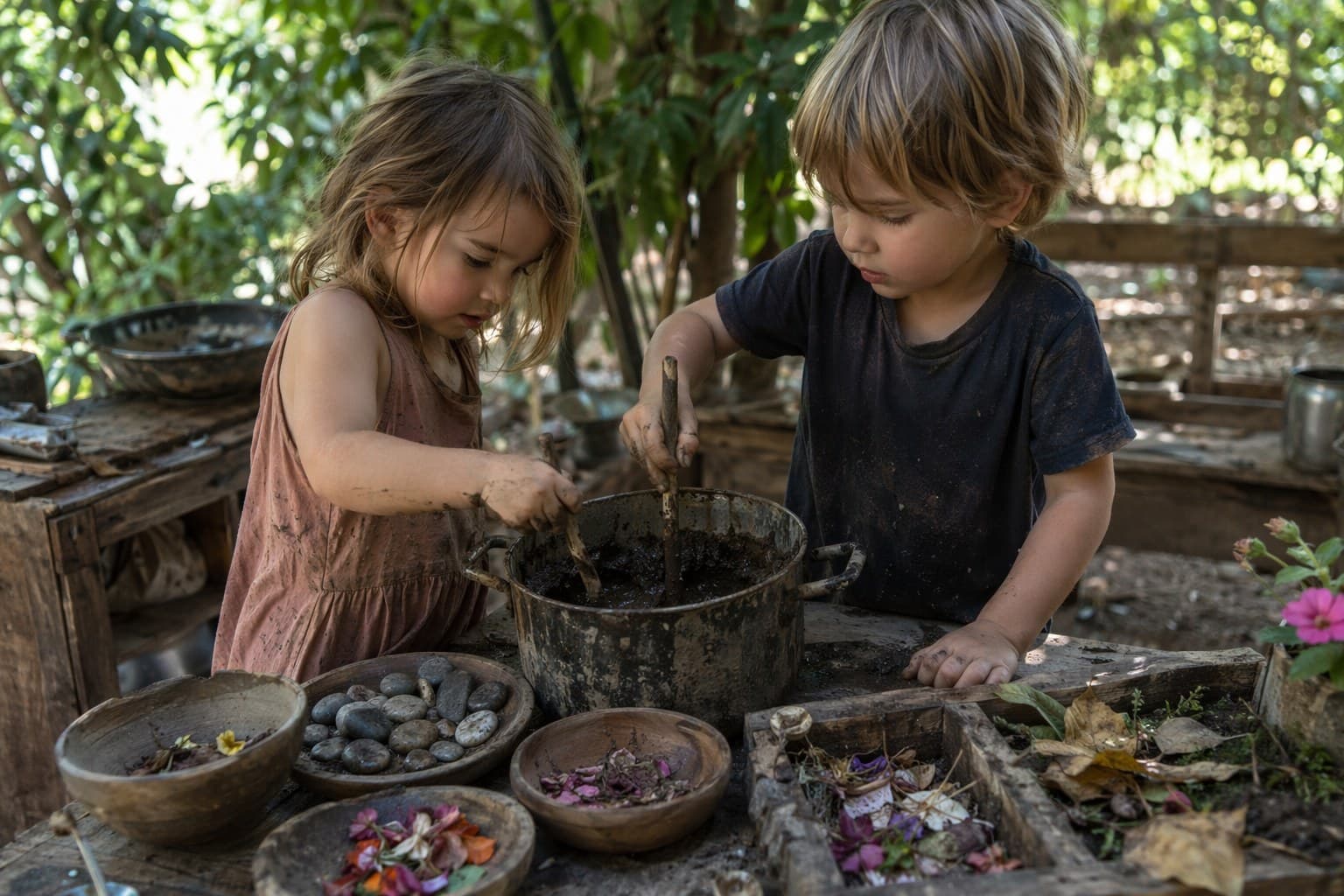
Soil and mud. Dig a small designated digging zone, or keep a bin of garden soil that children can wet to any consistency they like — crumbly, paste-thick, or soupy. The transformation of dry dirt into mud is endlessly fascinating, and it is the heart of any backyard mud kitchen setup. Add a few wooden-handled scoops and old pots and the play extends for an hour.
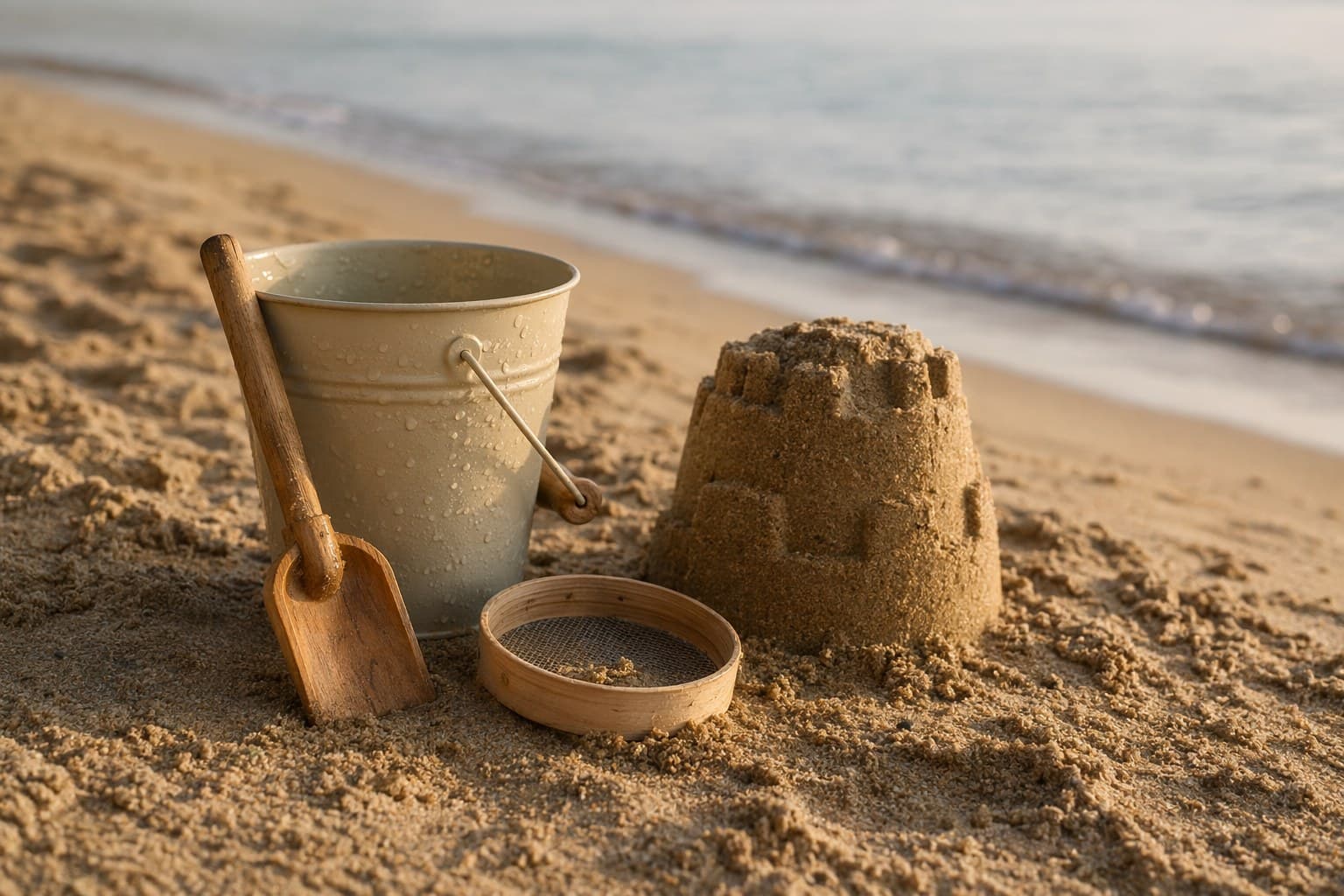
Sand and water together. A water table or simple bin of sand beside a bucket of water teaches children about absorption, flow, and consistency. They will pack wet sand into molds, watch dry sand pour like liquid, and discover the in-between. Keep an inexpensive set of sand scoops and a bucket-and-shovel set within reach.
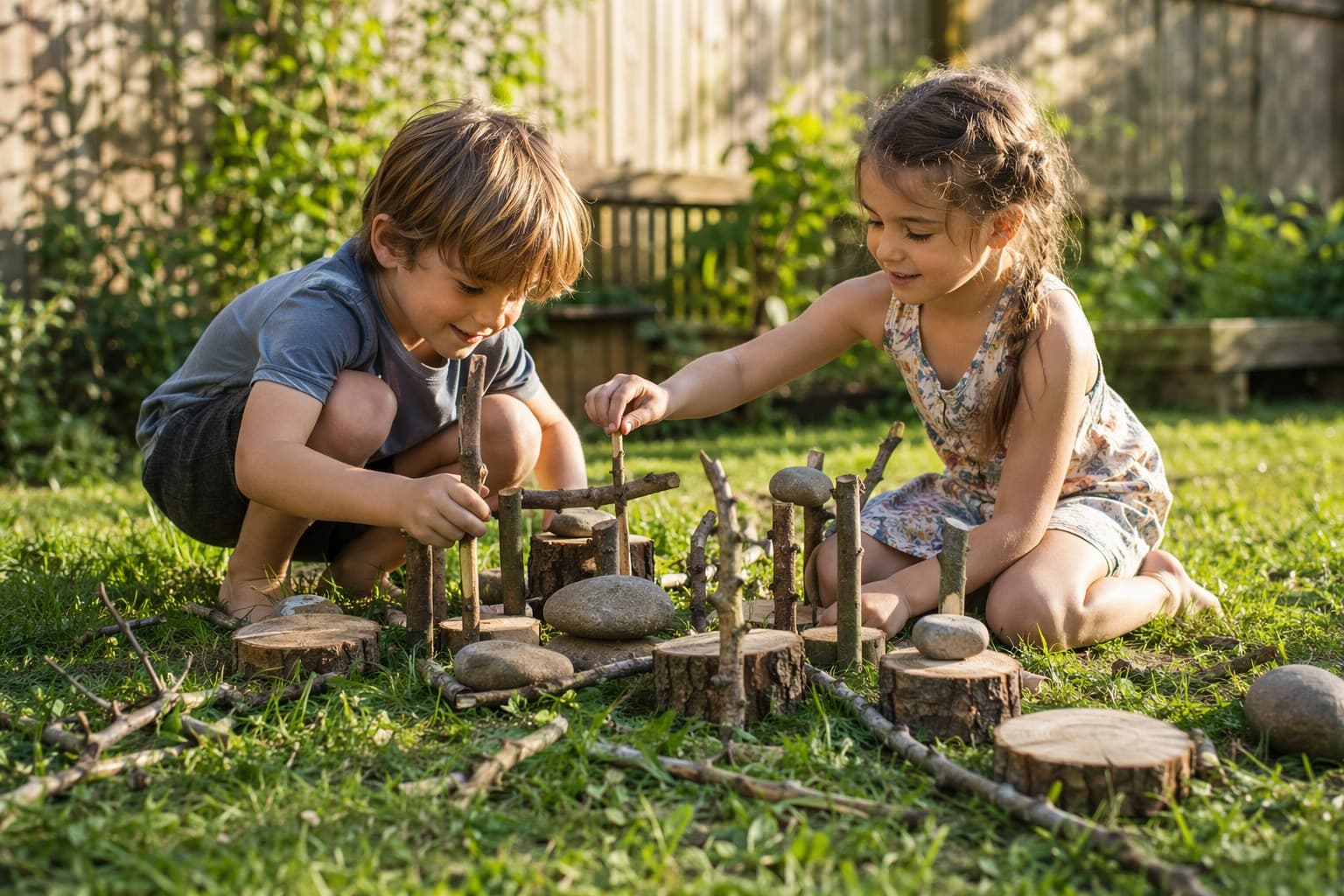
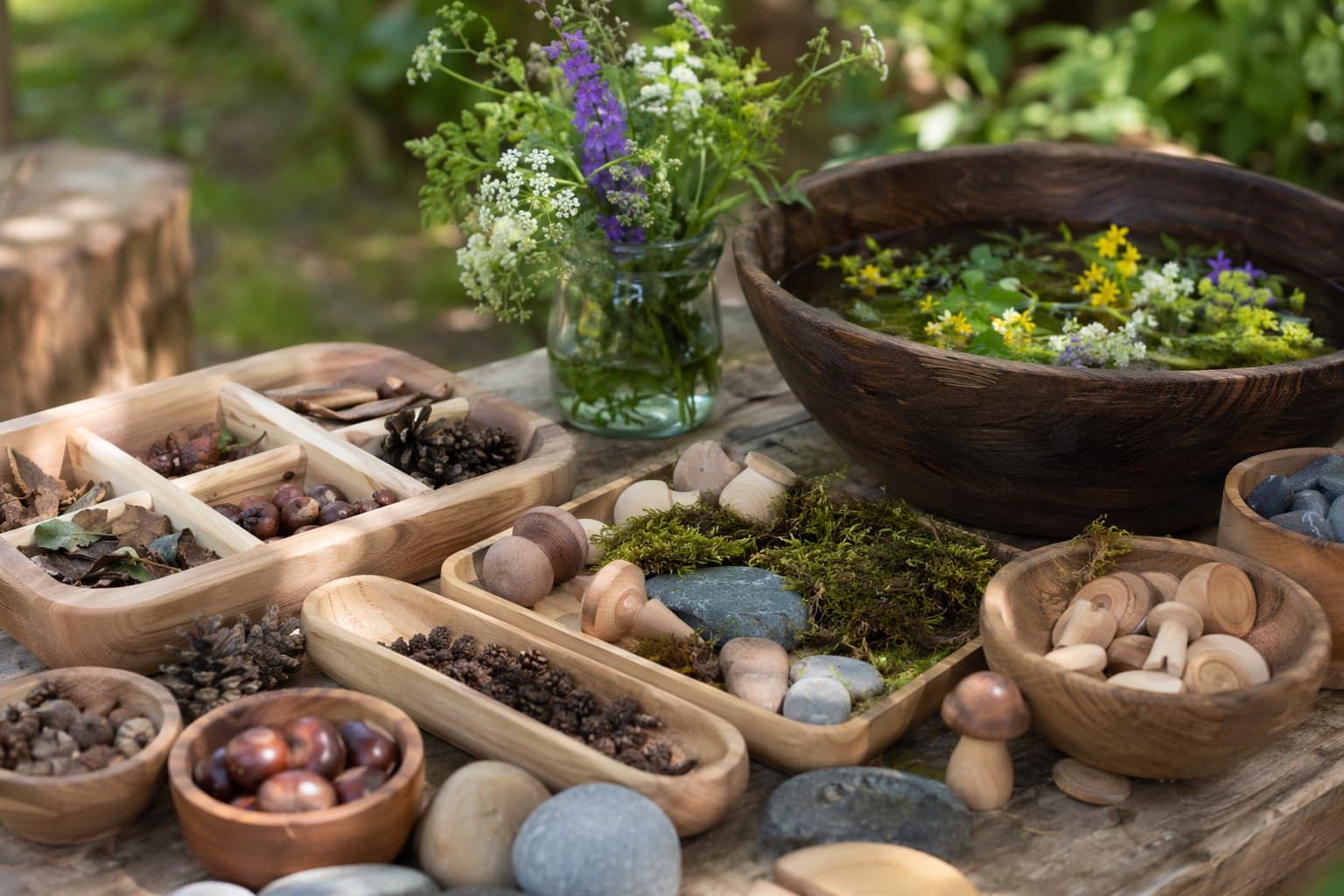
Natural texture collection. Send children to gather a basket of contrasting textures — smooth pebbles, rough bark, soft moss, prickly pinecones, velvety leaves. Sort them from roughest to smoothest. A woven nature collecting basket makes this feel purposeful and gives finds a home.
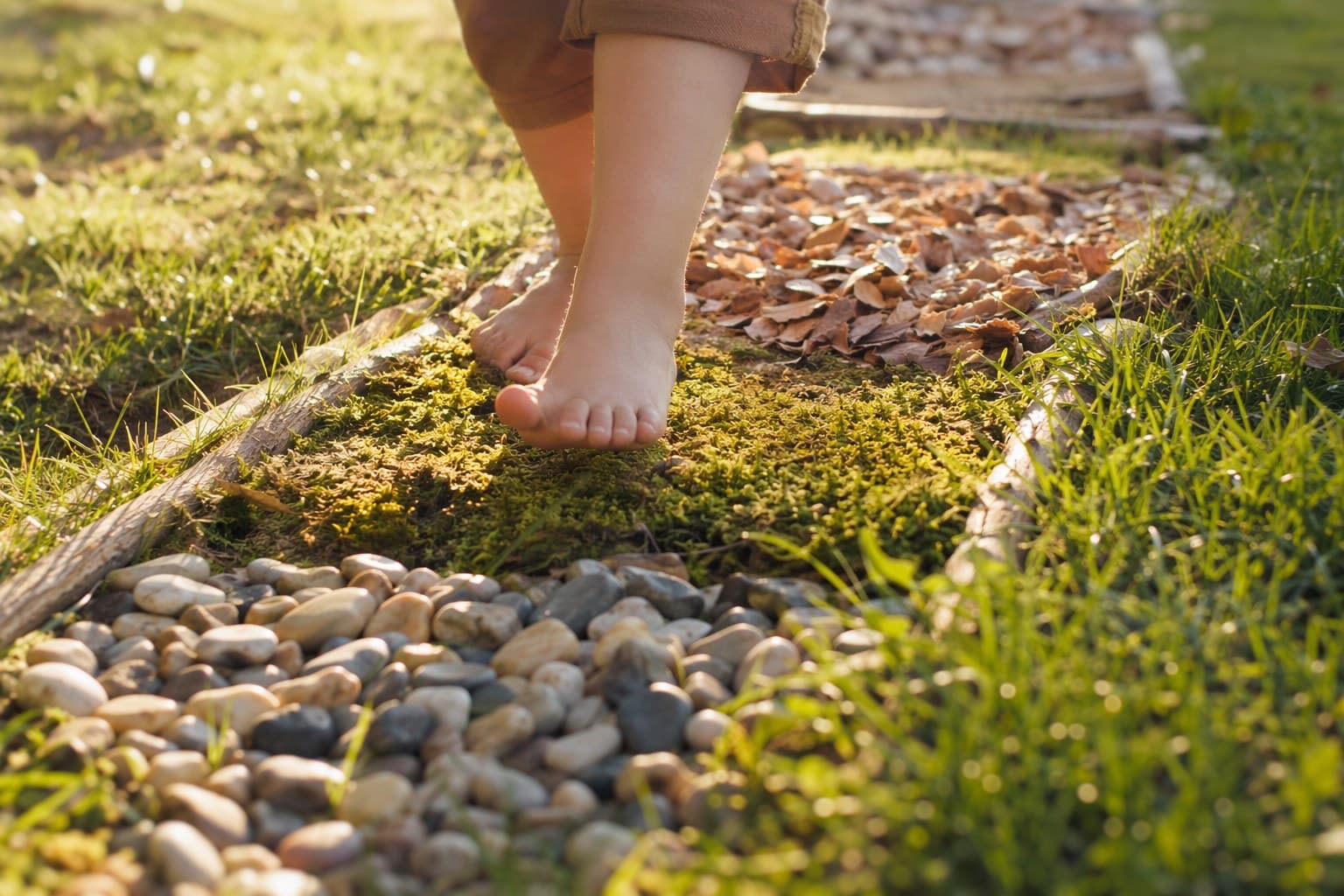
A barefoot sensory path. Lay out a line of shallow trays or simply mark zones across the lawn: cool grass, smooth river stones, dry leaves, warm sand, a tray of shallow water, soft mulch. Children walk the path barefoot. Feet have an extraordinary density of nerve endings, and this kind of input builds body awareness, balance, and sensory tolerance in children who are cautious about new textures.
Sound: Training the Outdoor Ear
Most children are so visually oriented that they rarely attend to the soundscape around them. Outdoor play is the perfect place to fix that.
Try a sound scavenger hunt: have children close their eyes for one minute and count how many distinct sounds they can identify — birdsong, wind in the leaves, a distant lawnmower, an insect, their own breathing. Then talk about each one. This focused listening is the same auditory discrimination skill that underlies phonemic awareness and early reading.
You can also make sound with natural materials. Tap two stones together. Crunch dry leaves underfoot. Drag a stick along a fence. Fill a clean jar with acorns or pebbles and shake it. For families who want to extend this into making instruments, our guide to outdoor nature activities offers more ideas for turning a yard into a soundscape.
Smell and Taste: The Underused Senses
Smell is strongly tied to memory and emotion, yet it is the sense we engage least in play. Outdoors, it is everywhere. Crush a handful of mint or lavender between small fingers and inhale. Compare the smell of damp soil after rain to dry dust. Press a nose into a blooming flower. Grind herbs and petals with a small mortar and pestle to make "nature perfume."
Taste requires more care, but it has a place. If you grow even a small patch of edible plants — cherry tomatoes, snap peas, strawberries, or herbs — children can taste straight from the garden. This is one of the great joys of gardening with kids: the broccoli a child grows is the broccoli a child eats. Just establish a firm rule early: we only taste what a grown-up says is safe.
Sight: Seeing the Garden Closely
Sensory play is not only about touch. Slowing down to truly see is its own rich experience. Hand a child a small magnifier and let them examine the veins in a leaf, the legs of a beetle, the structure of a dandelion gone to seed. Sort flower petals or stones by color into an egg carton. Build a temporary land-art mandala from petals, leaves, and pebbles arranged in rings. These quiet, focused activities tend to produce a calm, absorbed kind of attention that screens never deliver.
Setting Up Your Outdoor Sensory Space
You do not need a dedicated zone, but a loosely defined one helps the play happen without setup each time. A shaded corner with a bin of soil, a water source, a basket of tools, and a stash of collected natural materials is enough.
A few additions earn their keep:
- A sturdy outdoor sensory or water table keeps materials at a comfortable height and contains the worst of the splashing. A large outdoor sand and water table anchors the whole space.
- A set of stackable sensory bins lets you keep sand, soil, water, and dry leaves separate and easy to refresh. Look for a set of sturdy outdoor sensory bins with lids so materials stay put between sessions.
- Transfer tools — scoops, funnels, cups, a colander, tongs — turn raw materials into endless pouring and sorting play. A simple set of sensory scoops, cups, and funnels covers it.
- Texture exploration cards can prompt older preschoolers to hunt for "something bumpy" or "something soft." A printable or laminated texture matching card set adds a gentle game layer when interest flags.
Designate a set of play clothes you do not mind getting filthy, keep rain boots by the door, and have a towel and a hose within reach. With those three things handled, the mess stops being a reason to say no.
Adapting Outdoor Sensory Play by Age
Babies (6-18 months): Focus on safe, large textures with constant supervision. Cool grass under bare feet, smooth stones too big to swallow, shallow water in a baking pan, a basket of pinecones and large leaves to handle. Everything goes in the mouth at this age, so skip small parts entirely.
Toddlers (18 months-3 years): Pouring, dumping, stirring, and digging dominate. Wet sand, mud, and water with simple tools provide hours of repetition — and repetition is exactly how toddlers learn. This is the sweet spot for screen-free activities for toddlers, since outdoor sensory play holds their attention far better than any app.
Preschoolers (3-5 years): Sorting, building, and pretend play emerge. Mud kitchens, sensory paths, nature-soup-making, and color-sorting collections suit this age. Children begin narrating elaborate scenarios and creating "recipes" and "potions."
School-age (6+): Add investigation and documentation. Older children can run experiments — which soil-to-water ratio holds a shape best? — sketch their finds, and build complex small worlds. The sensory base of the play stays the same; the thinking on top of it grows more sophisticated.
Keeping It Fresh Through the Seasons
The single biggest advantage of outdoor sensory play is that nature restocks the shelves for you. Spring brings mud, new shoots, and an explosion of petals and blossoms to handle and smell. Summer is the season of sand and water play, when getting wet is a reward rather than a hassle. Fall delivers crunchy leaves, acorns, seed pods, and pinecones in abundance. Winter, in milder climates, offers frost, cold mud, and bare textures; in snowy climates, snow itself becomes the ultimate free sensory material.
Rotate your collected materials with the seasons, introduce a new tool every month or two, and let the weather set the agenda. Unlike a sensory bin that you build, photograph, and dismantle, the outdoor sensory space simply lives in your yard, ready whenever a child wanders out the door.
Frequently Asked Questions
You do not need a perfect setup, a Pinterest-worthy table, or a single store-bought kit to begin. You need a patch of dirt, a bucket of water, and the willingness to let your child get gloriously, productively messy. Open the back door, set down a few simple tools, and step back. Outside, the materials are endless and the senses do the rest.
Frequently Asked Questions
- What is outdoor sensory play and why is it better than indoor sensory bins?
- Outdoor sensory play is any activity that engages a child's senses using natural materials and outdoor space — mud, water, sand, bark, stone, grass, and wind. It is not necessarily better than indoor play, but it offers more variety, more space, and far less mess pressure. Outside, materials are free and self-replenishing, the textures shift with the seasons, and you do not have to worry about rice on the carpet. Outdoor play also adds sunlight, fresh air, and full-body movement to the sensory experience.
- At what age can children start outdoor sensory play?
- Supervised outdoor sensory play can begin as soon as a baby can sit and grasp — around six months. Babies explore safe natural textures like cool grass, smooth stones too large to swallow, and shallow water. Toddlers (1-3) dig, pour, and stir. Preschoolers (3-5) sort, build, and create elaborate small worlds. The same backyard space grows with your child for years.
- Is it safe for children to play with mud, sand, and natural materials?
- Yes, with reasonable precautions. Use soil free of animal waste, chemicals, and sharp objects, and wash hands after play. Avoid materials small enough to choke on for children who still mouth objects, and supervise all water play closely. Research on the hygiene hypothesis suggests that early exposure to soil and outdoor microbes actually supports immune development rather than harming it.
Enjoying this article?
Get more ideas like this delivered to your inbox every week.