Loose Parts Play Outdoors: Rocks, Sticks, and Open-Ended Creation
How to set up outdoor loose parts play with rocks, sticks, and natural materials — why it works, what to collect, simple boundaries to set, and ten open-ended invitations kids return to all summer.
By The Slow Childhood
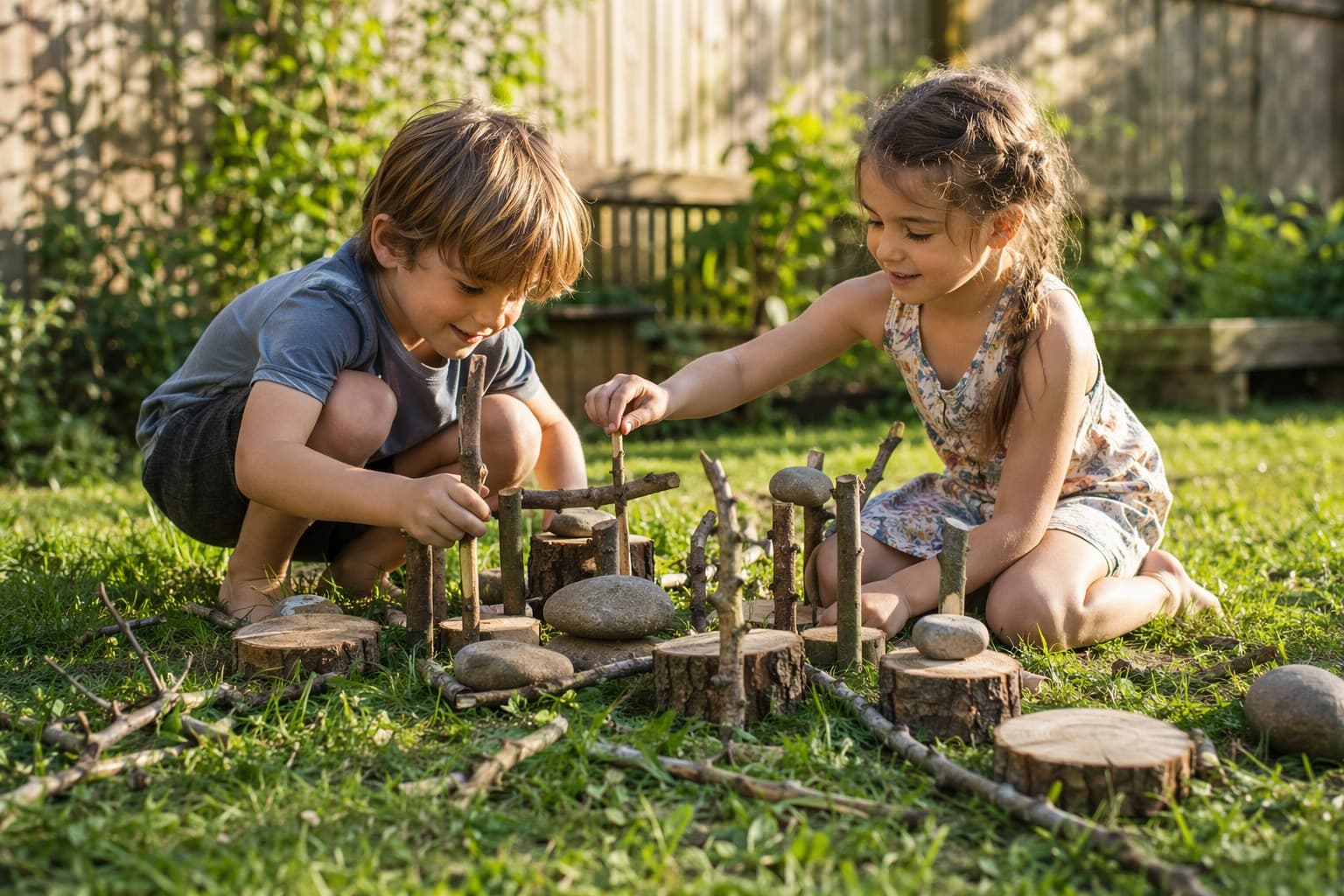
The best outdoor toys your kids will play with this summer cost nothing and are already lying in your yard. A pile of rocks. A heap of sticks. A few sawn log rounds, a bucket of pinecones, a length of rope. Hand a child these open-ended, movable materials — what educators call loose parts — and step back, and you will watch them build, sort, balance, transport, and invent for far longer than any battery-operated toy holds their attention. Outdoor loose parts play is bigger, louder, and messier than the indoor version, and it is often more absorbing precisely because the materials are heavier, the space is larger, and the stakes feel real. This guide explains why rocks and sticks beat the toy aisle, what to gather, how to set boundaries without killing the magic, and ten invitations your kids will return to all season long.
Why Rocks and Sticks Beat the Toy Aisle
In 1971, architect Simon Nicholson published his Theory of Loose Parts, arguing that "in any environment, both the degree of inventiveness and creativity, and the possibility of discovery, are directly proportional to the number and kind of variables in it." Translated: the more a child can move, combine, and change in their surroundings, the more creative and engaged they become. A finished toy does one or two things. A stick does ten thousand.
Outdoors, this principle goes into overdrive. Natural materials vary in weight, texture, smell, and stability in ways no molded plastic can match. A wet log behaves differently from a dry one. A flat rock balances; a round one rolls. Children absorb real physics — friction, gravity, leverage, balance — through their hands, not a worksheet.
There is also a body-and-brain payoff that researchers take seriously. A 2017 review in the International Journal of Environmental Research and Public Health found that risky, active outdoor play is associated with better physical health, improved risk-assessment skills, and stronger social behavior. Carrying a heavy rock across the yard delivers what occupational therapists call heavy-work or proprioceptive input — the deep muscle and joint feedback that calms and organizes the nervous system. The child dragging a log is not just playing. They are regulating.
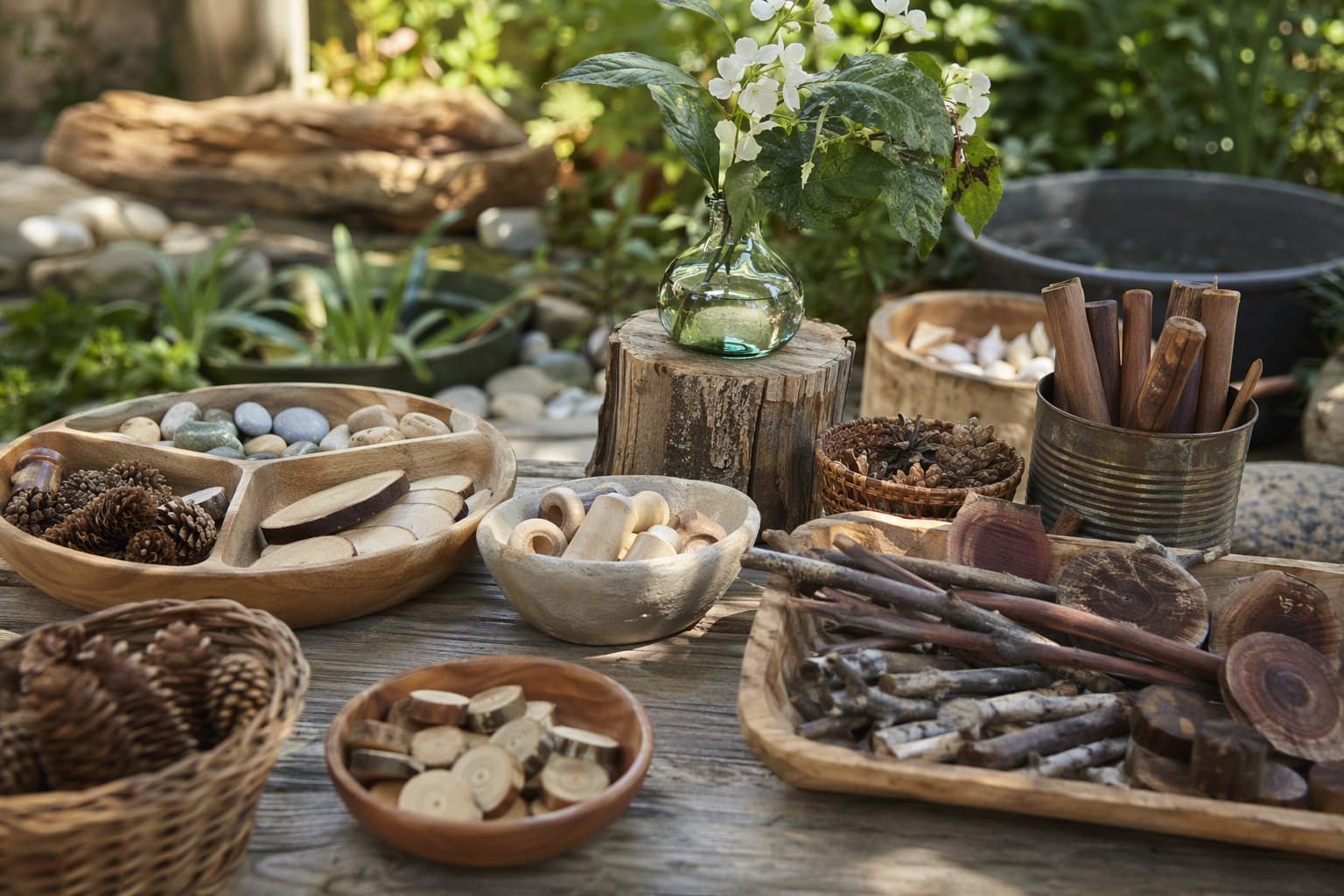
Finally, loose parts are gloriously self-leveling. Hand the same basket of stones to a toddler, a five-year-old, and a nine-year-old, and each plays at exactly their developmental edge. That makes outdoor loose parts the rare activity that genuinely works for mixed-age siblings at the same time.
What to Collect: An Outdoor Loose Parts Inventory
The whole point is that this is nearly free. Most of what follows comes from your yard, a walk around the block, the recycling bin, or a single trip to the hardware store. Gather generously — scarcity creates squabbles, while abundance invites cooperation.
Natural materials
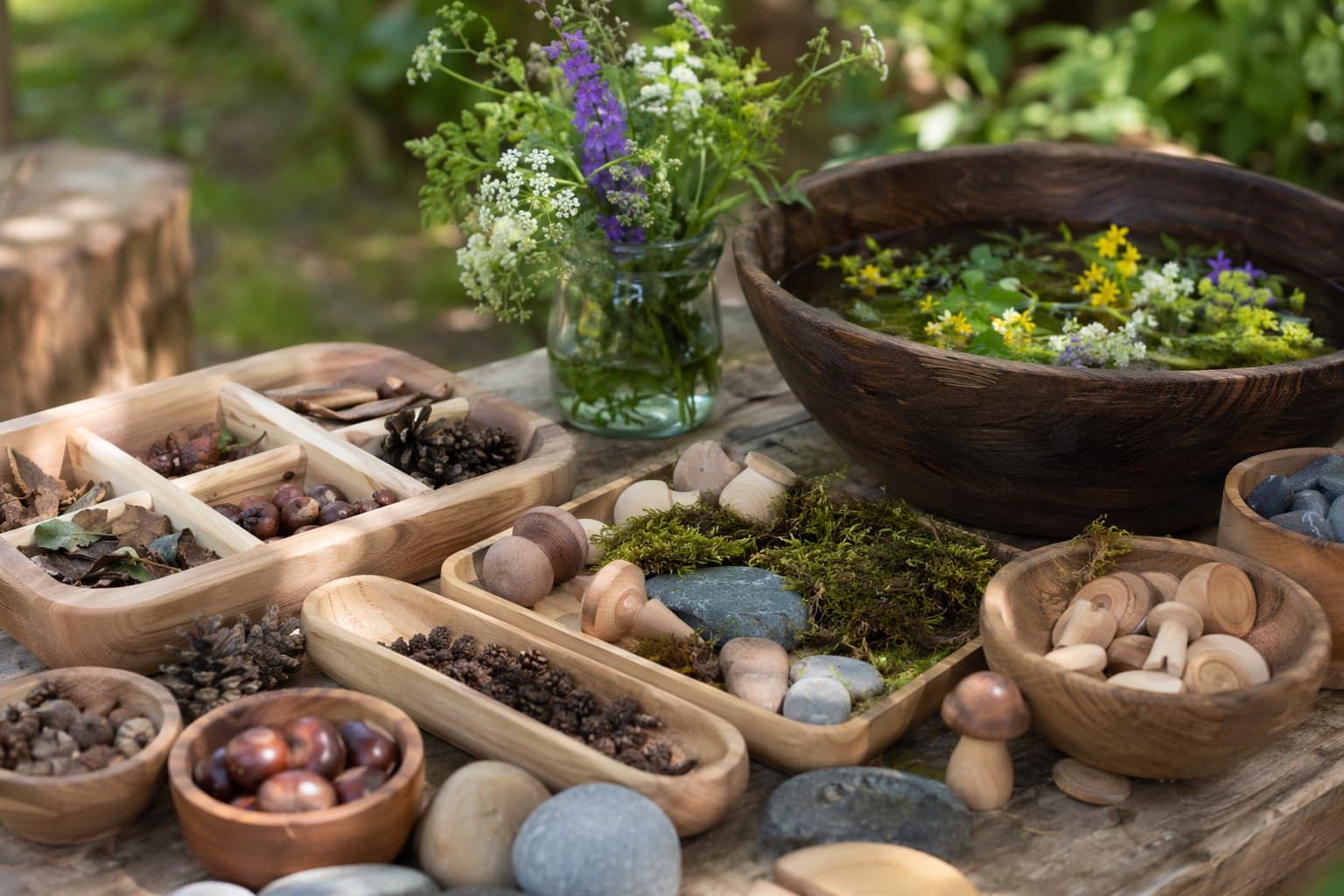
- Rocks and smooth river stones in a range of sizes
- Sticks, branches, and a few longer poles
- Log rounds and stumps (a neighbor's firewood pile or a tree service is a goldmine)
- Pinecones, acorns, seed pods, and bark
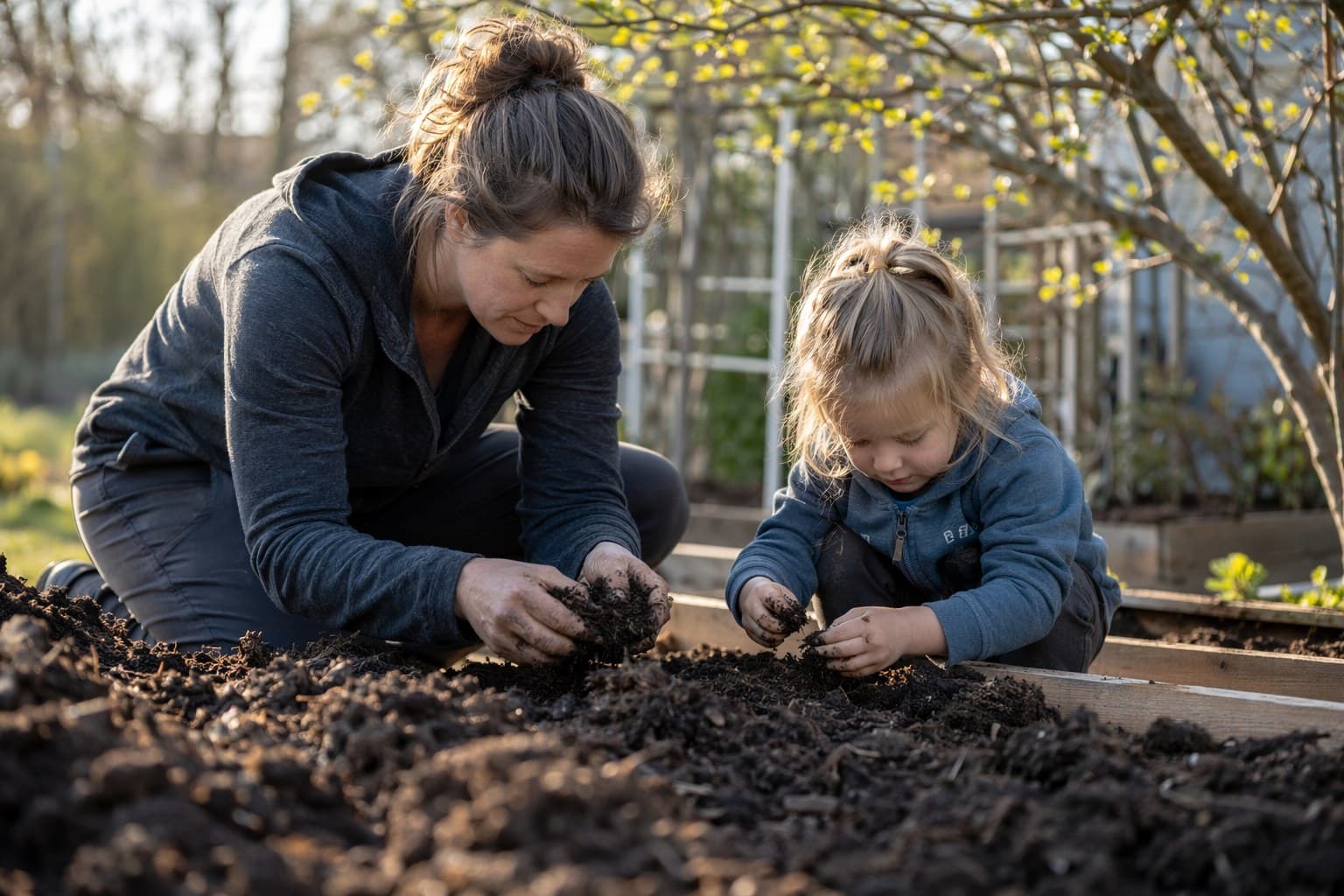
- Sand, soil, and water — the great transformers
- Leaves, petals, moss, and shells
Salvaged and inexpensive add-ons
- Wooden planks and offcuts for ramps and bridges
- Plastic crates, buckets, and a wheelbarrow for transporting
- Cable spools, PVC pipe sections, and old pots and pans
- Rope, jute twine, and fabric scraps for tying and draping
A few targeted purchases stretch the play without turning it into a shopping trip. A bundle of natural wooden tree blocks supplies clean log rounds without waiting on a tree service, and a bag of tumbled river rocks gives you smooth, satisfying stones for stacking and sorting. A spool of jute garden twine and a bundle of wooden craft sticks handle the tying and lashing that older kids crave. For corralling treasures, a set of woven collecting baskets keeps the yard from looking like a junkyard and makes "we put the parts away" an achievable expectation.
If you want a deeper inventory of indoor and natural materials to draw from, our complete guide to loose parts play covers organizing, rotating, and presenting collections so they stay inviting.
Setting Boundaries Without Killing the Magic
The most common reason parents shy away from rock-and-stick play is worry. The fix is not to ban the materials but to set a short, clear set of rules and then trust the play. Children handle real risk far better when adults name the boundary once and stop hovering.
Keep your rules few and physical, the kind a four-year-old can repeat back:
- Sticks stay below shoulder height. A stick carried low is a tool; a stick swung high is a hazard.
- Throwing has a target. Rocks get thrown into a bucket, a puddle, or at a wall — never toward a person.
- Test before you trust. Wobble a log or plank before standing on it. If it moves, it needs a better base.
- Parts come back. Everything returns to its basket or zone at the end, which keeps the yard usable and teaches stewardship.
Designate a loose parts zone so the play has a home — a corner of the yard, the edge of the garden, a patch of bare dirt. Containing the chaos to one area makes the mess feel intentional rather than overwhelming, the same principle behind a thoughtfully organized homeschool or play space indoors.
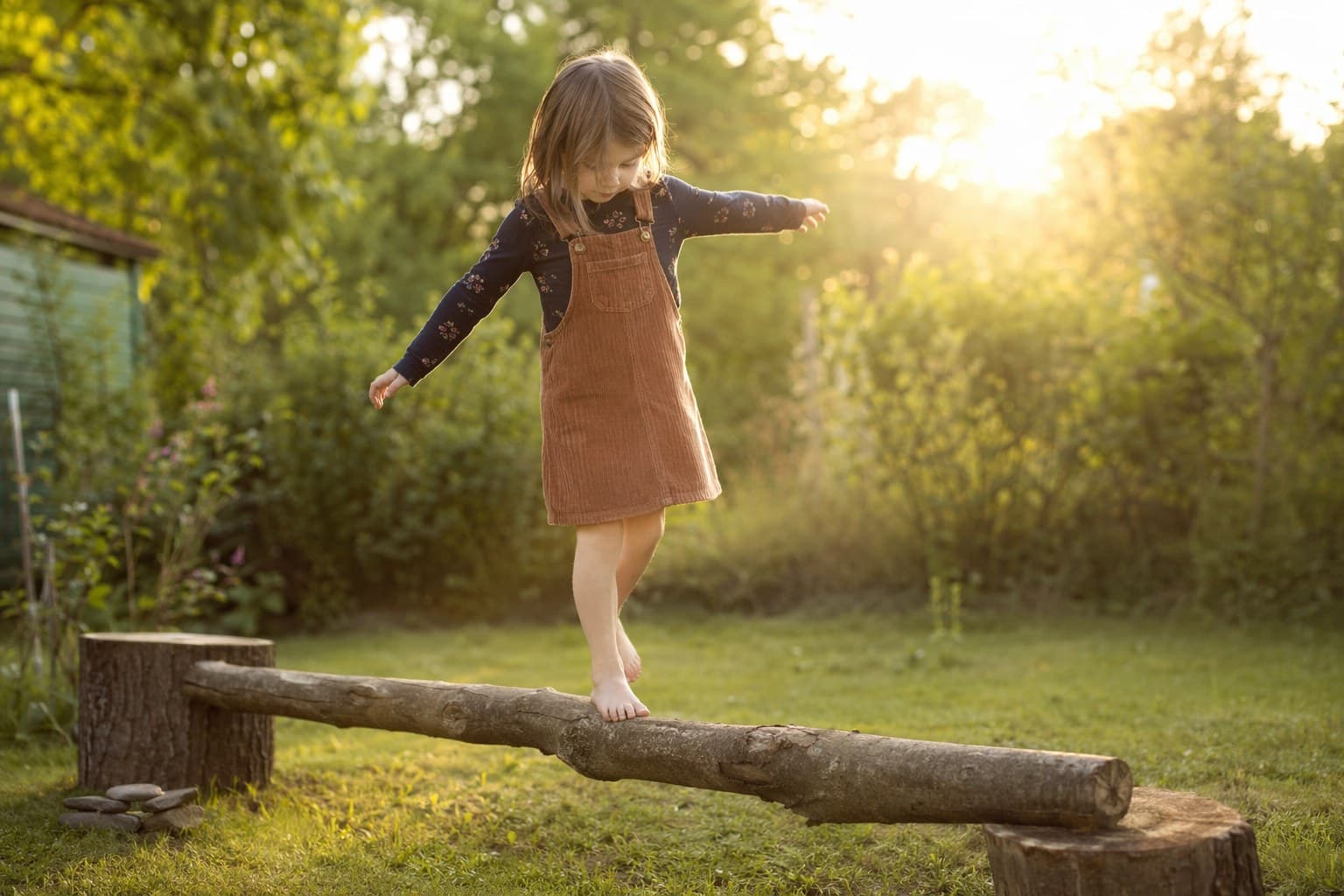
Then resist the urge to direct. Your job is to curate the materials and name the boundaries — not to show your child that the sticks "should" become a fence. The richest play emerges in the silence after you stop talking.
Ten Outdoor Loose Parts Invitations
An invitation is simply an intentional arrangement of materials that suggests possibility without dictating outcome. Set it up, then walk away.
1. Rock Stacking and Balancing
Set out a tray of flat and rounded stones. Children build cairns, balance impossible towers, and discover through dozens of collapses exactly where the center of gravity lives. This is physics by hand, and it absorbs kids of every age.
2. Stick Construction
Offer long and short sticks plus twine. Younger children line them up and lay them flat; older ones lash them into tepees, rafts, and fences. Tying is genuine fine motor work, a cousin of the handwork done in Waldorf traditions.
3. Ramps and Runs
Lean planks and lengths of pipe against logs and crates, then send rocks, balls, or water down. Kids adjust the slope, race objects, and learn cause and effect by reshaping the track until it works.
4. Loose Parts Mandalas
Hand over a basket of petals, pinecones, acorns, and stones and let children arrange radiating patterns on a patch of dirt or a wooden round. Photograph the result before the wind takes it — impermanence is part of the lesson.
5. The Mud Kitchen Pantry
Combine water, soil, leaves, and old pots with a collection of natural "ingredients." Mud soup and acorn stew can occupy children for an entire afternoon while quietly building measuring and sequencing skills.
6. Transporting Station
Provide buckets, a wheelbarrow, and a heap of rocks or pinecones at one end of the yard. Toddlers especially love the fill-carry-dump cycle, and the heavy lifting delivers calming sensory input.
7. Small World in the Dirt
Add a few animal figurines to a base of soil, moss, and sticks. Children build forests, farms, and dinosaur lands, narrating rich stories as they go — language development hiding inside imaginative play.
8. Balance and Movement Course
Lay log rounds, planks, and flat stones into a low path. Children walk, hop, and balance across, building the gross motor confidence that also drives our outdoor nature activities.
9. Sorting and Counting
Set out divided trays or baskets beside a mixed pile of natural parts. Children sort by size, color, or type and count their collections — early math that feels nothing like a lesson.
10. Fort and Den Building
Offer planks, large branches, a tarp, and rope against a fence or low tree. Building a shelter is the quintessential childhood project, full of negotiation, engineering, and pride of ownership.
The Adult's Role: Curate, Then Step Back
Your contribution to outdoor loose parts play happens before it begins and after it ends. You gather the materials, refresh the collection with a bag of beach shells or a fresh load of log rounds, and rotate away anything that gets ignored. During the play itself, the most valuable thing you can do is watch.
Notice which materials your child reaches for and which they pass over. Notice the story they are telling, the problem they are solving, the tower they rebuild for the fifteenth time. A child sorting stones for forty-five minutes is doing serious cognitive work; a child who keeps collapsing and rebuilding the same stick structure is running repeated experiments in balance. Trust that the play is the learning, even when it looks, to adult eyes, like nothing much is happening.
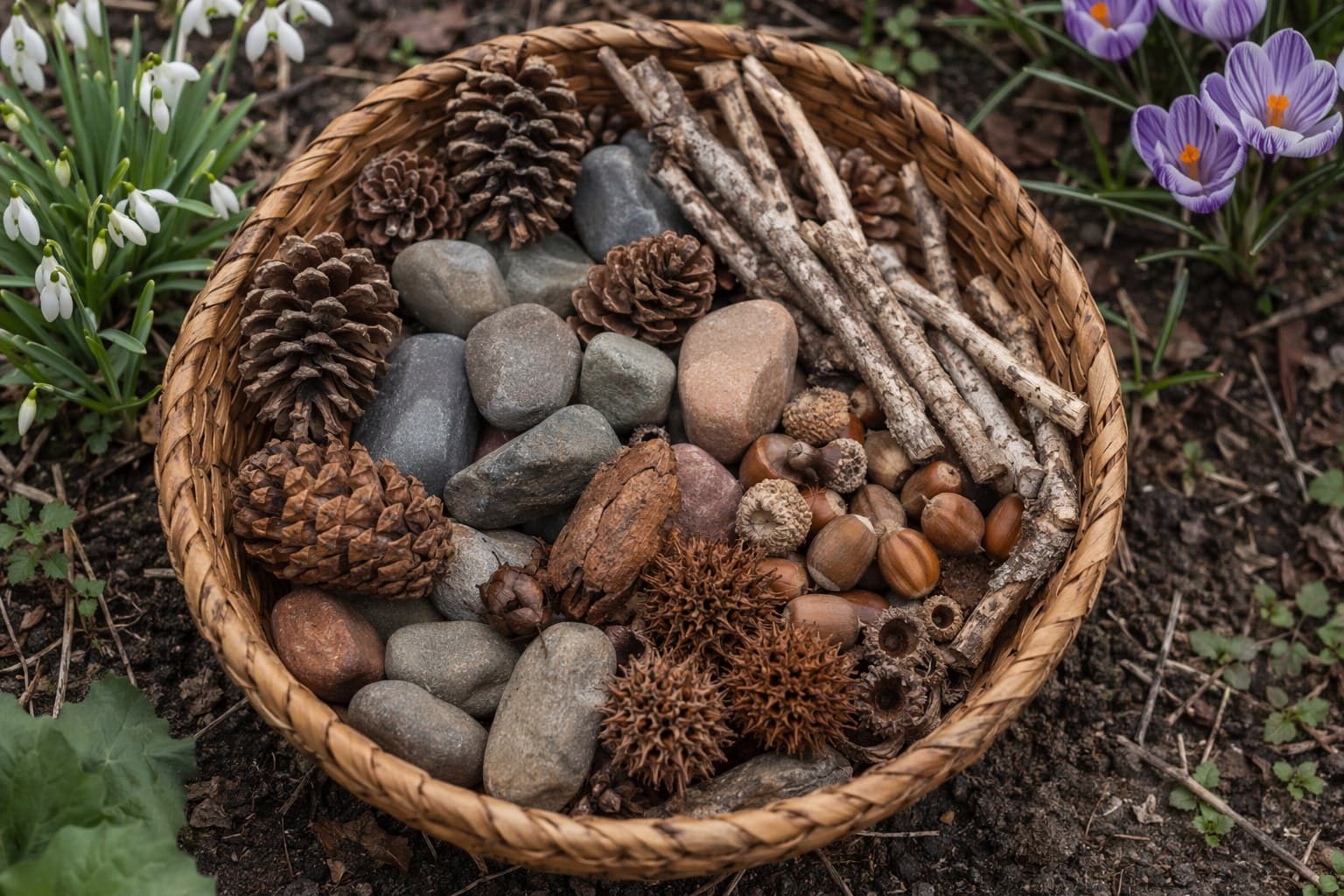
Resist three temptations: correcting the design, supplying the idea, and rushing the cleanup. When you let children own the whole arc — gather, build, dismantle, return the parts — you hand them not just a fun afternoon but a sense of capability that lasts well beyond it.
Getting Started This Week
You do not need to buy a thing to begin. This afternoon, walk the yard with a basket and gather a dozen rocks, an armful of sticks, a few pinecones, and any buckets or planks in the garage. Pick a corner of the yard to be the loose parts zone. Name your two or three rules. Then set the basket down and go sit on the step.
Within minutes, the lining-up and stacking and carrying will begin, and within a week the zone will have a life of its own — a fort under construction, a mud kitchen in business, a cairn no one is allowed to knock down. The materials are simple and the mess is real, but the play is limitless, and the child, not the toy, is in charge of every bit of it.
Frequently Asked Questions
- What are outdoor loose parts for kids?
- Outdoor loose parts are movable natural and salvaged materials with no fixed purpose — rocks, sticks, logs, pinecones, leaves, sand, water, bark, planks, buckets, rope, and crates. Children move, stack, line up, and combine them in endless ways. Because nothing has a 'right' use, the child's imagination drives the play, which is exactly what makes loose parts so engaging outdoors.
- What age is loose parts play good for?
- Loose parts play works from about 18 months through the early school years and beyond. Toddlers carry, fill, and dump large items like pinecones and smooth stones (nothing small enough to swallow). Preschoolers sort, line up, and build. School-age kids engineer ramps, forts, and elaborate small worlds. The same pile of sticks and rocks grows with the child.
- Is it safe to let kids play with rocks and sticks?
- Yes, with sensible boundaries and supervision. Set a few clear rules — sticks stay below shoulder height, throwing happens only at a target like a bucket or a wall, and we test logs before we climb. Choking-size objects are off limits for children still mouthing things. Research on managed risk shows that children who climb, balance, and handle real materials build better judgment and body awareness than those who never get the chance.
Enjoying this article?
Get more ideas like this delivered to your inbox every week.