Outdoor Cooking with Kids: Simple Recipes for Campfire and Grill
Outdoor cooking teaches kids food safety, measuring, and teamwork. Start with these simple, tested campfire and grill recipes that build real confidence and make better memories than any screen.
By The Slow Childhood
The first meal our kids ever cooked entirely on their own was a foil packet of diced potatoes, frozen corn, a pat of butter, and far too much pepper, tucked into the coals of a backyard fire pit on a Friday evening. It was, objectively, a little undercooked in the middle. They ate every bite anyway, with the specific pride that only comes from food you made yourself over an open flame. That meal taught them more about measuring, patience, and teamwork than a week of worksheets ever could.
Outdoor cooking is one of the most underrated ways to build real competence in children. There is something about the fire, the open air, and the genuine stakes — this food is actually going to be dinner — that focuses kids in a way the home kitchen rarely does. They measure carefully because the recipe matters. They wash their hands because there is raw food involved. They take turns because there is only one set of tongs and one grill. The lessons are baked in, no pun intended.
This guide covers the recipes we return to again and again, organized from easiest to most involved, with the specific skills each one teaches and clear notes on which jobs belong to kids and which belong to the adult tending the fire. Everything here has been tested by our own children at our own fire pit and on our own grill, repeatedly, by request.
Why Outdoor Cooking Builds Real Confidence
When a child assembles a meal in the kitchen, the result is often invisible — it goes into an oven they cannot see into and emerges transformed by a process they did not witness. Outdoor cooking is different. The child sees the whole chain of cause and effect: the fire is built, it burns down to glowing coals, the food goes on, it changes, it comes off, everyone eats. That visible sequence is a powerful teacher of patience and of how the world actually works.
The food-safety lessons are concrete rather than abstract. You cannot fudge whether chicken is cooked through when you are the one who threaded it onto the skewer. Kids learn to separate the cutting board for raw meat, to wash hands after handling it, and to recognize doneness by sight and texture. These are the same lessons that, in a school setting, would be a quiz question — but here they are simply how dinner happens.
There is teamwork built into the constraints. One grill, one fire, a handful of tools, and several hungry people means children must negotiate, take turns, and divide labor. We have watched siblings who bicker over everything indoors fall into an easy rhythm at the fire pit — one washing vegetables, one threading skewers, one in charge of the seasoning. The shared goal does the work that lectures about cooperation never could.
If your kids enjoy the cause-and-effect of cooking, they will likely love our kitchen science experiments for kids, which use the same predict-observe-explain thinking. And outdoor cooking pairs naturally with a broader love of the outdoors — our guide to camping activities for kids and families covers what to do before and after the meal.
Safety First: The Ground Rules We Never Skip
Before any recipe, a few non-negotiables. The fire is always an adult job — building it, feeding it, and deciding when it is ready. Children do not add wood, move logs, or reach over flame. We establish a clear "cooking zone" around the fire or grill, usually about three feet, that kids only enter when invited and only to place or retrieve food with proper tools.
We cook over coals, not flames, for almost everything. Open flame chars the outside while leaving the inside raw and burns marshmallows to ash. A bed of glowing, gray-edged coals provides the steady, even heat that actually cooks food and is far more forgiving for beginning cooks. Building the fire 30 to 45 minutes before you want to cook gives it time to burn down.
Long tools keep small hands away from heat. We use long-handled tongs, a long spatula, and skewers at least 30 inches long for anything that goes near the fire. A good outdoor cooking utensil set with long handles and a pair of heat-resistant gloves are the two purchases I would prioritize first. Keep a bucket of water and a first-aid kit within arm's reach, every single time.
Recipe 1: Foil-Packet Vegetables (The Perfect Starter)
This is where every kid should begin. There is no direct flame contact, no flipping, and almost no way to get hurt — the food cooks sealed inside a foil pouch nestled in the coals.
What kids do: Wash and tear vegetables, scoop them into the foil, add butter and seasoning, and fold the packet closed. What the adult does: Place the packet in the coals and remove it.
Ingredients per packet: A handful of diced potatoes (cut small, about half-inch cubes), frozen corn, sliced bell pepper, a pat of butter, salt, and pepper. Heavy-duty foil, torn into roughly 12-inch squares.
Method: Have your child pile the vegetables in the center of the foil, dot with butter, and season. Fold the foil up and over, crimping the edges tightly to make a sealed pouch with a little air space inside. An adult places it on the coals (not flames) for about 20 to 25 minutes, flipping once halfway with tongs. Let it rest a minute before opening — the steam is hot.
The skills: Measuring by eye, sequencing, and the patience of waiting 25 minutes for food you can smell. The half-inch dice is a real lesson — too big and the potatoes stay hard, which teaches kids precisely why size matters in cooking. Let them learn that the first time; the second batch will be diced smaller without you saying a word.
Recipe 2: Classic Roasted Marshmallows and Banana Boats
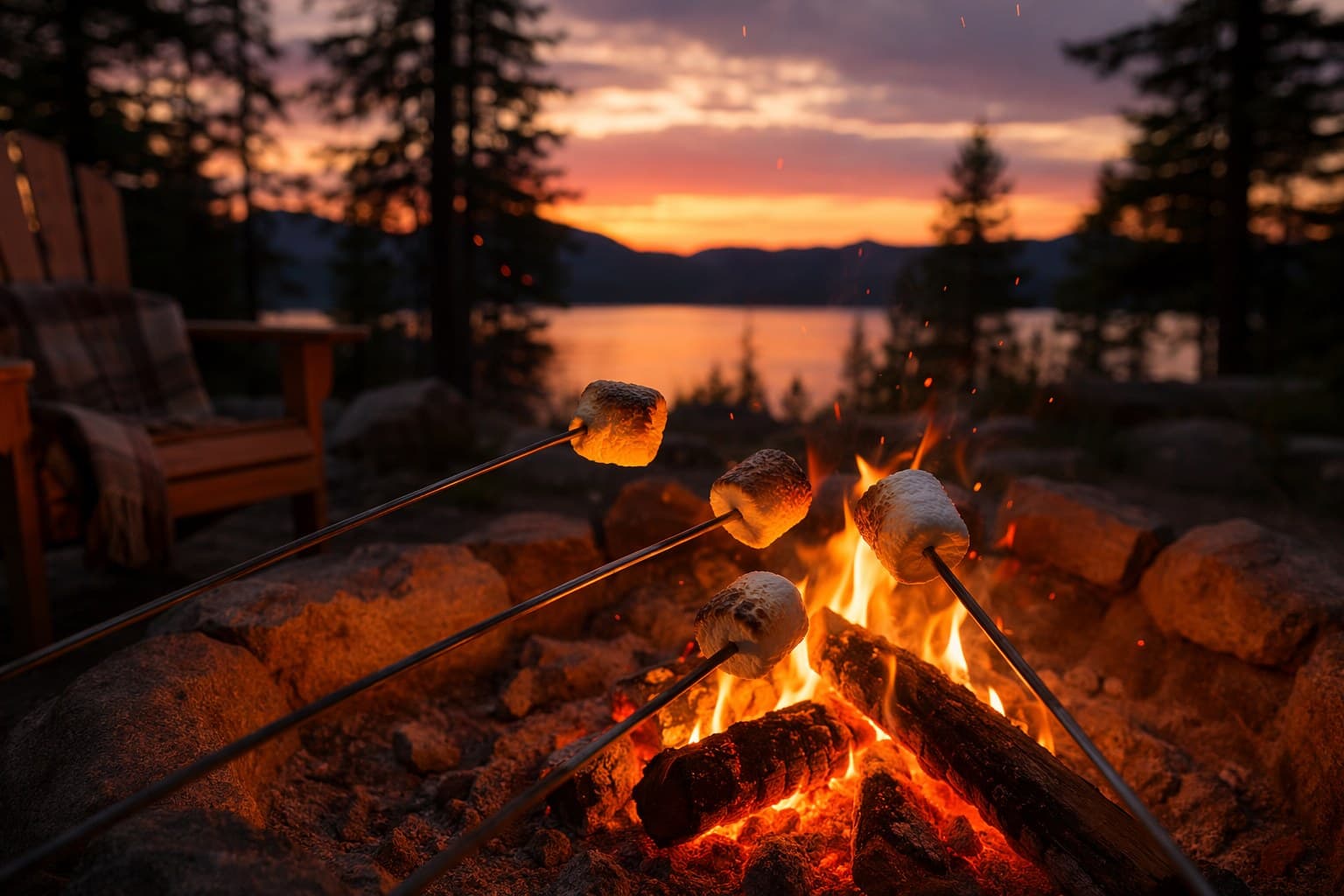
No outdoor-cooking guide is honest without marshmallows, and they teach more than you would think. The skill of slowly rotating a marshmallow over coals — not plunging it into flame — to achieve an even golden-brown is a genuine exercise in patience and heat management. The kid who rushes gets a charred, flaming mess; the kid who waits gets gold. The fire teaches the lesson directly.
Use long bamboo skewers (soaked in water first so they do not burn) or dedicated long roasting forks. For a step up, make banana boats: slit an unpeeled banana lengthwise, have kids stuff the slit with chocolate chips and mini marshmallows, wrap it in foil, and set it in the coals for about 10 minutes. It comes out as a warm, gooey dessert that children assemble entirely themselves.
The skills: Heat awareness, patience, and the fine-motor work of threading and stuffing. Banana boats also introduce the foil-packet concept in a fun, dessert-shaped package, which makes them a sneaky bridge to the savory packets above.
Recipe 3: Grilled Vegetable and Cheese Kebabs
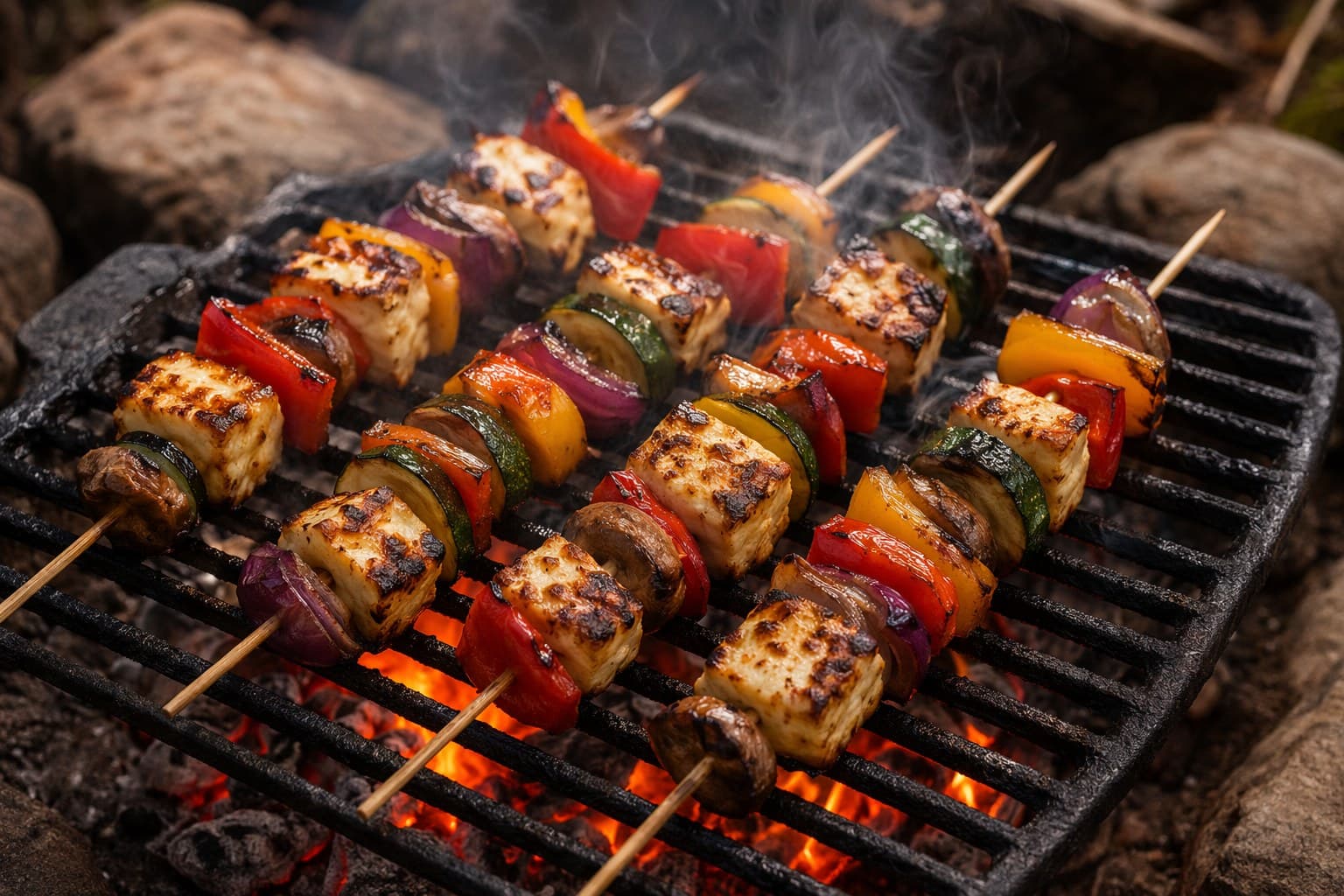
Kebabs are the recipe that makes kids feel like real chefs, because the assembly is entirely theirs and the result looks impressive. They are also a quiet math lesson — threading a repeating pattern of pepper, mushroom, zucchini, halloumi, repeat, is patterning and counting in disguise.
What kids do: Thread soaked bamboo skewers or sturdy metal ones with bite-sized vegetables and halloumi or firm cheese, brush with oil, and season. What the adult does: Manage the grill grate over the coals and supervise flipping.
Ingredients: Bell peppers, zucchini, cherry tomatoes, mushrooms, red onion, and cubes of halloumi (it holds together on the grill where mozzarella would melt away). Olive oil, salt, pepper, a little dried oregano.
Method: Kids thread the skewers in whatever pattern they like — encourage them to keep pieces roughly the same size so everything cooks evenly, another natural lesson. Brush with oil and season. An adult sets a campfire cooking grill grate over the coals and lays the kebabs across it, turning every few minutes with tongs until the vegetables are tender and the cheese is golden, about 10 to 12 minutes. Older kids can do the turning with supervision.
The skills: Patterning, knife-adjacent prep (use a child-safe knife for the softer vegetables), measuring uniformity, and the eye-judgment of doneness. The grill grate is the single most useful piece of campfire gear we own — it turns a fire pit into a flat, stable cooking surface and is what makes most of these recipes possible.
Recipe 4: Cast Iron Campfire Grilled Cheese
A cast iron skillet over the fire opens up a whole category of cooking, and grilled cheese is the perfect introduction because it is forgiving and universally loved. A good cast iron skillet for camping is the second piece of gear I would invest in after the grill grate — it is nearly indestructible, holds heat beautifully, and one pan handles eggs, grilled cheese, pancakes, and skillet cookies.
What kids do: Butter the bread, layer the cheese, and assemble the sandwiches at the prep table. What the adult does: Manage the hot skillet and the flip, or guide an older child through it.
Method: Heat the cast iron over the coals (not flames — flames will scorch the bread before the cheese melts). Butter the outsides of the bread, assemble with a generous layer of cheese, and place in the pan. This is where kids learn the most important grilled-cheese lesson: low and slow. A pan that is too hot burns the outside while the cheese stays cold and solid. Let them watch it, smell it, and learn to wait for the gentle sizzle. Flip once when golden. The reward is immediate and delicious.
The skills: Heat regulation, patience, and the satisfying judgment of "is it ready to flip yet?" Cast iron also teaches care of tools — kids learn that you do not soak it or scrub it with soap, you wipe it and re-oil it, which is a small lesson in maintaining the things that serve you.
Recipe 5: Build-Your-Own Campfire Breakfast Hash
Once kids have mastered foil packets and the skillet, a one-pan breakfast hash is the recipe that makes them feel genuinely capable of feeding the family. It also stretches every skill at once.
Ingredients: Diced pre-cooked potatoes (or leftover roasted ones), diced ham or pre-cooked sausage, a handful of frozen peppers and onions, eggs, salt, and pepper. Cooking in the cast iron skillet over the grill grate.
Method: An adult gets the skillet hot over the coals with a little oil. Kids add the potatoes and let them crisp, stirring occasionally with a long spoon. Then the meat and vegetables go in to warm through. Finally, crack the eggs directly over the top — cracking eggs cleanly is a wonderful, slightly messy skill for kids around six and up — and stir gently until set. This is real cooking with real heat, so it is a supervised, older-kid recipe, but the sense of accomplishment is enormous.
The skills: Sequencing (potatoes first because they take longest), egg-cracking fine-motor control, food safety with the eggs and meat, and the genuine pressure of cooking for other people. This is the recipe where a child crosses from "helping cook" to "cooking."
Matching Recipes to Ages
A quick reference for who can do what, drawn from years at our own fire pit. These are starting points — every child is different, and a confident eight-year-old may be ready for tasks we have listed under ten.
Toddlers (2 to 3): Washing vegetables, tearing lettuce and herbs, sprinkling pre-measured seasoning, and carrying unbreakable supplies to the table. Everything supervised, nothing near heat.
Preschoolers (4 to 5): Measuring ingredients, threading soft items onto skewers, assembling and folding foil packets, buttering bread, and arranging kebab patterns. They roast marshmallows with an adult holding the base of the skewer.
School-age (6 to 10): Cracking eggs, using a child-safe knife on soft vegetables, brushing oil, turning kebabs and flipping grilled cheese with supervision, and managing their own marshmallow over the coals. They can read a simple recipe card and follow the steps in order.
Tweens (10 to 12): Tending a skillet, managing skewers over the coals, judging doneness, and largely running a simple recipe like the breakfast hash with an adult nearby. The fire-building itself stays with the adult, but tweens can be taught to recognize when coals are ready.
A recipe card collection for camping is worth keeping in your gear box — handing a child their own laminated card to follow turns them from helper into chef and builds reading-for-purpose skills along the way.
The Gear That Actually Matters
You can cook outdoors with almost nothing, but a few pieces of equipment make it dramatically easier and safer for kids, and they are the difference between a frustrating evening and a joyful one.
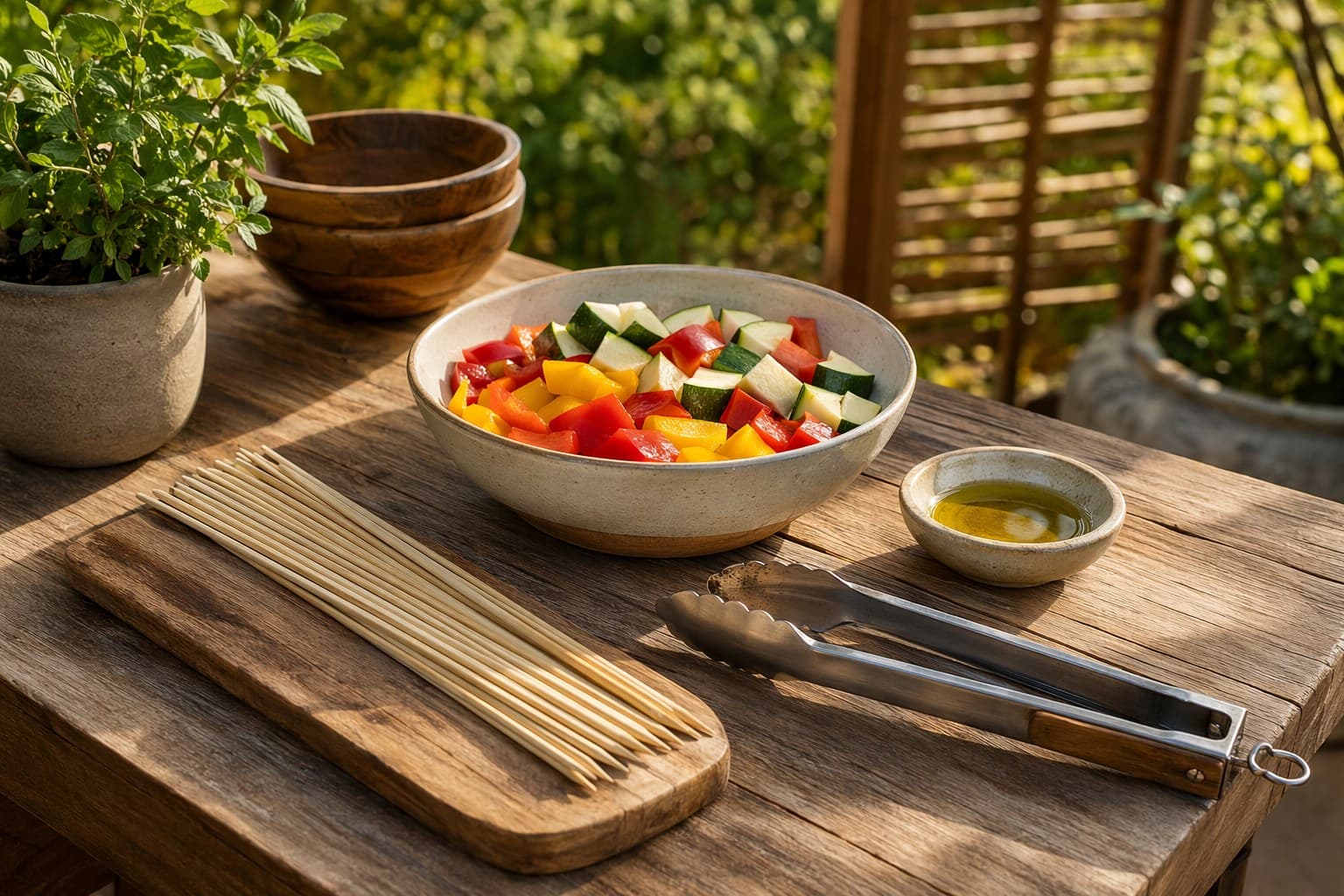
The campfire cooking grill grate is first on my list — a flat, stable surface over the coals unlocks kebabs, skillets, and direct grilling. Second, the cast iron skillet for camping, which is the single most versatile pan you can own outdoors. Third, a long-handled outdoor cooking utensil set and a set of bamboo skewers to keep small hands a safe distance from heat. Add the heat-resistant gloves and the laminated recipe cards, and you are genuinely set for years of outdoor meals.
Resist the urge to buy more than this. Part of the value of outdoor cooking is its simplicity — a fire, a grate, a pan, a few tools. The constraint is the point. Children who learn to make a real meal with five tools develop a confidence that no fully-stocked kitchen can teach.
Making Outdoor Cooking a Regular Habit
The recipes are only half of it. The real value comes from making outdoor cooking a rhythm rather than a special event. We try to cook outside at least once a week through the warm months, and a few habits have made it stick.
Let them own a job. Give each child a consistent role — one is the seasoning chief, one is the skewer master, one washes vegetables — and rotate over the weeks so everyone learns every station. Ownership creates investment, and an invested child does not wander off.
Embrace the imperfect meal. The undercooked potato, the over-charred marshmallow, the lopsided kebab — these are the curriculum, not failures. A child who slightly burns the grilled cheese and figures out why learns more than one who is handed a perfect sandwich. Let the fire teach.
Cook from the garden when you can. If you grow even a little food, outdoor cooking closes the loop beautifully — kids harvest the zucchini and then grill it the same evening. Our guide to the Montessori practical-life kitchen covers the indoor prep skills that make a child a competent outdoor cook, from washing to measuring to safe knife handling.
Slow down and eat together. The meal is the destination, but the cooking is the experience. Sit around the fire afterward, eat the food you made, and let the evening stretch. These are the dinners children remember decades later — not because the food was perfect, but because they made it, and they made it together.
Outdoor cooking gives children something increasingly rare: a real task, with real stakes, that produces something genuinely useful, all while standing shoulder to shoulder with the people they love. Build the fire. Hand them the skewers. Let them learn that they are capable of feeding themselves and others. The slightly-undercooked potatoes are part of the magic.
Frequently Asked Questions
- What can kids safely cook over a campfire or grill?
- Start with foil-packet meals, which require zero direct flame contact and cook in the coals. Kids can also roast marshmallows and hot dogs on long skewers, grill vegetable kebabs, make grilled cheese in a cast iron skillet, and toast bread for campfire pizza. Match the task to the age: young children assemble and season, while older kids (8 and up) can handle tongs and tend food near the fire with supervision. The rule we use is simple — children prep at the table, and an adult always manages the placement and removal of food from direct heat.
- At what age can kids start cooking outdoors?
- Toddlers as young as two can wash vegetables, tear lettuce, and sprinkle seasoning under close supervision. By ages four to five, children can measure ingredients, thread soft items onto skewers, and assemble foil packets. School-age kids (6 to 10) can crack eggs, use child-safe knives on soft foods, and flip items on a grill with help. Around age 10 to 12, with practice, they can manage a skewer over coals or tend a skillet largely on their own. The fire itself always stays an adult responsibility, regardless of age.
- What outdoor cooking skills do kids actually learn?
- Outdoor cooking teaches measuring and fractions (a half cup of cheese, a third of the foil packet), food safety (washing hands, separating raw meat, knowing when chicken is done), heat management and patience, and teamwork through dividing tasks. Children also learn sequencing — that you build the fire, let it burn down to coals, then cook — which is a genuine lesson in delayed gratification. These are real-world skills that transfer directly to the home kitchen and to a child's growing sense of capability.
Enjoying this article?
Get more ideas like this delivered to your inbox every week.