Best Art Supplies for Kids (What Artists and Teachers Actually Recommend)
The art supplies that real artists and teachers recommend for kids — from toddler-safe crayons to quality watercolors, plus exactly what to skip at the craft store.
By The Slow Childhood
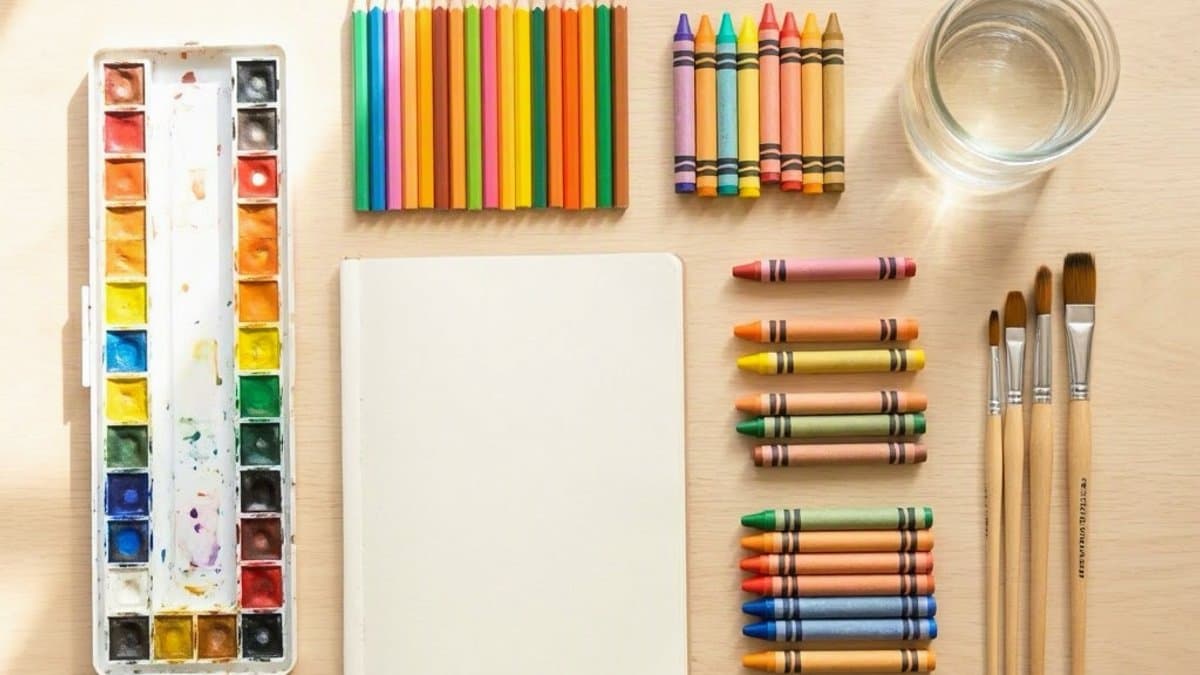
Walk into any craft store and the kids' art aisle is overwhelming — walls of markers, bins of crayons, shelves of paint kits, and rows of specialty supplies that promise creativity in a box. Most of it is mediocre at best and frustrating at worst. Cheap art supplies teach children that art is hard, messy, and disappointing. Good art supplies teach them that art is satisfying, beautiful, and worth doing.
The difference between a child who loves making art and one who avoids it often comes down to materials. A watercolor set that produces muddy gray washes no matter what you do will crush a child's enthusiasm faster than any lack of talent ever could. A set that blooms into vivid color with a single wet brushstroke makes every child feel like an artist.
This guide covers the art supplies that actual artists, art teachers, and experienced homeschool parents recommend — organized by type and age. We have tested these ourselves and heard from hundreds of families about what works in real homes with real children.
Crayons
Best for Toddlers: Stockmar Stick Crayons
Stockmar Stick Crayons are the gold standard of crayons for young children. Made from beeswax and non-toxic pigments, they produce rich, vibrant, layerable color that makes regular paraffin crayons look anemic by comparison. The thick, sturdy sticks resist breaking even under heavy toddler pressure, and they have a subtle honey scent that is lovely without being artificial.
Ages: 1+ (the block shape is better for under 2, stick shape for 2+) Price: About $20 for 16 colors Why they are worth it: Once you see the color a Stockmar produces compared to a standard crayon, you cannot go back. The richness and transparency of the wax lets children layer colors and create effects that cheap crayons simply cannot produce. These last for years — a single set typically outlasts a child's entire preschool period.
Best Block Crayons: Stockmar Block Crayons
Stockmar Block Crayons are the same premium beeswax formula in a wide, flat block shape that is perfect for toddlers and young preschoolers. The block shape prevents the hand-grip problems that thin crayons cause in very young children — there is no "wrong" way to hold a block crayon. Children color using the flat side, the edge, or the corner, producing a range of marks naturally.
Ages: 1-4 years Price: About $18 for 12 colors Why they are special: The Waldorf approach to early childhood art starts with block crayons for a reason — they encourage whole-arm movement rather than the tight finger grip that can develop too early with thin crayons. The colors are stunning.
Best Everyday Crayons: Crayola Crayons
For everyday use, the standard Crayola Crayons in the 24-pack are perfectly good. They are widely available, inexpensive, non-toxic, and produce decent color. The 24-pack has the right variety without the overwhelm of the 96-pack.
Ages: 3+ Price: About $3-4 for 24 colors When to use these instead of Stockmar: For everyday coloring, craft projects, and activities where crayons might be lost or broken. Save the Stockmar for focused art time.
Colored Pencils
Best for Kids: Prismacolor Junior
Prismacolor Junior colored pencils bridge the gap between cheap kids' pencils and professional-grade supplies. They have a soft, richly pigmented core that lays down color smoothly, blends well, and does not require the heavy pressure that cheap colored pencils demand. The barrel is comfortable and sturdy.
Ages: 5+ Price: About $15 for 24 colors Why they stand out: Cheap colored pencils require so much pressure to produce color that children's hands tire quickly and the points constantly break. Prismacolor Junior requires light pressure for vivid color, which means children can draw longer, enjoy it more, and produce work they are actually proud of.
Best Budget: Crayola Colored Pencils
Crayola Colored Pencils in the 24-pack are the reliable budget choice. They are not as smooth or vibrant as Prismacolor, but they are sturdy, sharpen well, and produce reasonable color. For everyday use and younger children, they are perfectly adequate.
Ages: 4+ Price: About $5 for 24 colors
Best for Serious Young Artists: Faber-Castell Polychromos (12 set)
For children ages 8+ who are serious about art, a small set of Faber-Castell Polychromos colored pencils is a worthwhile investment. These are professional-grade pencils with rich, lightfast pigments, excellent blending, and a break-resistant core. A 12-set provides the essential colors for a child to learn real colored pencil techniques.
Ages: 8+ Price: About $25 for 12 colors Why invest: A child who shows genuine interest in art deserves tools that respond to their intention. Professional pencils reward effort in a way that cheap supplies never can.
Watercolor Paints
Watercolor is the most accessible painting medium for children — it requires only paint, water, a brush, and paper. The cleanup is simple, the results can be beautiful, and the medium teaches patience and happy accidents.
Best for Beginners: Prang Watercolors (16 set)
Prang Watercolors are the best value in children's watercolors. The semi-moist oval pans produce vivid, transparent color that activates easily with a wet brush. Unlike cheap watercolor sets where you scrub and scrub and get barely any color, Prang paints release pigment generously. The 16-color oval pan set has been a classroom staple for decades.
Ages: 3+ Price: About $6-8 for 16 colors Why Prang wins: At this price point, nothing else comes close. The color intensity and ease of activation make them genuinely enjoyable to use, and children produce work that looks good rather than muddy and disappointing. This is the set that art teachers across the country keep buying year after year.
Best Liquid Watercolors: Colorations Liquid Watercolors
Colorations Liquid Watercolors are concentrated liquid paints in dropper bottles that produce brilliant, saturated color. They are ideal for toddlers and preschoolers because they eliminate the brushwork needed to activate pan paints — children just dip and paint, or use droppers and spray bottles for process art.
Ages: 1+ Price: About $30 for a set of 13 colors Why they are worth it: Liquid watercolors transformed our art table. Toddlers who could not get satisfying color from pan watercolors immediately produced vibrant paintings with liquid watercolors. They are also perfect for process art, color mixing experiments, and dropper activities that build fine motor skills.
Best Upgrade: Koi Watercolors Field Set
For children ages 7+ who are ready for better paints, the Sakura Koi Watercolor Field Set is an excellent step up. The 24-pan set includes a built-in mixing palette, a water brush, and artist-grade pigments that blend beautifully. The compact case makes it perfect for outdoor painting and nature journaling.
Ages: 7+ Price: About $25-30 for 24 colors Why upgrade: Once a child develops enough brush control to appreciate better paint, Koi watercolors reward their skill with smoother washes, better blending, and more predictable mixing. The included water brush is perfect for painting outdoors.
Brushes
A good brush makes more difference than good paint. A brush that splays, sheds bristles, or loses its shape frustrates children and produces messy results.
Best for Young Kids: Royal & Langnickel Big Kids Choice Set
The Royal & Langnickel Big Kids Choice brush set includes a variety of sizes and shapes with short, chunky handles designed for small hands. The synthetic bristles hold their shape well, pick up paint effectively, and survive the abuse that young children inflict on art tools.
Ages: 3-8 Price: About $8-12 for a set Why these: Short handles are crucial for young children — long-handled brushes are awkward and lead to poor control. The variety of shapes (round, flat, fan) lets children experiment with different marks without needing an extensive collection.
Paper and Sketchbooks
The most overlooked art supply is paper. Children given thin, cheap paper learn that art is fragile and frustrating — paint buckles the page, markers bleed through, and erasers tear holes. Good paper transforms the experience.
Best Painting Paper: Canson XL Watercolor Pad
Canson XL Watercolor Paper (90 lb, 9x12) handles watercolor, tempera, and acrylic without buckling or tearing. The textured surface grabs pigment and produces beautiful results. A single pad lasts for months of regular painting.
Ages: All ages Price: About $8 for 30 sheets Why it matters: Good watercolor paper is the single biggest upgrade you can make to a child's painting experience. The same paint that produces a wrinkled, muddy mess on copy paper produces a flat, vivid painting on watercolor paper. This is not optional — it is essential.
Best Sketchbook: Canson XL Mix Media Sketchbook
The Canson XL Mix Media sketchbook handles pencils, markers, light watercolor washes, and mixed media without bleeding or buckling. The wire binding lets it lie flat or fold back, and the 7x10 size is perfect for children's hands and laps.
Ages: 5+ Price: About $7-9 for 60 sheets Why every child should have one: A personal sketchbook gives a child ownership over their art practice. It is not an assignment sheet or a coloring page — it is their space to draw, experiment, make mistakes, and develop their own artistic voice. Keep it accessible and judgment-free.
Scissors, Glue, and Extras
Best Kids Scissors: Fiskars Pointed-tip Kids Scissors
Fiskars Pointed-tip Kids Scissors actually cut, which is more than can be said for most safety scissors. The pointed tip allows precision cutting, the blades stay sharp for years, and the ergonomic handles fit small hands comfortably. Available in both right-handed and left-handed versions.
Ages: 4+ Price: About $3-4 Why pointed-tip: Blunt-tip safety scissors are appropriate for toddlers, but by age 4 most children are ready for pointed tips that allow them to cut curves, corners, and details. Fiskars makes the best ones.
Best Glue Stick: Elmer's Disappearing Purple Glue Sticks
Elmer's Purple Glue Sticks go on purple (so children can see where they have applied glue) and dry clear. They are non-toxic, washable, and far less messy than liquid glue for most children's projects. Buy the multi-pack — you will go through them.
Ages: 2+ Price: About $6-8 for a pack of 6-12
Building an Art Supply Station
The best way to encourage daily art-making is to make supplies accessible. Set up a dedicated art area — a table, a shelf, or even a large tray — with supplies organized and within reach. Children who can grab a sketchbook and colored pencils whenever the mood strikes make far more art than children who must ask an adult to get supplies down from a high shelf.
Essential starter kit for ages 3-8:
- Stockmar stick crayons (16 colors)
- Crayola colored pencils (24 pack)
- Prang watercolors (16 oval pan)
- Royal & Langnickel brushes (variety set)
- Canson XL watercolor paper (9x12 pad)
- A sketchbook for each child
- Fiskars scissors and Elmer's glue sticks
Total cost: About $70-80 for a complete, quality art supply setup that will last most of a school year.
For more on integrating art into your homeschool, see our guide to the best homeschool art curriculum and our watercolor painting projects for kids.
Good art supplies do not make a child an artist. But they remove the barrier between a child's intention and their creation. When the crayon produces rich color on the first stroke, when the watercolor blooms exactly as the brush touches wet paper, when the colored pencil blends smoothly under a light hand — a child learns that their effort produces beauty. That lesson is worth every penny.
Frequently Asked Questions
- What art supplies should every kid have?
- Every child should have access to good quality crayons, colored pencils, watercolor paints, a variety of paper, kid-safe scissors, a glue stick, and washable markers. These six basics cover nearly every art project a child will encounter from toddler years through elementary school. Quality matters more than variety — a set of 12 good colored pencils is more useful than 64 cheap ones that break constantly.
- Are expensive art supplies worth it for kids?
- Yes, within reason. Cheap art supplies frustrate children — waxy crayons that barely color, watercolors that produce muddy washes, markers that dry out in days, and colored pencils that snap under normal pressure. Mid-range supplies like Stockmar crayons, Crayola colored pencils, and Prang watercolors cost slightly more but work dramatically better. You do not need professional-grade materials, but the cheapest options are false economy.
- What age can kids start using real watercolors?
- Children can start using pan watercolors (the solid cake kind) as young as 2-3 years old with supervision. The paint is non-toxic and water-soluble, so cleanup is easy. Liquid watercolors in dropper bottles are better for toddlers since they are easier to use and produce vivid colors without requiring brush technique. Quality watercolor paper makes a bigger difference than quality paint at young ages.
- What should I avoid buying at the craft store?
- Skip glitter (it gets everywhere and never fully cleans up), cheap watercolor palettes with tiny hard pans that produce no color, thin copy paper for painting (it buckles and tears), washable paint that is so washable it barely adheres to paper, and novelty supplies like scented markers or color-changing crayons that prioritize gimmicks over function. Buy fewer, better supplies instead of carts full of cheap ones.
Enjoying this article?
Get more ideas like this delivered to your inbox every week.