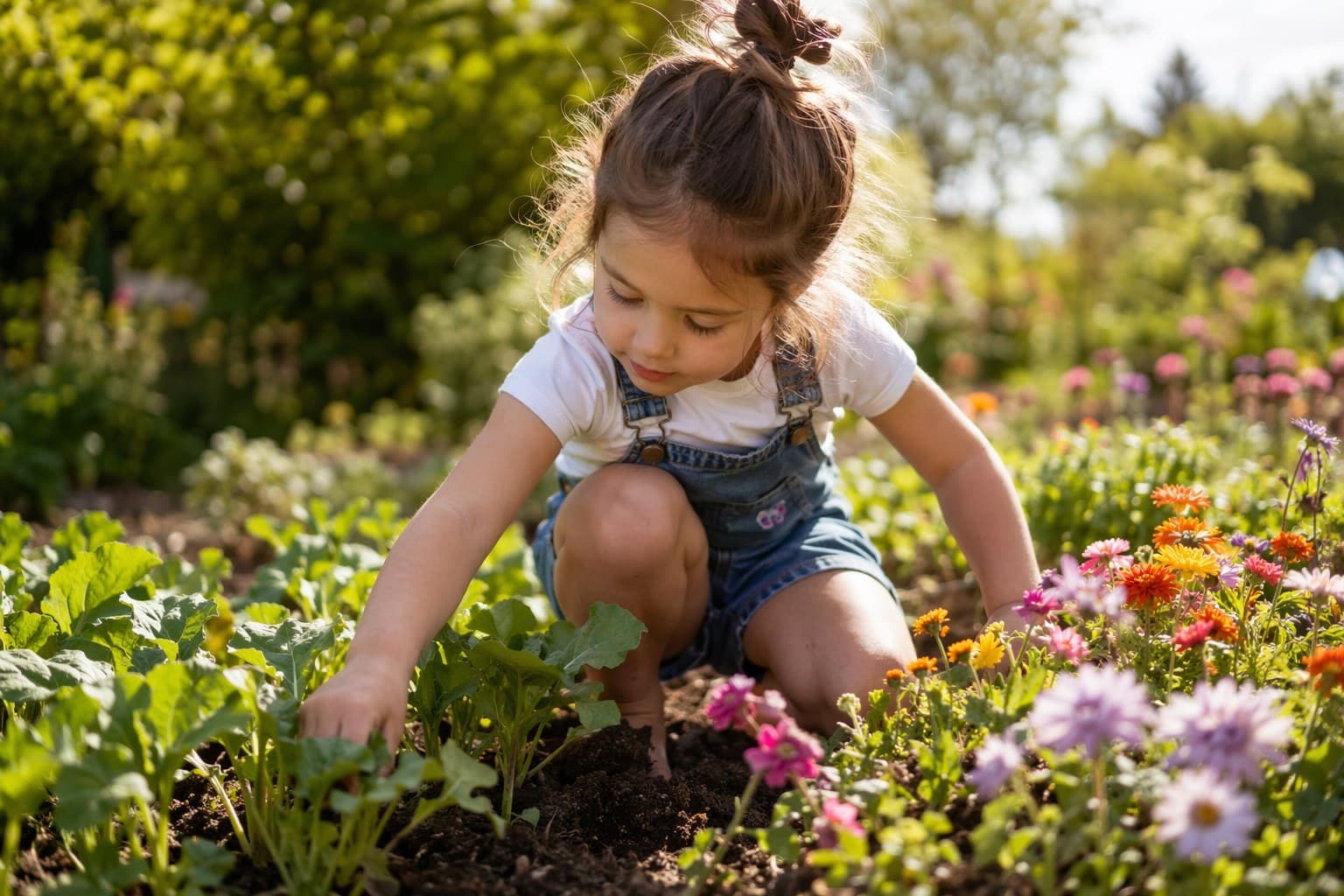
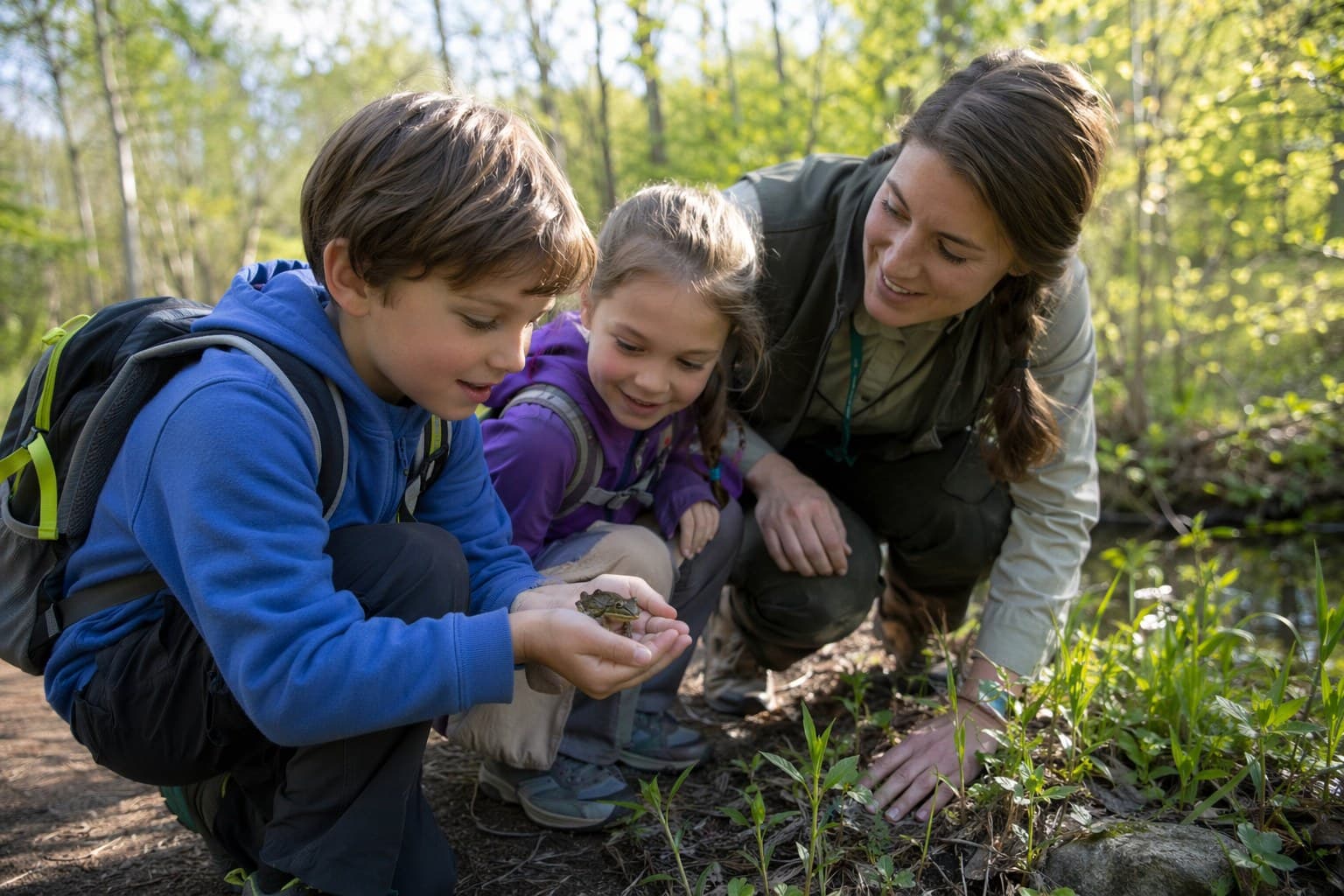
Forest School Concepts at Home: Nature-Based Learning in Your Yard
You do not need a woodland or a trained facilitator to bring forest school home. Learn how to adapt place-based learning, healthy risk-taking, and long stretches of unstructured outdoor time to an ordinary backyard — building real confidence and curiosity.
By The Slow Childhood
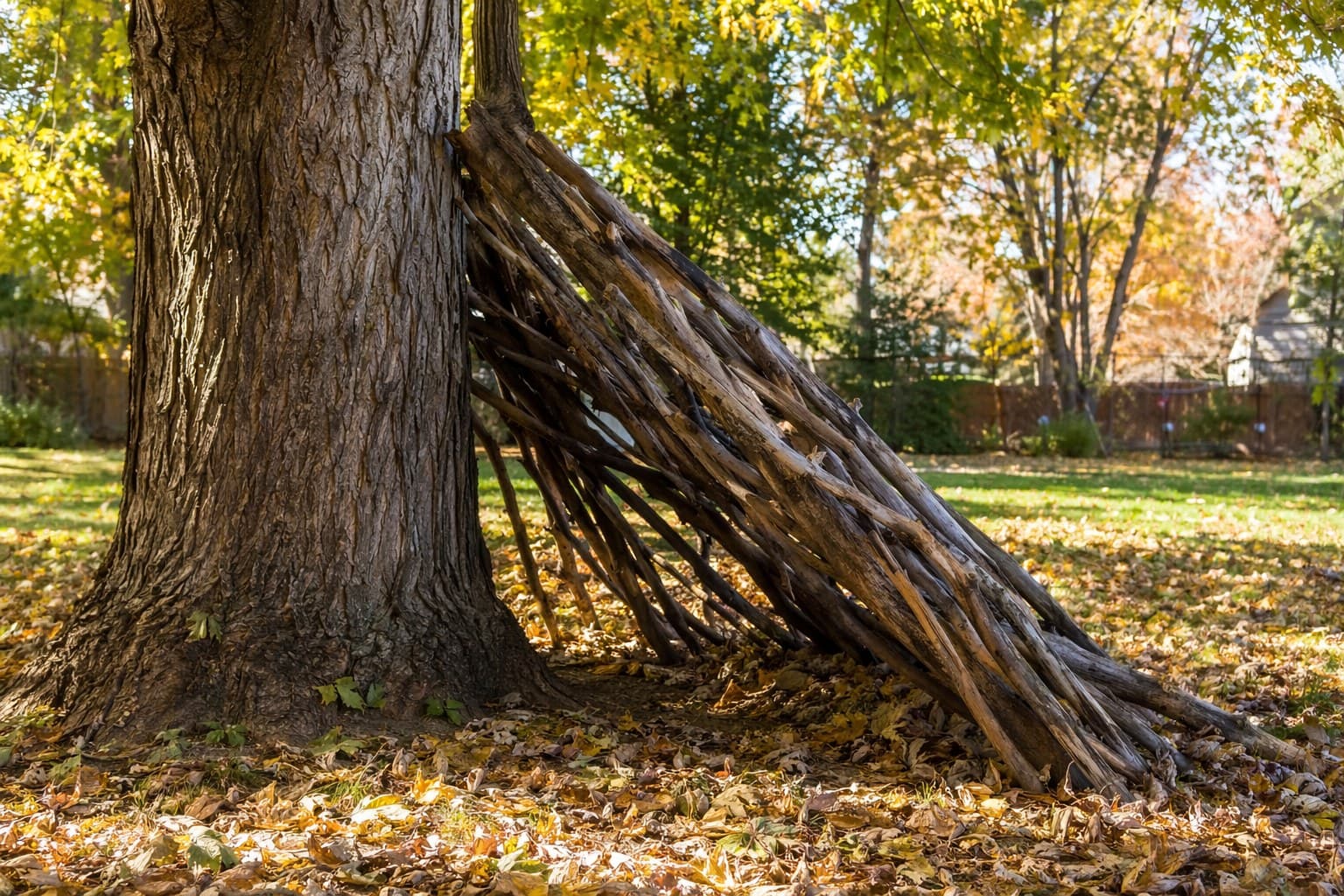
A forest school does not actually require a forest. It requires a patch of the outdoors that a child can return to over and over, a grown-up willing to step back, and a belief that long stretches of unstructured time in nature are not a break from real learning — they are real learning. The British and Scandinavian forest school movements built their reputation in genuine woodland, but the principles travel surprisingly well to a quarter-acre suburban lot, a shared community garden, or the scrubby strip behind a townhouse.
We have spent the last few years adapting forest school ideas to our own ordinary backyard, and the change has been quieter and deeper than I expected. The goal was never to recreate a Norwegian woodland. It was to take the philosophy — place-based, child-led, gently risky, gloriously slow — and let it reshape how our children spend their afternoons. This guide walks through how to do the same with whatever outdoor space you have.
What Forest School Actually Is
Forest school is often misunderstood as "doing crafts outside" or "a nature-themed lesson plan." It is neither. At its core it rests on a few principles that are worth stating plainly, because they are what you are actually trying to bring home:
- Place-based learning. Children develop a relationship with one specific outdoor space over a long period, learning its trees, its mud, its birds, and its seasons intimately rather than visiting many places shallowly.
- Child-led exploration. The adult observes and supports rather than directing. Curiosity sets the agenda. If a child spends 40 minutes building a dam in a puddle, that is the lesson.
- Healthy risk-taking. Children are trusted with real tools and real physical challenges, graduated to their ability — climbing, balancing, whittling, fire (eventually).
- Extended, unstructured time. Not 15 rushed minutes, but long enough that boredom passes and genuine absorption begins. This usually takes longer than parents expect.
- All weather, all seasons. "There is no bad weather, only bad clothing," the Scandinavian saying goes. Rain, frost, and wind are not obstacles; they are the curriculum.
None of this requires special terrain. It requires a shift in how you, the adult, behave in your own yard.
Reading Your Yard as a Forest School
Before you buy anything, spend a week looking at your outdoor space the way a child does. Where does water pool after rain? Which corner stays shaded and damp enough to grow moss and shelter pill bugs? Is there a tree limb low enough to hang from, a slope to roll down, a pile of leaves to burrow into, loose sticks to drag around?
Most yards have more "loose parts" potential than we notice because we are trained to see tidiness. A forest school eye sees differently: the brush pile becomes a fort frame, the muddy low spot becomes a mud kitchen, the woodpile becomes a balance course. Resist the urge to over-improve the space. The single most valuable thing you can add is loose, movable, open-ended material — logs, stumps, branches, stones, a few buckets — that children can rearrange endlessly. A perfectly landscaped yard with nothing to move is, paradoxically, a poor forest school. For more structured ideas on what to actually do once you are out there, the activities in our outdoor nature activities for kids guide pair well with a free-play foundation.
Clothing First: The Real Unlock
I want to be blunt about this because it is the thing that quietly determines whether backyard forest school survives past the first cold snap. The reason so many families abandon outdoor time is not lack of interest — it is wet socks. Once a child is cold and soaked, the afternoon is over, and the lesson they learn is that outside is uncomfortable.
Solve clothing and you solve attendance. A child who is genuinely warm and dry will happily spend two hours in a drizzle that would send an under-dressed adult running indoors. The investment that paid off most for us was a proper waterproof outer layer. A breathable rain suit like the Oakiwear Trail rain suit or a set of Tuffo Muddy Buddy coveralls means mud and puddles become features rather than disasters. Pair that with genuinely waterproof boots — Bogs Classic kids boots have lasted us through two children — and you have removed the single biggest barrier to all-weather play. Wool socks and a wool base layer handle the cold far better than cotton, which loses all its insulation the moment it gets damp.
Tools, Trust, and Risk
This is the part that makes many parents nervous, and it should be approached deliberately rather than skipped. Forest school treats children as capable of handling real tools, and the confidence that flows from this is hard to overstate. A child who has been trusted with a knife handles the world differently.
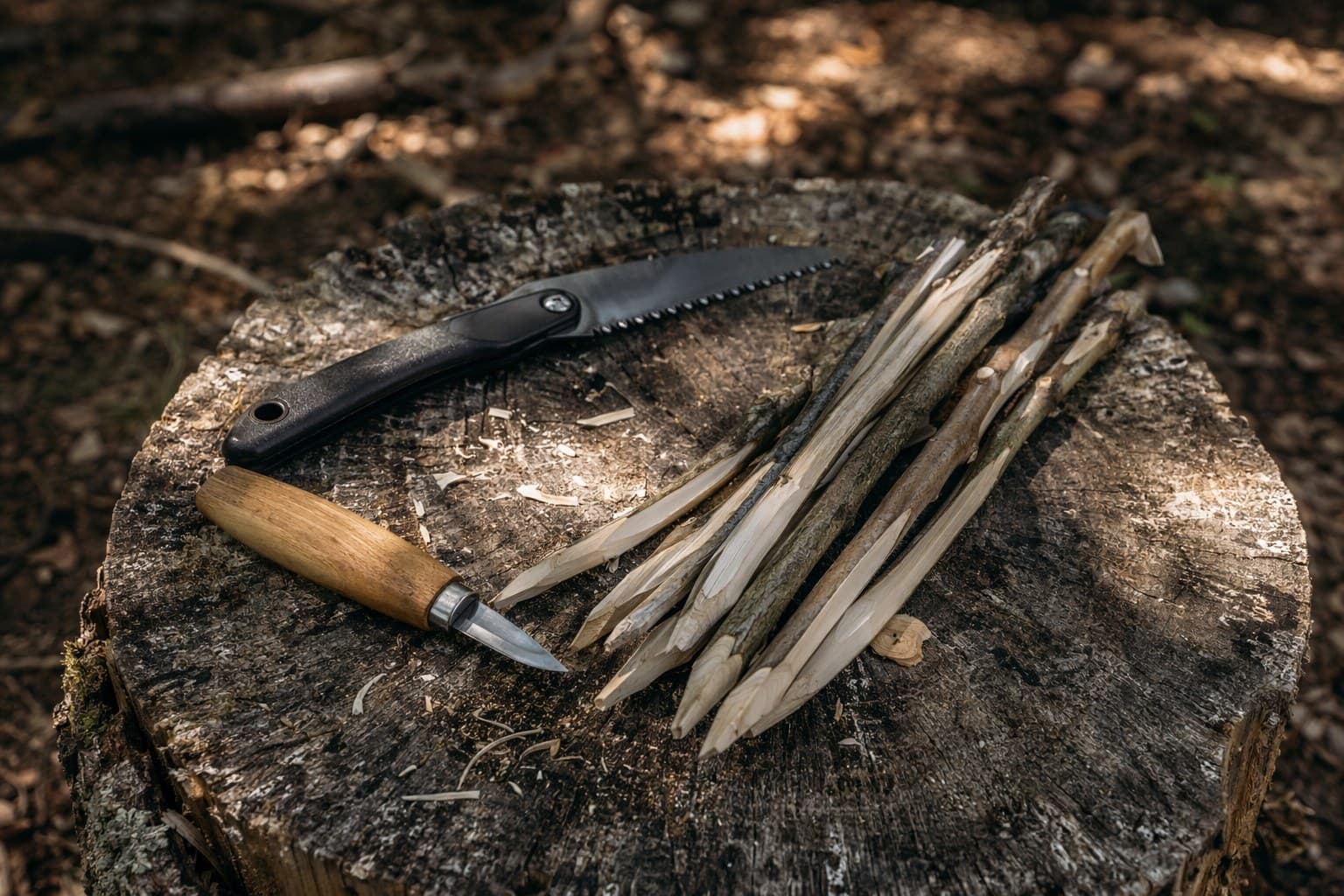
Start small and supervised. A natural explorer toolkit with a real magnifying glass, a bug viewer, and a small trowel is a gentle entry point. From there, introduce a child-sized whittling knife such as the well-regarded Morakniv Rookie, taught with firm rules: carve away from your body, maintain a "blood bubble" of space around you, knife away when walking. A pair of loppers or a folding saw for older children opens up real shelter-building.
The framework that helped me most was learning to separate hazards from risks. A hazard is a danger the child cannot perceive or assess — a rusty nail in a board, a wasp nest, rotten ice. You remove hazards. A risk is a challenge the child can see and choose to engage with — a high branch, a wobbly log, a sharp tool. You allow risks, supervised and graduated, because managing them is precisely how a child builds judgment. The 2017 review in the International Journal of Environmental Research and Public Health found risky play associated with more physical activity and better risk-assessment skills, without an uptick in serious injury. Removing all risk does not make children safer; it makes them less able to keep themselves safe later.
Keep a compact outdoor first aid kit within reach — splinters, scrapes, and the occasional small cut are part of the deal, and being prepared lets you stay calm and matter-of-fact when they happen.
Documenting and Deepening Curiosity
Forest school is child-led, but a light layer of documentation turns repeated visits into visible learning. A simple nature observation journal gives children a place to sketch the spider they found, tape a leaf, or note when the first buds appeared on the maple. Keep it pressure-free; the journal serves the child's curiosity, not your record-keeping. Our nature journal ideas for kids post has age-by-age prompts if you want a starting point.
The other tool that deepens place-based learning is a good regional field guide for identification. The key is sequencing: observe first, name second. A child who has watched a bird hop, noted its color and call, and then opens the guide to identify it has done real science. Reaching for the name too quickly short-circuits the looking.
What surprised me most is how naturally academic content emerges from this. Counting tree rings becomes math; tracking the same puddle's evaporation becomes a season-long science investigation; narrating an afternoon's adventures becomes writing. If you want to lean into that, our guide to nature-based learning across subjects shows how to connect backyard time to the curriculum without flattening the play.
Building a Rhythm You Can Actually Keep
The hardest part is not the first session. It is the fortieth. Forest school's benefits come from the relationship with place that builds across seasons, and that only happens with repetition. Pick a realistic rhythm — perhaps one longer outdoor block a few times a week plus short daily doses — and protect it the way you would protect a piano lesson.

Lower your own expectations for what a "good" session looks like. Some days the children will build something elaborate; many days they will poke a stick in the mud for an hour, and that is enough. Your job is to provide the time, the clothing, the loose parts, and a calm presence — then get out of the way. Resist narrating, fixing, and redirecting. The boredom that arrives ten minutes in is not a failure; it is the doorway. On the far side of it is the absorbed, self-directed play that forest school exists to protect.
That is the real shift. You are not running a program in your yard. You are reclaiming the unhurried, slightly wild, deeply ordinary outdoor childhood that has been quietly disappearing — and you can start it this afternoon, in the space you already have.
Frequently Asked Questions
- Do I need actual woods to do forest school at home?
- No. Forest school is a philosophy, not a location. Its core principles — long stretches of unstructured outdoor time, child-led exploration, real tools, healthy risk, and a deep relationship with one specific place — work in a small suburban yard, a community garden, or even a single mature tree and a patch of dirt. The magic comes from returning to the same outdoor space again and again across the seasons, not from the size or wildness of it. A 20-foot backyard you visit daily teaches more than a forest you see twice a year.
- Is risky play actually safe for children?
- Done thoughtfully, yes — and the research increasingly suggests it is protective. The risk in 'risky play' is age-appropriate and graduated: climbing a little higher, using a real knife under supervision, balancing on a log. A 2017 review in the International Journal of Environmental Research and Public Health found that opportunities for risky outdoor play were associated with greater physical activity, better social skills, and improved risk assessment, with no increase in serious injury. Your job is not to remove all risk but to remove hazards the child cannot see, then let them manage the rest.
- How much time does backyard forest school take each week?
- Consistency matters far more than duration. Even 30 to 45 minutes of genuinely unstructured outdoor time a few days a week builds the rhythm. Many home forest school families aim for one longer session — two to three hours outdoors in nearly any weather — plus shorter daily doses. The point is regular, repeated contact with the same place rather than a single ambitious outing you never repeat.
Enjoying this article?
Get more ideas like this delivered to your inbox every week.